GDP per capita of the countries of South America Ranking (1990-2019)
11 Nov 2019 Leave a comment
in development economics, economic history, growth disasters, growth miracles, Marxist economics Tags: The Great Fact
Shiiiiiit: The how and why of swearing in TV series
11 Nov 2019 Leave a comment

This is a guest post by Monika Bednarek, a linguist who has extensively analyzed US TV series. She is the author of Language and Television Series and the editor of Creating Dialogue for TV, a collection of interviews with Hollywood screenwriters. She has created a companion website at www.syd-tv.com and tweets at @corpusling.
* * *
The use of swear words in US TV series attracts a lot of attention. There are those who revel in creating mash-ups of swearing, and there are those who monitor and oppose swearing (like the Parents Television Council). Rules by the Federal Communications Commission restrict the broadcasting of profane and indecent speech to the evening and night and forbid obscene speech. But these rules don’t apply to subscription-based television such as cable or streaming services. Elsewhere I’ve looked at how frequent swearing is, but here I want to approach swearing…
View original post 1,176 more words
THE NEW ZEALAND BANDWAGON PHENOMENON
11 Nov 2019 Leave a comment

“Totally Inappropriate”, proclaimed Auckland Mayor Phil Goff about Shane Jones’s response to an Indian migrant’s complaint about the Immigration Department. But inappropriate to what? Phil didn’t tell us, instead preferring to jump on the current fashionable bandwagon, led by the Indian community, with the wearingly wrong cries of racism and hate speech.
It transpired the Department had declined the migrant’s application to bring in an arranged marriage potential bride he’d never met. The Department declined permission for the excellent reason that the rules required it to do so. Specifically, couples must have lived together for a year before their migration applications can be considered.
View original post 770 more words
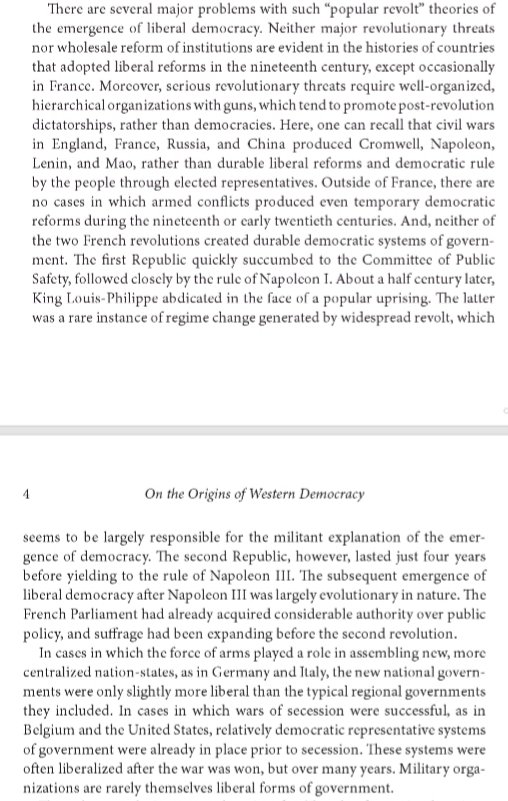
Roger D. Congleton on democracy coming through revolution
11 Nov 2019 Leave a comment
in comparative institutional analysis, constitutional political economy, defence economics, economic history, Public Choice Tags: capitalism and freedom
Sea level rise: what’s the worst case?
11 Nov 2019 Leave a comment

by Judith Curry
Draft of article to be submitted for journal publication.
View original post 8,410 more words
Former Jewel Thief Reviews Famous Heist Movies, From ‘Ocean’s Eleven’ to ‘Heat’”
11 Nov 2019 Leave a comment
in economics of crime, law and economics, movies, television
Why Fighter Jets Can Be Too Unstable
11 Nov 2019 Leave a comment
in defence economics, transport economics
No Discretion: On Royal Assent and the Governor General
11 Nov 2019 Leave a comment

Introduction
Under our system of responsible government, the Sovereign or Governor General exercises his prerogative powers on the advice of the Crown-in-Council, and his constitutional powers relating to Parliament on the advice of the Prime Minister alone. Responsible government means that “Ministers of the Crown are responsible for acts of the Crown” and responsible to the House of Commons.[1] The Sovereign or Governor General acts as a neutral figure and remains above partisan politics. The Prime Minister is the Governor General’s principle constitutional advisor, and while his government commands the confidence of the House, the Governor General must carry out the Prime Minister’s advice. Under no circumstances can the Leader of the Opposition, the leader of the third opposition party, or any other government or opposition backbencher offer legitimate, binding constitutional advice to the Governor General.
 The Crown-in-Parliament (Tidridge 2011, 63)
We must also situation this constitutional relationship between…
View original post 3,359 more words
The Armistice (11:00AM / 11th day / 11th month / 1918 )
11 Nov 2019 Leave a comment
in defence economics, war and peace Tags: World War I
Armistice – But Peace? I THE GREAT WAR Week 225
11 Nov 2019 Leave a comment
in defence economics, war and peace Tags: World War I
What It Was Like To Be a Trench Soldier in WWI
11 Nov 2019 Leave a comment
in defence economics, war and peace Tags: World War I
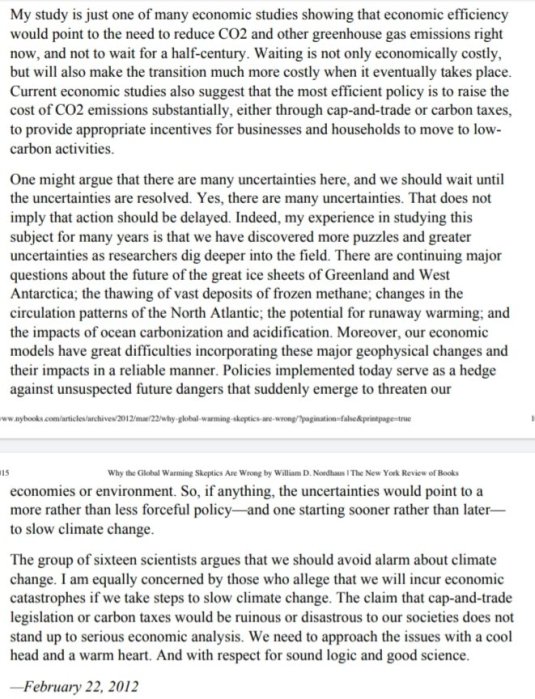
Nordhaus on tipping points
11 Nov 2019 1 Comment
in applied welfare economics, economics of bureaucracy, energy economics, environmental economics, environmentalism, global warming, international economic law, International law, politics - USA, Public Choice, public economics Tags: climate alarmists
Why Iceland Offers a Perfect Picture of our Geological Past
11 Nov 2019 Leave a comment
in economics of media and culture Tags: Iceland
Ring of Steel by Alexander Watson (2014) A synopsis
10 Nov 2019 Leave a comment

Introduction
Ring of Steel sets out:
- to explore how popular consent for the First World War was won and maintained in Austria-Hungary and Germany from 1914 to 1918
- to explain how extreme and escalating violence radicalised both German and Austro-Hungarian war aims, leading to the institution of slave labour and the stripping of agricultural and industrial resources in the occupied territories, and encouraging plans for the permanent annexation of Belgium, northern France and west Russia
- to describe the societal fragmentation caused by the war, especially in an Austria-Hungary already deeply fissured by ethnic tensions and which eventually collapsed into a host of new nation states; Germany was more ethnically homogenous and had been more socially unified in support of war so the end, when it came, unleashed a flood of bitterness and anger which expressed itself not along ethnic but along class lines, leading to street fighting between parties of…
View original post 5,042 more words
The Dissolution of the Austro-Hungarian Empire 1867-1918 by John W. Mason (1985)
10 Nov 2019 Leave a comment
This is another very short book, one of the popular Seminar Studies in History series. These all follow the same layout: 100 or so pages of text divided up into brisk, logical chapters, followed by a short Assessment section, and then a small selection of original source documents from the period. It’s a very useful format for school or college students to give you a quick, punchy overview of a historical issue.
This one opens by summarising the central challenge faced by the Austro-Hungarian Empire as it entered the twentieth century: how to take forward a fragmented, multi-cultural empire based on traditional dynastic and semi-feudal personal ties into the age of nationalism and democracy where every individual was, in theory at least, a citizen, equal before the law.
On page one Mason locates four key failures of late imperial governance:
- the failure to solve the Czech-German conflict in the 1880s…
View original post 7,112 more words


Recent Comments