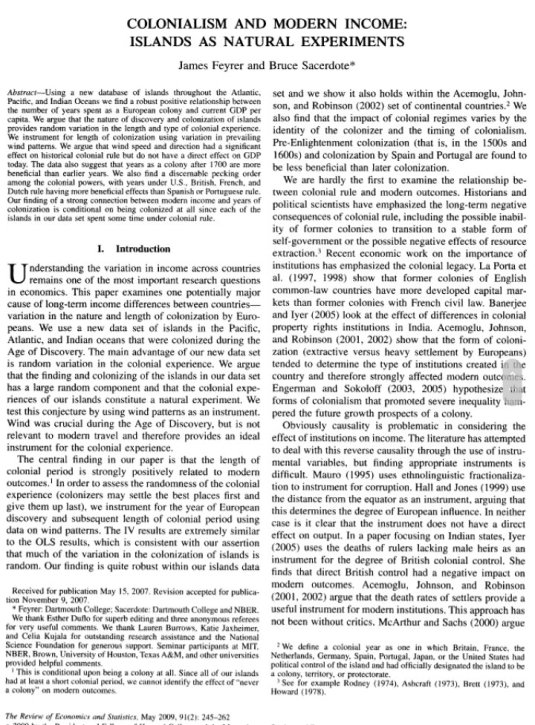
The Invisible 310-Mile Barrier to a #Brexit Deal | @WSJ
17 Oct 2019 Leave a comment
in defence economics, economic history, economics of crime, industrial organisation, international economic law, international economics, International law, law and economics, Public Choice Tags: Brexit, Ireland
Economic Reasoning Applied to Sociology – Becker and Posner
17 Oct 2019 Leave a comment
in development economics, economics of bureaucracy, economics of information, Gary Becker, growth disasters, growth miracles, health economics, law and economics, Public Choice, Richard Posner Tags: economics of AIDS
Stossel: The Science Around Male Brains vs. Female Brains
17 Oct 2019 Leave a comment
in discrimination, economics of education, economics of love and marriage, gender, health and safety, health economics, human capital, labour economics, labour supply, law and economics, occupational choice, poverty and inequality Tags: evolutionary psychology
Javier García Oliva: Sentencing the Catalan Separatists: The Painful Vindication of Equality Before the Law and Separation of Powers
16 Oct 2019 Leave a comment
The fundamental point is that a group of people exercising political power decided that they were justified in ignoring a court of law which was delineating the scope of their authority. This is key, because if the executive is free to set the limits on the boundaries of executive power, then the separation of powers becomes a mockery, and no effective safeguards against tyranny remain.

 As the dust settles following Miller (No. 2)/Cherry, tension inevitably mounts over the next instalment of the Brexit saga, and how the Prime Minister will interpret his commitment to respecting the Benn Act. Against this backdrop, it is interesting to speculate as to whether recent events in Spain will have any impact upon his decisions, because the Tribunal Supremo in Madrid has just sentenced the Catalan politicians who chose to disregard both the Spanish Constitution and the courts. In short, although cleared of the most serious charge of rebellion, the majority were convicted of the lesser (but still extremely grave) offence of sedition, whilst others were found to be guilty of misusing public funds.
Even though the incarcerated separatists and their followers argue that this was a political decision, maintaining that they are prisoners of conscience, there is no evidence to support such an allegation. Indeed, it flies…
View original post 1,421 more words
Angus Deaton Understanding and misunderstanding randomized controlled trials
16 Oct 2019 Leave a comment
in applied price theory, applied welfare economics, comparative institutional analysis, development economics, econometerics, economics of bureaucracy, economics of crime, economics of education, economics of information, growth disasters, health economics, labour economics, labour supply, law and economics, managerial economics, organisational economics, personnel economics, Public Choice, public economics, theory of the firm Tags: offsetting behaviour, The fatal conceit, The pretence to knowledge, unintended consequences
Tonight’s Democratic debate
16 Oct 2019 Leave a comment

I didn’t think I’d learn anything, and I really haven’t. The only change in my attitudes is that I like Elizabeth Warren less and Pete Buttigieg more, and everyone else pretty much the same as before. Even though “Mayor Pete” seems to have little chance to be the Democratic nominee, Warren’s evasion of questions grates on me. She dissimulates too much.
At least Bernie admits that “Medicare for All” will entail an increase in taxes for everyone, but says—and this is the way to couch it—that although taxes will go up, medical care costs for the poor and middle class will go down more. In net, he says, they’ll be paying less. I’m not sure that’s true, and I don’t favor “Medicare for all” (I favor a public option), but at least he’s honest. Warren can’t even admit that.
And Biden still looks befuddled.
I don’t think I can…
View original post 30 more words
Peter Singer on free speech and the denial of the Holocaust that murdered three of his grandparents
16 Oct 2019 Leave a comment
in defence economics, economic history, economics of crime, economics of information, economics of media and culture, economics of regulation, law and economics, laws of war, liberalism, politics - Australia, politics - New Zealand, politics - USA, Public Choice, war and peace Tags: free speech, The Holocaust

What did millionaire @SenSanders build from scratch?
16 Oct 2019 Leave a comment
in economic history, entrepreneurship, human capital, industrial organisation, labour economics, occupational choice, survivor principle Tags: superstars, The Great Enrichment, top 1%

35 years later: Diamond-Dybvig model of bank runs
16 Oct 2019 Leave a comment
in applied price theory, applied welfare economics, business cycles, comparative institutional analysis, economic growth, economic history, global financial crisis (GFC), great depression, great recession, income redistribution, industrial organisation, law and economics, macroeconomics, monetary economics, property rights, Public Choice, rentseeking, survivor principle Tags: bank panics, bank runs, deposit insurance
Deirdre McCloskey on why liberalism works
16 Oct 2019 Leave a comment
in applied price theory, comparative institutional analysis, constitutional political economy, development economics, economic growth, economic history, economics of bureaucracy, economics of education, economics of regulation, entrepreneurship, growth disasters, growth miracles, health economics, human capital, income redistribution, industrial organisation, international economics, labour economics, law and economics, macroeconomics, Marxist economics, poverty and inequality, property rights, Public Choice, public economics, Rawls and Nozick, rentseeking, survivor principle Tags: The Great Enrichment
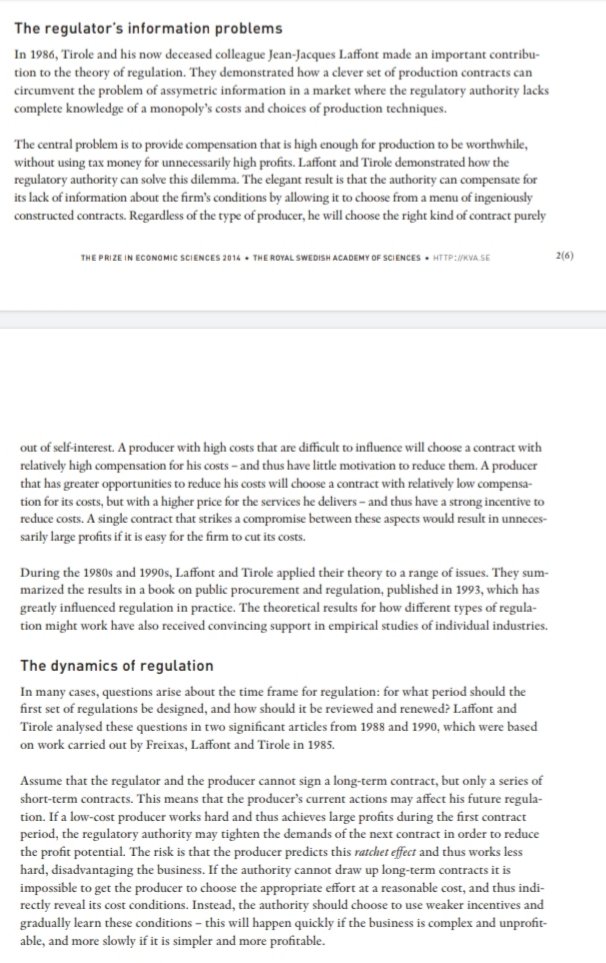
Tirole on the difficulties of network and utility regulation. Tradeoff between high cost, low profit firms v. low cost, high profit firms
16 Oct 2019 Leave a comment
Perjury, Wager of Law, and Debt in the Elizabethan Star Chamber
16 Oct 2019 Leave a comment

Guest post by Ian Williams, 15 October 2019
Wager of law was a central part of a serious disagreement between the courts of King’s Bench and Common Pleas in the last decades of Elizabeth I’s reign. The dispute concerned the availability and acceptability of the writ of assumpsit being used to sue for debts when those debts could also be recovered using the writ of debt.[1] The writ of debt was the long-established remedy for such claims and it permitted a defendant to wage her law or have the case tried by a jury. The insurgent writ of assumpsit permitted only trial by jury.
A defendant sued using a writ of debt could successfully defend their claim by completing the formal process of waging their law. Coming before the judges in Westminster Hall, the defendant would have to swear an oath denying their liability. Oath-helpers would then swear to…
View original post 1,935 more words
Guardian buries real cause of peace process failure
16 Oct 2019 Leave a comment

The narrative that the assassination of Yitzhak Rabin by extremist Yigal Amir killed the Israeli-Palestinian peace process is advanced in the headline of an Oct. 11th Guardian review of a new Israeli film on the 1995 tragedy:
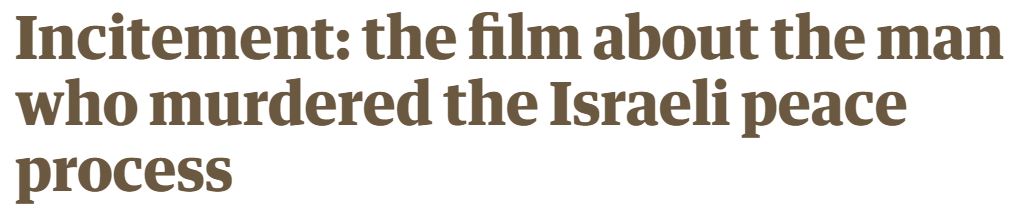
It’s also included in the opening paragraph of the review, written by Anne Joseph:
The murder of an Israeli prime minister by an Orthodox Jew was inconceivable,” says American-Israeli film-maker Yaron Zilberman. “For anyone who was pro-peace, it was beyond anything that we could fathom.” The assassination of Yitzhak Rabin by the religious ultra-nationalist law student Yigal Amir, at a peace rally on 4 November 1995, was one of the most traumatic events in Israel’s history. Rabin’s death buried the prospect of peace, further divided an already riven society and left an indelible mark on Israel’s politics.
The Guardian claim doesn’t hold up to scrutiny.
First, shortly after Rabin’s assassination, Likud leader…
View original post 564 more words


Recent Comments