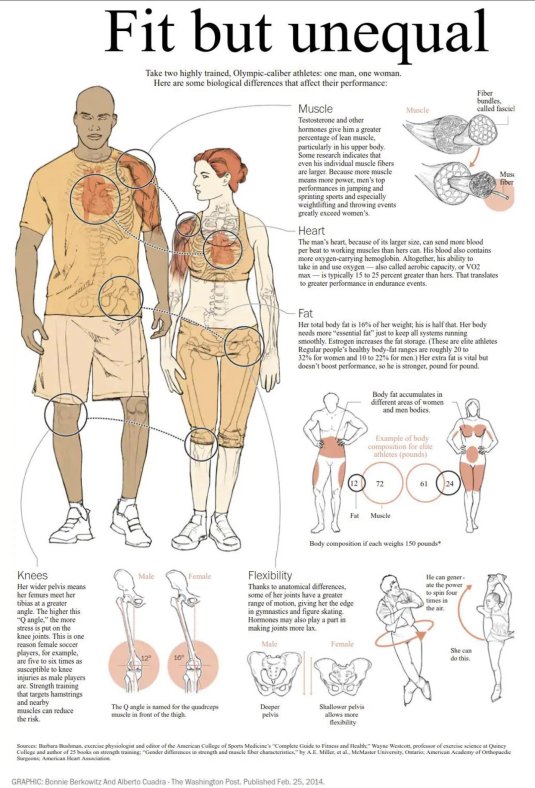
More gender gaps that are biological
03 Jun 2019 Leave a comment
in discrimination, gender, health economics, labour economics, labour supply, law and economics, occupational choice, sports economics Tags: gender gaps
“Knowledge starts as offendedness”: Jonathan Rauch on Free Speech
03 Jun 2019 1 Comment
in economics of crime, economics of information, law and economics, politics - New Zealand, politics - USA, Public Choice Tags: free speech
one day in urban sociology class…
03 Jun 2019 Leave a comment
Pretty good list all things considered

A few years ago, I found myself subbing for the teacher of an urban sociology class. It was the last day so we covered the last chapter in the text book, which talked about policy reforms. The book covered some reasonable topics, such as the need to have better regional government in the US to help coordinate things like transportation.
To spice things up, I added four intentionally provocative proposals that might improve urban life. I want you to guess which proposal triggered the most violent reaction:
- End the over-policing of neighborhoods by decriminalizing narcotics.
- Revive dying cities, such as the Rust Belt, by liberalizing immigration. A lot of poor people in developing nations would love to live in Detroit or St. Louis.
- Deregulate housing construction, so we can have higher density and cheaper homes for working class people. San Francisco – I’m looking straight at you!
- Surge pricing for…
View original post 176 more words
Nearly 20 Years of Renewable Energy Means Unstable and Expensive Electricity Delivery
03 Jun 2019 Leave a comment

From JoNova:
A big new study by electricity grid nerds (and I mean that in the nicest possible way) shows that after all the money and pain of 20 years of forced transition Australia’s electricity has shifted from 85% coal powered to 75% coal powered, which cost billions and as a bonus, made electricity more expensive and unstable. We drove out some brown coal, but swapped it for black coal. Instead of ousting coal power, the extra solar and wind power replaced some gas and hydro.
The authors are genuine independent experts, and the report is incredibly detailed — so this is rare — but still suffers from serious drawbacks:
1) The team doesn’t question the need for an artificial expensive transition. Almost all the problems they describe are caused by government policies that task our grid with changing the climate as well as producing cheap and reliable electricity.
View original post 186 more words
The rich are getting richer and the poor are getting poorer says @AOC
03 Jun 2019 Leave a comment
in economic history, politics - USA, poverty and inequality Tags: pessimism bias


Brexit at Dunkirk – WW2 – 040 – June 1 1940
03 Jun 2019 Leave a comment
in defence economics, war and peace Tags: World War II
Milton Friedman on “Too Many Millionaires”
03 Jun 2019 Leave a comment
in applied price theory, economic growth, economic history, entrepreneurship, industrial organisation, macroeconomics, Public Choice, public economics Tags: The Great Enrichment
Economists as “Useful Idiots” for Green Socialists
03 Jun 2019 Leave a comment


Robert P. Murphy writes at Mises Wire Economists Have Been “Useful Idiots” for the Green Socialists. Excerpts in italics with my bolds.
In the old Soviet Union, the Communists allegedly used the term “useful idiot” to describe Westerners whose naïve political views furthered the Soviet agenda, even though these Westerners didn’t realize that they were being exploited in such fashion. It is in this context that I confidently declare that American economists have been useful idiots for the green socialists pushing extreme climate change policies. The radical environmentalists were quite happy to embrace the economic concepts of “Pigovian negative externalities” and a carbon tax in the past, but now that it is impossible for economic science to endorse their desired agenda, the activists have discarded the entire field as hopelessly out of touch. Economists who still support a carbon tax and other climate “mitigation policies”…
View original post 600 more words
Why I escaped from my brainwashed country | Hyeonseo Lee | TEDxKyoto
03 Jun 2019 Leave a comment
in comparative institutional analysis, defence economics, development economics, growth disasters, International law, law and economics, liberalism, Marxist economics Tags: North Korea
How Many Times Can You Shoot a Bulletproof Vest Before It Stops Working?
03 Jun 2019 Leave a comment
in defence economics, economics of crime, health and safety, law and economics
How Deserving are the Poor? Bryan Caplan vs. Karl Smith
02 Jun 2019 Leave a comment
in applied price theory, applied welfare economics, economics of education, human capital, labour economics, labour supply, poverty and inequality Tags: child poverty, family poverty
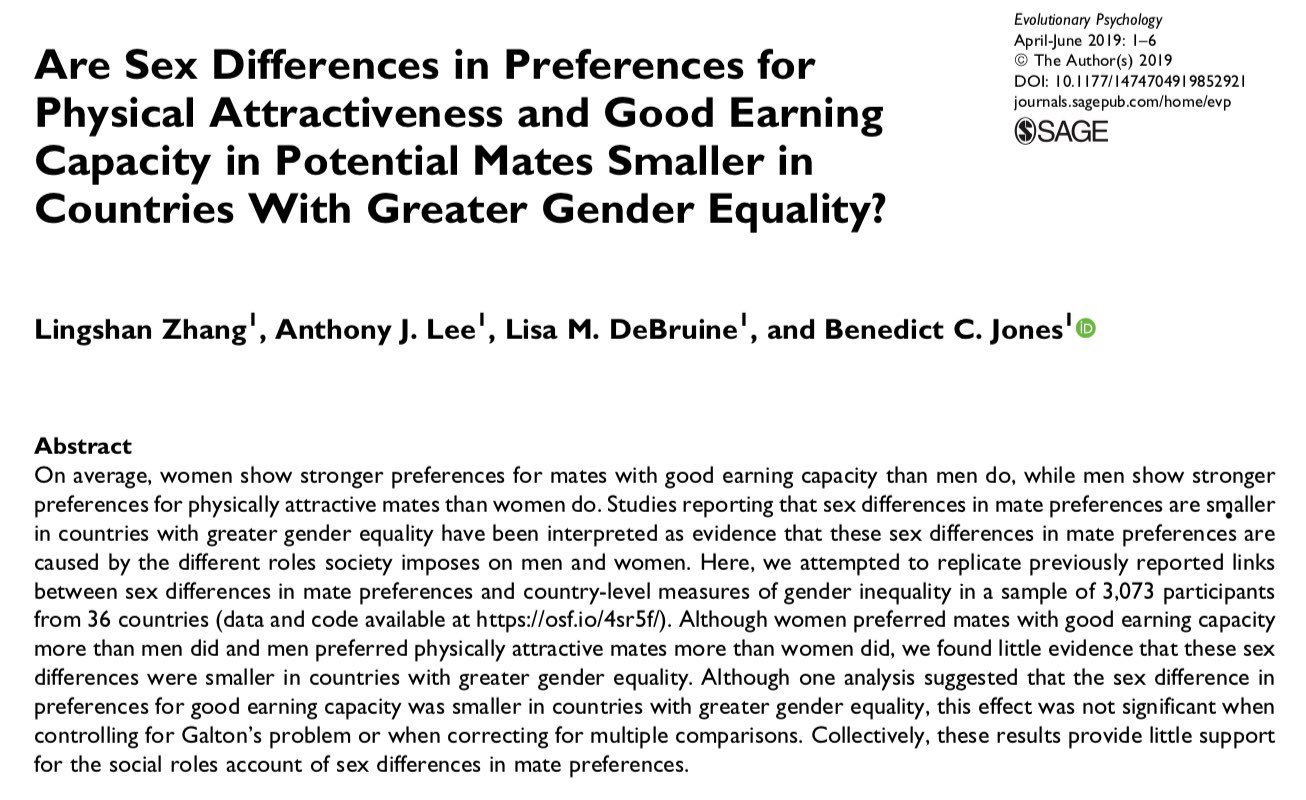
Men are just as shallow and women just as picky in more egalitarian countries
02 Jun 2019 Leave a comment
in discrimination, economics of education, economics of love and marriage, gender, human capital, labour economics, labour supply, law and economics, occupational choice, poverty and inequality Tags: dating markets, marriage and divorce
GLOBAL WARMING FAIL : Record Snow When You Were Assured By Climate ‘Scientists’ That There Would Be None
02 Jun 2019 Leave a comment
Snow was supposed to be a thing of the past?

 WHEN will the CSIRO, Australia’s premier ‘scientific’ body retract their 2001 “no snow by 2020” prediction?
SNOWFALL will become “A very rare and exciting event…
Children just aren’t going to know what snow is.”
Dr David Viner – Senior scientist, climatic research unit (CRU)
“Good bye winter. Never again snow?” Spiegel (2000)
“Milder winter temperatures will decrease heavy snowstorms” IPCC (2001)
“End of Snow?” NYTimes (2014)
“Good bye winter. Never again snow?” Spiegel (2000)
“The high impact scenario for 2020 leads to reductions of 30-40 days in average season lengths. At higher sites such as Mt Hotham, this can represent reductions in season duration of about 25%, but at lower sites such as Mt Baw Baw the reduction can be more significant (up to 60%)” CSIRO (2003) (Kevin Hennessy, Penny Whetton, Ian Smith, Janice Bathols, Michael Hutchinson and Jason Sharples)
“We must face up to the fact that if our societies…
View original post 2,862 more words


Recent Comments