
Three cheers for @Facebook and free speech
01 May 2019 Leave a comment
in economics of media and culture Tags: free speech
When will there be a similar PG-21 disclaimer on Das Kapital?
01 May 2019 Leave a comment
in economic history, history of economic thought, liberalism, Marxist economics Tags: free speech, political correctness, regressive left

FRIEDMAN FRIDAY Listing of transcripts and videos of “Free to Choose” episode 4 – From Cradle to Grave on www.theDailyHatch.org
01 May 2019 Leave a comment

In the last few years the number of people receiving Food Stamps has skyrocketed. President Obama has not cut any federal welfare programs but has increased them, and he has used class warfare over and over the last few months and according to him equality at the finish line is the equality that we should all be talking about. However, socialism has never worked and it has always killed incentive to produce more. Milton Friedman shows in this film series below how so many people get caught in the “Welfare Trap.” Friedman also gives a great solution to this problem in the “negative income tax.” I am glad that I had the chance to be studying his work for over 30 years now.
In 1980 when I first sat down and read the book “Free to Choose” I was involved in Ronald Reagan’s campaign for president and excited about the race. Milton Friedman’s books…
View original post 2,427 more words
Fake Socialism vs. Real Capitalism Jason Brennan
01 May 2019 Leave a comment
in comparative institutional analysis, industrial organisation, labour economics, law and economics, liberalism, libertarianism, Marxist economics, politics - USA, property rights, Public Choice Tags: capitalism and freedom
Fair comment
01 May 2019 Leave a comment
in economics of religion, politics - New Zealand Tags: free speech


How This Island Got 10% of Their Money by Chance
01 May 2019 Leave a comment
in economics of media and culture
Life Peerages Act 1958: First Women Life Peers
30 Apr 2019 Leave a comment

Today marks the 60th anniversary of the announcement of the first life peers after the passing of the Life Peerages Act, 1958. This Act also allowed women to sit in the House of Lords for the first time so this blog is July’s installment of the Women and Parliament series. We are delighted to hear from guest blogger Dr Duncan Sutherland, a historian who has worked on women in Parliament for several years. Today he considers the experiences and contributions of the first four women life peers…
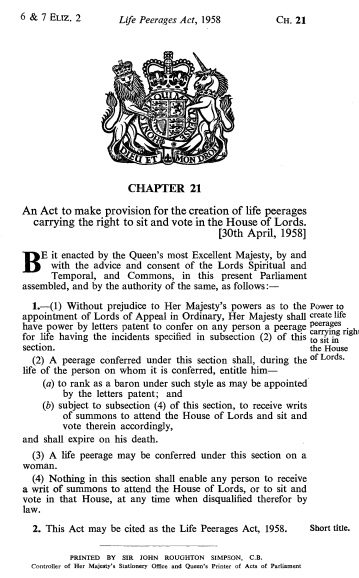
When the government announced the creation of life peers in 1958 to help revitalise the moribund Second Chamber, there was particular interest in who the first women appointed would be. Among those suggested but not chosen were Nancy Astor, former Suffragist Marjory Corbett Ashby and the elderly former Conservative Party activist Caroline Bridgeman. Three women passed over in 1958 would receive peerages…
View original post 1,178 more words
BBC senior editor defends double standards on terrorism
30 Apr 2019 Leave a comment

Those who have been following the BBC’s coverage of the recent attack at a synagogue near San Diego may have noticed that the sole use of the word terrorist appears in a quote from the wounded Rabbi in one of the BBC’s reports. A programme aired last month casts some light on related editorial policy.
The March 22nd edition of the BBC Radio 4 programme ‘Feedback’ included an item (from 1:03 here) concerning criticism of the BBC’s coverage of the terror attacks at two mosques in Christchurch, New Zealand, the previous week. Presenter Roger Bolton spoke with the BBC News editorial director Kamal Ahmed and from 5:20 the conversation turned to “the use of the word terrorism”. [emphasis in italics in the original]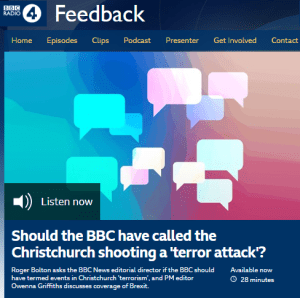
Bolton: “Should the BBC have used the term ‘terrorist attack’ instead of ‘shooting’?”
Ahmed: “On the issue of terror and terrorism…
View original post 674 more words
Empathy, John Rawls and JS Mill or why the state sector code of conduct was designed to drive empathy out of the @NZTreasury
30 Apr 2019 Leave a comment
in applied welfare economics, comparative institutional analysis, constitutional political economy, politics - New Zealand, Public Choice

From Decety J, Yoder KJ. Empathy and motivation for justice: Cognitive empathy and concern, but not emotional empathy, predict sensitivity to injustice for others. Soc Neurosci. 2015;11(1):1–14. doi:10.1080/17470919.2015.1029593
See too
Paul Bloom on the many drawbacks of empathy in public policy-making
30 Apr 2019 Leave a comment
in applied welfare economics, comparative institutional analysis, constitutional political economy, Public Choice

Nothing could be more true
30 Apr 2019 Leave a comment
in economics of media and culture Tags: conspiracy theorists


Recent Comments