
Gender pay gap driven by male lawyers having no interest in work-life balance. New mothers bill 200 hours less; new fathers keep working nights and weekends as before in a rat race job
21 Feb 2019 Leave a comment
in discrimination, economics of education, gender, human capital, labour economics, labour supply, law and economics, occupational choice Tags: gender pay gap

Renewables Reality Check: Giant Batteries No Solution to Wind Power’s Chaotic Delivery
20 Feb 2019 1 Comment

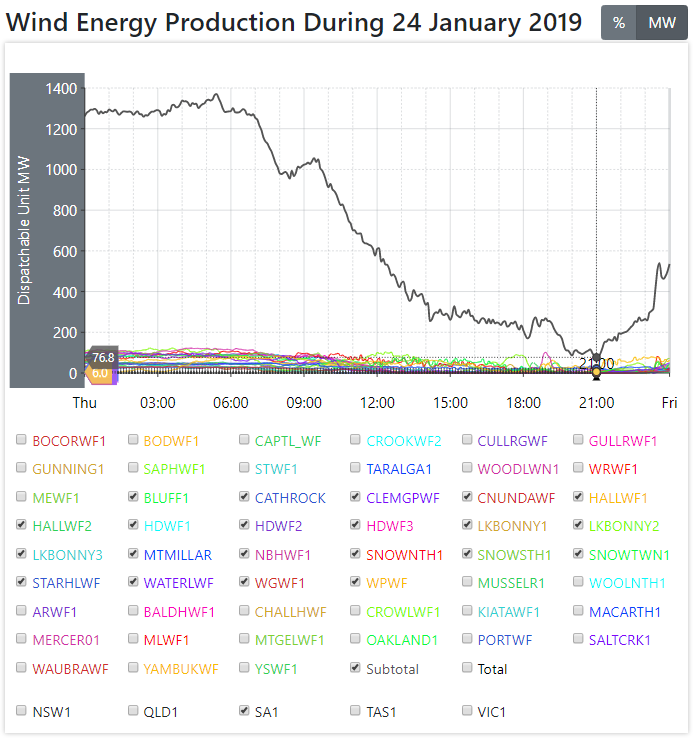
South Australia is Australia’s wind and solar capital: resulting in an unstable grid and the world’s highest power prices.
One wheeze in purported answer to the debacle above was Elon Musk’s giant 100 MW lithium-ion battery. It cost taxpayers a cool $150,000,000 and delivers occasional spurts of power to the grid, whenever the sun sets and/or calm weather sets in.
Its principal purpose is to allow the nearby 200 MW Hallett Power Station a few minutes lead time to fire up its 12 unit, open cycle gas turbine plant, to thereby avoid a total grid collapse when wind power output collapses – as it did on 24 January (see above), when the state was hit by heatwave and 29,000 households were left powerless.
The dual fuel plant can run on gas, but, more often than not, it’s running on diesel and spewing tonnes of filthy, noxious, particulate matter into…
View original post 546 more words
How seawater strengthens Roman concrete
20 Feb 2019 Leave a comment
in economic history Tags: Roman empire
Do people want a new centrist party?
20 Feb 2019 Leave a comment

Seven Labour MPs have resigned the party whip. It’s not clear what they plan to do next but many commentators assume that the formation of a new centrist party will be the eventual outcome
Is there a market for a new centrist party though? Nick Barlow thinks not. He wrote a piece on ‘the centrist fallacy’ last year in which he looked at data from the British Election Survey. He found that most people think their own political views are in the centre ground even when they are not. So lots of people might say they would support a centrist party but wouldn’t actually like its policies when it came to an election. He also found that, based on the questions in the BES, the electorate skews to the left on economic issues and to the right on social issues.
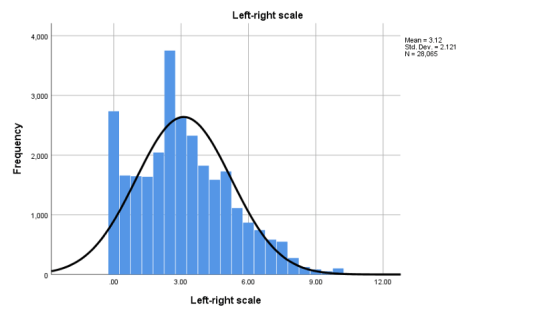
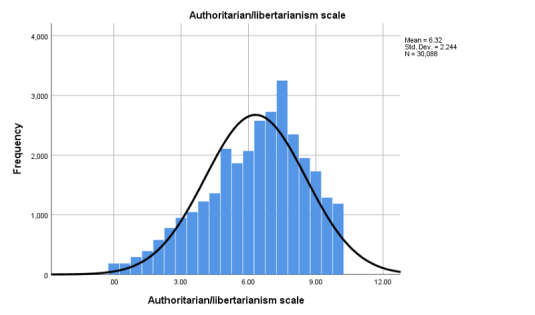
The FT’s John Burn-Murdoch plotted the same data on a…
View original post 1,340 more words
book spotlight: the coddling of the american mind by lukianoff and haidt
20 Feb 2019 Leave a comment

 Disclaimer: I’m a member of Heterodox Academy and I spoke with Jonathan about the book while it was being written. I am totally biased but don’t blow out of proportion!
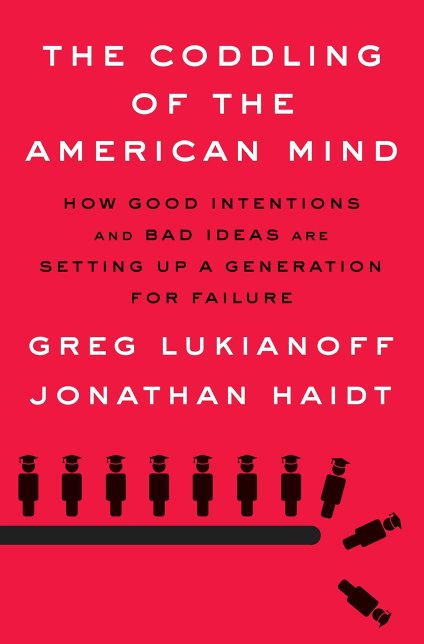
The Coddling of the American Mindis a book about two things. The first might be called the “rise of sensitive people.” That is, people now seem to be a bit on the fragile side. Say something awkward on Twitter and you might have thousands of people mocking you. Or say something about race or gender in a class, and people will get on your case. In my business, the Trustees of your university might go on a rant if you are on the wrong side of the discussion on the Israeli/Palestinian conflict.
Surprisingly, the book is also a self-help book. This is because Haidt and Lukianoff ascribe the rise of sensitive people to the counter-productive ways of thinking…
View original post 420 more words
Originalism and defamation
20 Feb 2019 1 Comment

Today, Justice Clarence Thomas issued a solo opinion urging the Supreme Court to reconsider a hallmark case in First Amendment law–New York Times v. Sullivan. That case held that defamation claims brought by public figures had to meet a heightened standard of proof by showing “actual malice” by the alleged defamer. The basic premise is that muscular use of private defamation suits discourages criticism of public figures and thus clashes with First Amendment interests.
Justice Thomas’s primary complaint with this standard is that judges created it with a wave of the wand rather than a serious analysis of the original understanding of the First Amendment. He points out that the ratifiers of the Constitution gave no indication that they intended to abrogate the long-standing common law of libel that had existed in the colonies and England for centuries. For those who believe that the Constitution’s meaning should reflect…
View original post 18 more words
California’s continued marijuana black market
20 Feb 2019 Leave a comment
in applied price theory, economics of crime, economics of regulation, health economics, law and economics, politics - USA Tags: black markets, marijuana decriminalisation, unintended consequences
Save the oceans – stop recycling plastic @greenpeace
20 Feb 2019 Leave a comment
in development economics, environmental economics Tags: expressive voting, rational irrationality, recycling
KiwiBuild: the Reserve Bank and crowding out
20 Feb 2019 Leave a comment

Last week, in association with the Monetary Policy Statement, the Reserve Bank published a short separate paper outlining how it was treating KiwiBuild for forecasting and monetary policy purposes. The bottom line was
The Bank has assumed that half to three quarters of what KiwiBuild contributes to residential investment will be offset by crowding out of other private investment over the forecast horizon.
It isn’t that different an assumption than they have been making since the current government first took office. This was what they wrote in the November 2017 Monetary Policy Statement
The Government has announced an intention to build 100,000 houses in the next decade…..our working assumption is that around half of the proposed increase will be offset by a reduction in private sector activity.
But, of course, then they refused to show us their workings or give us any supporting analysis.
I made brief…
View original post 1,826 more words
Peter Singer said something useful: social progress is the expansion of the circle of people we value, have same moral sense towards as our initial in-group ( defined in hunter gatherer times)
20 Feb 2019 Leave a comment
in health economics, law and economics Tags: evolutionary psychology, Steven Pinker

Blank Slate – The Modern Denial of Genetic Differences in Human Nature 2/6
20 Feb 2019 Leave a comment
in health economics Tags: evolutionary psychology, Steven Pinker
Bill Gates Slams Unreliable Wind and Solar Energy
20 Feb 2019 Leave a comment
in energy economics, environmental economics, global warming Tags: solar power, wind power
Romer v. Lucas
19 Feb 2019 Leave a comment

A couple of months ago, Paul Romer created a stir by publishing a paper in the American Economic Review “Mathiness in the Theory of Economic Growth,” an attack on two papers, one by McGrattan and Prescott and the other by Lucas and Moll on aspects of growth theory. He accused the authors of those papers of using mathematical modeling as a cover behind which to hide assumptions guaranteeing results by which the authors could promote their research agendas. In subsequent blog posts, Romer has sharpened his attack, focusing it more directly on Lucas, whom he accuses of a non-scientific attachment to ideological predispositions that have led him to violate what he calls Feynman integrity, a concept eloquently described by Feynman himself in a 1974 commencement address at Caltech.
It’s a kind of scientific integrity, a principle of scientific thought that corresponds to a kind of utter…
View original post 3,596 more words


Recent Comments