Human Garden Gnome (Weird Jobs in History)
07 Jan 2019 Leave a comment
in economic history, labour economics, labour supply, occupational choice
Goats Climbing on a Near-Vertical Dam | National Geographic
07 Jan 2019 Leave a comment
in economics of media and culture
Why consider the lighthouse a public good?
06 Jan 2019 Leave a comment

I know I talk about lighthouses a lot. This is because they are economically relevant. They are the penultimate example of public goods and they underlie all positive (i.e. scientific) justifications for state-provision of public goods. However, economic theory has whitewashed the history of the lighthouse in order to make this case. In reality, the lighthouse never was a public good and it never was, before the 19th century, the main way of providing maritime safety. Alongside Rosolino Candela, in a new working paper, I provide a ton of historical evidence showing that it was a complement to private goods and services such as pilotage and ballastage. Because it was a complement to other goods, it could be privately provided through bundling. That option was prohibited, however, by rent-seeking and monopoly privileges granted to firms/guilds involved in the production of the private goods that could (and did) produce lighthouses and…
View original post 207 more words
Kids Climate Case to be Appealed Before Trial
06 Jan 2019 Leave a comment

 A monkey wrench in the Works.
Previous posts have followed the twists and turns of the lawsuit Juliana vs. US, initiated and funded by Our Children’s Trust. In November the Supreme Court signaled their desire that lower courts rein in the scope of the lawsuit. The District Court backed off and now the Ninth Circuit Court will take up the appeal in advance of any trial activity. The significance and implications are described in an article by Karen Savage at Climate Liability News Appeals Court OKs Pre-Trial Appeal of Kids Climate Case, Siding With Government Excerpts in italics with my bolds.
The Ninth Circuit Court of Appeals has granted a petition by the Trump administration for a rare pre-trial appeal in the landmark constitutional climate lawsuit, Juliana v. United States. The appeals court agreed to the interlocutory appeal, which leaves the future progress of the case unclear.
Generally, interlocutory appeals…
View original post 495 more words
@greenpeace @oxfamnz lacks the moral fortitude to fight indoor air pollution because the solution is LPG stoves and electrification
06 Jan 2019 Leave a comment
in development economics, energy economics, environmental economics, global warming Tags: indoor air pollution

A gender gap @oxfamnz @Greenpeace and @Amnesty will never campaign against; they would rather fall on their bicycle pumps than mention the solution
06 Jan 2019 Leave a comment
in development economics, energy economics, environmental economics
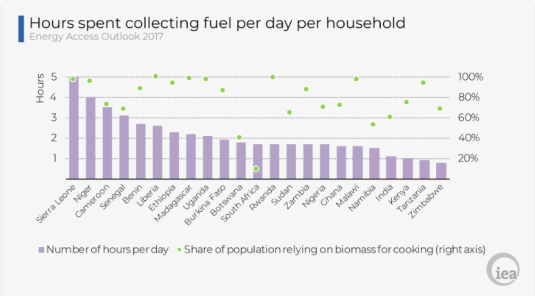
28 April 18, PM Modi announced that India had ahead of schedule provided electricity to every village: @Greenpeace @Oxfam boos?
06 Jan 2019 Leave a comment
in development economics, energy economics, entrepreneurship
Greg Mankiw on who pays company tax
06 Jan 2019 Leave a comment
in applied price theory, politics - USA, public economics

@SenSanders Praising Bread Lines and Food Rationing @AOC
06 Jan 2019 Leave a comment
in development economics, economic history, growth disasters, industrial organisation, Marxist economics, politics - USA, poverty and inequality Tags: anti-market bias
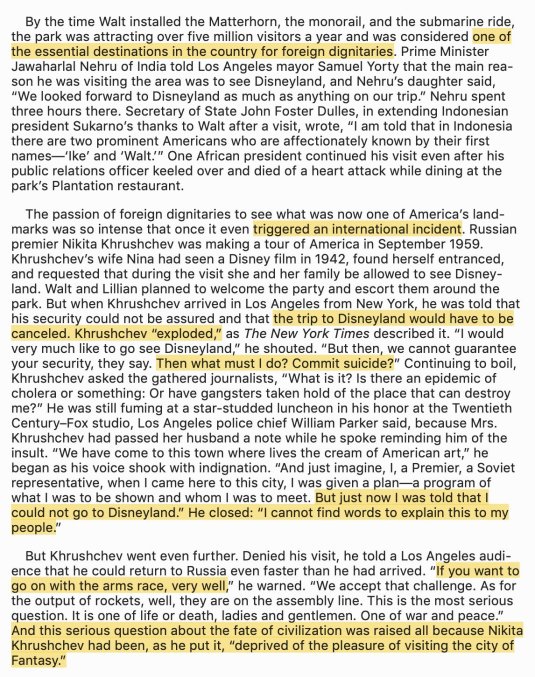
Stories about state visits to Disneyland
06 Jan 2019 Leave a comment
in economics of media and culture
Homage to Catalonia by George Orwell (1938)
06 Jan 2019 Leave a comment

Potted biography
Orwell was born Eric Arthur Blair to a civil servant in India in 1903. The family moved back to England in 1907 and sent young Eric, first to prep school near Eastbourne, then to Eton, where he met other boys who were to be among the literary luminaries of his generation. In other words he was brought up to be the toffiest of the toffs. However, unlike most of his literary contemporaries, Eric decided not to go on to Oxford or Cambridge but instead enlisted in the Indian Imperial Police and returned to Burma. Here he served from 1922 until 1927, wielding great responsibility for large provinces and huge numbers of ‘natives’.
Slowly he lost his faith in the Imperial mission, and came to dislike his role. One contemporary said he had an unusual sympathy for the natives and went to the unprecedented lengths of learning their language…
View original post 4,225 more words
Black Ivory (2) by James Walvin (1992)
06 Jan 2019 Leave a comment
Without the slaves there would have been no sugar and without sugar there would have been no national addiction to coffee and, later, to tea. (p.4)
I bought Walvin’s book 20 years ago, read and found it as unsatisfactory then as I do now. He uses a thematic approach to grouping the material in order to loosely follow the slave experience. Thus the opening chapters describe the ways slaves were seized in Africa – in war or expressly for slavery – marched to the coast, he describes the coastal slaving forts, the Atlantic crossing, the slave auctions in America or the Caribbean, and then life and death on the different types of plantation.
It’s a valid approach but the downside is it is very bitty. It creates a kind of magpie effect, picking out dazzling facts and incidents from Barbados in 1723 or Georgia in 1805 or Jamaica in 1671…
View original post 2,767 more words
Unfinished Empire: The Global Expansion of Britain by John Darwin (2012)
06 Jan 2019 Leave a comment
Empire – as the assertion of mastery (by influence or rule) by one ethnic group, or its rulers, over a number of others – has been the political rule of the road over much of the world and over most of world history: the default mode of state organisation. (p.7)
This is a much more sober, earnest and thoughtful account of the British Empire than Niall Ferguson’s popular blockbuster, Empire. Whereas Ferguson references popular myths and preconceptions in order to puncture them in the manner of a swashbuckling columnist, Darwin is the cautious scholar, thoughtfully engaging with the voluminous literature of other historians on the subject – which makes his book a much denser, more challenging, but hugely more rewarding read.
The medieval origins
Ferguson’s account starts with the Elizabethans establishing plantations in Ireland and America at the same time as they set up their own offshoot of the…
View original post 1,940 more words


Recent Comments