
Progress is bad?
22 Dec 2018 Leave a comment
in applied price theory, discrimination, economic history, labour economics, politics - USA, poverty and inequality Tags: regressive left, top 1%
Robert Bork: Perspectives on Judicial Activism
22 Dec 2018 Leave a comment
in comparative institutional analysis, constitutional political economy, law and economics, politics - USA, Public Choice Tags: constitutional law, Robert Bork
Flamethrower Trooper (World War I)
22 Dec 2018 Leave a comment
in defence economics, war and peace Tags: World War I
When Emotions Make Better Decisions – Antonio Damasio
22 Dec 2018 Leave a comment
in health economics Tags: cognitive psychology
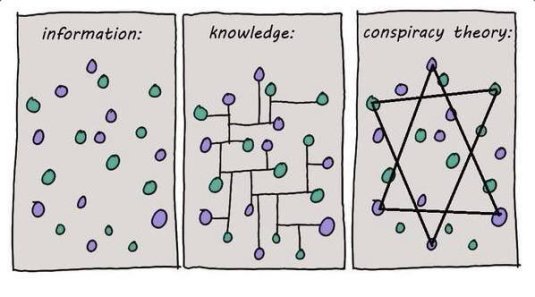
Nice summary
22 Dec 2018 Leave a comment
in economics of media and culture Tags: conspiracy theories
How Did Cereal Become a Staple Breakfast Item?
22 Dec 2018 Leave a comment
in economic history, health economics

Andrew Geddis: “Declarations of Inconsistency” under the New Zealand Bill of Rights Act 1990
21 Dec 2018 Leave a comment

 As in the United Kingdom, the question of whether prisoners should be permitted to vote has generated considerable constitutional interest for New Zealand. Largely that is due to the efforts of a long term prisoner and “jailhouse lawyer”, Arthur Taylor, who has mounted something of a one-man campaign against 2010 legislation that stripped the right to vote from all sentenced prisoners.
In Mr Taylor’s latest sortie, Attorney General v Taylor [2017] NZCA 215, the New Zealand Court of Appeal has upheld a High Court decision (Taylor v Attorney General [2015] NZHC 1706) to issue the following formal declaration:
Section 80(1)(d) of the Electoral Act 1993 (as amended by the Electoral (Disqualification of Sentenced Prisoners) Amendment Act 2010) is inconsistent with the right to vote affirmed and guaranteed in s 12(a) of the New Zealand Bill of Rights Act 1990, and cannot be justified under s 5…
View original post 1,816 more words
Andrew Geddis: New Zealand’s Supreme Court Considers Prisoner Voting – Twice
21 Dec 2018 Leave a comment
 New Zealand’s Supreme Court has twice in the past two months turned its attention to the vexed issue of prisoner voting. Its first decision, Attorney-General v Taylor, upheld by a 3-2 majority a declaration that the legislative ban on all sentenced prisoners voting is inconsistent with the New Zealand Bill of Rights Act 1990 (NZBORA). Its second decision, Ngaranoa v Attorney-General, found by a 4-1 majority that as this legislative ban did not amend any of the “reserved” provisions in the Electoral Act 1993, no question arose as to its validity. This post outlines each decision, before making some general comment on what they reveal about the Court’s approach to constitutional issues.
The background to the issue
In 2010, New Zealand’s Parliament passed a member’s bill in the name of a backbench MP from the then-governing National Party by a 63-58 vote margin. This Bill amended the Electoral…
View original post 1,376 more words
Walter Williams Suffers No Fools
21 Dec 2018 Leave a comment
in applied price theory, applied welfare economics, comparative institutional analysis, discrimination, economic history, economics of education, economics of regulation, human capital, labour economics, labour supply, occupational choice, occupational regulation, poverty and inequality, unemployment, unions, welfare reform Tags: racial discrimination, Walter Williams
Testing bullet proof glass in 1932
21 Dec 2018 Leave a comment
in economics of crime, economics of media and culture, health and safety, labour economics, law and economics, occupational choice
Thomas Sowell – Preferential Policies (Fascinating 1990 Interview)
21 Dec 2018 Leave a comment
in applied price theory, comparative institutional analysis, development economics, discrimination, economic history, economics of bureaucracy, economics of crime, economics of education, economics of media and culture, economics of regulation, entrepreneurship, history of economic thought, human capital, income redistribution, labour economics, labour supply, law and economics, Marxist economics, occupational choice, politics - USA, population economics, poverty and inequality, property rights, Public Choice, rentseeking Tags: racial discrimination, Thomas Sowell
UN compact: Peters’ supporters fear he hasn’t put NZ First
21 Dec 2018 Leave a comment

Deputy PM Winston Peters has lit a firestorm in his own support base over the government’s decision to sign the controversial UN Migration Compact—a move National says it will overturn.
NZ First’s Facebook page went into overdrive as one-time NZ First voters voiced their anger. After all, NZ First campaigned strongly against the previous government’s immigration policies and stood out in demanding stricter controls on migration.
Now the party appears willing to adopt the UN’s rules on open, regular migration.
So did Peters miscalculate? In Parliament he had been using the UN compact to bait National, because it was the government in 2016 when offering support as the compact was being initiated.
View original post 666 more words


Recent Comments