
How railways shaped a modern metropolis: Evidence from London
17 Oct 2018 Leave a comment

Stephan Heblich, Stephen Redding and Daniel Sturm write on how Railways shaped City of London:
In new research, we use the mid-19th century transport revolution from the invention of steam railways, a newly created, spatially disaggregated dataset for Greater London from 1801-1921, and a quantitative urban model to provide new evidence on the contribution of the separation of workplace and residence to agglomeration (Heblich et al. 2018). The key idea behind our approach is that the slow travel times achievable by human or horse power implied that most people lived close to where they worked when these were the main modes of transportation. In contrast, the invention of steam railways dramatically reduced the time taken to travel a given distance, increasing average travel speeds from around 6 mph for horse-drawn vehicles and 3 mph for walking to around 21 mph, which permitted the first large-scale separation of workplace and…
View original post 316 more words
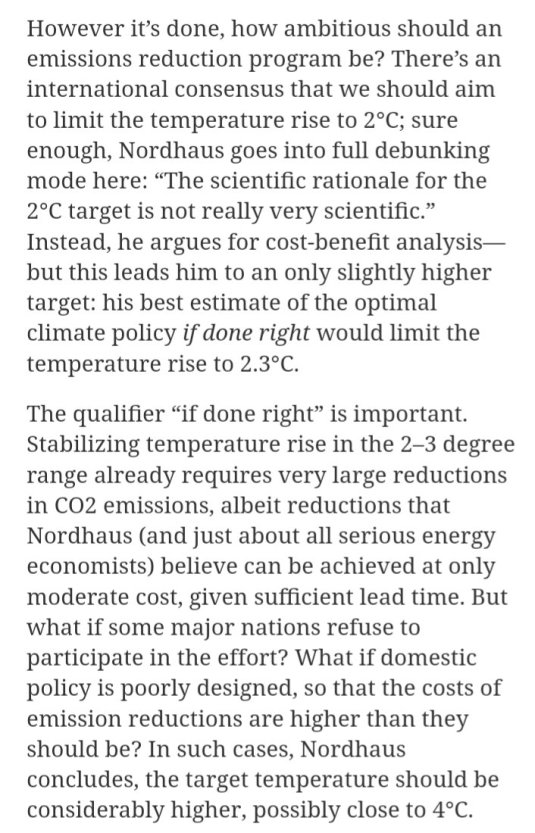
From @PaulKrugman’s review of Nordhaus’ Climate Casino @jamespeshaw @Greenpeacenz
17 Oct 2018 Leave a comment
in applied welfare economics, environmental economics, global warming Tags: climate alarmists
Is Wind Power Really “The Cheapest Form Of Producing Electricity Today”, Mr Gummer?
17 Oct 2018 Leave a comment
Tom @PullarStrecker doesn’t follow why women live longer @hadtwohurt @AwardsDarwin feeds
17 Oct 2018 Leave a comment
in gender, health and safety, health economics


Boom: The Future of Supersonic Flight?
17 Oct 2018 Leave a comment
in economic history, entrepreneurship, industrial organisation, survivor principle, transport economics
This CEO Proved His Bulletproof Cars Work By Sitting Inside One And Taking Shots From An AK-47
17 Oct 2018 Leave a comment
Dummy Tanks (Weird Tech WWII)
17 Oct 2018 Leave a comment
in defence economics, war and peace Tags: World War II
Crown Prince Rupprecht & Erich Ludendorff – Westerner vs. Easterner I WHO DID WHAT IN WW1?
17 Oct 2018 Leave a comment
in defence economics, laws of war, war and peace Tags: World War I
My March, 2017 Congressional Testimony
17 Oct 2018 Leave a comment

I came across this video today of my short, 5 minute opening statement before the House Science Committee last March. The focus of my testimony was to ask members of Congress not to spend their time going after scientists whose work they don’t like and instead, to defend the importance of scientific assessments for obtaining robust answers to their questions.
Conservative Parties and the Birth of Democracy
16 Oct 2018 Leave a comment

Understanding how political parties function is an area where recent research in political science has contributed major insights. Political parties are a fairly recent phenomenon. Prior to the 19th century, there were factions and loose groupings – the Optimates and Populares in Republican Rome, Tories and Whigs in late 17th century England, and Girondins and Jacobins in the French Revolution – but not organized parties. They were looser groupings that centered around dominant individuals – a Marius or Sulla, a Lord Shaftsbury, or a Brissot or Robespierre; but not parties with structured platforms and a deep well of local support.
I recently reviewed Daniel Ziblatt‘s recent book Conservative Parties and the Birth of Democracy for the Journal of Economic History (gated and ungated). Ziblatt provides new insights into the key role played by conservative parties in the formation and stabilization of democracy in Western Europe. Ziblatt’s thesis…
View original post 247 more words


Recent Comments