By Timothy Cogley. He was then at the Federal Reserve Bank of San Francisco (1999). He is now at New York University. “In recent years, a number of economists have expressed concern that the stock market is overvalued. Some have compared the situation with the 1920s, warning that the market may be headed for a…
Monetary Policy and the Great Crash of 1929: A Bursting Bubble or Collapsing Fundamentals?
Monetary Policy and the Great Crash of 1929: A Bursting Bubble or Collapsing Fundamentals?
11 Jun 2024 Leave a comment
in business cycles, economic growth, economic history, great depression, history of economic thought, macroeconomics, monetarism, monetary economics Tags: monetary policy
What Evolution Reveals About Human Behavior
11 Jun 2024 Leave a comment
in economics of education, economics of media and culture, health economics, population economics Tags: cognitive psychology, evolutionary biology, evolutionary psychology
Can Democracy Survive the “Defenders of Democracy”?
11 Jun 2024 Leave a comment
in comparative institutional analysis, constitutional political economy, economics of crime, law and economics, politics - USA Tags: 2016 US presidential election, 2020 presidential election, 2024 presidential election

Below is my column in The Hill on the latest calls to protect democracy with distinctly undemocratic measures. Former presidential candidate Hillary Clinton insisted that the 2024 election was our D-Day, suggesting that voters would have to fight the GOP like the Nazis in World War II. Clinton previously called on Europe to censor American […]
Can Democracy Survive the “Defenders of Democracy”?
Leftists Against Growth: Honest, but Wrong
10 Jun 2024 Leave a comment
in comparative institutional analysis, constitutional political economy, development economics, economic growth, economic history, macroeconomics Tags: constitutional law
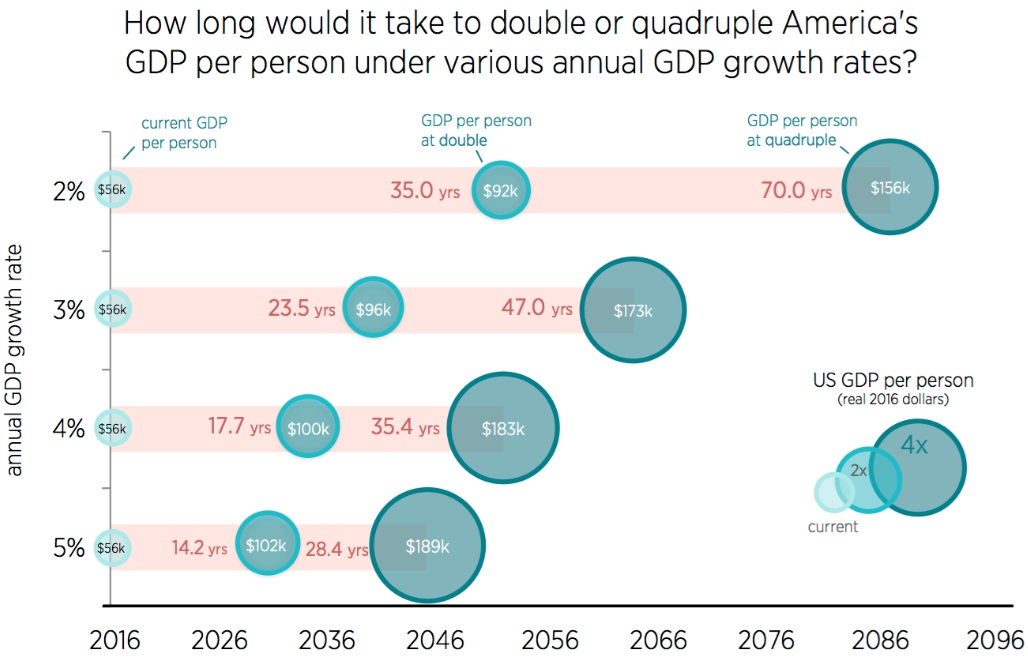
Just as trend lines are important for fiscal policy, they are perhaps even more important when looking at economic performance. Even small difference in annual growth rates, for instance, can lead to big changes in prosperity within a couple of decades. And enormous changes over longer periods of time. All of which explains why I’m […]
Leftists Against Growth: Honest, but Wrong
Where did the Government get the law right and wrong with the Covid-19 response?
10 Jun 2024 Leave a comment
in economics of bureaucracy, economics of natural disasters, economics of regulation, health economics, law and economics, politics - New Zealand, Public Choice Tags: economics of pandemics
For those who are interested in public law, a very interesting paper by Dean Knight summarising the various court cases over the Covid-19 response. It details in which areas the Government won judicial reviews, and in which areas they lost. The TLDR version is: Hopefully we will not go through another pandemic anytime soon.
Where did the Government get the law right and wrong with the Covid-19 response?
On electing gangsters
10 Jun 2024 Leave a comment
in comparative institutional analysis, development economics, economic history, economics of bureaucracy, economics of crime, growth disasters, growth miracles, income redistribution, law and economics, Public Choice, rentseeking Tags: economics of corruption, India
In India it’s common for politicians to have criminal cases against them. Why do voters vote for criminals? One compelling explanation provided by political scientist Milan Vaishnav is that voters often care less about their represntative’s ability to deliver broad-based development or draft good laws, and more about the effectiveness at helping them access limited […]
Haan, goonda hai, magar hamara goonda hai
Fauci Didn’t Test
09 Jun 2024 Leave a comment
in applied welfare economics, economics of regulation, health economics, politics - USA Tags: economics of pandemics, The fatal conceit, unintended consequences
I am not a Fauci hater but I think this criticism of Facui from epidemiologist and oncologist Vinay Prasad hits the mark: Lockdown was specifically advocated for by Anthony Fauci (‘15 days to stop the spread’/ ‘hunker down’/ ‘shelter in place’), and Fauci would go on to make hundreds of other specific policy recommendations. Although he initially […]
Fauci Didn’t Test
Will Hunter Take the Stand? He May Want to Think Twice Before Checking That Box
09 Jun 2024 Leave a comment
in economics of crime, law and economics, politics - USA Tags: 2024 presidential election, economics of prohibition, gun control

This weekend, the Hunter Biden team is reportedly debating whether to have him take the stand on Monday, a move rife with risk. Most criminal defendants avoid such appearances given the potential damage of a withering cross examination. Those risks were evident in the recent testimony of Hunter’s daughter, Naomi, which backfired badly on key […]
Will Hunter Take the Stand? He May Want to Think Twice Before Checking That Box
The Battle of Messines – Explosion Beneath Hill 60 I THE GREAT WAR Week 150
09 Jun 2024 Leave a comment
in defence economics, war and peace Tags: World War I
Net zero by 2050 is simply not happening
09 Jun 2024 1 Comment
in energy economics, environmental economics, global warming

By Paul Homewood h/t Philip Bratby Few energy analysts enjoy the level of global respect accorded to Vaclav Smil, a distinguished professor emeritus at the University of Manitoba and a best-selling author of 47 books. Whenever Smil publishes something new, people in the energy space pay attention. That’s certainly the case with […]
Net zero by 2050 is simply not happening
More impatient people are more likely to commit crime
09 Jun 2024 Leave a comment
in applied price theory, econometerics, economics of crime, economics of education, labour economics, law and economics, occupational choice Tags: cognitive psychology, crime and punishment, criminal deterrence, law and order
Gary Becker’s famous model of rational crime suggests that criminals weigh up the costs and benefits of crime (and engage in a criminal act if the benefits outweigh the costs). Time preferences matter in this model, because the benefits of a criminal act are usually realised immediately, whereas the greatest costs (including the penalties of…
More impatient people are more likely to commit crime
The rich will soon pay a heavy price for net zero
08 Jun 2024 Leave a comment
in energy economics, environmental economics, global warming Tags: British politics

By Paul Homewood . Will net zero upend our lifestyles? Will we fly less, turn down our thermostats, become vegans? The British public are already feeling the effects – from the push to buy EVs and install heat pumps, to Ulez, low-traffic neighbourhoods and the endless restrictions on plastics. Although the UK became the first […]
The rich will soon pay a heavy price for net zero
Laptop Deniers in Delaware: The Media Shrugs as the Biden Laptop is Authenticated in Federal Court
08 Jun 2024 Leave a comment
in economics of crime, law and economics, politics - USA Tags: 2020 presidential election, 2024 presidential election

Below is my column in Fox.com on the authentication of Hunter Biden laptop in the Delaware trial. The government has denounced the Russian disinformation claims as a “conspiracy theory” and put on evidence that there is no evidence of tampering with the laptop. The FBI declared the laptop to be “real” and “authentic” and the […]
Laptop Deniers in Delaware: The Media Shrugs as the Biden Laptop is Authenticated in Federal Court
The WEF Denies Demanding the Arrest of Climate Deniers
08 Jun 2024 Leave a comment
in energy economics, environmental economics, global warming Tags: climate alarmism, free speech, political correctness, regressive left

An AAP Factcheck, a few wild claims, and an Andrew Doyle interview with British environmentalist Jim Dale which appears to have taken on a life of its own.
The WEF Denies Demanding the Arrest of Climate Deniers


Recent Comments