Finally?

Gravedodger's avatarNo Minister

Roy Morgan has That Woman’s power base beginning with a 2! having plunged from the figure 5 merely 23 and a half months ago?

Little comfort for Mr Luxon however as his number was lifted by a meager fraction of the margin of error! well short of the 40% he needs to be credible

The scariest bit for this person was the lift for the Melons to 12.5%, totally at odds with the deep socialist traits masked by their verdant camouflage.

The best bits at the end with the old charlatan well within that margin of error figure, well embedded in the one% of the insane.

Was Roy Morgan once the mainstay of the left’s support? if that still holds then it really is bleak for the great saviour mob.

It is one thing “to keep their powder dry”, but “ARID” ( too dry to support vegetation?).

View original post

Greetings from Argentina – An Obamaesque Land of Crony Capitalism and a Warning to America

Dan Mitchell's avatarInternational Liberty

Welcome Instapundit readers. Thanks, Glenn.

After reading below about Argentina’s decline, several people have emailed to ask how Chile compares. Ask and ye shall receive. This post from last month shows shows Chile, Argentina, and Venezuela. Very powerful, which is why I gave the post such a grandiose title.

==============================

There’s been a lot of coverage of the recent decision by Standard & Poor to warn that the United States has a “negative” outlook.

As Joe Biden would say, BFD. I’m stunned that anyone would care, particularly since the rating agencies have zero credibility. These clowns completely missed Enron. They missed the collapse of Europe. They blew it on the financial crisis, especially with regard to the corrupt government-created mess at Fannie Mae and Freddie Mac.

The fact that one of the rating agencies belatedly warns that America is heading in the wrong direction should elicit only one response…

View original post 453 more words

Absolute Economic Liberty, Relative Economic Liberty, and the Never-Answered Question

Dan Mitchell's avatarInternational Liberty

As part of my recent presentation to IES Europe, here’s what I said (and what I’ve saidmany times before) about the relationship between economic policy and national prosperity.

My remarks focused in part on the difference between absolute economic liberty and relative economic liberty.

  • The absolute level of economic liberty is the degree to which a nation relies on markets or statism (see, for instance, the Fraser Institute’s Economic Freedom of the World).
  • The relative level of economic liberty is a measure of whether one country is more market-oriented than another country (basically a measure of national competitiveness).

Understanding these two concepts explains why it is possible to criticize nations in North America and Western Europe for having too much government while also recognizing that those same nations tend to have better policies than most countries in other parts of the world.

An obvious example is…

View original post 326 more words

The Amazing Hockey Stick of Economic Progress

Dan Mitchell's avatarInternational Liberty

Back in 2010, I shared a remarkable chart showing how quickly economic output doubles in a fast-growth economy, but it also showed how long it takes for GDP to expand if an economy only grows 1 percent or 2 percent per year.

My main message was that nations should follow good policy because:

…even modest differences in economic growth can have a big impact on relative prosperity with a couple of decades.

But what’s really astounding – in a bad way – is that there used to be no growth. I recently posted a remarkable video from Learn Liberty that showed how the world was mired in poverty for century after century until growth exploded around 1800.

Now Don Boudreaux has a similar must-watch video for Marginal Revolution University.

The moral of the story is that poverty is, or at least was, the natural state of humanity.

But then something…

View original post 158 more words

Once an export (and import) powerhouse

Michael Reddell's avatarcroaking cassandra

We’ve been having a bit of conversation at home – my son doing a NZ history paper at university and me reading yet another old book – about the line that pops up in almost any old book about the New Zealand economy, that New Zealand once (pre-war) had consistently the highest exports (and imports) per capita of any country.

It isn’t really a surprising statistic. All else equal, small countries tend to sell abroad a larger share of their output than large countries (there isn’t much market at home and the world, by contrast, is big). And rich and productive countries tend to do more per capita of every component of GDP. 80-100 years ago we were small and we were rich – on standard comparisons, inevitably limited as they are, among the two or three richest countries on the planet.

All else equal, we also know that countries…

View original post 611 more words

Has Free Enterprise Produced More Prosperity or More Suffering?

Dan Mitchell's avatarInternational Liberty

I have a multi-part series making the case for capitalism (Part IPart IIPart IIIPart IV, Part V, and Part VI), and I’ve shared lots of long-run data showing how some people began to enjoy unimaginable prosperity as capitalism emerged and monarchism, feudalism, and mercantilism began to fade.

For those interested in this remarkable story of human enrichment, Don Boudreaux and Deirdre McCloskey have must-watch videos on how capitalism enabled (some) nations to escape poverty.

But not everybody understands or appreciates the benefits of capitalism.

MSN has an article, authored by Claire Conway, about new research that ostensibly shows that capitalism has been bad news for people.

…a study recently published in World Development…provided three conclusions. They found that extreme poverty was not, in fact, a normal or universal condition prior to the 19th century. …The second conclusion is…

View original post 664 more words

Shortest tax cut in history a harbinger of our own future political difficulties?

xtrdnry's avatarPoint of Order

Real change can be a profound shock.

One response is to hunt for the trigger.  Another is to point out the contrast with past ultimately-failed efforts to shore up the status quo (and marvel at all those ‘total overhauls’ of the deckchair sector).

This could be a useful framework to examine the ferocious response – both from the political establishment and the British public – to the Truss government’s start of a real overhaul.

View original post 534 more words

The Bank of England Bought Bonds Last Week to Keep UK Pension Funds from Imploding

Scott Buchanan's avatarEconomist Writing Every Day

The ups and downs of the U.S. stock market are largely driven by the degree to which the Federal Reserve makes easy money available. After (ridiculously) insisting for most of 2021 that inflation was merely “transitory”, chairman Powell has finally put on his big boy pants and started to attack the problem by raising short term interest rates, and (only now) starting to reduce the Fed’s holdings of bonds. Massive buying of bonds is termed “Quantitative Easing” (QE), and its opposite is known as “quantitative tightening” or QT. QT can be accomplished by outright sales of bonds into the open market, or (as the Fed is doing) simply letting bonds mature and not replacing them with purchases of new bonds.

The specter of Fed tightening drove stock prices down all year, to a low in June. Then a new mantra began to circulate on Wall Street, that the Fed would…

View original post 474 more words

Image

The case for a real-terms benefit cut is weak – and it would be political madness

julianhjessop's avatarPlain-speaking Economics

The reluctance of both the Chancellor and the Prime Minister to confirm that benefits (notably Universal Credit) will be uprated next year in line with inflation has fed speculation that the Government is considering a real-terms cut. My advice would be to squash this idea as soon as possible – mainly because it is bad economics. But it would be bad politics too, undoing any good done by the U-turn on the 45p rate of income tax.

To recap, benefits are usually uprated in April in line with the CPI measure of inflation recorded in the previous September. This meant that benefits rose by just 3.1% in April this year (the inflation rate in September 2021), well below actual inflation of 9.0% in April itself.

The row about this at the time was partly defused by additional one-off payments to low-income households. But ministers also argued that benefit claimants could…

View original post 827 more words

UN Owns The Science!

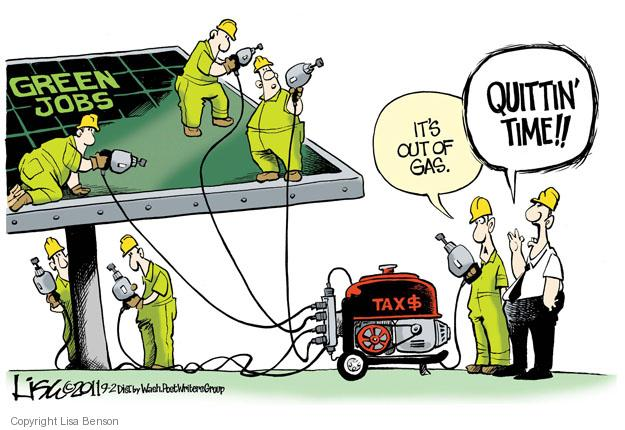
Smoke & Mirrors: Claims About Wind & Solar Being Cheap Don’t Stand Contact With Reality

stopthesethings's avatarSTOP THESE THINGS

Renewable energy rent seekers keep spreading the lie about wind and solar being the cheapest form of power there is. Trouble is, there isn’t a shred of evidence to support claims about wind and solar being cheap. There never was.

The position your country occupies on the table above is directly related to increased reliance on the unreliables (German power prices are now at record levels – recently hitting 40 US cents per kWh).

One game played by wind and solar propagandists is the use of the Levelised Cost of Electricity as a method of burying the true and actual cost attached to chaotically intermittent wind and solar.

Francis Menton explains the tricks of the game, below.

The Completely Fraudulent “Levelized Cost Of Electricity”
Manhattan Contrarian
Francis Menton
18 August 2022

My last post on Tuesday reported on the Soho Forum climate change debate that had taken place the…

View original post 1,159 more words

Shona Wilson Stark and Raffael Fasel: Unconstitutionally Legal: How the UK Supreme Court Should Decide the Lord Advocate’s Reference

UKCLA's avatarUK Constitutional Law Association

On 28 June 2022, the Lord Advocate referred to the UK Supreme Court (“UKSC”) the question of whether the Scottish Parliament has the power to legislate for a second independence referendum (“Indyref 2”) without an Order enabling it do so under section 30 of the Scotland Act 1998 (a “section 30 Order”). Assuming the UKSC will accept the reference, we argue that it should rule that the Scottish Parliament has no legal power to pass legislation facilitating an independence referendum without a section 30 Order. However, we propose that this does not prevent the UKSC from attempting to break the deadlock by declaring that the UK Government is acting unconstitutionally in a political sense if it does not make a section 30 Order. Of course, there is no guarantee that a section 30 Order would be issued – we consider alternative pathways to an Indyref 2, including possible invocations of…

View original post 2,353 more words

What Fiscal Policy Is Worse than a Wealth Tax?

Dan Mitchell's avatarInternational Liberty

A wealth tax is an extraordinarily destructive way for governments to generate revenue.

It violates the principles of sensible tax policy and it does a lot of damage since people have less incentive to save and invest. It’s unadulterated double taxation. Or, in some cases, triple or quadruple taxation.

And it’s unfair.

These factors explain why many nations in Europe have abolished their wealth taxes. This map from the Tax Foundation shows the holdouts that still pursue this senseless version of class warfare.

You’ll notice that Spain is one of the few countries that still has this punitive levy. And if you want to learn more about the Spanish version of this levy, you can click here and here for thorough summaries.

But one thing that everyone should understand is that politicians are always capable of making a bad situation worse.

And as you can see from this…

View original post 350 more words

Most Popular Social Media – Growth Evolution (2004-2022)

The withering away of the middle class

Previous Older Entries Next Newer Entries

Thoughts from the North

Celebrating humanity's flourishing through the spread of capitalism and the rule of law

Fardels Bear

A History of the Alt-Right

Vincent Geloso

Econ Prof at George Mason University, Economic Historian, Québécois

Bassett, Brash & Hide

Celebrating humanity's flourishing through the spread of capitalism and the rule of law

Truth on the Market

Scholarly commentary on law, economics, and more

The Undercover Historian

Beatrice Cherrier's blog

Matua Kahurangi

Celebrating humanity's flourishing through the spread of capitalism and the rule of law

Temple of Sociology

Celebrating humanity's flourishing through the spread of capitalism and the rule of law

Velvet Glove, Iron Fist

Celebrating humanity's flourishing through the spread of capitalism and the rule of law

Why Evolution Is True

Why Evolution is True is a blog written by Jerry Coyne, centered on evolution and biology but also dealing with diverse topics like politics, culture, and cats.

Down to Earth Kiwi

Celebrating humanity's flourishing through the spread of capitalism and the rule of law

NoTricksZone

Celebrating humanity's flourishing through the spread of capitalism and the rule of law

Homepaddock

A rural perspective with a blue tint by Ele Ludemann

Kiwiblog

DPF's Kiwiblog - Fomenting Happy Mischief since 2003

The Dangerous Economist

Celebrating humanity's flourishing through the spread of capitalism and the rule of law

Watts Up With That?

The world's most viewed site on global warming and climate change

The Logical Place

Tim Harding's writings on rationality, informal logic and skepticism

Doc's Books

A window into Doc Freiberger's library

The Risk-Monger

Let's examine hard decisions!

Uneasy Money

Commentary on monetary policy in the spirit of R. G. Hawtrey

Barrie Saunders

Thoughts on public policy and the media

Liberty Scott

Celebrating humanity's flourishing through the spread of capitalism and the rule of law

Point of Order

Politics and the economy

James Bowden's Blog

A blog (primarily) on Canadian and Commonwealth political history and institutions

Science Matters

Reading between the lines, and underneath the hype.

Peter Winsley

Economics, and such stuff as dreams are made on

A Venerable Puzzle

"The British constitution has always been puzzling, and always will be." --Queen Elizabeth II

The Antiplanner

Celebrating humanity's flourishing through the spread of capitalism and the rule of law

Bet On It

Celebrating humanity's flourishing through the spread of capitalism and the rule of law

History of Sorts

WORLD WAR II, MUSIC, HISTORY, HOLOCAUST

Roger Pielke Jr.

Undisciplined scholar, recovering academic

Offsetting Behaviour

Celebrating humanity's flourishing through the spread of capitalism and the rule of law

JONATHAN TURLEY

Res ipsa loquitur - The thing itself speaks

Conversable Economist

In Hume’s spirit, I will attempt to serve as an ambassador from my world of economics, and help in “finding topics of conversation fit for the entertainment of rational creatures.”

The Victorian Commons

Researching the House of Commons, 1832-1868

The History of Parliament

Articles and research from the History of Parliament Trust

Books & Boots

Reflections on books and art

Legal History Miscellany

Posts on the History of Law, Crime, and Justice

Sex, Drugs and Economics

Celebrating humanity's flourishing through the spread of capitalism and the rule of law

European Royal History

Exploring the Monarchs of Europe

Tallbloke's Talkshop

Cutting edge science you can dice with

Marginal REVOLUTION

Small Steps Toward A Much Better World

NOT A LOT OF PEOPLE KNOW THAT

“We do not believe any group of men adequate enough or wise enough to operate without scrutiny or without criticism. We know that the only way to avoid error is to detect it, that the only way to detect it is to be free to inquire. We know that in secrecy error undetected will flourish and subvert”. - J Robert Oppenheimer.

STOP THESE THINGS

The truth about the great wind power fraud - we're not here to debate the wind industry, we're here to destroy it.

Lindsay Mitchell

Celebrating humanity's flourishing through the spread of capitalism and the rule of law