Star Trek: Season 3, Episode One “Spock’s Brain”
16 Nov 2022 Leave a comment

Stardate: 5431.4 (2268)
Original Air Date: September 20, 1968
Writer: Lee Cronin (Gene L. Coon)
Director: Marc Daniels
“What have you done with Spock’s brain?”

At last, we arrive at the infamous season three opener which many fans regard as the worst episode in the whole series! A strange object is rapidly moving through space toward the enterprise via ion propulsion at a high velocity. Scotty marvels at its beauty –it even has its own internal atmosphere. Suddenly, a female humanoid lifeform appears on the bridge. She pushes a button attached to her wrist which essentially renders all lifeforms on the Enterprise unconscious –we later learn her name is Kara (Marj Dusay).
When the crew awaken, they find that Spock is missing. He is later found in sickbay on a table. Is he dead? No, he is “worse than dead” –his brain missing! Thanks to his Vulcan autonomic…
View original post 848 more words
Star Trek: Season 3, Episode Three “The Paradise Syndrome”
16 Nov 2022 Leave a comment
Stardate: 4842.6 (2268)
Original Air Date: October 4, 1968
Writer: Margaret Armen
Director: Jud Taylor
“I am Kirok!!”

Kirk, Spock, and Bones beam down to an idyllic planet rife with pine trees, a lake, honeysuckle, and orange blossoms –it appears to be exactly akin to earth only half a galaxy away. Suddenly, the crewmen spot a strange object composed of alloy and featuring a complex language scribed upon it. Who could have constructed such an obelisk? This planet known as Amerind (only in the script, not in the episode), has primitive tribes who seem to live peacefully alongside the banks of the water. The tribes carry a mixture of “Navajo, Mohican, and Delaware” characteristics. However, we soon learn that a massive asteroid is en route to destroy this planet, and the Enterprise crew have only thirty minutes on the surface before needing to depart and hopefully…
View original post 1,002 more words
New Anti-Fossil Fuel Puritans Set New Standard in Blatant Ignorance & Gross Hypocrisy
16 Nov 2022 Leave a comment


If it looks and sounds like a deranged cult, it probably is. The latest wheeze is pretending that functional, civil societies can live without coal, oil and gas. It’s perfect nonsense, to be sure, and symptomatic of an uneducated cohort who haven’t the faintest idea about what makes their safe and utterly privileged little lives possible.
This is a class of resentful, miserable misanthropes who live by an edict that fossil fuels are an unadulterated evil to be driven back to the earthly depths where they shall remain. None of which applies to their own selfish energy needs. Think pontificating actors, wannabe princesses and their royal beaus lecturing us about our energy use, as they traverse every inch of the globe in their private jets.
Amongst this brand of New-Age Puritan, ranting about oil, coal and gas, is all the rage. Sanctimony and outrage have overtaken logic and reason.
Theodore…
View original post 1,059 more words
Unions press ahead to win “fair pay” agreements. But what if they add to inflationary pressure?
16 Nov 2022 Leave a comment

One of NZ’s leading economists Cameron Bagrie told the TV3 AM show on Tuesday the increase in wages in NZ is a “success” but we are getting to a point of too much success.
His warning came as the Dominion-Post reported what it called “an avalanche” of fair pay applications are expected to be made over the next few months as unions gather momentum to launch bids for better pay for workers under the new fair pay agreement law.
Fair pay agreements set out specific conditions and deals betweenworkers and employersin an industry or occupation, with the regime for establishing them coming into effect next month.
They can be triggered by support from 1000 workers or 10% of a workforce. The fair pay legislation stemmed from a major plank in the Labour Party’s election policy.
So how will that “avalanche” fit with what the Reserve Bank is trying…
View original post 439 more words
Bernard Montgomery: The Spartan General
16 Nov 2022 Leave a comment
in defence economics, war and peace Tags: World War II
Northern Ireland: dangers and opportunities for London
15 Nov 2022 Leave a comment


Northern Ireland is again governed by civil servants. Alan Whysall argues that London’s self-interest requires it to give Northern Ireland serious attention in coming months. But success may require more effort and time than is currently envisaged, and a return to the approach that led to the Belfast/Good Friday Agreement. Not making this commitment could have grave consequences for the entire Union, not just Northern Ireland.
This blog draws on the Unit’s report on Northern Ireland’s Political Future, published in May (hereafter referred to as the Report).
No government again
Northern Ireland has had no functioning Executive since the DUP’s withdrawal of its First Minister, in protest at the Northern Ireland Protocol, in February. The party declined to appoint a deputy First Minister following Assembly elections in May – when, for the first time, Sinn Féin emerged the largest party, entitled to the First Minister post (the DUP…
View original post 1,882 more words
Wind & Solar Wipeout: Reliable & Affordable Power Now Part of Ancient History
15 Nov 2022 Leave a comment
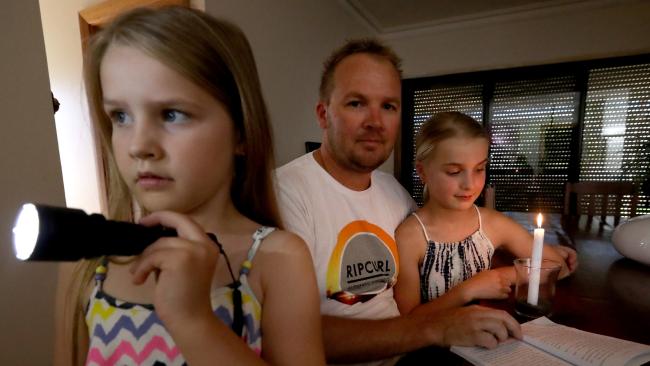
Pretty soon, the notion of having affordable power available on demand will be ancient history. Never before in the course of human existence have so few done so much damage to so many. Electricity prices are spiralling out of control in any place attempting to run on sunshine and breezes, power rationing (aka ‘demand management’) is routine and, with delusional dunderheads driving energy policy in Australia, we’ve only just begun.
As Eric Worrall describes it, Australians can look forward to a very dark and very dismal future. One where the weather dictates whether or not you and yours will be sitting freezing or boiling in the dark.
The Australian Government Vision for Our Renewable Future
Watts Up With That?
Eric Worall
16 October 2022
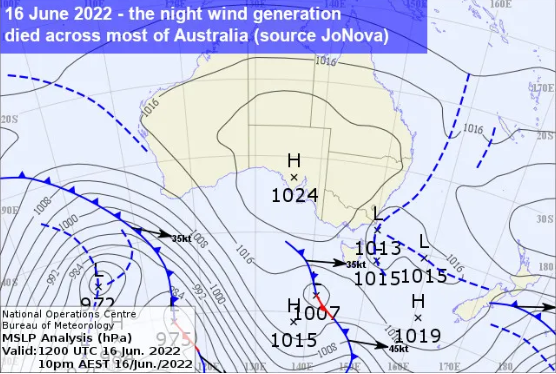
The government has provided a risible $224 million budget for batteries to stabilise a 33GW grid which is expected to be 82% renewable by 2030.
Record…
View original post 583 more words
Some Thoughts On The Counsellors Of State
15 Nov 2022 Leave a comment

With the news that the Prince of Wales has COVID, I’ve been asked about who might step in for the Queen if she were to fall ill as well. Under section 6(1) of the Regency Act 1937, the Sovereign can delegate their functions to Counsellors of State in the event of illness or some other indisposition. Section 6(2) of the Act states that the Counsellors must be the Sovereign’s spouse and the four individuals who are next in line for the throne and are capable of serving as a regent.[1]
Since the Duke of Edinburgh is dead and the Duke of Cambridge’s children are too young to serve, this means the Counsellors would be Prince Charles, Prince William, the Duke of Sussex, and the Duke of York. But Prince Charles is self-isolating, Prince William is out of the country, Prince Harry lives in the US, and Prince Andrew…
View original post 564 more words
What Are Counsellors Of State?
15 Nov 2022 Leave a comment
The Prince of Wales and the Duke of Cambridge will open Parliament today after the Queen had to pull out due to mobility issues. They will be acting as Counsellors of State, but what exactly does that mean?
Counsellors of State are individuals empowered by the Sovereign to discharge royal functions under section 6 of the Regency Act 1937. Unlike a Regent, who exercises the full panoply of the Crown’s power, Counsellors of State are meant to handle routine business such as signing state documents or holding meetings of the Privy Council.[1] The Monarch ultimately decides what they can and cannot do, though section 6(1) of the 1937 Act states that the Sovereign can’t delegate the power to dissolve Parliament (except on their express instructions) or create new peerages.[2] Modern convention also dictates that Counsellors of State don’t handle business from the Commonwealth Realms.[3]
When George…
View original post 588 more words
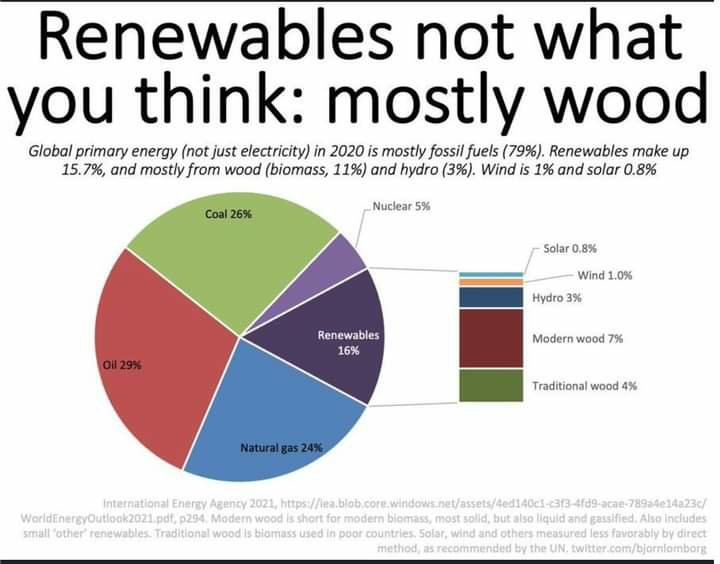
Solar and wind are bugger all
15 Nov 2022 Leave a comment
in energy economics, environmental economics, global warming Tags: renewable energy, solar power, wind power
Small Modular Reaction: Europe’s Wind & Solar Disaster Paves Way For New Nuclear Age
14 Nov 2022 Leave a comment

Europe’s energy disaster proves, beyond doubt, that wind and solar are an abject failure, leaving the way clear for nuclear power and any other power generation source that can dish it up, on demand.
With numerous operators seeking or obtaining licences to build Small Modular Reactors, and numerous countries signing up to have them, SMRs are here to stay.
The wind and solar cult reckon SMRs are a pipe dream, cooked up by conservative reactionaries, conveniently overlooking the 200 small nuclear reactors that are presently powering 160 ships and submarines all around the world, of the kind that have been doing so for decades.
Nuclear power is safe, affordable, reliable and the perfect antidote to arguments about human-generated carbon dioxide gas posing a threat to life on Earth – because it doesn’t generate any, while generating power on demand, irrespective of the weather, unlike inherently unreliable wind and solar.
As…
View original post 1,024 more words
New Report on Construction Costs Misses the Mark
14 Nov 2022 Leave a comment

In the last few years, ever more serious and powerful actors have begun investigating the fact of high American infrastructure construction costs. First it was Brian Rosenthal’s excellent New York Times exposé, and then it was the Regional Plan Association’s flop of a study. At the same time, I was aware that the congressional Government Accountability Office, or GAO, was investigating the same question, planning to talk to sources in the academic world as well as industry in order to make recommendations.
The GAO report is out now, and unfortunately it is a total miss, for essentially the same reason the RPA’s report was a miss: it did not go outside the American (and to some extent rest-of-Anglosphere) comfort zone. Its literature review is if anything weaker than the RPA’s. Its interviews with experts are telling: out of nine mentioned on PDF-p. 47, eight live in…
View original post 2,114 more words


Recent Comments