Russia’s Ukrainian Invasion Equation: Europe Ditches Wind & Solar Transition
19 Mar 2022 Leave a comment
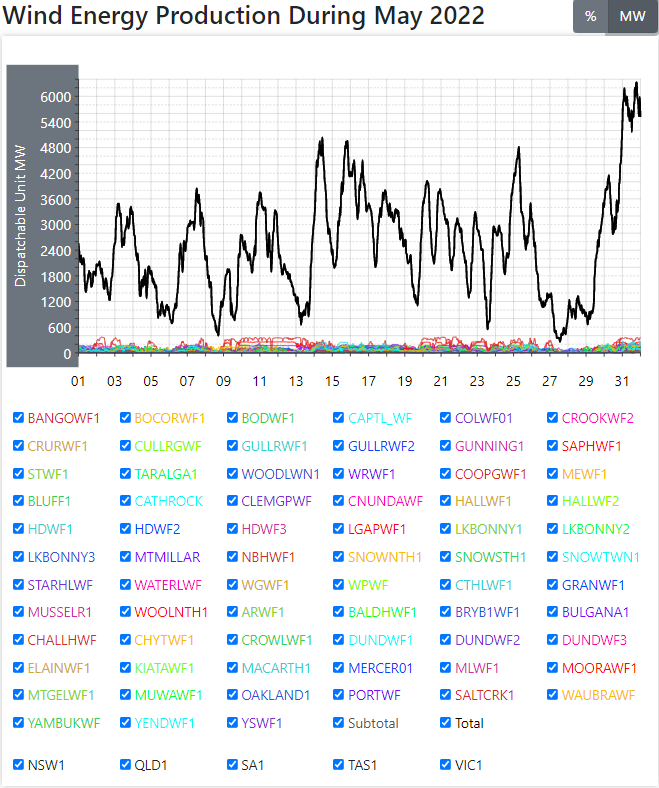
Like a jilted bride, wind and solar have lost all love and favour as Europe scrambles for reliable and affordable energy.
Now it seems that the only inevitable thing about the ‘inevitable transition’ is that when people are forced to choose between electricity delivered reliably and affordably and the purportedly clean and green kind, they couldn’t care less about where it comes from.
Even Germany’s Greens have backflipped on their policy to kill off its nuclear and coal-fired plants; all of a sudden infantile ideology has given way to necessity and sound engineering.
Who would have thought that a modern Stalin would herald the end for chaotically intermittent wind and solar?
Hitherto the model was fairly simple: Europe would ditch its reliable and affordable generation systems; squander billions of euros on subsidies to inherently unreliable wind and solar; and use Russian oil and gas to run highly inefficient gas…
View original post 892 more words
In a Tweet, Everything You Need to Know about Living Standards in the United States and Europe
19 Mar 2022 Leave a comment
When debating big issues such as the size and scope of government, I like to think that facts matter. Maybe I’m being naive, but people should look at evidence before deciding whether to make government bigger or smaller.
And with Biden proposing a big expansion in the size of the welfare state, this is why I regularly compare the economic performance of the United States and various European nations.
After all, if we’re going to make America more like Europe, shouldn’t we try to understand what that might mean for the well being of the citizenry?
With this in mind, I want to share this tweet (based on this data) from Stefan Schubert at the London School of Economics.
The obvious takeaway is that the average person in the United States enjoys much higher living standards (more than 50 percent higher) than the average person in…
View original post 171 more words
Planet Normal: Race report author Dr Tony Sewell on attempts to discredit his findings on race relations
19 Mar 2022 Leave a comment
in discrimination, economic history, economics of bureaucracy, human capital, labour economics, labour supply, law and economics, poverty and inequality, Public Choice, rentseeking Tags: racial discrimination
Addressing economic disparity challenges in NZ
19 Mar 2022 Leave a comment
in applied price theory, applied welfare economics, discrimination, economic history, economics of education, entrepreneurship, gender, human capital, industrial organisation, labour economics, labour supply, occupational choice, poverty and inequality, survivor principle Tags: child poverty, family poverty
This Time was Way Different
19 Mar 2022 Leave a comment
The financial crisis recession that started in late 2007 was very different from the 2020 pandemic recession. Even now, 15 years later, we don’t all agree on the causes of the 2007 recession. Maybe it was due to the housing crisis, maybe due to the policy of allowing NGDP to fall, or maybe due to financial contagion. I watched Vernon Smith give a lecture in 2012 in which he explained that it was a housing crisis. Scott Sumner believes that a housing sectoral decline would have occurred, and that the economy-wide deep recession and subsequent slow recovery was caused by poor monetary policy.
Everyone agrees, however, that the 2007 recession was fundamentally different from the 2020 recession. The latter, many believe, reflected a supply shock or a technology shock. Performing social activities, including work, in close proximity to others became much less safe. As a result, we traded off productivity…
View original post 899 more words
Top 10 Largest Companies by Market Cap (1979-2021)
19 Mar 2022 Leave a comment
in economic history, industrial organisation, survivor principle Tags: creative destruction
A Slice of The Pie – Splitting Up The Middle East I THE GREAT WAR Week 34
19 Mar 2022 Leave a comment
in applied price theory, defence economics, war and peace Tags: World War I
How Vertebrates Got Teeth… And Lost Them Again
19 Mar 2022 Leave a comment
in economics of education, economics of media and culture
Accession of Queen Anne of Great Britain and Ireland. Conclusion
18 Mar 2022 Leave a comment
The War of the Spanish Succession (1701–1715) was a conflict involving many of the leading European powers that was triggered by the death in November 1700 of the childless Carlos II of Spain.
Prince Louis, The Grand Dauphin, had the strongest genealogical claim to the Spanish throne held by King Carlos II who was his maternal uncle. The Grand Dauphin was the son and heir-apparent of King Louis XIV of France and Navarre.
However, since neither the Grand Dauphin nor his eldest son, Louis, Duke of Burgundy, could be displaced from the succession to the French throne, King Carlos II named the Philippe, Duke of Anjou as his heir. The Duke of Anjou was the second son of Louis, Grand Dauphin, Duke of Anjou as his heir-presumptive.
If Philippe, Duke of Anjou refused the crown, the alternative was Archduke Charles of Austria, younger son of Leopold I, Holy Roman Emperor.
View original post 1,063 more words
Campaigners to challenge Bristol Airport expansion in court
18 Mar 2022 Leave a comment

Once again the courts are cast in the role of arbiter of climate obsessions as so-called ‘campaigners’ try to suppress modern developments, intended to meet rising demand, by the usual claim that any minor increase on the 0.04% carbon dioxide in the atmosphere is a problem rather than a benefit.
– – –
Bristol Airport Action Network (BAAN) has lodged an appeal against the Planning Inspectorate’s recent decision to approve the expansion, after raising more than £20,000 to cover legal fees, reports New Civil Engineer.
BAAN believes the expansion will be damaging for local people and the environment, and lead to a rise in road traffic, increased noise and air pollution and an “inevitable rise in carbon emissions”.
BAAN representative Stephen Clarke said: “This decision is so damaging for the local people and the climate that it simply cannot be allowed to stand unchallenged.”
View original post 160 more words
Review of “Salmon P. Chase: Lincoln’s Vital Rival” by Walter Stahr
18 Mar 2022 Leave a comment
Reading the Best Biographies of All Time
Salmon P. Chase: Lincoln’s Vital Rival
by Walter Stahr
832 pages
Simon & Schuster
Published: Feb 2022
Walter Stahr’s long-awaited biography of Salmon Chase was published recently and proves worth the wait. Stahr was a lawyer for two decades before embarking on a career as an author. His previous biographies also focus on early American political figures: John Jay, William Seward and Edwin Stanton.
Anyone who has read Doris Kearns Goodwin’s riveting biography of Abraham Lincoln is familiar with Salmon P. Chase (1808-1873). He was a passionate anti-slavery voice, a U.S. Senator, Governor of Ohio, helped establish the Republican Party, served as Lincoln’s Secretary of the Treasury, was Chief Justice of the Supreme Court…and was the inspiration behind a large piece of what is now J.P. Morgan Chase.
This author’s fondness – almost reverence – for Chase is obvious from the book’s first pages and is occasionally distracting…
View original post 429 more words
March 17, 1337: Edward, the Black Prince is made Duke of Cornwall
18 Mar 2022 Leave a comment
1337 – Edward, the Black Prince is made Duke of Cornwall, the first Duchy in England. Prior to his elevation to the Duchy of Cornwall the highest title of nobility, outside of King, was that of an Earl.By the 13th century Earls had a social rank just below the king and princes, but were not necessarily more powerful or wealthier than other noblemen. A point had been reached where Earls were infrequently created by the King as it was seen that too many powerful Earls brought restrictions to the Royal Prerogative.
Edward the Black Prince
The best way to become an Earl was to inherit the title or to marry into one—and the king reserved a right to prevent the transfer of the title. By the 14th century, creating an Earl included a special public ceremony where the king personally tied a sword belt around the waist of the…
View original post 675 more words


Recent Comments