
The twilight of the Age of Exploration
10 Mar 2022 Leave a comment
in economic history, health and safety, labour economics, labour supply, occupational choice Tags: Age of exploration
Power Price Punishment: Cost of Subsidised Wind & Solar Killing Productive Industry & Enterprise
10 Mar 2022 Leave a comment


Reliance on intermittent wind and solar guarantees rocketing power prices and chaotic supply. Price spikes and/or power rationing when the sun sets or calm weather sets in are the death knell for a range of energy-hungry businesses and industries. Manufacturing and mineral processing are usually the first to disappear, when the true costs of running with the unreliables start to bite.
The State of Virginia provides the perfect example, with a push for an all wind and sun powered future in the not-too-distant future.
David Stevenson adds up the whopping costs and the non-existent benefits of Virginia’s plans to run on sunshine and breezes below.
Cost and Reliability Implications of the Virginia Clean Economy Act
Caesar Rodney Institute
David T Stevenson
10 January 2022
Virginia legislation requires electric power to come 100% from renewable sources by 2045. Specific targets are set for the amount of solar and onshore wind, offshore…
View original post 876 more words
The Failure of Bidenomics, Part VI
10 Mar 2022 Leave a comment

Having addressed Biden’s track record on subsidies, inflation, protectionism, household income, and fiscal policy, let’s finish our series by reviewing the president’s record on regulatory issues.
The first place to start is the Federal Register, which is Uncle Sam’s official site for new rules.
Though it gives us conflicting information. The number of pages (a crude measure of regulatory zeal, as I noted a few years ago) actually decreased during Biden’s first year. But only compared to Trump’s last year.
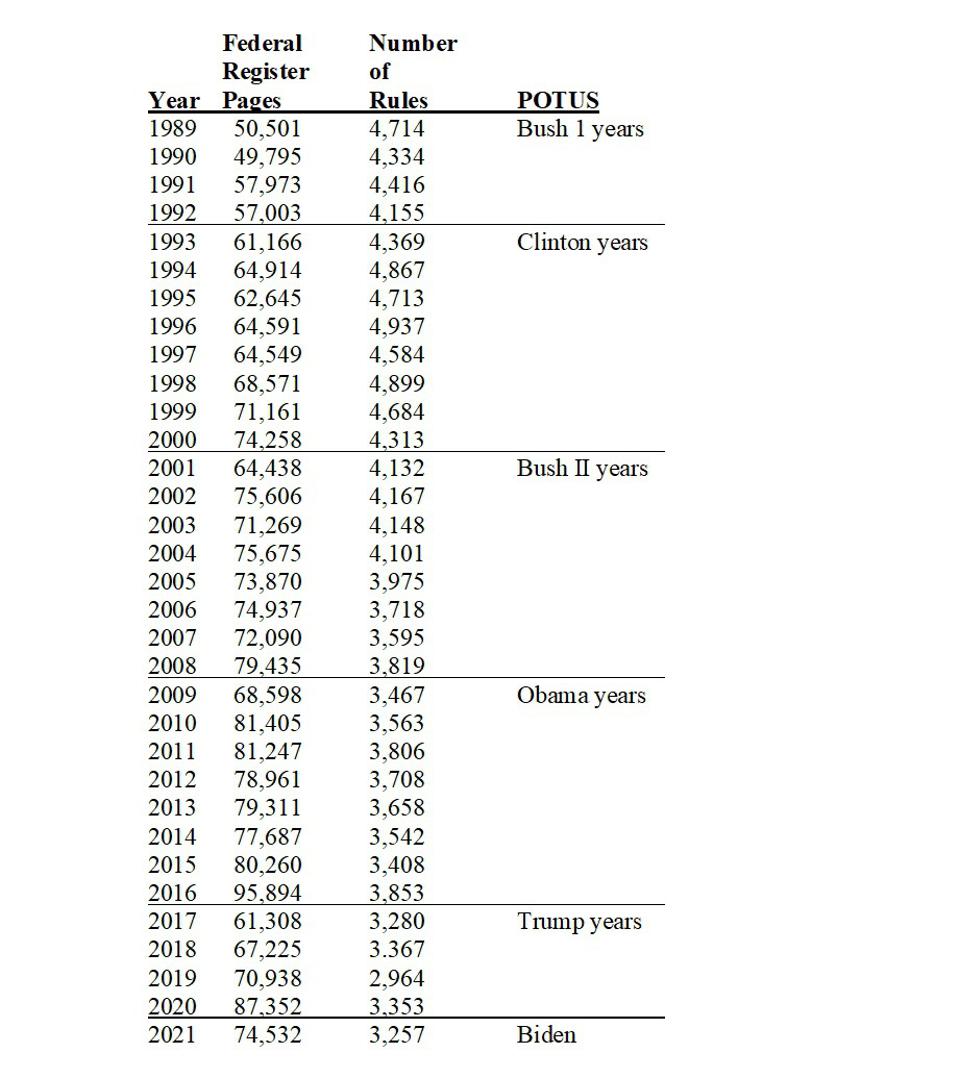
To understand what’s really going on, let’s look at the Forbesarticle from which the above table was taken.
Clyde Wayne Crews of the Competitive Enterprise Institute sifts through the data and concludes that Biden is a fan of expanded red tape.
The Federal Register is the daily depository of rules and regulations produced by hundreds of federal departments and agencies. …Under Biden, the regulatory…
View original post 714 more words
Accession of Queen Anne of England, Scotland and Ireland: Part II.
10 Mar 2022 Leave a comment

In November 1677, Anne’s elder sister, Mary, married their Dutch first cousin Willem III of Orange, at St James’s Palace, but Anne could not attend the wedding because she was confined to her room with smallpox. By the time she recovered, Mary had already left for her new life in the Netherlands. Lady Frances Villiers contracted the disease, and died. Anne’s aunt Lady Henrietta Hyde (the wife of Laurence Hyde) was appointed as her new governess. A year later, Anne and her stepmother visited Mary in Holland for two weeks.
Anne’s father and stepmother retired to Brussels in March 1679 in the wake of anti-Catholic hysteria fed by the Popish Plot, and Anne visited them from the end of August. In October, they returned to Britain, the Duke and Duchess of York to Scotland and Anne to England. She joined her father and stepmother at Holyrood Palace in Edinburgh from…
View original post 357 more words
March 1672: The Declaration of Indulgence
10 Mar 2022 Leave a comment

In March 1672 Charles II issued a document to remove harsh sanctions against religious non-conformity. But what brought about this ‘Declaration of Indulgence’ and why was a supposedly tolerant measure met with heavy criticism? History of Parliament Director Dr Paul Seaward explores…
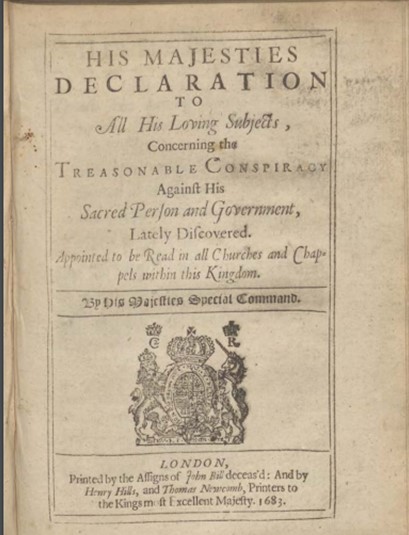
On 15 March 1672, 350 years ago, the English government issued a document headed His Majesty’s Declaration to all his loving subjects, but which has become known as the Declaration of Indulgence. It was an astonishing statement, reversing the position of English monarchical governments since Elizabeth I towards Protestant religious dissent or nonconformity. Not only that, but in explicitly suspending a large body of parliamentary legislation which required church attendance and forbade the holding of alternative religious meetings (‘conventicles’) outside the framework of the Church of England it overrode the authority of parliament itself.
View original post 1,099 more words
The House of Lords amendment to the Dissolution and Calling of Parliament Bill returns appropriate power to MPs: they should accept it
09 Mar 2022 Leave a comment



The House of Lords has amended the government’s Dissolution and Calling of Parliament Bill to require House of Commons approval for early general elections. Tom Fleming and Meg Russell explore what MPs should consider when the bill returns to the Commons. They argue that the Lords amendment deserves support, as it provides an important limit on Prime Ministers’ power to call early elections, and avoids drawing either the monarch or the courts into political controversy.
Background
The Dissolution and Calling of Parliament Bill seeks to change how early general elections are called in the UK. Specifically, it aims to restore the Prime Minister’s control of election timing, by repealing the Fixed-term Parliaments Act 2011 (FTPA).
Before 2011, general elections were required at least every five years. However, the Prime Minister could ask the monarch to dissolve parliament during that period, resulting in an earlier election. The FTPA removed this…
View original post 1,585 more words
Europe’s Insatiable Demand for Gas Driven by Total Wind Power Output Collapses
09 Mar 2022 Leave a comment
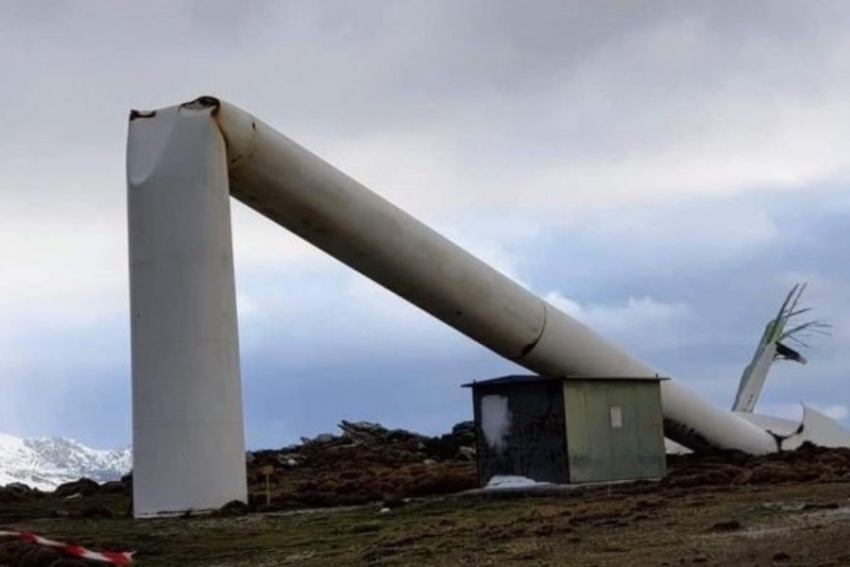
Gas producers love wind power because of its hopeless intermittency, which drives demand for gas and raises prices across the board.
No better example has been Europe’s months-long wind drought, when wind power output was little more than pitiful and the demand for gas, accordingly, went through the roof.
Craig Mackinlay explains the relationship below.
Green energy cannot save us
The Critic
Craig Mackinlay
10 February 2022
Amid the furore surrounding “birthdaycakegate”, “cheeseandwinegate” and “proseccogate”, which could still derail the premiership of Boris Johnson, the risks in Ukraine are looming large and the certainty of a cost of living crisis lies dead ahead. The government must deal with it. To restore trust with the wider public and the new voters who, perhaps for the first time voted Conservative in 2019, Boris Johnson has to show that he is the one with the solutions to the problems Britain is facing.
While…
View original post 822 more words
The Failure of Bidenomics, Part V
09 Mar 2022 Leave a comment
Our series on the failure of Bidenomics has touched on four topics.
- Biden’s subsidy agenda will lead to higher prices and economic inefficiency.
- Biden’s inflation policy is mocked even by senior Democratic economists.
- Biden’s so-called Buy America policy hurts taxpayers and means fewer jobs.
- Biden’s statist agenda means families lose as prices rise faster than income.
For our fifth edition, let’s turn our attention to the president’s misguided fiscal policy.
This means analyzing three pieces of legislation.
First, his so-called stimulus was approved last year, adding $1.9 trillion to the nation’s fiscal burden. The president and his team claimed it would lead to four million additional jobs, but the net result was a drop in employment compared to the White House’s own projections.
Second, his costly infrastructure plan also was approved last year, though only a small fraction of new spending was actually for roads and…
View original post 300 more words
Roman writers
09 Mar 2022 Leave a comment

As well to remember that all Roman literature was written by an elite for an elite about an elite, and is overwhelmingly conservative and traditionalist in tone. Even when they’re writing about farmers or ordinary citizens or soldiers, Roman writers are doing it from the perspective of privileged members of the literate, leisured classes. With the possible exception of the first two entries in the list, the comic playwrights Plautus and Terence, whose work features numerous slaves and tradesmen (often cooks) though here again, we should be cautious about treating these characters and their views as documentary evidence, as they are clearly based on standardised stereotypes.
This isn’t a comprehensive list of Roman authors, that would be much longer. These are the important Roman authors and this is by way of being an ideal or personal, reading list.
The Republic
Plautus (Titus Maccius Plautus, 254 to 184 BC) Plautus’s comedies…
View original post 995 more words
March 8, 1702: Accession of Anne as Queen of England, Scotland and Ireland. Part I.
09 Mar 2022 Leave a comment
Anne (February 6, 1665 – August 1, 1714) was Queen of England, Scotland and Ireland from 8 March 1702 to 1 May 1707. On 1 May 1707, under the Acts of Union, the kingdoms of England and Scotland united as a single sovereign state known as Great Britain. She continued to reign as Queen of Great Britain and Ireland until her death in 1714.
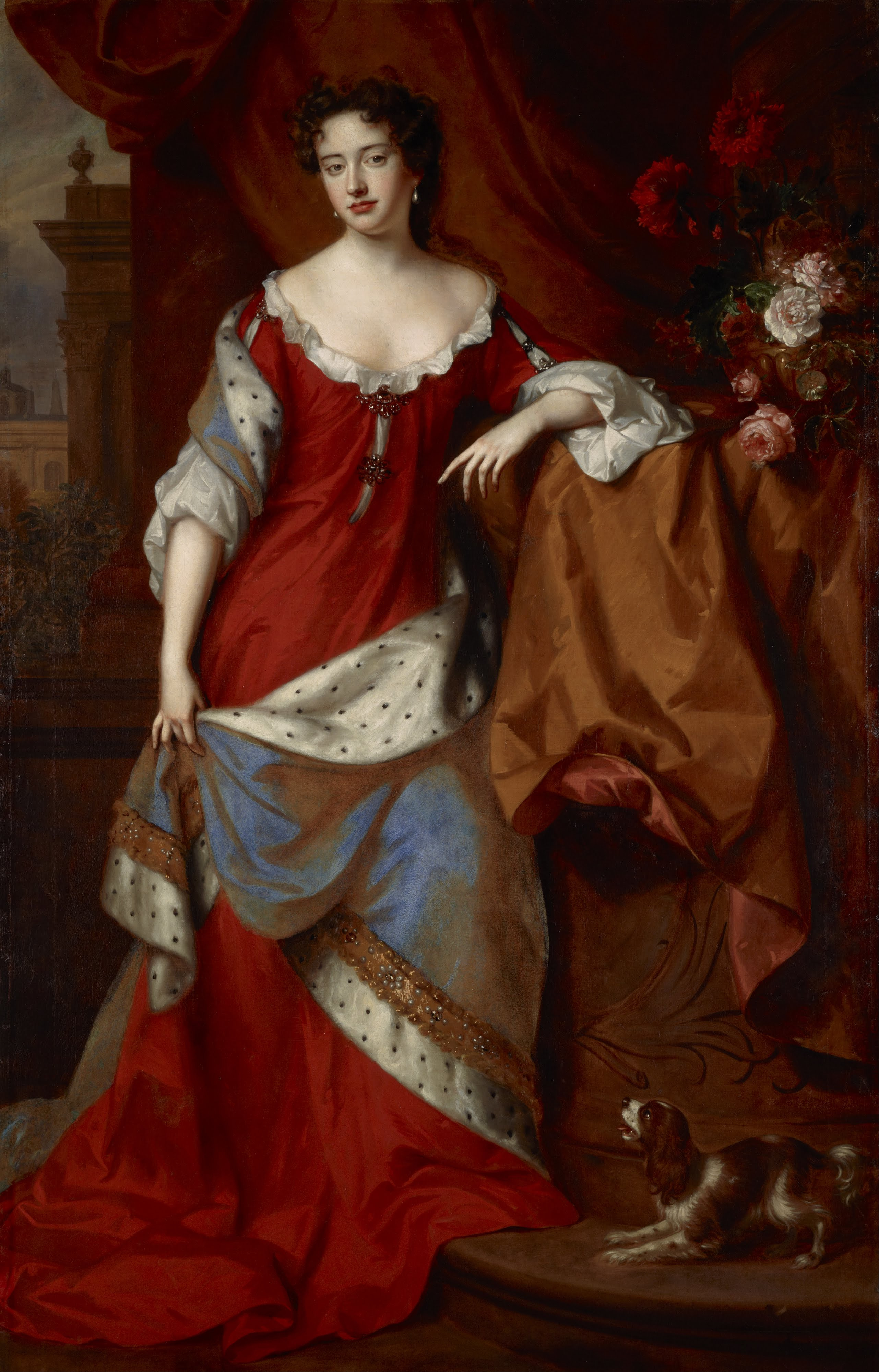 Anne was born at 11:39 p.m. on February 6, 1665 at St James’s Palace, London, the fourth child and second daughter of the Duke of York (afterwards King James II – VII), and his first wife, Anne Hyde.
Anne’s father was the younger brother of King Charles II, who ruled the three kingdoms of England, Scotland and Ireland, and her mother was the daughter of Lord Chancellor Edward Hyde, 1st Earl of Clarendon. The Duke and Duchess of York had eight children, but Anne and Mary…
View original post 299 more words
Reality Check: Europe’s ‘Inevitable’ Wind & Solar Transition Unwinds In Ukraine
08 Mar 2022 Leave a comment
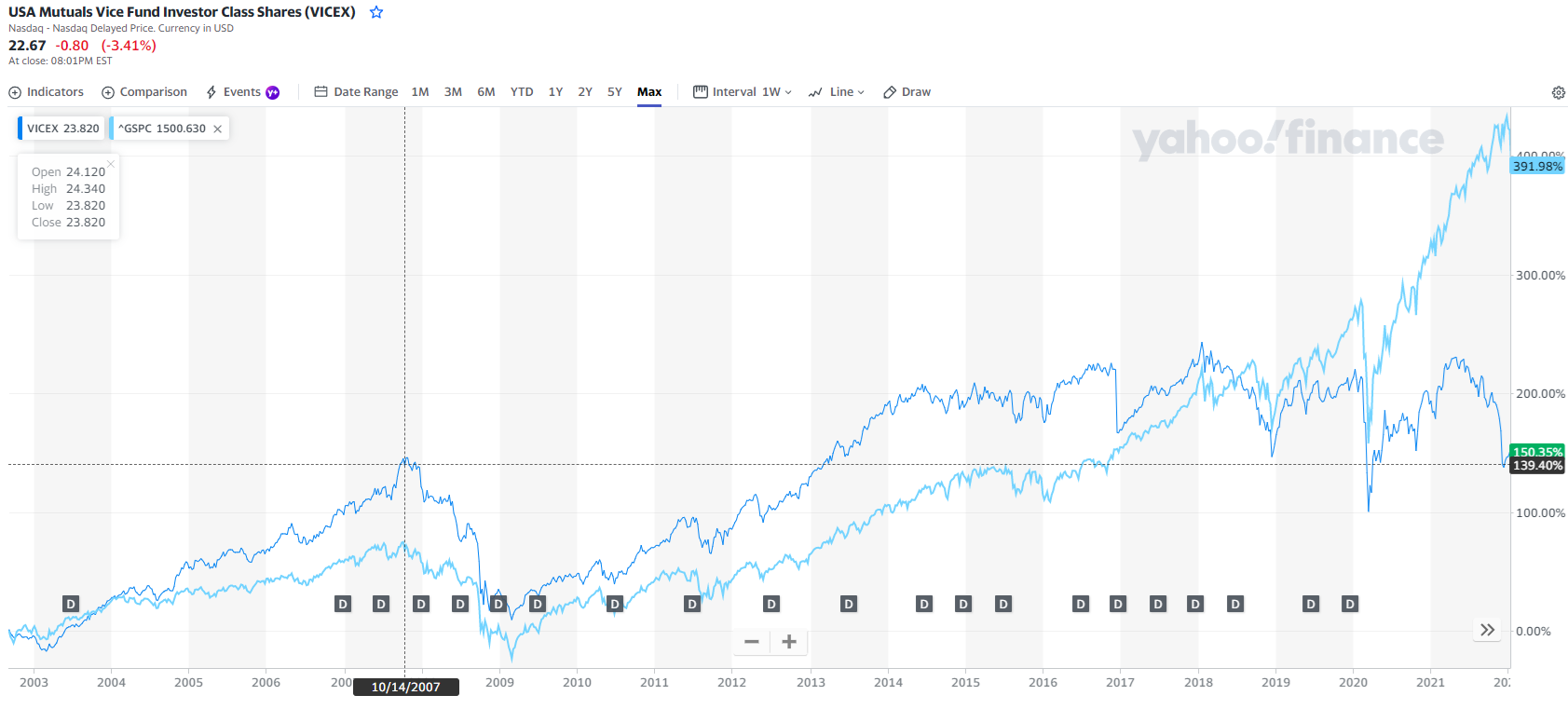
That the West has become weak and silly, is best exemplified by its concerted efforts to wreck hitherto reliable and affordable energy supplies. While policy wonks will argue forever about the precise casus belli for Putin’s attack on Ukraine, it is unarguable that Europe’s insatiable demand for Russian oil and gas has allowed Putin to hold wind and solar obsessed Europe to ransom. His swagger and belligerence rests on the confidence that, without Russian oil and gas, Europe would grind to a halt, very quickly.
Hence, he has little to fear from Germany entering the fray; all he needs do is turn off the tap and he will cripple Germany, within a week.
Not so long ago, the Germans had an enviable fleet of coal-fired and nuclear power plants, which provided them with abundant electricity, whatever the weather. Not so, now.
Michael Shellenberger explains how its self-inflicted renewable energy disaster…
View original post 959 more words
The Failure of Bidenomics, Part IV
08 Mar 2022 Leave a comment
As part of my ongoing efforts to show that free enterprise produces better results than statism, I often use data on per-capita economic output – especially when comparing nations over long periods of time.
And I’ll sometimes build upon those numbers by comparing consumption levels in different nations.
But what if we’re looking at one country rather than several nations?
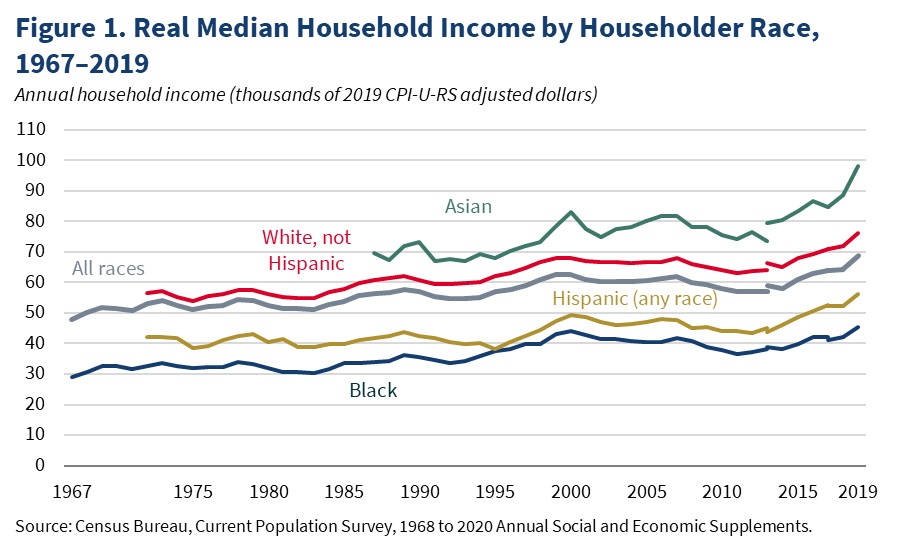 In the case of the United States, it is useful to peruse data on GDP and consumption, but I’m also a big fan of using the Census Bureau’s data on inflation-adjusted median household income (though even this data isn’t perfect because household sizes are declining over time).
These numbers allow us to gauge, over multi-year periods, whether government policies are making life better for average families. Or whether they are producing stagnation.
But what if we don’t have several years of data?
That’s a very relevant question…
View original post 494 more words
Elasticity of Substitution or Why Simple Tools Teach Us Tons
07 Mar 2022 Leave a comment

I enjoy simple methods in economics. For economic history, which is my field of specialization, its often by constraint that I have to use them. Because of that, one has to be creative. In the process, however, one spots how well-used simple methods can be more powerful (both in terms of pedagogy and explanatory uses) than more advanced methods. Let me show you an example from Canadian history: the fur trade industry.
Yes, Canada’s mighty beaver! Generally known for its industriousness, the beaver has been mostly appreciated for its pelt which was the main export staple from Canada during the 17th and 18th centuries. In fact, if one is pressed to state what they think of when they think about Canada, fur pelts come in the top 10 (if not the top 5). It is thus unsurprising that there are hundreds of books on the business history of the fur…
View original post 1,028 more words
Not being entirely straightforward
07 Mar 2022 Leave a comment

No posts last week between some mix of the war news (including related economics and financial markets news) being more interesting, and Covid – in our house that is. Not being too sick, but not being entirely well either I wasn’t concentrating very hard for very long. Fortunately, the isolation is now half over and no one’s health is particularly concerning. So back to some domestic economics and policy.
The leader of the National Party yesterday gave what he billed as a “State of the Nation” speech. You can read it all here. It was, however, largely a tax speech. And – and I say this as someone who would really really like to be able to vote for National – it was pretty disappointing.
It wasn’t that I disagreed with any of the tax ideas – none of them very radical anyway. So when he committed to repealing…
View original post 1,529 more words


Recent Comments