
13 days ago!! #COVID19 contact tracing
26 Feb 2022 Leave a comment
in health economics Tags: economics of pandemics

February 25, 1885: Birth of Princess Alice of Battenberg
26 Feb 2022 Leave a comment

Princess Alice of Battenberg (February 25, 1885 – December 5, 1969) was the mother of Prince Philip, Duke of Edinburgh, and mother-in-law of Queen Elizabeth II.
Alice was born in the Tapestry Room at Windsor Castle in Berkshire in the presence of her great-grandmother, Queen Victoria. She was the eldest child of Prince Louis of Battenberg and his wife, Princess Victoria of Hesse and by Rhine.
Her mother was the eldest daughter of Ludwig IV, Grand Duke of Hesse and by Rhine, and Princess Alice of the United Kingdom, Queen Victoria’s second daughter. Her father was the eldest son of Prince Alexander of Hesse and by Rhine through his morganatic marriage to Countess Julia Hauke, who was created Princess of Battenberg in 1858 by Ludwig III, Grand Duke of Hesse and by Rhine.
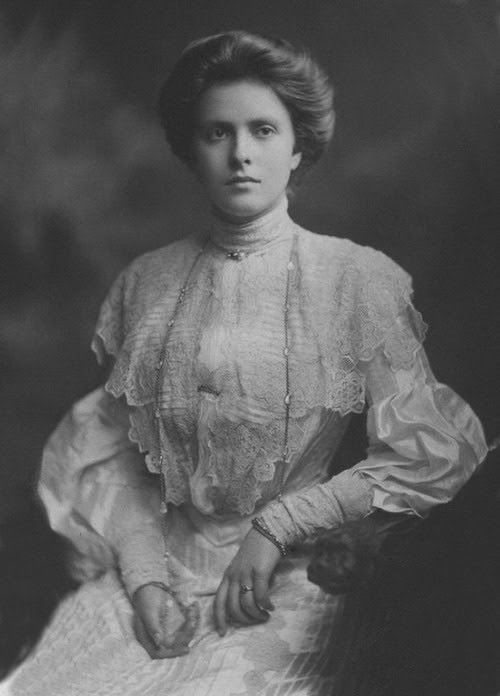 Alice’s three younger siblings, Louise, George, and Louis, later became Queen of Sweden, Marquess of Milford Haven…
View original post 686 more words
Playing With Fire – The First Flame Thrower I THE GREAT WAR Week 32
26 Feb 2022 Leave a comment
in defence economics, war and peace Tags: World War I
Economics of the Russia-Ukraine Conflict
25 Feb 2022 Leave a comment

Russia launched a full invasion of Ukraine last night. Most of the discussion I’ve seen has naturally focused on the fighting itself- what is happening, what is likely to happen, how did it come to this.
Since there are plenty of better sources to follow about that, I’ll simply offer a few observations on the economics of the conflict:
- Russia is not only more than 3 times as populous as Ukraine, it also more than twice as well off on a per-capita basis. This means its overall economy is more than 6 times the size of Ukraine’s. This gap has been growing since the fall of the Soviet Union, as Russia’s per-capita GDP growth has been much stronger, while its population has shrunk much less than Ukraine’s. Putting this together, Ukraine’s measured real GDP is actually smaller than it was in 1990, while Russia’s is larger.
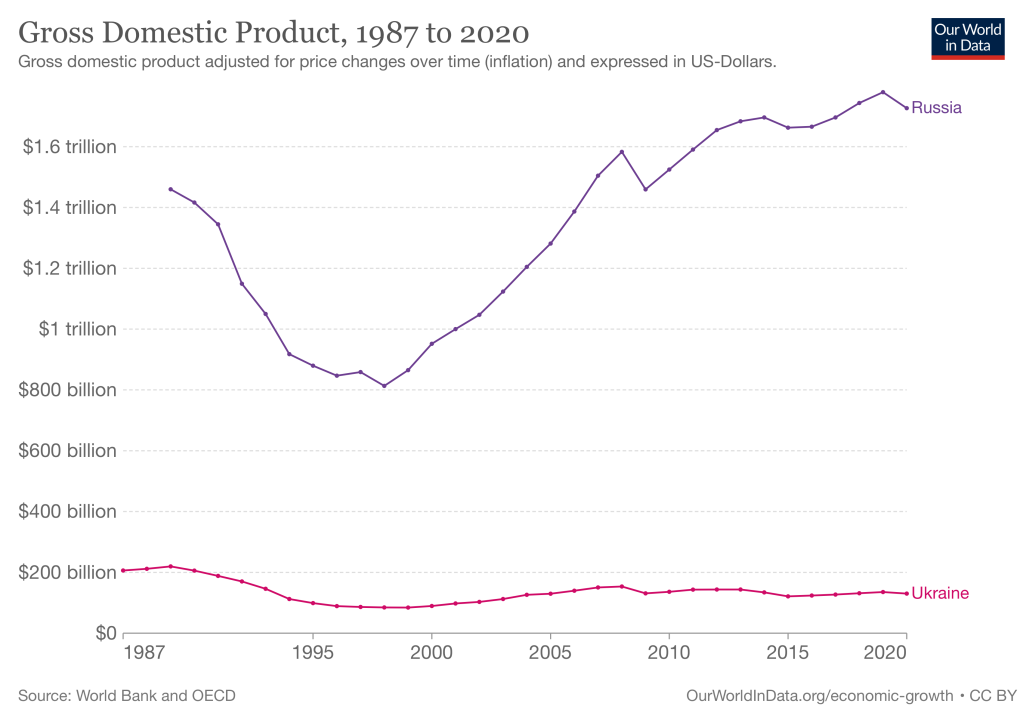
2. Russia’s much larger…
View original post 417 more words
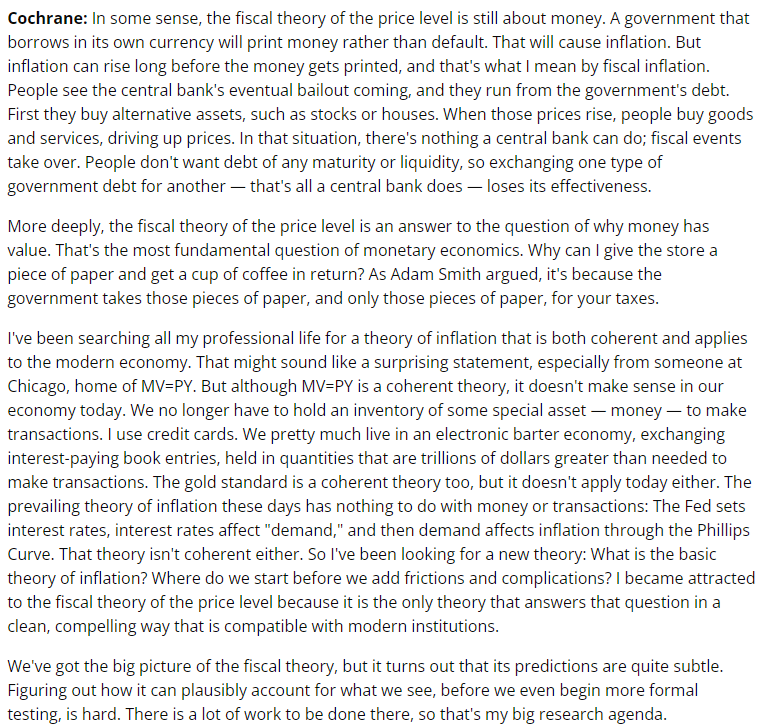
Fiscal theory of the price level = inflation ultimately comes from government debt, as opposed to the central bank printing money
25 Feb 2022 Leave a comment
in Adam Smith, financial economics, fiscal policy, history of economic thought, macroeconomics, monetarism, monetary economics
When We First Talked
25 Feb 2022 Leave a comment
in economics of education, economics of media and culture
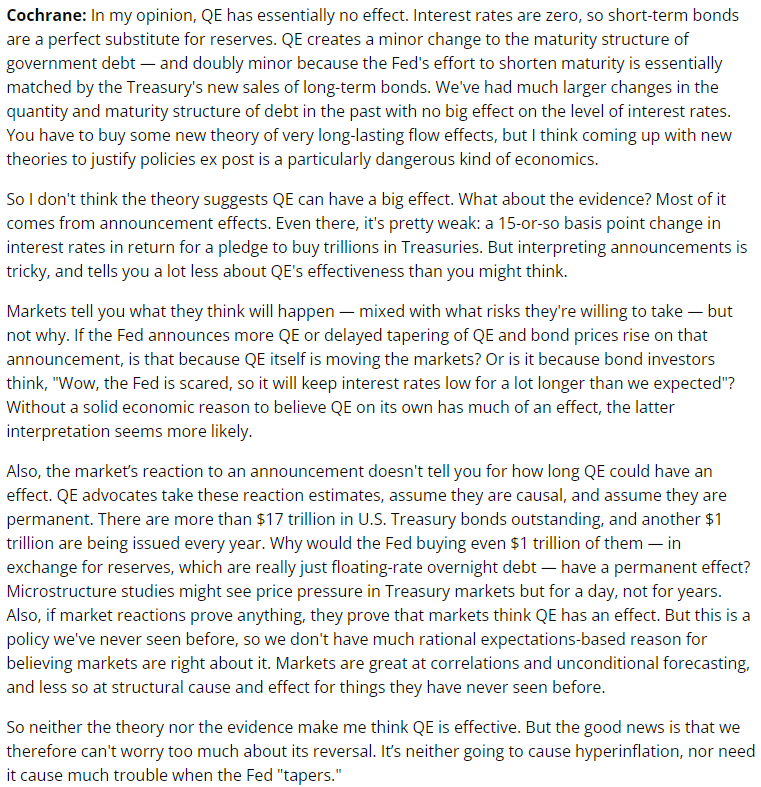
(QE) — the Fed’s massive purchases of Treasuries and other assets to push down long-term interest rates
24 Feb 2022 Leave a comment
in business cycles, financial economics, macroeconomics, monetary economics
House of Saxe-Coburg and Gotha/Windsor: George V (1910-1936)
24 Feb 2022 Leave a comment

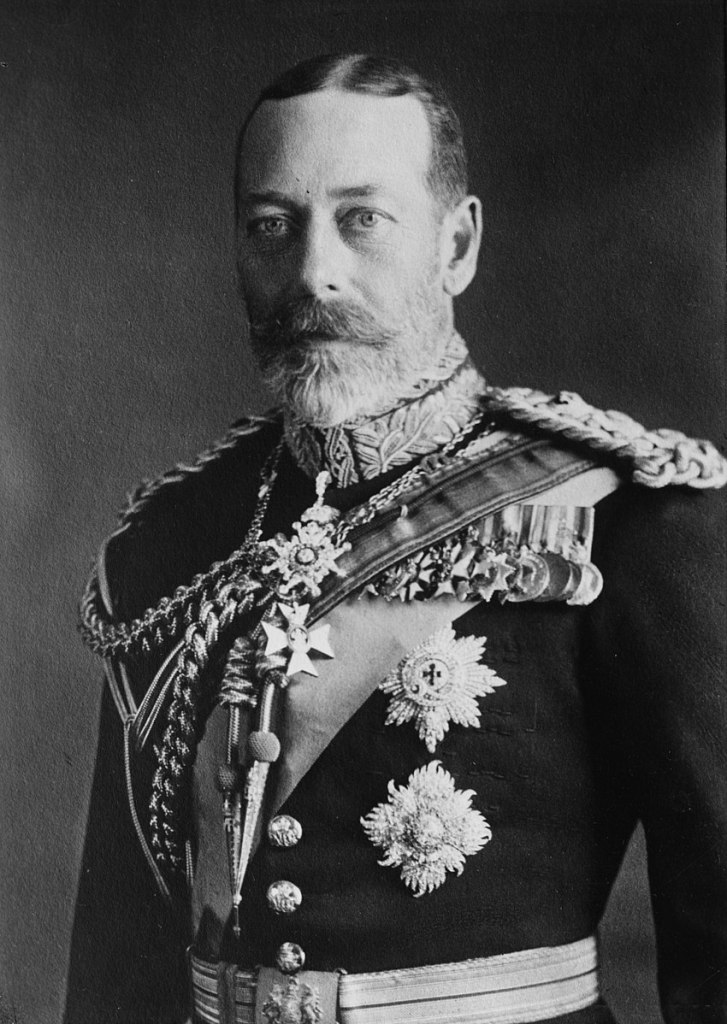
Prince George Frederick Ernest Albert was distinct in nearly every way from his wayward, philandering father. He was a slim man –shy, and abstemious– and he often wore the same elegant clothes to public events (despising most newfangled trends). Moral strength was paramount for George. A former navy man, Prince George was accustomed to unchanging daily routines and the peace of mind that came with country life. He was a luddite who refused to be driven in a car above 30 miles an hour and he despised trains and airplanes, but loved hunting and stamp collecting. In all things, he was an orderly and disciplined man with an unassuming nature.
In 1892, Prince George’s erratic and apparently perverted older brother Eddy died and thus George found himself in the unexpected position of inheriting the crown’s succession. He quickly left the Navy and began preparations to one day become king. Unlike…
View original post 1,258 more words
Energy Insecurity: Biden’s Policies Leave Americans Vulnerable to Unreliable Wind & Solar
24 Feb 2022 Leave a comment

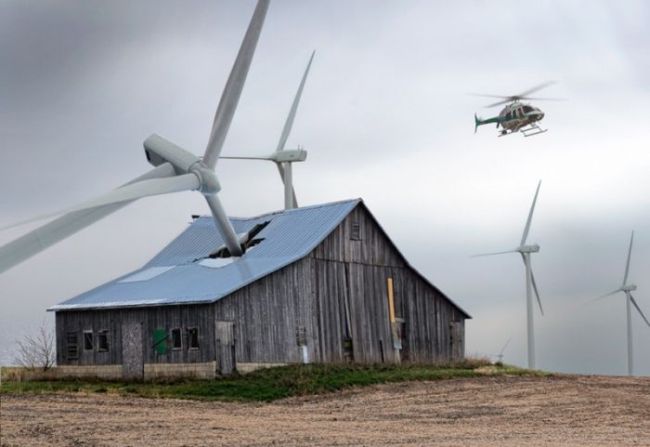
With the magnitude of the renewable energy-driven disaster playing out in Europe hard to ignore, it seems incredible that American Green New Deal Democrats remain fixated on chaotically intermittent wind and solar. And yet, they show no signs of relenting on their determined path to inevitable energy insecurity; an approach that borders on National treachery.
Call it a cult, call it good old-fashioned lunacy, whichever way you slice it becomes hard to explain, let alone justify, policies quite obviously designed to drive American enterprise into the ground.
The only winners are, of course, the rent-seekers and crony capitalists who stand to profit from an endless stream of subsidies directed to the owners of bird-mincing turbines and weather-prone solar panels.
Paul Driessen focuses on Virginia as the perfect example of the clear and present danger subsidised wind and solar represent to America’s energy security.
Assessing Virginia’s Hidden Wind and Solar Costs
View original post 1,282 more words
“Frankly simply daft”
24 Feb 2022 Leave a comment

I wasn’t going to write anything here today, but I couldn’t let the final question and answer from this morning’s Finance and Expenditure Committee hearing on the Monetary Policy Statement go without record and comment.
Simon Bridges, National’s FInance spokesman, asked the Governor whether the current prohibition – agreed between the Governor, the Board and the Minister – on any (external) MPC member having any active, engaged (present or future) analytical/research interest in monetary policy was not “frankly simply daft”, and did it not “ruin the ability to have thought diversity”.
He might well have added, but time was short, “and without precedent anywhere else in the advanced world” (or quite probably in most of the less-advanced world). Ben Bernanke would be disqualified, Lars Svensson would be out, and one could run a very long list of the sort of people who’ve served with distinction on the MPCs of other…
View original post 850 more words
How did Medieval Banking Work?
24 Feb 2022 Leave a comment
in economic history, financial economics, law and economics, macroeconomics, monetary economics, property rights
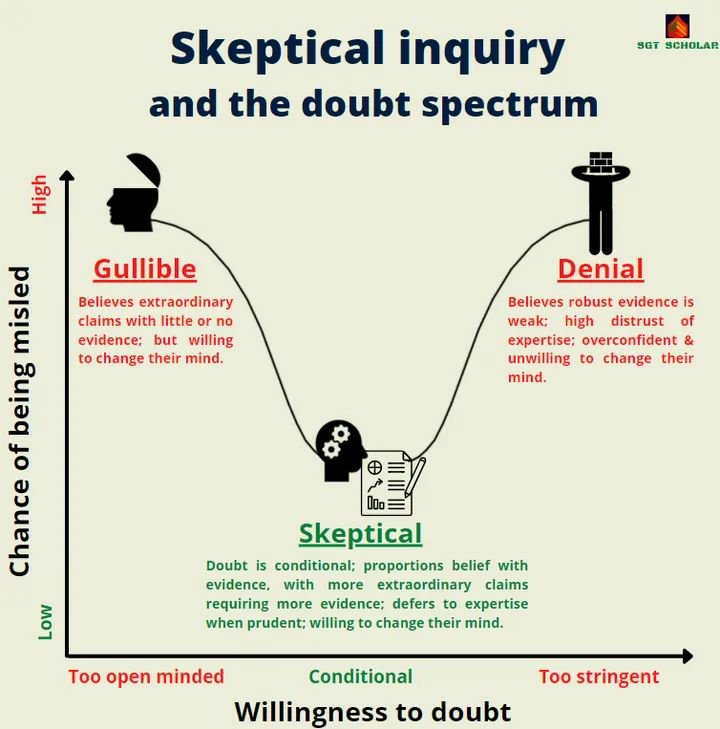
Spectrum of doubt
24 Feb 2022 Leave a comment
in economics of education Tags: conjecture and refutation, conspiracy theorists, philosophy of science
Paolo Sandro: A ‘political’ constitution, but for whom? Citizenship fees, legality and the limits of doctrine
23 Feb 2022 Leave a comment

 Last week the Supreme Court rendered the much-awaited judgment in R (PRCBC and O (by her litigation friend AO)) v Secretary of State for the Home Department
(‘PRCBC’), upholding the capacity for the government to set the fees as it pleases (subject to approval by both Houses of Parliament) for citizenship applications under Section 1(4) of the British Nationality Act 1981 (‘the 1981 Act’), pursuant to Section 68 of the Immigration Act 2014 (‘the 2014 Act’). The Supreme Court appears to have taken an even more rigid stance – and with potential far-reaching implications – on the question of the legality of the Fees Order, by which the citizenship application fees are set, than the Court of Appeal, whose decision has already been critically analysed in an excellentposton this blog in May last year. In this respect, the decision of the Supreme Court is striking from more than…
View original post 2,975 more words
Unreliable Wind & Solar Show Everything Depends On Reliable & Affordable Power Supplies
23 Feb 2022 Leave a comment
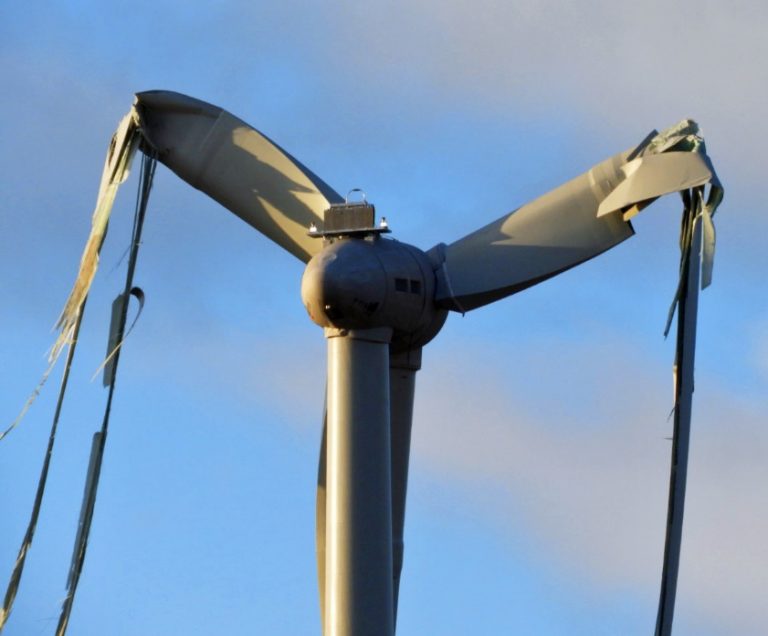
2021 was the year when the inherent unreliability of wind and solar revealed how everything depends upon reliable and affordable power supplies.
The wind and solar ‘industries’ talk a big game; and in their wilder moments even claim to be capable of replacing conventional coal, gas and nuclear generators, altogether. Europe’s months-long wind drought in the last half of 2021 demonstrated otherwise. And the peculiar disappearance of solar power, every day is readily explained by that phenomenon known as “sunset”.
The mega-batteries touted as a solution are nothing but an expensive pipe dream.
Which is why the French, among others, are now talking about nuclear power as if it was their very first love.
In short, the deliberate destruction of reliable and affordable power supplies has put their critical significance front and centre.
Energy is the most important issue in the world
Spectator
Ayaan Hirsi Ali
24 January…
View original post 862 more words


Recent Comments