Electric Vehicles’ Battery Problem
13 Jan 2022 Leave a comment
in energy economics, environmental economics, global warming Tags: electric cars
Long Chimpanzee Grooming Session
13 Jan 2022 Leave a comment
in economics of education, economics of media and culture
A Conversation with Armen A. Alchian 2001
13 Jan 2022 Leave a comment
in applied price theory, Armen Alchian, comparative institutional analysis, economics of information, history of economic thought, theory of the firm
Alan Manning “Monopsony and the wage effects of migration”
12 Jan 2022 Leave a comment
in applied price theory, applied welfare economics, discrimination, econometerics, economic history, human capital, labour economics, labour supply, occupational choice, poverty and inequality Tags: economics of immigration, monopsony
Primary Driver for This Inflation Is Surging Demand (Fueled by COVID Payments), Not Supply Chain Constraints
12 Jan 2022 Leave a comment

Inflation is colloquially defined as, “Too much money chasing too few goods (and services)”. Supply chain constraints get talked about, and these are widely blamed for the inflation we are seeing. Of course, supply limitations play into inflation, but to focus on them is to miss the elephant in room. The primary driver of this inflation is not “too few goods”, but “too much money.”
Such is the thesis of a widely circulated article by Ray Dalio’s investing firm Bridgewater Associates, “It’s Mostly a Demand Shock, Not a Supply Shock, and It’s Everywhere.” The point is summarized:
While the headlines tend to focus on the micro elements of the supply shock (the LA port, coal in China, natural gas in Europe, semiconductors globally, truckers in the UK, etc.), this perspective largely misses the macro cause that is likely to persist and for which there is no idiosyncratic solution.
View original post 529 more words
TOTALLY GUILTY!!: Total Wind & Solar Power Collapses Responsible For Texan Blackouts
12 Jan 2022 Leave a comment

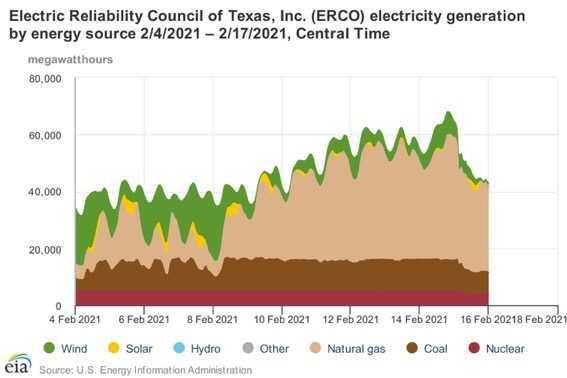
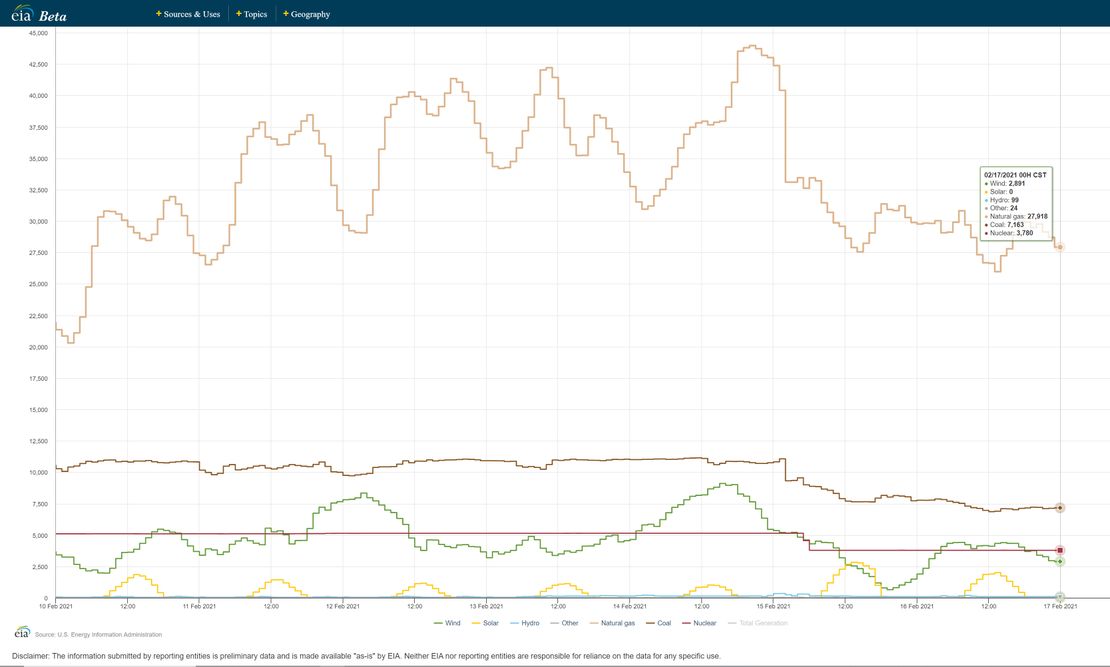
After America’s big freeze and the blackouts that followed, wind and solar acolytes are struggling to explain away the hard numbers, yet again.
On 16-17 February – with hundreds of wind turbines frozen solid during breathless, freezing weather – Texan wind power output was a paltry 2% of installed capacity (see above and below).
Solar panels were buried under inches-deep blankets of snow and ice and, likewise, just as useless.
Millions of Texans were left freezing in the dark; no doubt, chuffed with the progress of their ‘inevitable transition’ to an all wind and sun powered future.
The only thing keeping the lights on, at all, were Texan nuclear and gas-fired power plants. But, if your insight into world affairs was left to the mainstream media, you’d think it was the other way round.
The debacle playing out in Germany – dealt with here: Coal Comfort – barely rates a…
View original post 1,598 more words
Oil – Hitler’s Only Chance to Win the War? – WW2 Special
12 Jan 2022 Leave a comment
in defence economics, war and peace Tags: World War II
Trench Warfare in World War 1 I THE GREAT WAR Special
12 Jan 2022 Leave a comment
in defence economics, war and peace Tags: World War I
Study looks at Antarctic sea ice changes since the early 20th century, increases since 1979
11 Jan 2022 Leave a comment

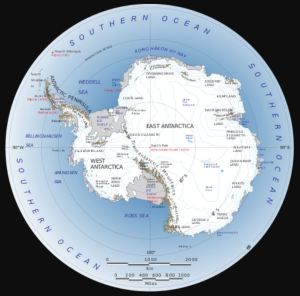 Antarctica
The article says ‘The satellite measurements start in 1979’, but the USGS Landsat satellite project has been ‘imaging the Earth since 1972’. The researchers say in the abstract of their paper: ‘In stark contrast to the Arctic, there have been statistically significant positive trends in total Antarctic sea ice extent since 1979. However, the short and highly variable nature of observed Antarctic sea ice extent limits the ability to fully understand the historical context of these recent changes.’ The UK Met Office reported in October 2021: ‘Antarctic sea ice reached a maximum extent (to date) of 18.75 million sq km on 1st September 2021 (Figure 7), which is very close to the 1981-2010 average maximum extent of 18.70 million sq km.’
– – –
A study led by Ohio University researchers shows that the increase of sea ice surrounding Antarctica since 1979 is a unique feature of Antarctic…
View original post 418 more words
Keynesian Spending Undermines Economic Expansion
11 Jan 2022 Leave a comment

I wrote in 2010 that Keynesian economics is like the Freddy Krueger movies. It refuses to die despite powerful evidence that you don’t help an economy by increasing the burden of government. In 2014, I wrote the theory was based on “fairy dust.” And in 2015, I said Keynesianism was akin to a perpetual motion machine.
What’s my proof? Well, during the period when Obama’s “stimulus” was in effect, unemployment got worse.  And the best growth period under Obama was after the sequester, which Obama and others said was going to hurt the economy.
When I discuss these issues with Keynesians, they reflexively claim that Obama would have gotten good results if only he had increased spending even faster (which is also their knee-jerk response when you point out that Keynesianism didn’t work for Hoover, didn’t work for FDR, didn’t work…
View original post 660 more words
Biden’s “Stimulus” Failure
11 Jan 2022 Leave a comment
At the risk of understatement, economists are not good forecasters.
And they are especially incompetent when they make forecasts based on bad policy, 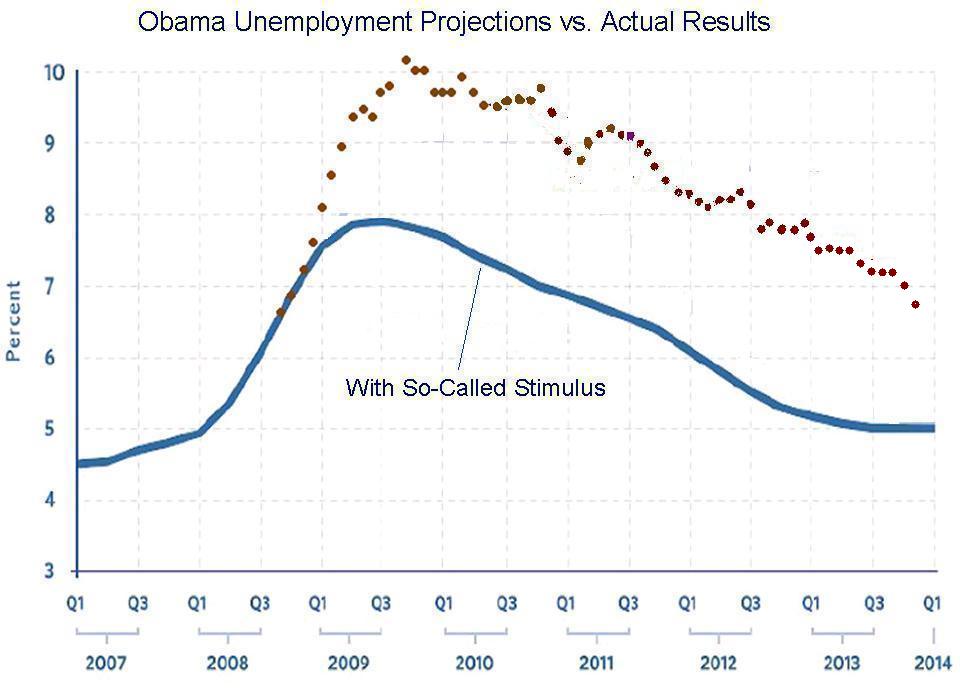 such as when the Obama White House projected that his so-called stimulus would quickly lead to falling unemployment.
In reality, the jobless rate immediately increased and then remained much higher than projected for the remainder of the five-year forecast.
The failure of Obama’s stimulus should have been a learning moment for Washington politicians.
But Joe Biden must have slept through that lesson because his first big move after taking office was to saddle the nation with a $1.9 trillion “stimulus” package.
The White House claimed this orgy of new spending would lead to four million additional jobs in 2021, on top of the six million new jobs that already were expected.
So what happened? Matt Weidinger of the American Enterprise Institute looked at…
View original post 370 more words


Recent Comments