

Edward C. Prescott 2015 Nov 11. Video – Edward C. Prescott (2014) – The Revolution in Aggregate Economics https://www.mediatheque.lindau-nobel.org/videos/33975/edward-prescott/laureate-prescott Accessed 2021 Nov 15.
Celebrating humanity's flourishing through the spread of capitalism and the rule of law
16 Nov 2021 Leave a comment
in business cycles, Edward Prescott, history of economic thought, labour supply, macroeconomics, monetary economics, public economics
Edward C. Prescott 2015 Nov 11. Video – Edward C. Prescott (2014) – The Revolution in Aggregate Economics https://www.mediatheque.lindau-nobel.org/videos/33975/edward-prescott/laureate-prescott Accessed 2021 Nov 15.
16 Nov 2021 Leave a comment
in business cycles, Edward Prescott, history of economic thought, labour supply, macroeconomics, monetary economics, public economics

Edward C. Prescott 2015 Nov 11. Video – Edward C. Prescott (2014) – The Revolution in Aggregate Economics <https://www.mediatheque.lindau-nobel.org/videos/33975/edward-prescott/laureate-prescott>. Accessed 2021 Nov 15.
16 Nov 2021 Leave a comment
in economic history, International law, war and peace Tags: Denmark, Norway, Sweden
16 Nov 2021 Leave a comment
in economics of education, economics of media and culture
16 Nov 2021 Leave a comment
In the general election of 1747 Frederick Louis, Prince of Wales again campaigned actively for the opposition but Pelham’s party won easily. Like his father before him, the Prince entertained opposition figures at his house in Leicester Square. When Prince Frederick Louis died unexpectedly in 1751, his eldest son, Prince George, became heir apparent.
The king commiserated with the Dowager Princess of Wales (Princess Augusta of Saxe-Gotha) and wept with her. As her son would not reach the age of majority until 1756, a new British Regency Act was passed to make her regent, assisted by a council led by Frederick Louis’ brother, Prince William, Duke of Cumberland, in case of George II’s death.
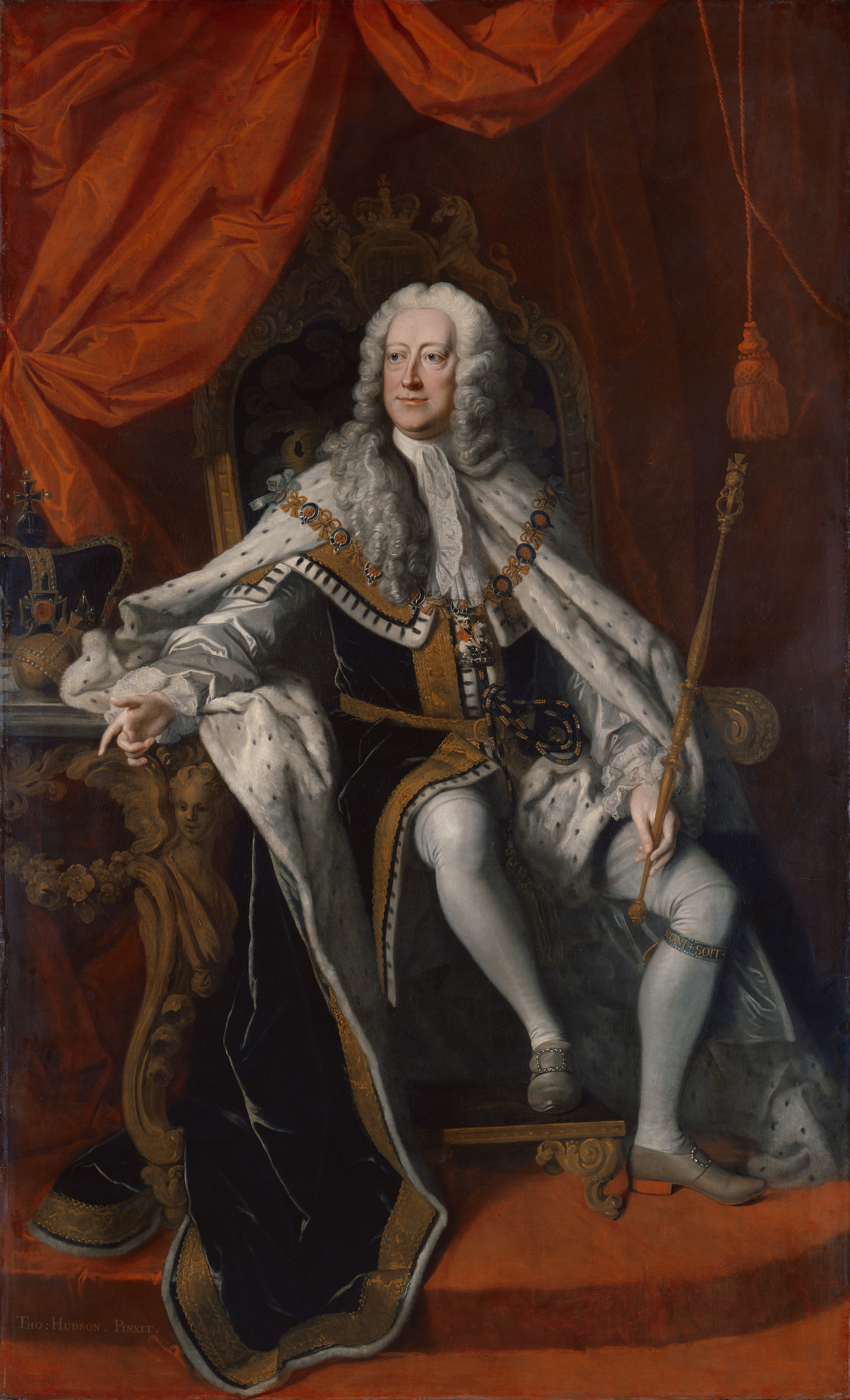 The king also made a new will, which provided for Cumberland to be sole regent in Hanover. After the death of his daughter Louisa at the end of the year, George lamented, “This has been a…
View original post 710 more words
16 Nov 2021 Leave a comment
The world climate revival meeting in Glasgow ended with Alok Sharma (the UK’s minister to COP26, as well as the presiding chief priest) in tears over a last minute word change. The countries which have built more coal fired capacity, more quickly, than just about anyone else in history (that’s you China and India) would only agree to phase its use “down”, rather than “out”.
Despite the (quite literal) imprecations of hellfire, the only truly substantive outcome of the conference may be the Chinese government’s practical suggestion that the world should aim for a global temperature increase of 2°. (Bill Gates also chipped in some climate realism, noting that 1.5° was probably unachievable.)
View original post 585 more words
15 Nov 2021 Leave a comment

Europe’s great wind drought has focused attention on the unassailable fact that wind power is an utterly meaningless power source.
The demand for electricity is, always and everywhere, a ‘here and now’ kind of thing. Households and businesses couldn’t care less if there’s a roaring gale and plenty of wind power at 2 in the morning. But the absence of electricity at the point when power consumers (of all shapes and sizes) need it, is always noticed rather keenly – the experience of freezing or boiling in the dark during mass blackouts tends to collect in the subconscious.
The response to Europe’s wind power debacle has been a series of backflips that would do a Russian gymnast proud.
Despite lots of bluff and bluster from Boris Johnson about his country’s all wind ‘powered’ future, Johnson is now openly committed to building nuclear power plants, including a fleet of new small…
View original post 1,456 more words
15 Nov 2021 Leave a comment
in applied price theory, applied welfare economics, Austrian economics, business cycles, comparative institutional analysis, economic growth, economic history, fiscal policy, global financial crisis (GFC), great depression, great recession, history of economic thought, inflation targeting, macroeconomics, monetarism, monetary economics Tags: monetary policy
15 Nov 2021 Leave a comment
When Queen Victoria died on January 22, 1901, Edward became King of the United Kingdom, Emperor of India and, in an innovation, King of the British Dominions. He chose to reign under the name of Edward VII, instead of Albert Edward—the name his mother had intended for him to use—declaring that he did not wish to “undervalue the name of Albert” and diminish the status of his father with whom the “name should stand alone”.
The numeral VII was occasionally omitted in Scotland, even by the national church, in deference to protests that the previous Edwards were English kings who had “been excluded from Scotland by battle”. J. B. Priestley recalled, “I was only a child when he succeeded Victoria in 1901, but I can testify to his extraordinary popularity. He was in fact the most popular king England had known since the earlier 1660s.”
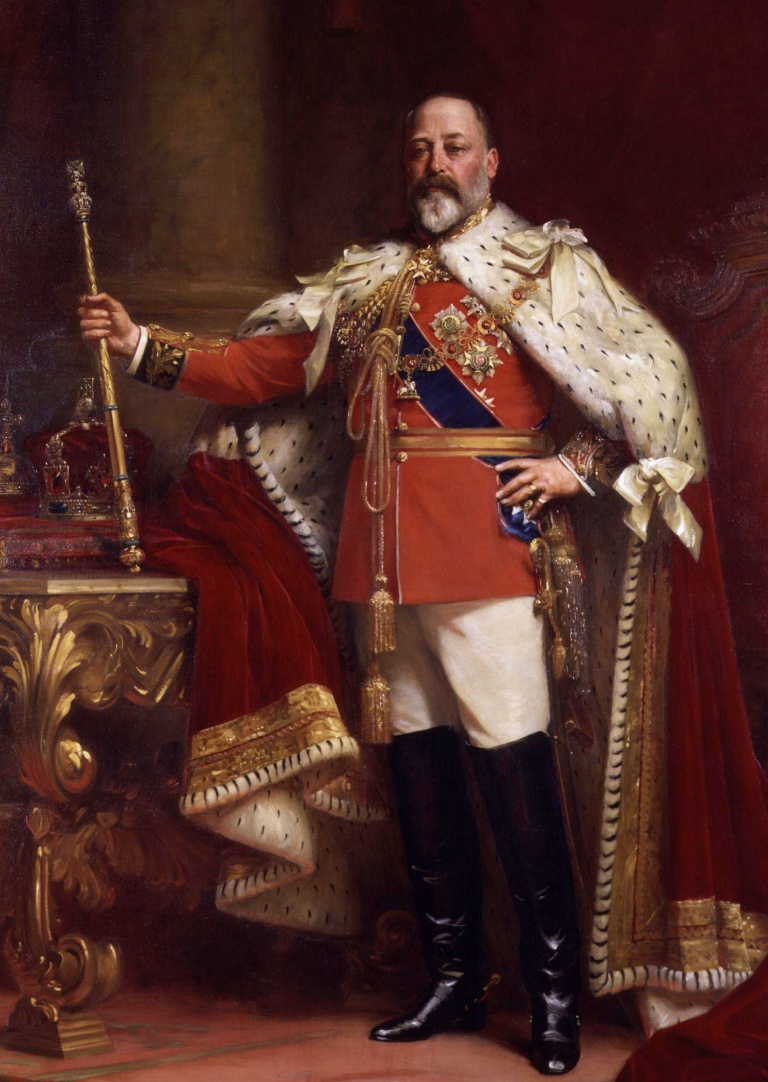 As king, Edward played a…
View original post 557 more words
15 Nov 2021 Leave a comment
Yesterday, I shared part of an interview that focused on Mayor Pete Buttigieg’s scheme to give more subsidies to colleges, thus transferring money from poorer taxpayers to richer taxpayers.
Here’s the other part of the interview, which revolved around a very bad idea to copy nations that impose price controls on prescription drugs.
In some sense, this is a debate on price controls, which have a long history (going all the way back to Ancient Rome) of failure.
But my comments focused primarily on the adverse consequences of Pelosi’s approach.
And if you want more details, Doug Badger explained how Pelosi’s approach would backfire in a report for the Heritage Foundation. He starts with an explanation of the legislation.
The Lower Drug Costs Now Act of 2019 (H.R. 3), introduced last week with the backing of House Speaker Nancy Pelosi, D-Calif., would double down on the failures of…
View original post 911 more words
15 Nov 2021 Leave a comment
There are some issues – such as class-warfare tax rates and the minimum wage – where intelligent people on the left will privately admit being wrong (or at least they will admit adverse consequences).
Another example is rent control.
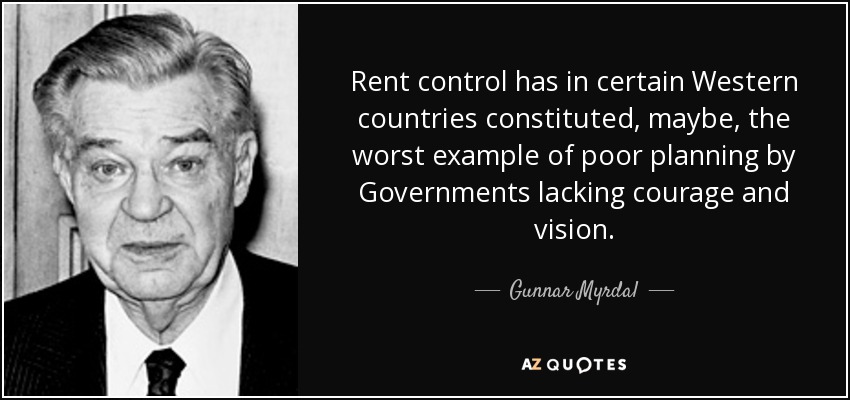 Indeed, it’s so obvious that imposing price controls on housing will create shortages that some folks on the left even admit publicly that it’s a bad idea.
Yet leftist politicians are drawn to the policy for the simple reason that renters outnumber landlords.
Simply stated, they’re willing to impose considerable damage so long as they can grab a few extra votes.
Let’s look at some evidence about the folly of rent control, and we’ll start with a hot-off-the-presses column by Ryan Mills for National Review.
Democratic leaders in Minnesota’s capital city are scrambling for solutions after developers put several large projects on hold across St. Paul in the wake…
View original post 718 more words
15 Nov 2021 Leave a comment
in defence economics, war and peace Tags: World War II
15 Nov 2021 Leave a comment
One of the (many) disillusioning aspects of the Covid response of the New Zealand government (politicians and public service) has been the apparent total absence of any use of cost-benefit analysis techniques to help inform thinking about policy responses. No cost-benefit analysis on any aspect of the policy response has ever been published (or hinted at), on the couple of occasions I’ve OIAed any such analysis (just to be sure) agencies have been quick to deny any such analysis exists, and when one independent agency (the Productivity Commission) did do a little exercise along these lines at one point last year it was shunned as almost “unclean”. And if there had been any slight excuse early last year about “no time” – not convincing even then – officials have had 22 months now to get toolkits in place. But they (and their political masters) seem to prefer seat-of-the-pants thinking, all…
View original post 2,011 more words
15 Nov 2021 Leave a comment
 Diagram showing solid-body rotation of the Earth with respect to a stationary spin axis due to true polar wander. [Credit: Wikipedia] The researchers say their finding ‘challenges the notion that the spin axis has been largely stable over the past 100 million years.’
– – –
We know that true polar wander (TPW) can occasionally tilt whole planets and moons relative to their axes, but it’s not entirely clear just how often this has happened to Earth, says ScienceAlert.
Now a new study presents evidence of one such tilting event that occurred around 84 million years ago – when dinosaurs still walked the Earth.
Researchers analyzed limestone samples from Italy, dating back to the Late Cretaceous period (100.5 to 65.5 million years ago), looking for evidence of shifts in the magnetic record that would point towards an occurrence of TPW.
Bacteria fossils trapped in the rock, forming chains of…
View original post 323 more words
Celebrating humanity's flourishing through the spread of capitalism and the rule of law
Celebrating humanity's flourishing through the spread of capitalism and the rule of law
Celebrating humanity's flourishing through the spread of capitalism and the rule of law
Celebrating humanity's flourishing through the spread of capitalism and the rule of law
Celebrating humanity's flourishing through the spread of capitalism and the rule of law
Celebrating humanity's flourishing through the spread of capitalism and the rule of law
Celebrating humanity's flourishing through the spread of capitalism and the rule of law
Celebrating humanity's flourishing through the spread of capitalism and the rule of law
Celebrating humanity's flourishing through the spread of capitalism and the rule of law
Celebrating humanity's flourishing through the spread of capitalism and the rule of law
Celebrating humanity's flourishing through the spread of capitalism and the rule of law
Celebrating humanity's flourishing through the spread of capitalism and the rule of law
A History of the Alt-Right
Econ Prof at George Mason University, Economic Historian, Québécois
Celebrating humanity's flourishing through the spread of capitalism and the rule of law
Scholarly commentary on law, economics, and more
Beatrice Cherrier's blog
Celebrating humanity's flourishing through the spread of capitalism and the rule of law
Celebrating humanity's flourishing through the spread of capitalism and the rule of law
Celebrating humanity's flourishing through the spread of capitalism and the rule of law
Why Evolution is True is a blog written by Jerry Coyne, centered on evolution and biology but also dealing with diverse topics like politics, culture, and cats.
Celebrating humanity's flourishing through the spread of capitalism and the rule of law
A rural perspective with a blue tint by Ele Ludemann
DPF's Kiwiblog - Fomenting Happy Mischief since 2003
Celebrating humanity's flourishing through the spread of capitalism and the rule of law
The world's most viewed site on global warming and climate change
Tim Harding's writings on rationality, informal logic and skepticism
A window into Doc Freiberger's library
Let's examine hard decisions!
Commentary on monetary policy in the spirit of R. G. Hawtrey
Thoughts on public policy and the media
Celebrating humanity's flourishing through the spread of capitalism and the rule of law
Politics and the economy
A blog (primarily) on Canadian and Commonwealth political history and institutions
Reading between the lines, and underneath the hype.
Economics, and such stuff as dreams are made on
"The British constitution has always been puzzling, and always will be." --Queen Elizabeth II
Celebrating humanity's flourishing through the spread of capitalism and the rule of law
Celebrating humanity's flourishing through the spread of capitalism and the rule of law
WORLD WAR II, MUSIC, HISTORY, HOLOCAUST
Undisciplined scholar, recovering academic
Celebrating humanity's flourishing through the spread of capitalism and the rule of law
Res ipsa loquitur - The thing itself speaks
In Hume’s spirit, I will attempt to serve as an ambassador from my world of economics, and help in “finding topics of conversation fit for the entertainment of rational creatures.”
Researching the House of Commons, 1832-1868
Reflections on books and art


Recent Comments