Steven Pinker and Tim Harford on Rationality
18 Nov 2021 Leave a comment
in economics of education, liberalism, Marxist economics Tags: free speech, philosophy of science, political correctness, regressive left
The British High Command at Passchendaele I
18 Nov 2021 Leave a comment

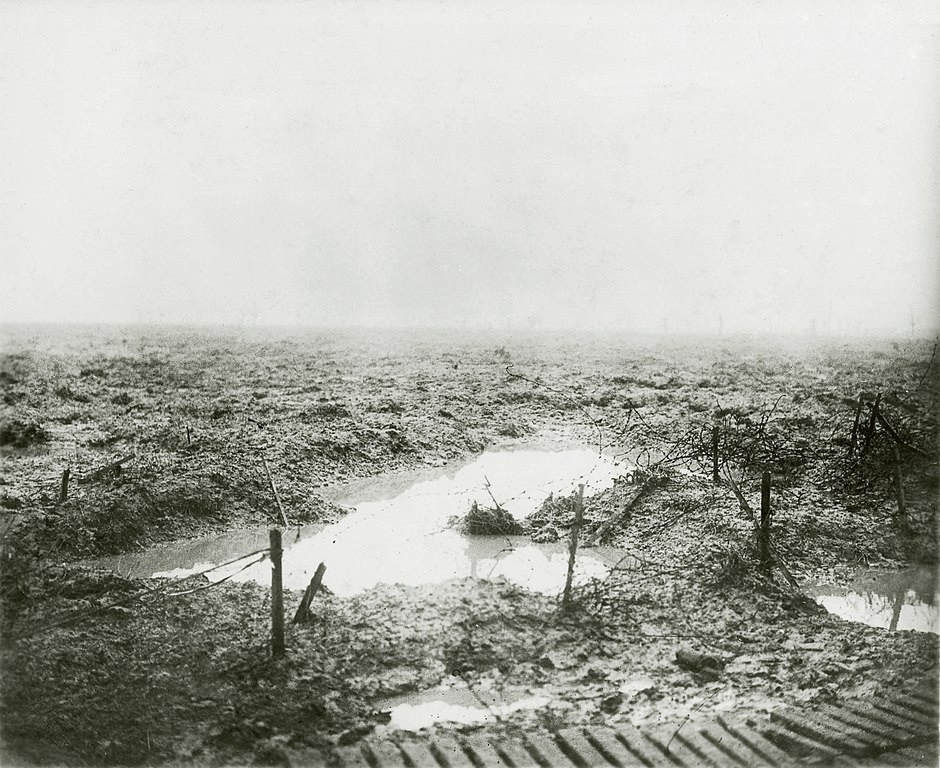
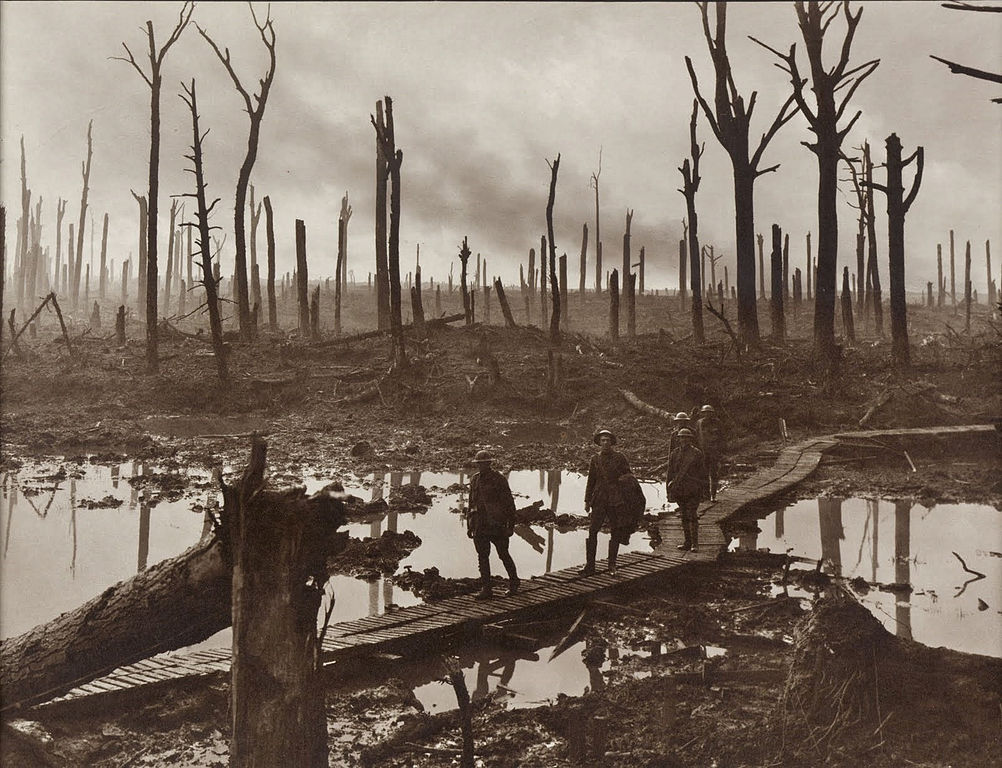
On 12 October 1917 the following event took place about three miles from Passchendaele Ridge in Belgium: A soldier who had been slightly wounded in the fighting earlier that day left the line to find the nearest casualty clearing station. In the gloom, he deviated from the wooden duckboard path which snaked its way through the mire. Later he was discovered stuck fast in a shell hole. He was only a few yards from where he had started some hours before. Men were called up. Ropes and spades were brought forward. Repeated efforts were made to dig or pull him out. At one moment there were sixteen men working on this task. When his battalion was relieved the following night he was still stuck fast. His fate is unknown. But the probability that he drowned in the mud is very high.
What we will investigate is:
- why men were sent…
View original post 2,393 more words
November 17, 1558: Death of Queen Mary I of England and Ireland
18 Nov 2021 Leave a comment

Mary I (February 18, 1516 – November 17, 1558), also known as Mary Tudor, and as “Bloody Mary” by her Protestant opponents, was Queen of England and Ireland from July 1553 until her death in 1558. She is best known for her vigorous attempt to reverse the English Reformation, which had begun during the reign of her father, Henry VIII. Her attempt to restore to the Church the property confiscated in the previous two reigns was largely thwarted by Parliament, but during her five-year reign, Mary had over 280 religious dissenters burned at the stake in the Marian persecutions.
Mary was born on February 18, 1516 at the Palace of Placentia in Greenwich, England. She was the only child of King Henry VIII and his first wife Catherine of Aragon to survive infancy. Her mother had suffered many miscarriages. Before Mary’s birth, four previous pregnancies had resulted in a stillborn…
View original post 623 more words
The Western Front: Lions Led by Donkeys?
18 Nov 2021 Leave a comment
Blackadder Goes Forth is the fourth and final series of the BBC sitcom Blackadder, written by Richard Curtis and Ben Elton, which aired from 28 September to 2 November 1989 on BBC One. The series placed the recurring characters of Blackadder, Baldrick and George in a trench in Flanders during World War I, and followed their various doomed attempts to escape from the trenches to avoid certain death under the misguided command of General Melchett. The series is particularly noted for its criticism of the British Army leadership during the campaign, and also refers to a number of famous figures of the age. In addition, the series is remembered for the poignant ending of the final episode.
By Dr Gary Sheffield
The scale of human devastation during World War One has often been blamed on incompetent leadership. Dr Gary Sheffield offers an alternative view.
The generals
Douglas Haig was ‘brilliant…
View original post 1,581 more words
Creative destruction
18 Nov 2021 Leave a comment
in economic history, entrepreneurship, history of economic thought, industrial organisation, survivor principle Tags: creative destruction

The Life and Times of Aaron Burr, Hamilton’s Nemesis
18 Nov 2021 Leave a comment
in economics of media and culture
The New York City Blackout of 1977
18 Nov 2021 Leave a comment
in economics of crime, energy economics, law and economics
How Do You Get Rid of Bacteria in Space Stations
18 Nov 2021 Leave a comment
in economics of media and culture Tags: space
Pat Michaels Discusses the “Green New Deal”
17 Nov 2021 Leave a comment

Biden’s spending bill will lavish over half a $1 trillion on projects geared to combating human-caused climate change. In reality, environmentalist groups will be given most of the money to continue their political activities. Two years ago, climate scientist Patrick Michaels was on the Laura Ingraham Show on Fox News to discuss what the program is really all about and doom and gloom predictions.
What Lessons Can Be Learned by Comparing European Countries and American States?
17 Nov 2021 Leave a comment

I regularly cite data about Europe’s sub-par economic outcomes in hopes of driving home the point that the United States should not copy that continent’s approach of onerous fiscal burdens.
Which is now a very relevant topic with Biden pushing for a big expansion of the welfare state.
This is not a good idea. Americans are richer than their counterparts on the other side of the Atlantic. Even more remarkably, lower-income people in the United States often have living standards equal to – or even greater than – middle-income Europeans.
Another way of making this point is to compare economic outcomes in American states compared to European countries.
I first did that back in 2015, citing data to show that all be the very-richest European nations would be considered poor if they were part of the United States.
I want to augment that comparison today. I’m motivated by a
View original post 403 more words
$5.7 billion
17 Nov 2021 Leave a comment

A few weeks ago I wrote a fairly discursive post on the losses the Reserve Bank had run up on its Large Scale Asset Purchase programme. I know some readers found the basic point a little hard to grasp (no doubt a reflection on my storytelling), so today I’m going to do a very stylised representation of what has gone on.
But first, as I noted in that post, as market interest rates rise losses mount. The Bank has now released its end-October balance sheet and this is the line item representing their claim on the Crown (the Minister of Finance indemnified the Bank for losses incurred).

So the losses have now reached $5.7 billion (roughly 1.6% of annual GDP). Market interest rates fluctuate each day, but as of yesterday’s rate current losses are likely to be very similar to those as at 31 October. Perhaps Covid has inured us…
View original post 1,857 more words
Prescott on real business cycle theory’s successes
17 Nov 2021 Leave a comment
in business cycles, development economics, economic growth, growth miracles, macroeconomics, monetary economics


Edward C. Prescott 2015 Nov 11. Video – Edward C. Prescott (2014) – The Revolution in Aggregate Economics https://www.mediatheque.lindau-nobel.org/videos/33975/edward-prescott/laureate-prescott Accessed 2021 Nov 15.


Recent Comments