The Fractured-Land Hypothesis
17 Oct 2021 Leave a comment
in applied price theory, comparative institutional analysis, constitutional political economy, economic growth, economic history, economics of bureaucracy, entrepreneurship, growth disasters, growth miracles, history of economic thought, income redistribution, law and economics, macroeconomics, property rights, Public Choice, rentseeking
David Friedman’s appearance in Miami’s Rothbardian Circle
17 Oct 2021 Leave a comment
in comparative institutional analysis, constitutional political economy, David Friedman, economics of crime, law and economics, property rights
George Selgin | American Institute for Economic Research
17 Oct 2021 Leave a comment
in Austrian economics, business cycles, economic history, financial economics, global financial crisis (GFC), great recession, macroeconomics, monetary economics
Joseph Stalin: Waiting For Hitler (Part 2)
17 Oct 2021 1 Comment
in defence economics, development economics, economic history, economics of crime, growth disasters, law and economics, Marxist economics, politics - USA, war and peace Tags: World War II
Peter Boettke: «Austrian Economics in the Real World»
16 Oct 2021 Leave a comment
in applied price theory, applied welfare economics, Austrian economics, comparative institutional analysis
The Hanoverians: George II (1727-1760)
16 Oct 2021 Leave a comment

In the summer of 1727 George I died while fittingly on holiday in his beloved kingdom of Hanover. The crown was left to his first-born son, George Augustus Prince of Wales. Like his father before him, George II was a stolid man. Today, both men are remembered mainly as pig-headed dullards, renowned for their mutual disgust of one another. George II was a soldier through and through -he was the last English King to lead his troops in battle at Dettingen in 1743- and he had little taste for the arts (or “boets and bainters” as he called them) despite a lifelong love of music, particularly the works of Handel and donating the royal library to the British Museum which was founded during his reign. During his long kingship, Britain expanded its colonial and mercantile interests far and wide from India to the American colonies, however through it all George…
View original post 2,730 more words
Edgar Ætheling, Uncrowded King of the English
16 Oct 2021 1 Comment

1066 – Following the death of Harold II at the Battle of Hastings, Edgar the Ætheling is proclaimed King of England by the Witan; he is never crowned, and concedes power to William the Conqueror two months later.
Edgar Ætheling or Edgar II (c. 1052 – 1125 or after) was the last male member of the royal house of Cerdic of Wessex (see House of Wessex family tree). He was elected King of England by the Witenagemot in 1066, but never crowned.
Edgar was born in the Kingdom of Hungary, where his father Edward the Exile, son of King Edmund Ironside, had spent most of his life, having been sent into exile after Edmund’s death and the conquest of England by the Danish king Cnut the Great in 1016.
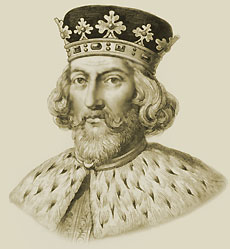 Edgar II the Ætheling, King of the English
His grandfather Edmund, great-grandfather Æthelred II the Unready, and great-great-grandfather Edgar the Peaceful…
View original post 1,303 more words
ALPHA: EDDIE GALLAGHER AND THE WAR FOR THE SOUL OF THE NAVY SEALS by David Pilipps
16 Oct 2021 Leave a comment

:quality(70)/arc-anglerfish-arc2-prod-mco.s3.amazonaws.com/public/MW56MTM4JNHFLKURY4HPO3BLVA.jpg)
(Special Operations Chief Edward “Eddie” Gallagher, a highly decorated Navy SEAL, is fighting murder charges tied to the death of an Islamic State operative in Iraq).
It is clear that after recent events that the American experience in Afghanistan did not end well. With the Taliban victory the future of the Afghan people, especially women are under a darkening cloud. In this environment the American military approach in the region has come under question and many of the soldiers who fought and the families of those who died or suffered life altering injuries must be wondering if their sacrifices were in vain. In this environment any book that deals with the American approach to war is timely. David Philipps’ new book, ALPHA: EDDIE GALLAGHER AND THE WAR FOR THE SOUL OF THE NAVY SEALS fits this category. Though the book focuses on the conduct of American troops in Mosul, Iraq…
View original post 1,149 more words
Human Capital, Development, and Growth
16 Oct 2021 Leave a comment
in applied price theory, comparative institutional analysis, development economics, economic growth, economic history, entrepreneurship, financial economics, growth disasters, growth miracles, human capital, industrial organisation, labour economics, labour supply, macroeconomics, occupational choice, poverty and inequality, Robert E. Lucas, survivor principle
Edward Prescott on real business cycles (2002)
16 Oct 2021 Leave a comment
in applied price theory, applied welfare economics, budget deficits, business cycles, econometerics, economic growth, economic history, Edward Prescott, history of economic thought, macroeconomics, monetary economics Tags: Japan, real business cycles, taxation and labour supply
David Friedman – Election Scenarios
16 Oct 2021 Leave a comment
in applied price theory, applied welfare economics, comparative institutional analysis, constitutional political economy, David Friedman, economics of crime, economics of education, economics of information, human capital, industrial organisation, labour economics, labour supply, law and economics, occupational choice, Richard Posner, survivor principle


Recent Comments