Noam Chomsky on Leninism
04 Oct 2021 Leave a comment
in comparative institutional analysis, economic history, Marxist economics
Dead-Calm Weather Killing ‘Inevitable’ Renewable Energy ‘Transition’
03 Oct 2021 Leave a comment


Wind power is, by definition, a wholly weather-dependent power source. So, it should come as no surprise that – whenever a burst of calm-weather hits – those charged with responsibility for delivering power, as and when we need it, scramble to obtain it from any convenient and, more importantly, reliable source. Which is why Germany and the UK have reverted to reliance on their ‘dreaded’ and purportedly ‘dirty’ coal-fired power plants.
Back in January this year, the Germans mandated the closure of 11 coal-fired power plants (with a total combined capacity of 4.7GW). But the legislative shutdown barely lasted a week, with all of those plants being hastily brought back online in response to an outbreak of, you guessed it, calm weather.
Likewise, the Brits have been forced to bring old (thought to be redundant) coal-fired power plants back into service. Again, in response to a burst of calm weather.
View original post 828 more words
Die Hard
03 Oct 2021 Leave a comment

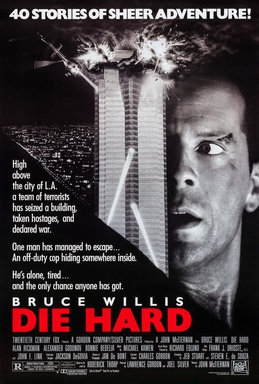
Die Hard (1988) Director: John McTiernan
“Come Out To The Coast, We’ll Get Together, Have A Few Laughs…”
★★★☆☆
Die Hard is a guilty pleasure movie, another amusing thriller from John McTiernan. It celebrates the great American working class hero, a lone everyman struggling against a sea of incompetence and bureaucracy -and the movie takes place on Christmas no less! It was widely expected to fail, and the decision to hire Bruce Willis, previously a television actor, for $5M against favored actors Arnold Schwarzenegger or Sylvester Stallone drew unfavorable press , but Die Hard has since become a Christmas “classic.” The story is based on a 1967 novel by Roderick Thorp called Nothing Lasts Forever.
Die Hard stars Bruce Willis, in his career-launching role as John McClane, a street-wise New York City cop who is flying out to Los Angeles for the holidays to salvage his collapsing marriage. His…
View original post 355 more words
October 2, 1452: Birth of Richard III, King of England and Lord of Ireland
03 Oct 2021 Leave a comment

Richard III (October 2, 1452 – August 22, 1485) was King of England and Lord of Ireland from June 26, 1483 until his death in 1485. He was the last king of the House of York and the last of the Plantagenet dynasty. His defeat and death at the Battle of Bosworth Field, the last decisive battle of the Wars of the Roses, marked the end of the Middle Ages in England.
Richard was born on 2 October 1452, at Fotheringhay Castle in Northamptonshire, the eleventh of the twelve children of Richard Plantagenet, 3rd Duke of York, and Cecily Neville, and the youngest to survive infancy. His childhood coincided with the beginning of what has traditionally been labelled the ‘Wars of the Roses’, a period of political instability and periodic open civil war in England during the second half of the fifteenth century, between the Yorkists, who supported Richard’s father…
View original post 1,378 more words
The Climate Clubs Solution | William Nordhaus
03 Oct 2021 Leave a comment
in applied price theory, applied welfare economics, comparative institutional analysis, development economics, economic history, economics of bureaucracy, economics of regulation, energy economics, environmental economics, global warming, growth miracles, international economic law, International law, politics - Australia, politics - New Zealand, politics - USA, Public Choice, public economics Tags: carbon tax, carbon trading, climate clubs, free riding, international public goods
Why Mises Is Important – Israel Kirzner
03 Oct 2021 Leave a comment
in Austrian economics, Israel Kirzner, Ludwig von Mises
History in Plastic: Credit Cards
03 Oct 2021 Leave a comment
in economic history, entrepreneurship, financial economics
2006 – David Friedman – If Life Were A Lot Longer: An Economist’s Thoughts
03 Oct 2021 Leave a comment
in applied price theory, applied welfare economics, David Friedman, economics of education, human capital, labour supply, law and economics, occupational choice, property rights
Essential Coase: Why Do Firms Exist?
03 Oct 2021 Leave a comment
in applied price theory, comparative institutional analysis, economics of information, Ronald Coase, theory of the firm
How do carbon markets work? | The Economist
02 Oct 2021 Leave a comment
in applied price theory, comparative institutional analysis, development economics, economic history, economics of bureaucracy, energy economics, environmental economics, global warming, international economic law, International law, Public Choice Tags: carbon tax, carbon trading
The Zero-Sum Fallacy
02 Oct 2021 Leave a comment

by Tim Harding
(An edited version of this article was published in
“The Skeptic” Vol 32, No. 4, December 2012)
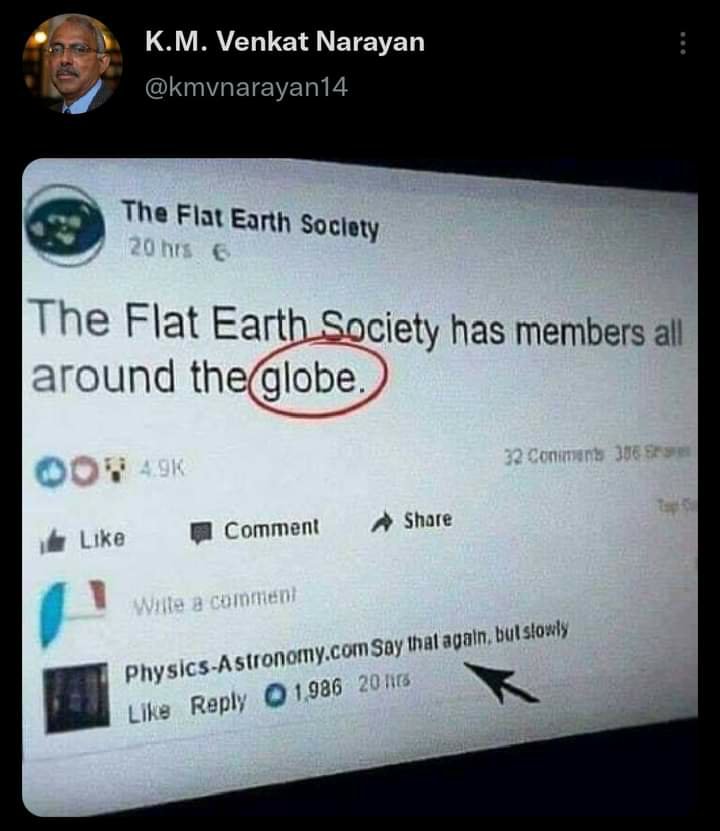
In game theory, ‘zero-sum’ describes a game where one player’s gain is a loss to other players; and the total amount of the available money or playing chips is fixed. A logical fallacy often occurs when this particular game theory is applied to real life economic or political discussions amongst non-economists – leading to false beliefs that the amount of wealth or jobs in the economy is fixed.
This mistaken view is illustrated by expressions such as ‘a larger slice of the pie’, which imply that ‘the pie’ has a fixed size and that net welfare cannot be improved by growing a bigger pie. That is, that people can only become richer by making others poorer; or that increasing labour productivity or immigration causes unemployment. In economics, this is…
View original post 373 more words
Entrevista a Robert Lucas Jr
02 Oct 2021 Leave a comment
in budget deficits, business cycles, economic growth, economic history, Euro crisis, financial economics, fiscal policy, global financial crisis (GFC), great recession, macroeconomics, monetary economics, Robert E. Lucas
The Failure of Lyndon Johnson’s Great Society
02 Oct 2021 Leave a comment

When asked to list the worst presidents of the 20th century, Woodrow Wilson, Franklin Roosevelt, and Richard Nixon belong on the list.
But this Reason video with Amity Shlaes shows why Lyndon Johnson also is among the worst of the worst.
You should watch every second of the video, but if you don’t have 33 minutes to spare, here’s a helpful summary.
Johnson declared war on poverty, jacked up federal spending on education, and pushed massive new entitlement programs, including Medicare and Medicaid,
which promised to deliver high-quality, low-cost health care to the nation’s elderly and poor. …But did the Great Society achieve its goals of eradicating poverty, sheltering the homeless, and helping all citizens participate more fully in the American Dream? In Great Society: A New History, Amity Shlaes argues that Lyndon Johnson’s bold makeover of the government was a massive failure.
Massive failure may…
View original post 319 more words
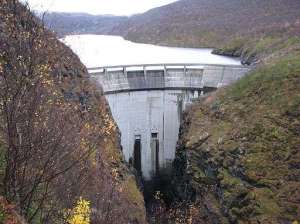
Norwegian reservoirs power homes in Great Britain via 724km cable — who wins?
02 Oct 2021 Leave a comment

 Norwegian hydro-electric site
The suspicion has to be that Britain’s ‘excess’ wind power, if any, would sell for a low price as Norway doesn’t need it, whereas a shortage of power in Britain would allow Norway to sell for a high price, assuming availability at request time. Water can be stored but wind can’t. Some reports are calling this ‘cheap hydro’, but at £1.4 billion just for the cable system such claims appear unconvincing.
– – –
Norwegian reservoirs will begin powering homes in Great Britain today as the world’s longest subsea power cable was switched on, in a boost to renewables and tight energy supplies this winter, says New Scientist.
The 724-kilometre North Sea Link is the sixth of a growing network of electricity interconnectors between Great Britain and its European neighbours, to trade energy and adapt to grids increasingly reliant on the variable output of wind, solar…
View original post 236 more words


Recent Comments