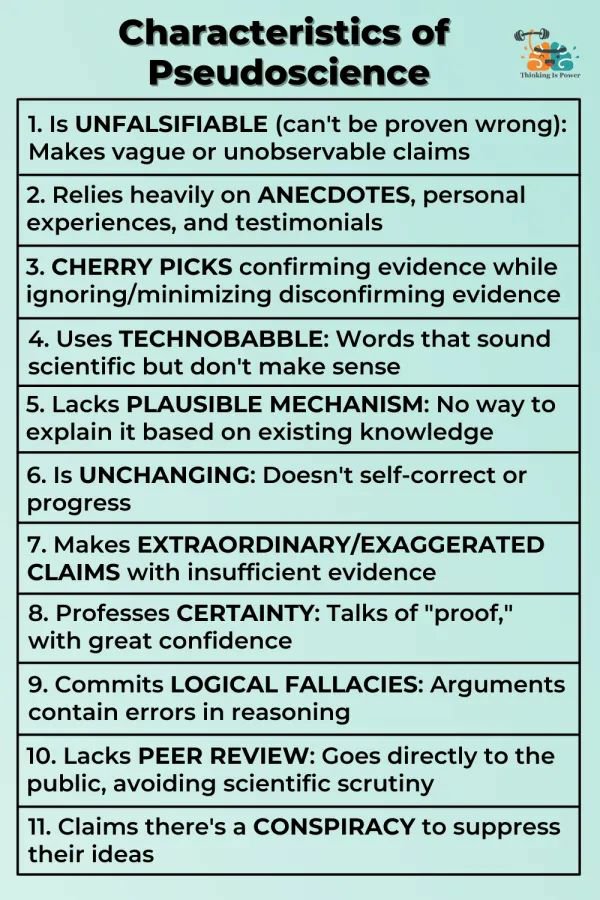
Pseudoscience
23 Sep 2021 Leave a comment
in economics of education, liberalism, Marxist economics Tags: conjecture and refutation, philosophy of science
The Russian War Machine And The Race To The Sea I THE GREAT WAR – Week 9
23 Sep 2021 Leave a comment
in defence economics, war and peace Tags: World War I
Mysterious Disappearance of Mary Seymour
23 Sep 2021 Leave a comment

Mary Seymour (August 30, 1548 – unknown), was the only daughter of Thomas Seymour, 1st Baron Seymour of Sudeley, and Catherine Parr, widow of Henry VIII of England and Ireland. Mary was born at her father’s country seat, Sudeley Castle in Gloucestershire.
Parents
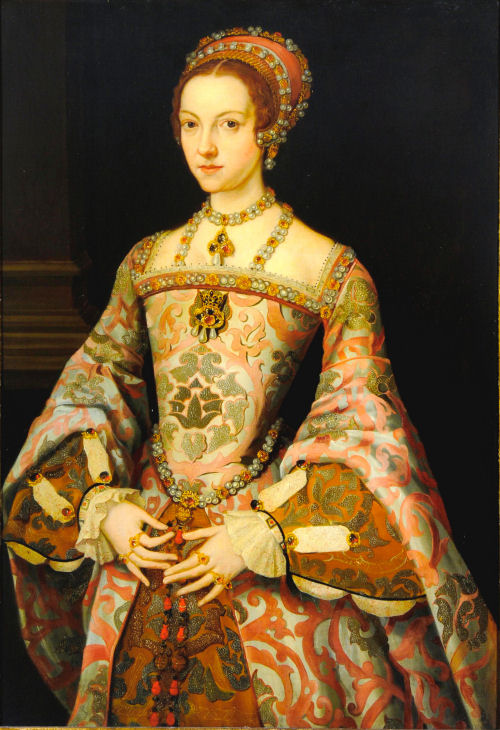 Catherine Parr was the eldest child of Sir Thomas Parr, lord of the manor of Kendal in Westmorland, (now Cumbria), and Maud Green, daughter and co-heiress of Sir Thomas Green, lord of Greens Norton, Northamptonshire, and Joan Fogge. Sir Thomas Parr was a descendant of King Edward III, and the Parrs were a substantial northern family which included many knights.
Catherine was Queen of England and Ireland as the last of the six wives of King Henry VIII from their marriage on July 12, 1543 until Henry’s death on January 28, 1547.
About six months after Henry VIII’s death, she married her fourth and final husband, Thomas…
View original post 636 more words
George Carlin: “The Planet Is Fine …”
22 Sep 2021 Leave a comment

Remember, the only species environmentalists don’t want to save and make life a living hell on Earth for are humans.
PHOTO CREDIT: By Bonnie from Kendall Park, NJ, USA – Carlin Does Trenton, CC BY-SA 2.0, https://commons.wikimedia.org/w/index.php?curid=4027048
The Most Pointless Election Since 1965
22 Sep 2021 Leave a comment

2019 & 2021
We have just undergone a futile election which has produced substantively the same outcome as the previous general election in October 2019: a Liberal plurality around 15 to 20 seats short of a majority.
On 21 October 2019, Canadians elected the 43rd Parliament as follows:
| Party | Seat Count | Popular Vote | Vote Total |
| Liberals | 157 | 33.1% | 5,911,588 |
| Conservatives | 121 | 34.4% | 6,150,177 |
| Bloc Quebecois | 32 | 7.7% | 1,377,234 |
| New Democrats | 24 | 15.9% | 2,845,949 |
| Greens | 3 | 6.5% | 1,160,694 |
As of around 0900 on 21 September, the preliminary results show that on 20 September 2021, we have elected a 44th Parliament virtually identical to its predecessor. The results in some ridings might change as Elections Canada counts the rest of the mail-in ballots this week, but the general result of a Liberal plurality at roughly the same level as two years ago will not.
| Party | Seat Count | Popular Vote |
| Liberals |
View original post 1,106 more words
Pumped hydro more expensive than batteries: the calculations
22 Sep 2021 Leave a comment

Now let’s take a look into the calculations that Ronald Brakels made to prove that hydro power (Snowy Hydro 2.0) is more expensive than battery storage (Hornsdale Power Reserve). His arguments were spread over many paragraphs and at first glance it was not very clear what he was calculating exactly and why. Therefor, I thought it might be a good idea to redo his calculations. This reconstruction will be the subject of this post and I will clearly write out all his calculations in order to better understand his arguments.
The calculation can be divided into three parts.
View original post 748 more words
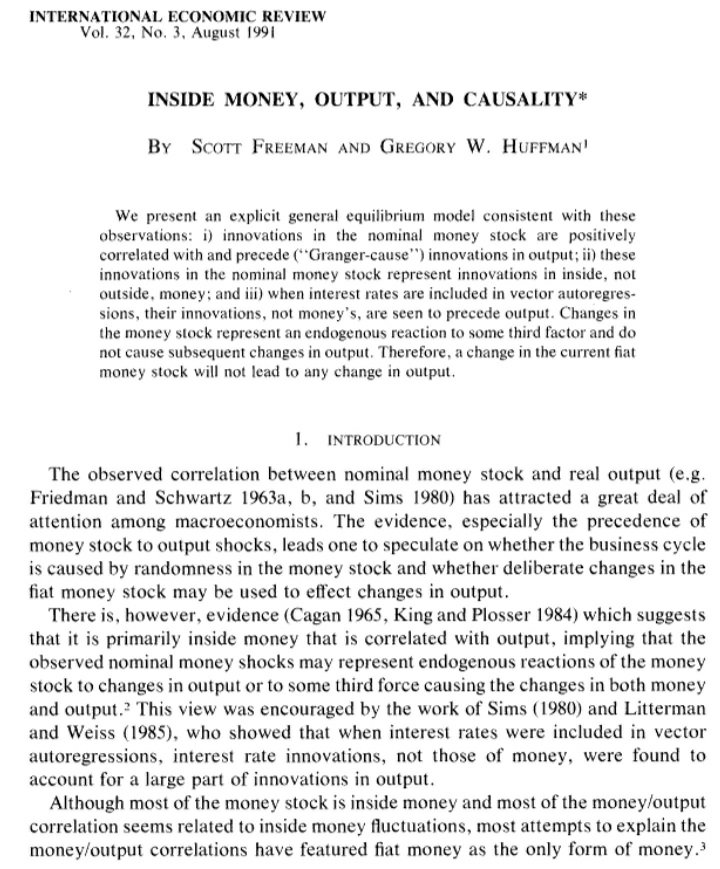
Scott Freeman on whether money matters
22 Sep 2021 Leave a comment
in applied price theory, econometerics, economic history, financial economics, macroeconomics, monetarism, monetary economics Tags: monetary policy
Why Do We Have Fewer Outbreaks? Epidemiological Transition: Crash Course Outbreak Science #3
22 Sep 2021 Leave a comment
in health economics Tags: economics of pandemics
Americans Are Getting Richer, but the Relevant Question is “How Quickly?”
22 Sep 2021 Leave a comment

Our friends on the left believe (or at least claim to believe) that the United States is an unfair nation because the rich get richer and the poor get poorer.
More specifically, they assert that the economy is a fixed pie and that when people like Bill Gates and Jeff Bezos become rich, then there is less prosperity for everyone else.
This is grotesquely inaccurate, as I explained earlier this year.
We have a great opportunity to revisit this issue because the Census Bureau just released its annual report on Income and Poverty in the United States. I went to Table A2 and created this chart to show how inflation-adjusted income has increased over time for the average household.
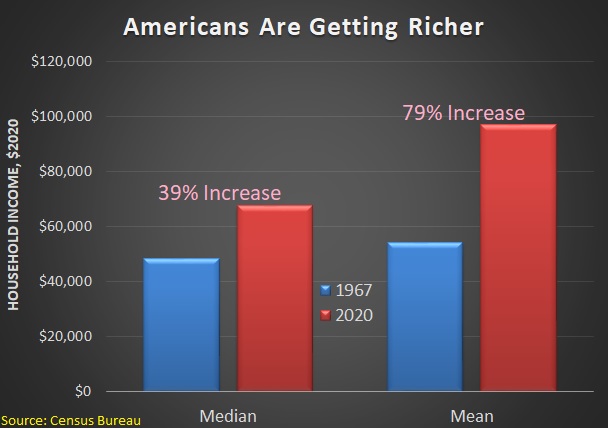
In other words, families are earning more, no matter how we measure the average (“median” is the household in the middle and “mean” is the average of all…
View original post 449 more words
Illusions of History
22 Sep 2021 Leave a comment

That is the title of a new New Zealand Initiative report out yesterday, with the subtitle “How misunderstanding the past jeopardises our future”.
I’m no fan of this government, including its economic policies, and often lament how little New Zealand economic history is taught (none at all for example in our capital city university), so I should have been favourably predisposed towards such a report, which appears to have been prompted (specifically) by a couple of recent quotes from the Minister of Finance. This is how the report starts

And here is how it ends
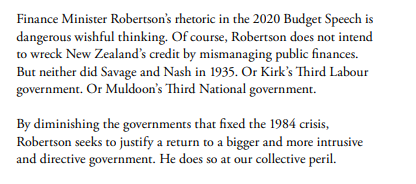
You’ll get the drift.
I’m very sympathetic to the story that both Robertson and his boss are keen on a “bigger and more intrusive and directive government”, and it is clear that they have no serious ideas about (and demonstrate little interest in) reversing the decades of relative productivity decline. Most likely, their approach will…
View original post 2,043 more words
How Chicago Economics is Helping End a Pandemic: Enabling Choice and Competition in Healthcare
22 Sep 2021 Leave a comment
in applied price theory, applied welfare economics, comparative institutional analysis, economics of regulation, entrepreneurship, health economics, industrial organisation, survivor principle
Entrevista Gary Becker, Nobel Economía 1992 – ICEX
22 Sep 2021 Leave a comment
in applied price theory, applied welfare economics, budget deficits, business cycles, comparative institutional analysis, economic growth, economics of education, fiscal policy, Gary Becker, history of economic thought, human capital, industrial organisation, labour economics, labour supply, macroeconomics


Recent Comments