
Lost on the woke
19 Oct 2020 Leave a comment
in discrimination, economics of education, gender, human capital, labour economics, labour supply, minimum wage, occupational choice, politics - Australia, politics - New Zealand, politics - USA, poverty and inequality, unemployment, welfare reform Tags: child poverty, family poverty, regressive left
Panic in Moscow! The Germans are here! – WW2 – 112 – October 17, 1941
18 Oct 2020 Leave a comment
in defence economics, war and peace Tags: World War II
More blasphemy
18 Oct 2020 Leave a comment
in discrimination, economics of crime, economics of religion, law and economics, politics - Australia, politics - New Zealand, politics - USA Tags: free speech, Freedom of religion, political correctness, regressive left

Bertrand Russell on faith versus fact
18 Oct 2020 Leave a comment

I was shocked when a reader mentioned, in a recent comment, that the famous philosopher, logician, mathematician and vociferous atheist Bertrand Russell had written a book about the conflict between religion and science. How could I have missed it when I wrote a book about the same issue in 2015, and spent two years reading before I wrote it? I was chagrined, and of course nothing would do but for me to get the book, which was published in 1935.
Fortunately, our library had it, and I got it and devoured it within a few days. I was happy to once again read Russell’s clear prose and dry wit, but also to see that while his topic was nominally the same as mine, there isn’t much overlap between our books. I’ll just highlight a few points of similarity and difference, and mention a few of Russell’s ideas that we still…
View original post 1,249 more words
#globalwarming #climateemergency @Greenpeace @Greens @AOC @NZGreens @BernieSanders
18 Oct 2020 Leave a comment
in development economics, discrimination, economic history, economics of bureaucracy, economics of crime, economics of regulation, energy economics, entrepreneurship, environmental economics, financial economics, gender, global warming, growth miracles, human capital, income redistribution, labour economics, labour supply, law and economics, liberalism, libertarianism, Marxist economics, minimum wage, occupational choice, occupational regulation, politics - Australia, politics - New Zealand, politics - USA, poverty and inequality, Public Choice, rentseeking, unemployment, unions, welfare reform Tags: The fatal conceit

Russian Civil War in Central Asia I THE GREAT WAR 1920
18 Oct 2020 Leave a comment
in defence economics, war and peace Tags: Russian revolution, World War I
Behind on my blasphemy
17 Oct 2020 Leave a comment
in economics of religion, politics - Australia, politics - New Zealand, politics - USA Tags: free speech, Freedom of religion, political correctness, regressive left

Climate science and the Supreme Court
17 Oct 2020 Leave a comment

by Judith Curry
An alternative assessment of U.S. Supreme Court Justice nominee Amy Coney Barrett’s statements on climate change.
View original post 972 more words
Hydrogen-based heating: UK research raises questions
17 Oct 2020 Leave a comment

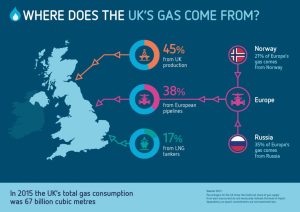 Credit: mygridgb.co.uk
Questions such as: why bother? If it’s three times the cost of natural gas and it’s not technically possible to produce it at large scale from renewables, in what way does it make any sense, even to committed climate alarmists?
– – –
Using hydrogen instead of natural gas for heating could help the UK to achieve net carbon-neutrality by 2050, according to new Imperial research, reports TechXplore.
Currently, non-renewable natural gas from fossil fuels is used to supply half of Europe’s heat demand, with national shares as high as 80 percent in the Netherlands and the UK.
However, the UK has committed to developing an economy with net-zero greenhouse gas emissions, and one of the ways to achieve this might involve switching natural gas for hydrogen.
View original post 294 more words
Amy Coney Barrett dodges the issue of climate change
17 Oct 2020 Leave a comment
By the end of today, Amy Coney Barrett’s hearing will be over, and she’ll be on the fast track to confirmation as a Supreme Court Justice. Like most such candidates, she dodged questions about how she’d rule in various cases or in various circumstances. But she also dodged questions about scientific fact—in particular, about climate change. But that doesn’t matter, so long as she doesn’t espouse something as dumb as a flat Earth. Wait, I take that back: she could have said that the question of the Earth’s shape is unsettled, and she’d still get confirmed.
No, it doesn’t matter if she denies the scientific consensus, for that’s the GOP’s position about climate change, and that, more than anything, tells you about the ideological and political nature of this judge. People have said that we should ignore her religious beliefs, and she’s averred that they won’t affect her rulings. Does…
View original post 603 more words
Braking the law: is there, and should there be, an executive veto over laws made by parliament?
16 Oct 2020 Leave a comment


During the Brexit crises of 2019, something exceptionally rare happened twice in less than six months: parliament passed legislation without the government’s consent. But are there constitutional veto mechanisms that governments can use to prevent this? In a new Unit report, Paul Evans explores this question in detail. He summarises his conclusions here.
What do executive vetoes look like?
Many constitutional democracies include mechanisms whereby a head of state can veto a law made by the legislature, but few of these are absolute vetoes. Most are suspensory, inviting the legislature to think again, but giving it the last word. The US Constitution is the most obvious example of such an arrangement. France has a broadly similar system but, as with many if not most such vetoes, it isn’t used. Some states (for example Iceland) enable the president to put a law to a referendum. Others (such as Ireland) leave…
View original post 2,593 more words
Merriam-Webster Dictionary changes language about sexuality during Amy Coney Barrett hearings
16 Oct 2020 Leave a comment
It’s not enough these days for dictionaries to record words and phrases and document as their meaning changes over time. Now, in line with Woke practice, dictionaries are actually running ahead of the pack, changing meanings and connotations to guide usage.
Or so it seems, at least to me, with the latest term: “sexual preference”, meaning either the sexes or genders with which one “prefers” to have sex, or to whom one is “oriented” sexually. And it’s the difference between “prefer” and “orient” that is the heart of this new debate. The debate, it appears, is over free will of a sort: whether one chooses to have sex with a certain gender, and you could have chosen otherwise, or whether one is constrained to have sex with members of a certain gender. To me, of course, there’s no difference here: “choose” is simply shorthand for what one does when facing…
View original post 1,168 more words
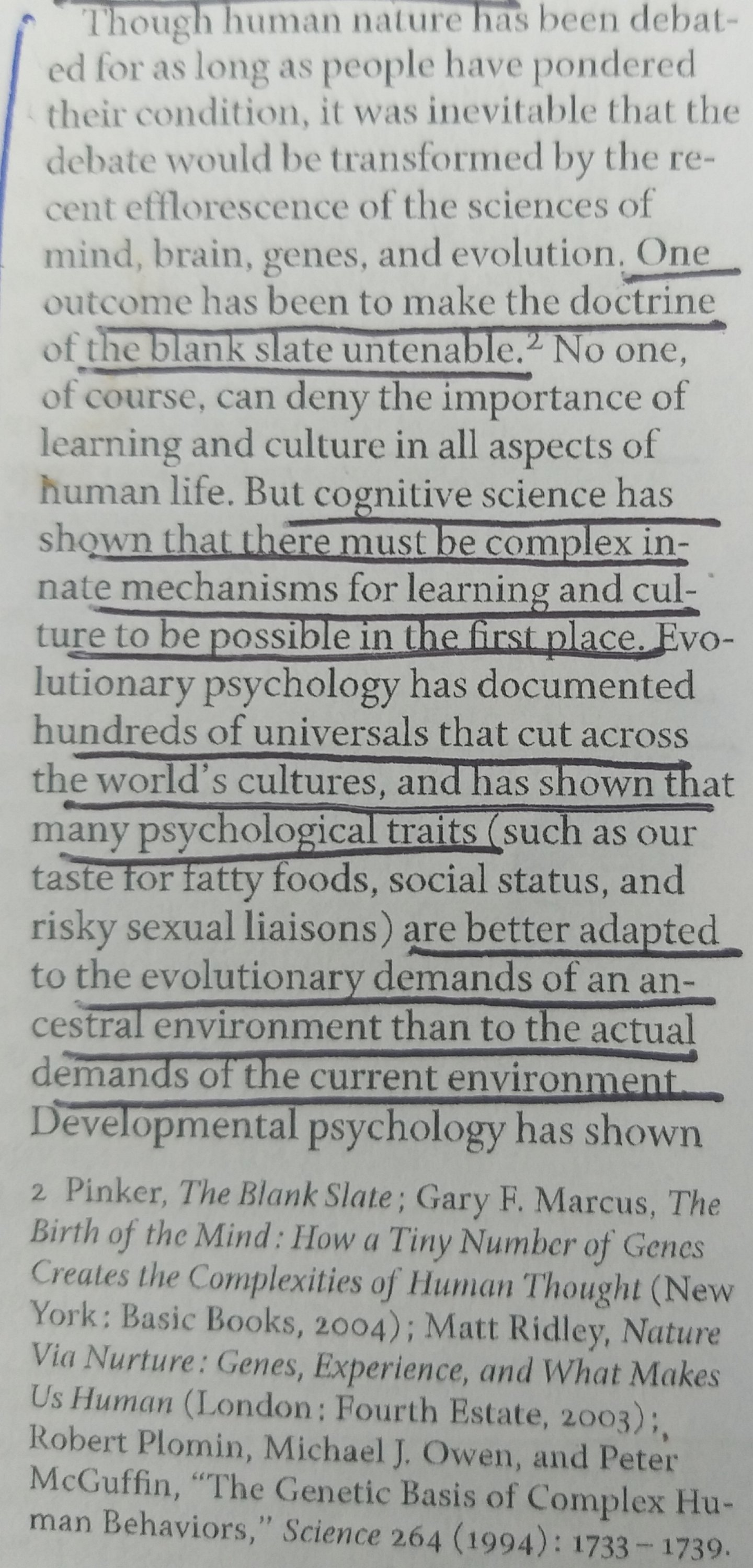
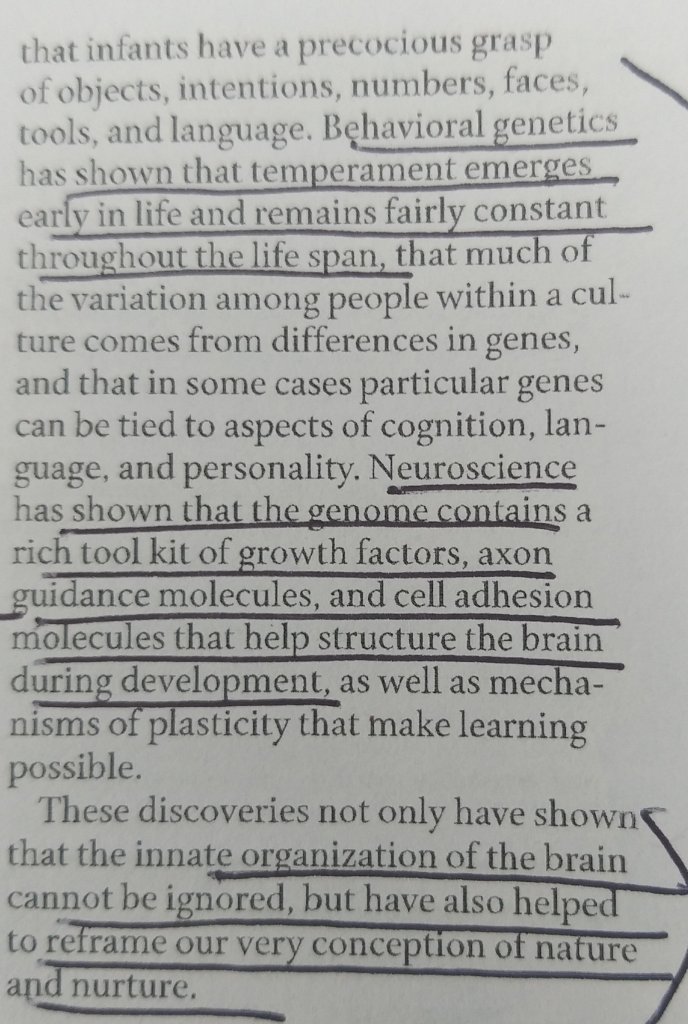
Intelligence Failures | Nuclear Proliferation Explained
16 Oct 2020 Leave a comment
in defence economics, war and peace Tags: nuclear proliferation
Maori and the one 1840 treaty
16 Oct 2020 Leave a comment


Clarification from Bruce Moon
Who is Maori?
To the profound question of “Who is a Maori”, the official definition, as far as I can make out, is “anybody who feels like a Maori”. Apart from anything else, to define something in terms of itself is a piece of logical nonsense, a fake definition and it is surely somewhat of a sobering thought that many millions of dollars of our money have been and will be dished out by a succession of governments on the basis of a fake definition. (You may laugh or cry at that — your choice!)
Only one Treaty
Some people refer to “the Maori version of the Treaty of Waitangi”. Well, no, in actual fact there is no “Maori version”, simply one Treaty of Waitangi and that is in the Ngapuhi dialect, modified of necessity by the inclusion of some important missionary-defined words owing to the…
View original post 261 more words


Recent Comments