What Was Hygiene Like In The Wild West?
12 Oct 2020 Leave a comment
in economic history, health economics
Heather Mac Donald And Glenn Loury On Policing, Race, And Ideological Conformity
12 Oct 2020 Leave a comment
in discrimination, economics of crime, economics of education, gender, health and safety, human capital, labour economics, labour supply, law and economics, politics - USA, poverty and inequality Tags: political correctness, racial discrimination, regressive left
The Rules of Logic Part 1: Why Logic Always Works
12 Oct 2020 Leave a comment

An Introduction to Logic
In debates, I often find that people are unwilling to accept the rules of logic, and they make foolish comments like, “well you’re entitled to your opinion.” In reality, the rules of logic are like the rules of mathematics. They are an inherent and immutable property of existence, not opinions. Just as 2+2 always equals four, the rules of logic are always true and must always be followed. To illustrate, the most basic rule upon which all other rules rely is known as the Law of Noncontradiction. It states that something cannot be A and not A simultaneously. In other words, two mutually exclusive things cannot exist simultaneously. For example, you cannot have a circular triangle, because a circle, by definition, has no straight lines and no corners, and a triangle, by definition, has three straight lines and three corners. An object cannot simultaneously have…
View original post 1,096 more words
The Rules of Logic Part 3: Logical Fallacies
12 Oct 2020 Leave a comment
Perhaps the most common mistake that people make in debates is the use of logical fallacies. This occurs largely because people generally are not taught logical fallacies, and, therefore, don’t recognize them when they use or see them. Knowing logical fallacies and being able to recognize them is, however, extremely important, because, as previously explained, the presence of even a single fallacy will completely destroy an argument and force you to reject it. So this post is my attempt to help my readers learn the how to spot logical fallacies. What follows is a list of some of the most commonly committed fallacies. For each of them, I attempted to provide examples to illustrate how they work (or, rather, fail to work). I have grouped these fallacies by “type.” These are not officially recognized distinctions (such as formal and informal fallacies), rather, they are groupings that I find useful…
View original post 10,580 more words
Sabine Hossenfelder says we don’t have free will, but its nonexistence shouldn’t bother us
12 Oct 2020 Leave a comment

Here we have the German theoretical physicist, author, and science popularizer Sabine Hossenfelder giving an 11-minute talk called “You don’t have free will, but don’t worry”. (My own talk on the subject is the first five words she uses, and I think we should be concerned—though not in the sense she means.) The video and a written transcript are on her website Backreaction.
If you’ve read this site, you’ll know that my own views are pretty much the same as hers, at least about free will. We don’t have it, and the fundamental indeterminacy of quantum mechanics doesn’t give it to us either. Hossenfelder doesn’t pull any punches:
This means in a nutshell that the whole story of the universe in every single detail was determined already at the big bang. We are just watching it play out.
These deterministic laws of nature apply to you and your brain…
View original post 1,407 more words
In Defense of Christopher Columbus: An Exaggerated Evil
12 Oct 2020 Leave a comment

Christopher Columbus is a controversial historical figure who is widely viewed as terrible. Every year we question whether we should continue to have a day to celebrate his discovery. But, as this video points out, his bad deeds as highlighted by Leftists have been exaggerated to make him fit the role of a villain.
The hatred directed at Columbus could be the result of centuries of mistreatment against natives by Europeans and Americans that might continue to this day and should not be downplayed nor ignored. In the case of the Left and what Knowing Better exposes brilliantly, is that Columbus is the convenient scapegoat to blame misfortunes on rather than to have to explain the true nuanced nature of history.
PHOTO CREDIT:Christopher Columbus on Santa Maria 1492 By Emanuel Leutze – http://mr_sedivy.tripod.com/explor2.htm, Public Domain, https://commons.wikimedia.org/w/index.php?curid=17318667
The Anglo-Saxons: Hostages, Oaths, Treaties and Treachery I
12 Oct 2020 Leave a comment

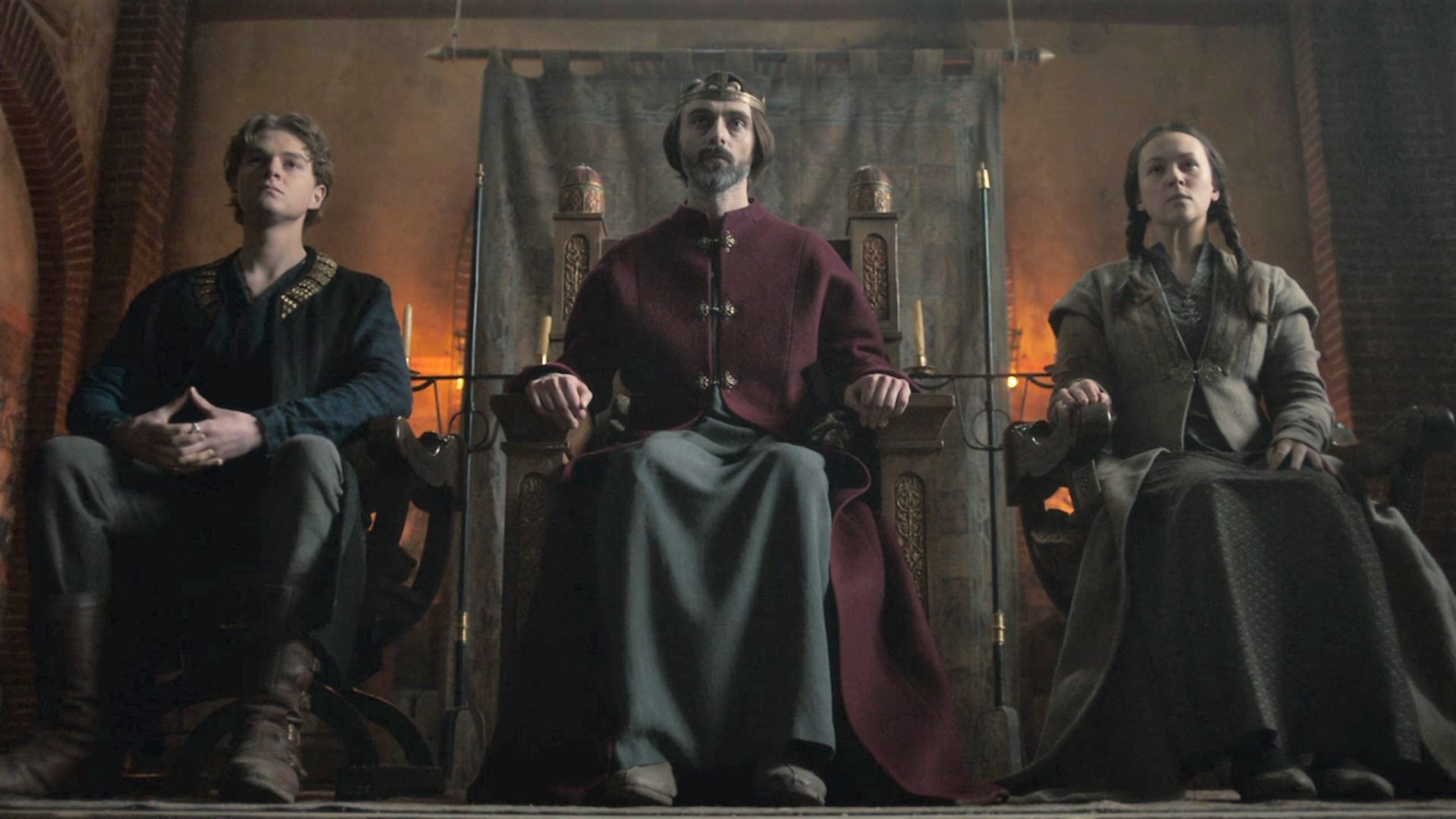
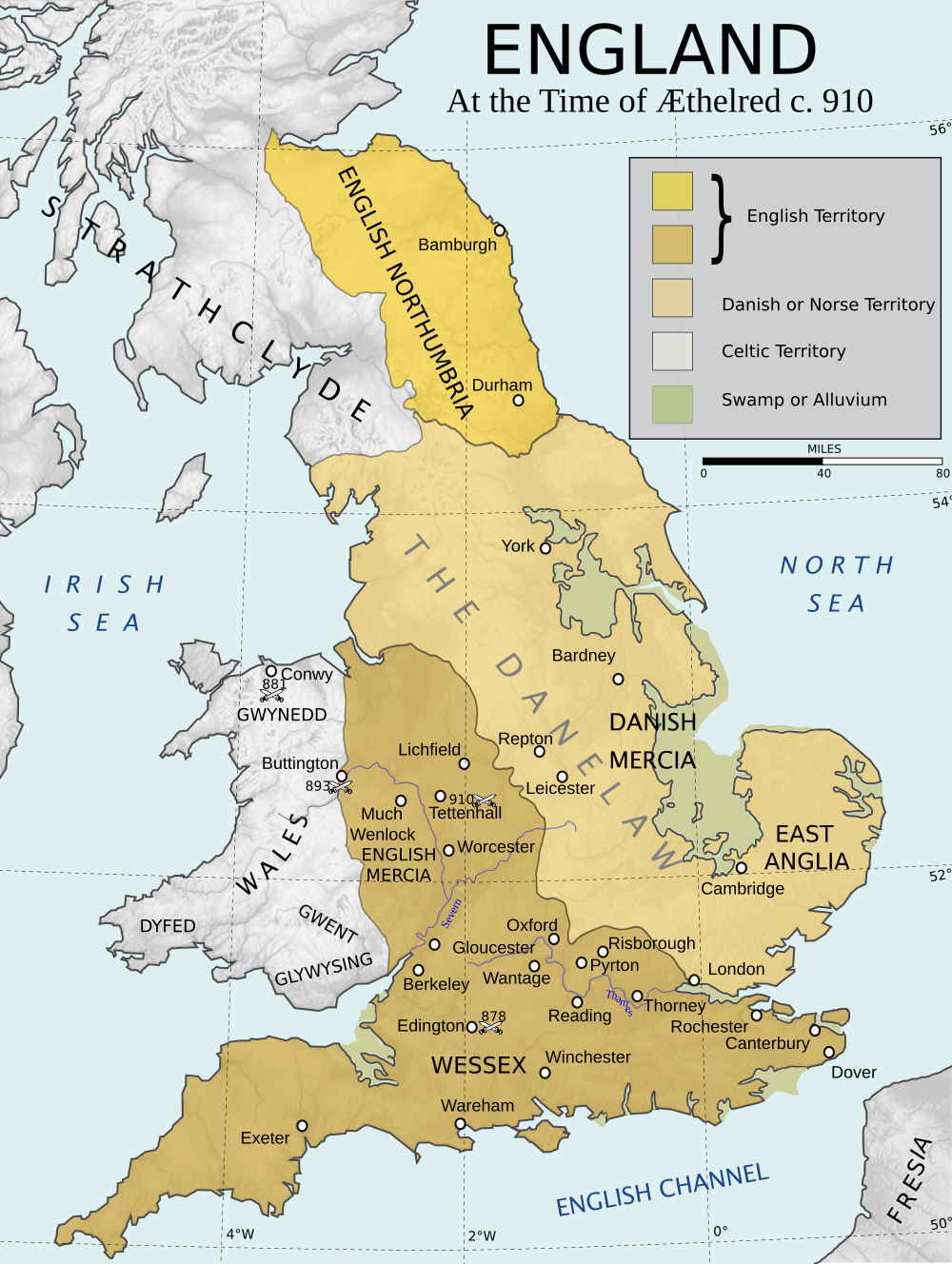
Bargains made and broken involving the exchange of hostages and the swearing of oaths were such an important part of Anglo-Saxon warfare that scarcely an event was recorded without such an accompaniment. It is the glue that held the model of the political world together. By looking at the nature of such agreements it can be shown that the familiar tools used to cement agreements varied wildly in their effectiveness. The study of this one phenomenon alone can explain so much about Anglo-Saxon history.
There were a number of ways in which the leaders of early Medieval England could seek to cement an agreement or alliance. For Christian parties there was the baptismal sponsorship or god-parenting arrangement. Also, there was the marriage alliance, particularly effective if the leader in question had several available beautiful sisters at his disposal, as did King Athelstan at the beginning of his reign (924–39). Athelstan…
View original post 3,431 more words
The Floating Harbors of D-Day
12 Oct 2020 Leave a comment
in defence economics, war and peace Tags: D-Day, World War II
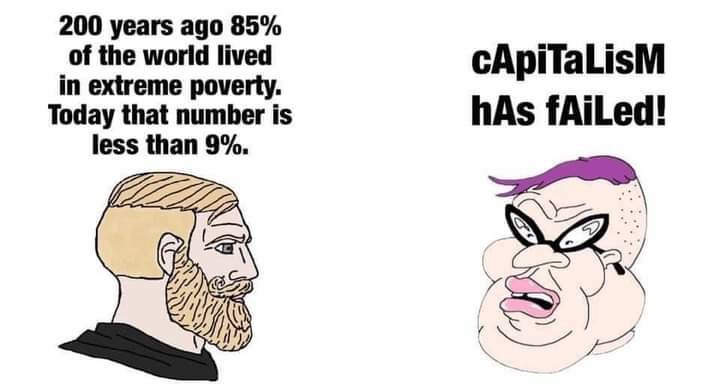
.@AOC @BernieSanders @Greens @NZGreens
12 Oct 2020 Leave a comment
in Austrian economics, comparative institutional analysis, constitutional political economy, development economics, economic growth, economic history, entrepreneurship, growth disasters, growth miracles, history of economic thought, human capital, income redistribution, industrial organisation, international economics, labour economics, labour supply, law and economics, liberalism, macroeconomics, Marxist economics, politics - Australia, politics - New Zealand, politics - USA, poverty and inequality, property rights, Public Choice, survivor principle Tags: pessimism bias, regressive left, The Great Enrichment
An Open Road to Moscow! – WW2- 111- October 10, 1941
12 Oct 2020 1 Comment
in defence economics, laws of war, war and peace Tags: World War II
Ə: The Most Common Vowel in English
12 Oct 2020 Leave a comment
in economics of education Tags: economics of languages
David Laidler should be awarded the Nobel Prize in Economics
12 Oct 2020 Leave a comment

My biggest wish for the Autumn is that David Laidler will win the Nobel Prize in Economics next week for …
“…his contribution to monetary economics and the history of economic thought”
There is unfortunately little chance that that will happen, but it is about time that a historian of economic thought is awarded the Nobel Prize.
While we are awaiting for the good news (fingers crossed) you should read David’s latest paper – Reassessing the Thesis of the Monetary History. This is the abstract:
The economic crisis that began in 2007 and still lingers has invited comparison with the Great Depression of the 1930s. It has also generated renewed interest in Milton Friedman and Anna Schwartz’s explanation of the latter as mainly the consequence of the Fed’s failure as a lender of last resort at its onset, and the ineptitude of its policies thereafter. This explanation is reassessed…
View original post 84 more words
Religious Liberty Symposium Keynote | Richard Epstein
12 Oct 2020 Leave a comment
in comparative institutional analysis, constitutional political economy, economics of bureaucracy, income redistribution, law and economics, politics - USA, Public Choice, public economics, rentseeking Tags: constitution law


Recent Comments