
Wokeness explained
07 Oct 2020 Leave a comment
in economics of education, liberalism, libertarianism, Marxist economics Tags: political correctness, regressive left
We Must Question The COVID-19 Status Quo (w/Dr. Jay Bhattacharya)
07 Oct 2020 Leave a comment
in health economics, politics - Australia, politics - New Zealand, politics - USA Tags: economics of pandemics
America’s Largest Fire
07 Oct 2020 Leave a comment

This week is the anniversary of the Great Fire of 1910 that burned in Idaho and Montana and was nearly as large as all the fires in the US combined so far this year.
PHOTO CREDIT: Wallace, Idaho after the Big Blowup By National Photo Company – U.S. Library of Congress Prints &; Photographs Online Catalog, Public Domain, https://commons.wikimedia.org/w/index.php?curid=6989498
Why are North and South India so different on gender?
07 Oct 2020 Leave a comment

Alice Evans in this piece (HT: MR blog):
Everyone knows that Southern and Northern India are very different in culture, language, and socio-economic development. But the most dramatic regional disparity may be in gender relations.
Southern and North-eastern women are more likely to
- survive infancy
- be educated
- marry later
- choose their own husbands
- interact more closely with their husbands
- bear fewer children
- own more assets
- exercise more control over their dowry
- socialise with friends
- move more freely in their communities and
- work alongside men.
- In North/North-west India, women are much more constrained, and sex ratios are far higher
Education, paid work, and age are all associated with greater economic and physical autonomy. But even if a woman completes secondary school, she is less likely to choose her husband if she lives in the North.
Social Credit – too timid by far this time
07 Oct 2020 Leave a comment

Social Credit ideas have a long history in New Zealand. The originator, Major Douglas, even visited New Zealand in 1934 and testified to a parliamentary committee. The ideas influenced Labour in particular in the 1930s, and some who later played very prominent roles in National. We got our very own political party – the Social Credit Political League – in 1954 and from time to time Social Credit did very well in the polls (and under FPP even managed four MPs at the different times from the 1960s to the 1980s). I recall a time – perhaps 1980 – when Social Credit briefly polled ahead of Labour. There had been an entire Royal Commission in the 1950s, mostly intended to debunk them, but they weren’t deterred – as a young economist at the Reserve Bank, a fair amount of my time was spent responding to letters, to us or the…
View original post 2,172 more words
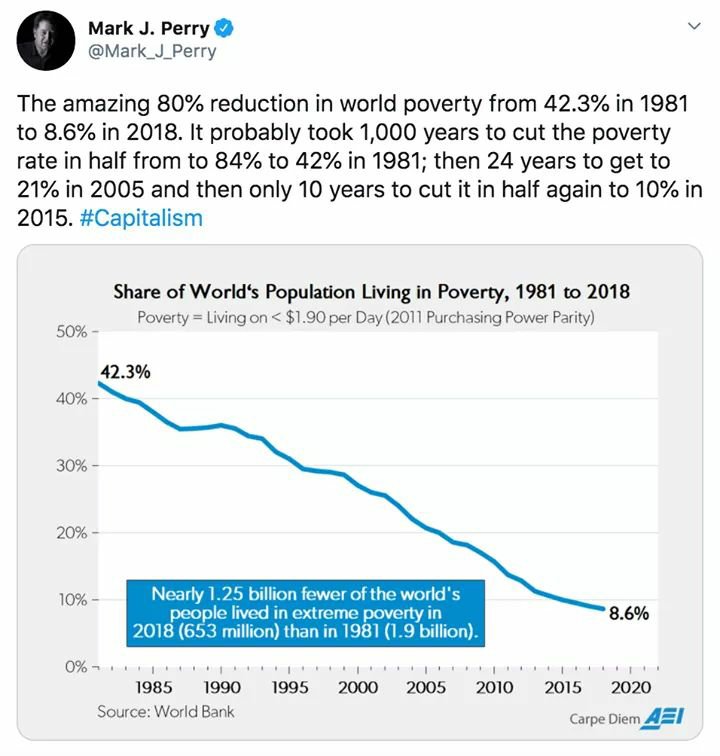
The Great Fact @AOC @BernieSanders @Greens @NZGreens
07 Oct 2020 Leave a comment
in comparative institutional analysis, development economics, economic history, growth disasters, growth miracles, liberalism, Marxist economics Tags: The Great Enrichment, The Great Escape, The Great Fact
What is ecological economics’ BIRTH CREDITs? What does BIRTH CREDIT mean?
06 Oct 2020 Leave a comment
in applied price theory, economics of crime, economics of love and marriage, labour economics, labour supply, law and economics, population economics Tags: ageing society, cranks, population bomb
Hydrogen Hyperbole: Debunking Overblown Claims That Hydrogen Can Save Intermittent Wind & Solar
06 Oct 2020 Leave a comment


Renewable energy rent seekers claim converting useless, unpredictable and unreliable wind and solar power into hydrogen gas is a cinch. Sure, the notion of turning useless electricity into something that can be used as and when consumers need it – rather than something that depends on the whims of mother nature – makes sense – at a conceptual level.
But that’s the point when the reality carriage detaches from the dream caboose.
If converting chaotic wind and solar into hydrogen gas was as cheap and easy as its proponents suggest, then market forces would have brought the process into being, years ago. However, rent seekers pushing the hydrogen line are already putting their hands out for government ‘assistance’ – so get set for yet another crony capitalist playground, where massive and endless subsidies are the endgame.
Like every other country suffering from the wind and solar obsession, Australia’s Federal government…
View original post 1,381 more words
The barbarity of the medieval criminal law: petty treason and the murders of Sir Thomas Murdak and John Cotell
06 Oct 2020 Leave a comment

In today’s blog Dr Simon Payling, senior research fellow in our Commons 1461-1504 project, once again turns his attention to crime and punishment in the medieval period. In the 14th century, the criminal law system may have worked slowly, but it was particularly harsh to those convicted of ‘petty treason’…
In the first months of 1316 there was a notable series of deaths in the knightly family of Gayton.In the space of four days in January the head of the family, Sir Philip, a former Warwickshire MP, and his son and heir, Theobald, died at their manor of ‘le Grave’ in that county, and it may be that the two men were victims of some infectious disease.Disease, however, was emphatically not the explanation for the third of the deaths. The heirs to the Gayton estates were Theobald’s two sisters, both married, the elder of the two, Juliana, to Sir…
View original post 940 more words
And so another term passes and nothing changes for the better
06 Oct 2020 Leave a comment
A couple of years ago I had my arm twisted and agreed to write a chapter for a new book on New Zealand public policy being edited by a couple of Victoria University academics. My chapter was to be on the economy, and although the general tone of the book was to be rather upbeat, about the public policy and governance frontiers New Zealand had marked out, there wasn’t very much to be upbeat about in the longer-term New Zealand economic story. And so I wasn’t.
The published book finally turned up in the mail last week and I’ve started reading it (there might be a post later about some of the other chapters). In my chapter (a slightly longer version of which is here) I’d highlighted the continuing relative decline in New Zealand’s economic performance. I’d forgotten that I’d ended the chapter this way (emphasis added)
Looking ahead…
View original post 2,277 more words
There’s nothing new about the concept of end of life choice
06 Oct 2020 Leave a comment

This post was written by David Barber, media adviser and newsletter editor for the End of Life Choice Society
There is nothing new about the concept of a doctor helping to hasten the end of somebody who is already dying to spare further pain and suffering.
It is not some fanciful New Age idea, as some seem to think in the lead-up to this month’s referendum on the End of Life Choice Act.
Euthanasia (the word translates as “good death” in Greek) was practised in Ancient Greece and Rome, where writers and philosophers reported that good emperors prayed for a dignified and pain-free farewell.
After becoming the first country to allow women to vote, in 1893, New Zealand developed a trailblazing reputation for social reform, but has fallen behind in legalising medical assistance to die, which is seen by advocates as the last human right denied citizens – the…
View original post 518 more words
Unclear if Draconian Measures Saved Lives — John P.A. Ioannidis
06 Oct 2020 Leave a comment
in applied welfare economics, economics of bureaucracy, health economics, politics - Australia, politics - New Zealand, politics - USA, Public Choice Tags: economics of pandemics, offsetting bbehaviour, pessimism bias, The fatal conceit, unintended consequences
Assistant Pastor of church an “employee” for unfair dismissal claim
06 Oct 2020 Leave a comment

I have commented previously on the question of the employment status of members of the clergy, which can be quite complicated. A recent decision of the Fair Work Commission, Solomon Woldeyohannes v Zion Church in Melbourne Australia Inc [2020] FWC 4194 (11 August 2020) holds that an assistant pastor of a small incorporated church was an employee of the church, and was able to commence an action for unfair dismissal.
View original post 1,311 more words


Recent Comments