The ubiquity and selectiveness of statistical discrimination
05 Oct 2020 Leave a comment
in applied price theory, discrimination, economics of crime, economics of education, economics of information, human capital, labour economics, labour supply, law and economics, politics - USA, poverty and inequality Tags: adverse selection, asymmetric information, racial discrimination, statistical discrimination
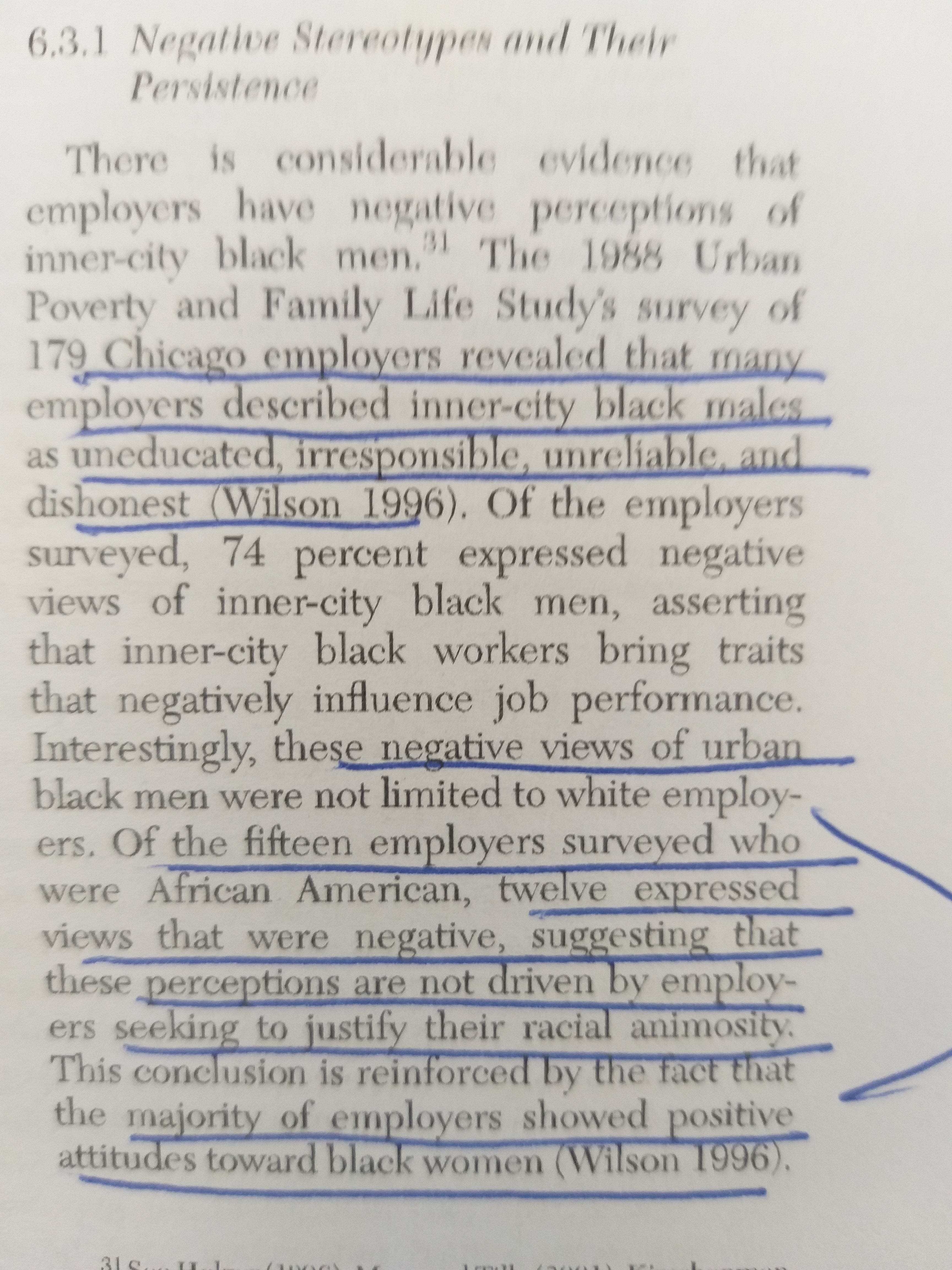
Lang and Lehmann 2005, JEL
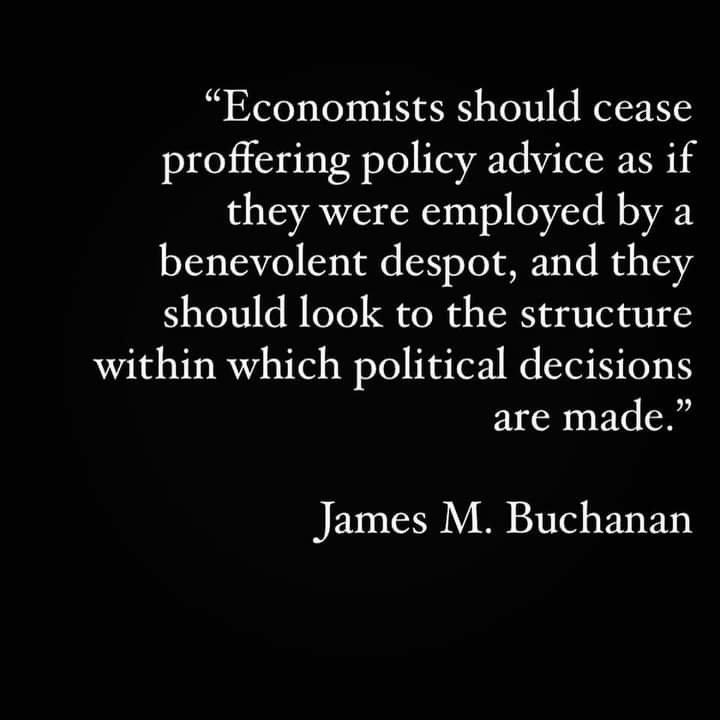
What should public service economists do?
05 Oct 2020 Leave a comment
in comparative institutional analysis, constitutional political economy, economics of bureaucracy, history of economic thought, James Buchanan, James Buchanan, Public Choice, public economics Tags: The fatal conceit
One less thing for @amnesty to grumble about
05 Oct 2020 Leave a comment
in defence economics, laws of war, war and peace Tags: regressive left, useful idiots, war against terror

Milton Friedman on Taxation
05 Oct 2020 Leave a comment

Yesterday’s column featured some of Milton Friedman’s wisdom from 50 years ago on how a high level of societal capital (work ethic, spirit of self-reliance, etc) is needed if we want to limit government.
Today, let’s look at what he said back then about that era’s high tax rates.
His core argument is that high marginal tax rates are self-defeating because the affected taxpayers (like Trump and Biden) will change their behavior to protect themselves from being pillaged.
This was in the pre-Reagan era, when the top federal tax rate was 70 percent, and notice that Friedman made a Laffer Curve-type prediction that a flat tax of 19 percent would collect more revenue than the so-called progressive system.
We actually don’t know if that specific prediction would have been accurate, but we do know that Reagan successfully lowered the top tax rate on the rich from 70 percent…
View original post 133 more words
What Was Hygiene Like In The Victorian Era?
05 Oct 2020 Leave a comment
in economic history, health economics
How we fool ourselves
05 Oct 2020 Leave a comment

by Judith Curry
Crowd sourcing examples of fallacious thinking from climate science.
View original post 757 more words
How not to science: Lessons from flat earthers and climate change deniers
05 Oct 2020 Leave a comment

 A great quote from one of my favorite shows, Stargate SG1 (Season 3 Episode 19, “New Ground”)
Science is an amazingly powerful tool for disentangling fact and fiction. When done correctly, it is a systematic, objective, unbiased, and self-correcting method for understanding our universe. Unfortunately, many people don’t appreciate the objectivity that science requires, and instead view it as a blunt instrument for proving what they already “know” to be true. You see, science always has to ask open-ended questions, because science is not a method for trying to prove something. Rather, science is a method for trying to learn what is true. It is a method for setting aside your biases, testing possibilities, and discerning objective reality. Thus, science must always go from evidence to a conclusion. It can never go from a conclusion to evidence. Indeed, if you start with a conclusion, then look for evidence to support…
View original post 1,565 more words
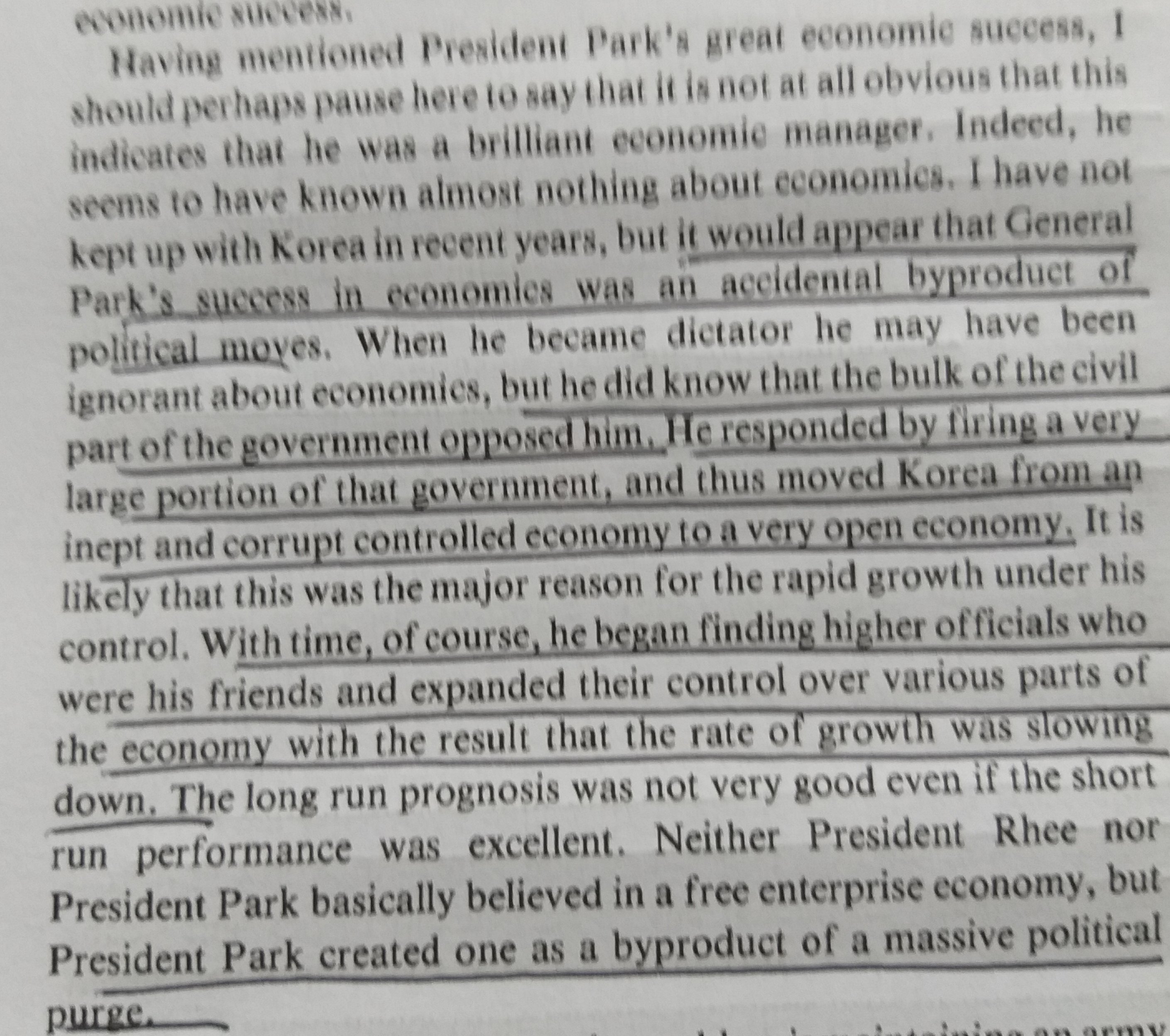
Gordon Tullock on the accidental Korean economic miracle
04 Oct 2020 Leave a comment
in comparative institutional analysis, constitutional political economy, defence economics, development economics, economic growth, economic history, economics of bureaucracy, economics of crime, economics of regulation, entrepreneurship, Gordon Tullock, growth disasters, growth miracles, history of economic thought, industrial organisation, international economics, law and economics, macroeconomics, property rights, Public Choice, rentseeking, survivor principle Tags: South Korea
Ramifications Of California Governor Newsom’s Ban On Gas-Powered Vehicles
04 Oct 2020 Leave a comment

 By Ronald Stein ~
Before sky diving, you need to plan ahead by having a parachute before you jump. California Governor Newsom’s recent suicidal jump onto the EV train has a minimum of eight (8) lack-of-a-plan ramifications from his recent Executive order to ban the sale of gas-powered vehicles by 2035 that will be devastating to the state’s economy and environment:
-
 Vehicle ownership: With 45 percent of the California population – that’s a whopping 18 of the 40 million residents of the state – being Hispanic and African American – having average incomes of less than half of present EV owners, the Governor is incentivizing those least likely being able to afford a new car to continuously re-register their existing vehicles. Additionally, California has the highest homeless population, and the fifth largest percentage of homeless (behind D.C., New York, and Hawaii, and Oregon, and has the second highest poverty rate.
View original post 768 more words
The Reading List: The Legacy of Wounded Knee
04 Oct 2020 Leave a comment
The nobel savage myth permeates the Left

Wounded Knee has become a byword for awful relationships between native North American Indians and the US government, as well as White racism, colonialism and a bunch of other bad “isms” brought to the New World.
So this review of a new book on the subject, The Legacy of Wounded Knee, is of interest. Just a bit of background first:
The American name “Wounded Knee” referred to the site near Wounded Knee Creek in southwestern South Dakota where troops of the U.S. 7th Cavalry, under orders to disarm a group of several hundred Miniconjou and Hunkpapa Sioux, stumbled into a chaotic fight on December 29, 1890, in which they killed probably more than 150 Indians, including dozens of women and children, and lost 25 men.
But the term did not catch on until a book by that name was published in 1972, with the author, Dee Brown, taking the…
View original post 968 more words
Anti-science left @Greens @Greenpeace @NZGreens on #GMOs #vaccination #nuclearpower #recycling #fluoridation & economics #globalwarming
04 Oct 2020 Leave a comment
in environmental economics, global warming, health economics, politics - Australia, politics - New Zealand Tags: anti-GMO movement, Anti-Science left, fluoridation, nuclear energy, recycling, solar power, vaccination, vaccines, wind power
Milton Friedman on Spending
04 Oct 2020 Leave a comment
I identified four heroes from the “Battle of Ideas” video I shared in late August – Friedrich Hayek, Milton Friedman, Ronald Reagan, and Margaret Thatcher. Here’s one of those heroes, Milton Friedman, explaining what’s needed to control big government.
For all intents and purposes, Friedman is pointing out that there’s a “public choice” incentive for government to expand.
To counteract that disturbing trend, he explains that we need a high level of “societal capital.” In other words, we need a self-reliant and ethical populace – i.e., people who realize it’s wrong to use the coercive power of government to take from others.
Sadly, I don’t think that’s an accurate description of today’s United States.
So how, then, can we get control of government?
Since politicians are unlikely to control spending in the short run (their time horizon is always the next election)…
View original post 142 more words
Should mental-health professionals diagnose Trump as mentally ill?
04 Oct 2020 Leave a comment

It’s one thing for us to call Trump a narcissist or a sociopath, but it’s another thing entirely when a group of mental-health professionals argue that Trump should not be allowed to debate—or should be impeached—because he’s sick in the head.
Psychiatrists generally refrain from diagnosing people whom they haven’t examined, adhering to what’s called the “Goldwater Rule”. That rule, put into place by the American Psychiatric Association, came into being in 1973 when a group of over 1000 psychiatrists questioned Barry Goldwater’s fitness for office based on their long-distance diagnosis. Other Presidents, including Clinton, have also been diagnosed as mentally ill by the pros.
After the diagnosing of Trump started in 2016, the APA issued a statement in January, 2018 that reaffirmed the Goldwater Rule:
Today, the American Psychiatric Association (APA) reiterates its continued and unwavering commitment to the ethical principle known as “The Goldwater Rule.” We…
View original post 1,773 more words
Why Wind & Solar Are Pointless: ‘Renewables Will Power Us’ Myth, Smashed Again
03 Oct 2020 Leave a comment

 Renewables will power us myth, smashed – again.
It takes a special brand of delusion to believe that we’re a heartbeat away from an all wind and sun powered future. But that’s the premise advanced by wind and sun worshippers and the rent seekers that profit from the greatest subsidy scam in human history.
Putting aside their chaotic intermittency, the staggering amount of resources required to build and construct wind turbines and solar panels, there’s the inherently diffuse nature of wind and solar power. Land use is just another issue which the renewable energy crowd brush away with a sniff and a shrug.
Atte Harjanne and Janne Korhonen take a different view, with a detailed analysis of why wind and solar are worse than pointless.
Abandoning the concept of renewable energy
Energy Policy (127, pp.330-340)
Atte Harjanne and Janne Korhonen
April 2019
Abstract
Renewable energy is a widely used term…
View original post 3,815 more words


Recent Comments