
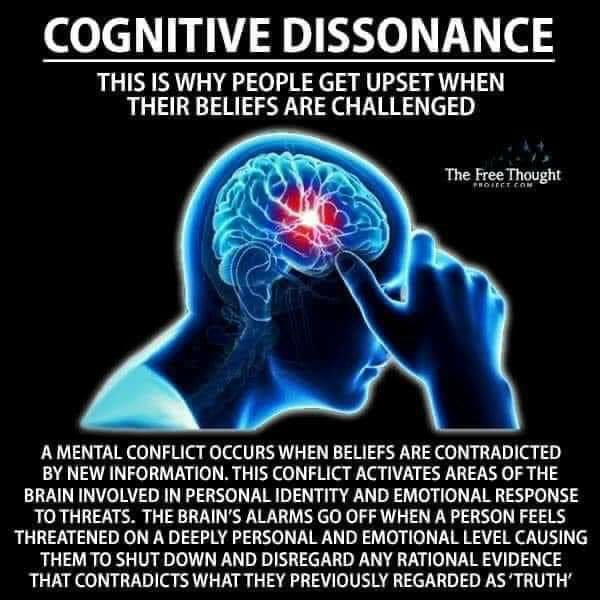
From https://thebrain.mcgill.ca/flash/capsules/outil_bleu11.html
Celebrating humanity's flourishing through the spread of capitalism and the rule of law
03 Oct 2020 Leave a comment
in David Friedman, discrimination, economics of education, economics of love and marriage, gender, health economics, human capital, labour supply, occupational choice, urban economics Tags: evolutionary biology, evolutionary psychology
03 Oct 2020 Leave a comment
While writing the post on the upgrade of the Hornsdale Power Reserve, I became curious how South Australia balances its grid. Looking into the data, it became pretty clear that it aren’t the batteries that doing the balancing. According to the fuel mix data of AEMO, the battery storage output is insignificant compared to the huge swings in output of solar and wind power.
There are several balancing strategies possible. For example, in a previous series on the German energiewende, I found that Germany’s strategy is to use fossil fuels (gas, coal and even lignite) when there is not enough solar & wind and export the surplus to the neighboring countries when there is too much solar & wind.
South Australia also has a high share of solar and wind, so how do they do it?
View original post 562 more words
03 Oct 2020 Leave a comment
in defence economics, laws of war, war and peace Tags: World War II
03 Oct 2020 Leave a comment
in defence economics, war and peace Tags: World War II
02 Oct 2020 1 Comment
in industrial organisation, law and economics, Marxist economics, politics - Australia, property rights Tags: ageing society
02 Oct 2020 Leave a comment
in applied price theory, discrimination, econometerics, economics of bureaucracy, economics of education, gender, health economics, human capital, labour economics, labour supply, law and economics, occupational choice, personnel economics, politics - New Zealand, Public Choice Tags: gender wage gap, motherhood penalty
02 Oct 2020 Leave a comment
If you asked me the height of Mount Everest, I could tell you without missing a beat: 29,029 feet (I don’t know it by heart in meters, but it’s 8,848 m). That’s been the accepted height since the 1954 Survey Of India, which established the height using a number of observation stations and triangulation (trigonometry). Since then, there have been a few other measurements, all yielding heights close to the 1954 data: a 1999 National Geographic measurement gave 29,035 feet (seven feet higher), while a 2005 Chinese survey yielded 29,017 (that was the rock height, neglecting the roughly ten feet of ice and snow covering the summit).
There’s no doubt that Everest’s summit is the highest spot on earth measured from sea level (Chimborazo in Ecuador, however, is the highest mountain measured from the Earth’s center), but people want an exact figure. This article in the new National Geographic (click…
View original post 997 more words
02 Oct 2020 Leave a comment
in business cycles, development economics, discrimination, economic growth, economic history, economics of bureaucracy, economics of crime, economics of education, Economics of international refugee law, economics of love and marriage, economics of regulation, economics of religion, energy economics, entrepreneurship, environmental economics, financial economics, fiscal policy, gender, global warming, growth disasters, growth miracles, health and safety, health economics, history of economic thought, human capital, income redistribution, industrial organisation, international economics, International law, job search and matching, labour economics, labour supply, law and economics, macroeconomics, Marxist economics, minimum wage, occupational choice, occupational regulation, politics - Australia, politics - New Zealand, politics - USA, poverty and inequality, privatisation, property rights, Public Choice, public economics, rentseeking, survivor principle, unemployment, unions, welfare reform Tags: Age of Enlightenment, moral psychology, offsetting behaviour, political psychology, regressive left, The fatal conceit, The Great Enrichment, unintended consequences, useful idiots
02 Oct 2020 Leave a comment
in applied price theory, applied welfare economics, economics of regulation, law and economics, property rights, transport economics, urban economics Tags: housing affordability
01 Oct 2020 Leave a comment
in defence economics, war and peace Tags: World War II
01 Oct 2020 Leave a comment



This month sees the publication of our book The Role of Monarchy in Modern Democracy: European Monarchies Compared, published by Hart. This two part Blog reflects on some of its main conclusions.
Our comparative study looked at seven other constitutional monarchies in Europe, in addition to the UK. In 1900 every country in Europe was a monarchy, save for just three: France, Switzerland and San Marino. By 2000 most countries in Europe had become republics, with the only exceptions being the Scandinavian monarchies of Denmark, Norway and Sweden, the Benelux countries of Belgium, the Netherlands and Luxembourg, Spain and the UK. These monarchies have survived partly for geopolitical reasons, most of the other European monarchies having disappeared at the end of the First or Second World Wars. But they have also survived by continuously adapting to the needs of modern democracy: monarchy depends ultimately on the support of…
View original post 1,338 more words
01 Oct 2020 Leave a comment
in comparative institutional analysis, constitutional political economy, development economics, income redistribution, international economic law, International law, labour economics, labour supply, law and economics, liberalism, libertarianism, poverty and inequality, property rights Tags: economics of immigration
01 Oct 2020 2 Comments
in economics of education, human capital, labour economics, labour supply, poverty and inequality Tags: cognitive psychology
01 Oct 2020 Leave a comment
I guess I’ll have to post twice on a race-related topic today, though I’m trying to avoid too much of this kind of stuff. Yet people keep sending me links to overly Woke initiatives, and this one was too good to pass up. It’s just one example of how every academic subject is being racialized these days. It’s certainly happening to evolutionary biology, but you’d think that math would be immune to identity politics.
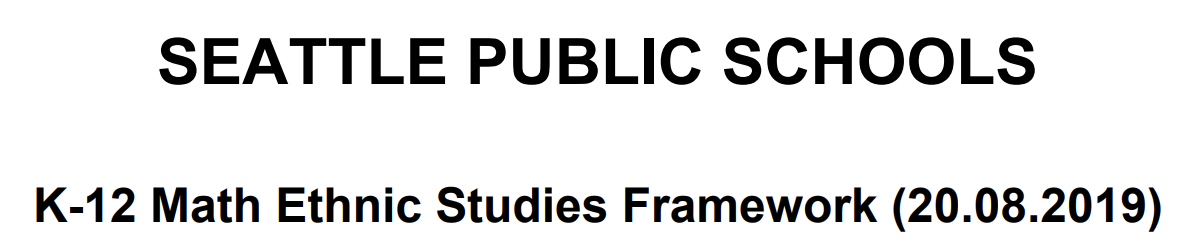
Think again. The Seattle Public School system is planning an initiative that will fuse math education with Critical Race Theory from kindergarten through high school, effectively turning math class into Ethnic Studies class. (This initiative apparently comes from a branch of scholarship called “ethnomathematics.”) If you think I’m exaggerating, have a look at the official math standards framework (below) and the two articles below that.
The new curriculum;
The first piece is from Education Week…
View original post 1,209 more words
Celebrating humanity's flourishing through the spread of capitalism and the rule of law
Celebrating humanity's flourishing through the spread of capitalism and the rule of law
Celebrating humanity's flourishing through the spread of capitalism and the rule of law
Celebrating humanity's flourishing through the spread of capitalism and the rule of law
Celebrating humanity's flourishing through the spread of capitalism and the rule of law
Celebrating humanity's flourishing through the spread of capitalism and the rule of law
Celebrating humanity's flourishing through the spread of capitalism and the rule of law
Celebrating humanity's flourishing through the spread of capitalism and the rule of law
A History of the Alt-Right
Econ Prof at George Mason University, Economic Historian, Québécois
Celebrating humanity's flourishing through the spread of capitalism and the rule of law
Scholarly commentary on law, economics, and more
Beatrice Cherrier's blog
Celebrating humanity's flourishing through the spread of capitalism and the rule of law
Celebrating humanity's flourishing through the spread of capitalism and the rule of law
Celebrating humanity's flourishing through the spread of capitalism and the rule of law
Why Evolution is True is a blog written by Jerry Coyne, centered on evolution and biology but also dealing with diverse topics like politics, culture, and cats.
Celebrating humanity's flourishing through the spread of capitalism and the rule of law
A rural perspective with a blue tint by Ele Ludemann
DPF's Kiwiblog - Fomenting Happy Mischief since 2003
Celebrating humanity's flourishing through the spread of capitalism and the rule of law
The world's most viewed site on global warming and climate change
Tim Harding's writings on rationality, informal logic and skepticism
A window into Doc Freiberger's library
Let's examine hard decisions!
Commentary on monetary policy in the spirit of R. G. Hawtrey
Thoughts on public policy and the media
Celebrating humanity's flourishing through the spread of capitalism and the rule of law
Politics and the economy
A blog (primarily) on Canadian and Commonwealth political history and institutions
Reading between the lines, and underneath the hype.
Economics, and such stuff as dreams are made on
"The British constitution has always been puzzling, and always will be." --Queen Elizabeth II
Celebrating humanity's flourishing through the spread of capitalism and the rule of law
Celebrating humanity's flourishing through the spread of capitalism and the rule of law
WORLD WAR II, MUSIC, HISTORY, HOLOCAUST
Undisciplined scholar, recovering academic
Celebrating humanity's flourishing through the spread of capitalism and the rule of law
Res ipsa loquitur - The thing itself speaks
In Hume’s spirit, I will attempt to serve as an ambassador from my world of economics, and help in “finding topics of conversation fit for the entertainment of rational creatures.”
Researching the House of Commons, 1832-1868
Reflections on books and art
Posts on the History of Law, Crime, and Justice
Celebrating humanity's flourishing through the spread of capitalism and the rule of law
Exploring the Monarchs of Europe
Cutting edge science you can dice with



Recent Comments