Why astronomers now doubt there is an undiscovered 9th planet in our solar system
27 May 2020 Leave a comment

 Credit: NASA
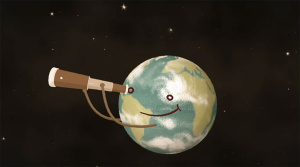
Looks like game over for the Planet Nine idea. Unavoidable observational biases may be at least partly to blame.
– – –
Planet Nine is a theoretical, undiscovered giant planet in the mysterious far reaches of our solar system, says The Conversation (via Phys.org)
The presence of Planet Nine has been hypothesized to explain everything from the tilt of the sun’s spin axis to the apparent clustering in the orbits of small, icy asteroids beyond Neptune.
But does Planet Nine actually exist?
View original post 204 more words
COVID19 update, May 26, 2020: Sweden revisited; homes for the elderly; new drug on the block
27 May 2020 Leave a comment

(0) Israel today celebrated its first day with zero new cases.
(1) Via Instapundit, SSRN (Social Science Research Network, a preprint server similar to arXiv.org, medrxiv.org, biorxiv.org and chemrxiv,org) has a article in press about the Swedish COVID19 epidemic.
https://papers.ssrn.com/sol3/papers.cfm?abstract_id=3609493
Their per capita death rate is an order of magnitude larger than neighboring Scandinavian countries. It is tempting to attribute all this to Sweden’s Sonderweg (“road alone”) — but this article makes a case that at least part results from factors unrelated to Sweden’s decision not to go on lockdown.
Not only is half of Sweden’s mortality concentrated in just the capital city Stockholm, but over 70% of Sweden’s mortality is in nursing homes. As the article explains, in Sweden the elderly tend to stay at home for as long as possible, assisted by home helpers assigned by the public healthcare system. (Independent assisted living facilities do exist, apparently mostly…
View original post 1,054 more words
Free To Choose in Under 2 Minutes Episode 7 – Who Protects the Consumer?
27 May 2020 Leave a comment
in economics of bureaucracy, economics of information, economics of regulation, entrepreneurship, industrial organisation, law and economics, Milton Friedman, Public Choice, survivor principle, television Tags: consumer fraud, consumer protection
What Happened to All the Roman Conspirators After Julius Caesar’s Death?
27 May 2020 Leave a comment

A-List Actors Who Turned Down Hollywood’s Biggest Action Roles
27 May 2020 Leave a comment
in movies, occupational choice, television
Hydrogen Hoax: Wind & Solar Rent-Seekers Demand Subsidies To Convert Their Chaotic Power Into Gas
27 May 2020 Leave a comment


Producing hydrogen gas using chaotically intermittent wind and solar is only the latest hoax being peddled by renewable energy rent seekers and other crony capitalists.
The majority of hydrogen available on the market (around 95%) is produced from fossil fuels by steam reforming or partial oxidation of methane and coal gasification with only a tiny fraction produced by way of biomass gasification or the electrolysis of water or solar thermochemistry.
Steam-methane reforming, the current leading technology for producing hydrogen in large quantities, extracts hydrogen from methane, usually in the form of natural gas; the process releases carbon dioxide and carbon monoxide into the atmosphere. Which, of course, doesn’t wash with the climate cult.
Another method of creating hydrogen is electrolysis, which involves chewing up enormous volumes electricity that gets passed through a volume of water to separate the hydrogen and oxygen atoms. The big plus attached to this method is…
View original post 1,054 more words
Deliverance from the F-word
26 May 2020 Leave a comment

At Strong Language we love creative swearing. But sometimes being creative means avoiding swearwords. When John Boorman and his team were filming Deliverance in rural southeast US, they faced difficulties not only in handling the unforgiving location but also in making certain scenes suitable for eventual TV broadcasting.
One scene in particular proved a challenge: Jon Voight and Ned Beatty’s brutal encounter with two sadistic locals in the woods. According to Boorman, the film’s producers suggested that he shoot the scene two different ways, so that there’d be a version suitable for TV. This meant, among other things, toning down the language in the working script.
View original post 152 more words
The irresistible sway of first impressions
26 May 2020 Leave a comment

We make our mind up about people after seeing their faces for barely a fraction of a second.
Far from being trivial, these impressions impact our decision making and have real world implications. For example, politicians that simply appear more competent are more likely to win elections.
Can we reliably discern character from people’s faces, or are we being misled?
In Face Value, Princeton psychologist Alexander Todorov tells the scientific story of first impressions and argues the snap judgements we make of people’s faces are predictable, yet usually inaccurate.
Alexander Todorov manages to weave the psychological science of first impressions into a grand story, accompanied with slick photography and illustrations on virtually every other page which makes reading the book an engaging aesthetic experience. Face Value would make a great gift for anyone interested in the human mind, laymen and psychology nerds alike.
Physiognomist’s promises
The story starts with…
View original post 4,120 more words
The evolutionary logic of overconfidence
26 May 2020 Leave a comment
People in general are overconfident, excessively optimistic and think of themselves as superior to others.
How can I say such a thing?
Ask anyone with a license to rate their driving abilities, and most people will tell you that they are above average. However, this is not just an isolated case of cocky drivers. The same effect is found when asking people to assess their own intelligence, evaluate their attractiveness, or reflect on how kind they are.
A survey of American school students, which received over 1 million responses, found that no less than 70% rated themselves as above average leaders. Conversely, only 2% of these students humbly stated that they are actually below average.
This all begs the question: why do we think more highly of ourselves than who we really are?
To explain the prevalence of overconfidence, psychologists have historically pointed to the mental health…
View original post 1,539 more words


Recent Comments