
by Judith Curry
Some interesting papers that I’ve spotted over the past week.
View original post 849 more words
Celebrating humanity's flourishing through the spread of capitalism and the rule of law
20 May 2020 Leave a comment
by Judith Curry
Some interesting papers that I’ve spotted over the past week.
View original post 849 more words
20 May 2020 Leave a comment
in economic history, international economic law, international economics, International law, law and economics, Marxist economics, property rights, Public Choice
20 May 2020 Leave a comment
in energy economics, environmental economics, global warming, politics - Australia, politics - New Zealand, politics - USA Tags: climate alarmists, nuclear energy, solar power, wind power

20 May 2020 Leave a comment
in health economics, politics - New Zealand
20 May 2020 Leave a comment
in economics of education, economics of media and culture Tags: space
20 May 2020 Leave a comment

It looks as if most European countries intend to learn the hard way that industrial economies can’t run successfully on expensive and intermittent electricity supplies. If their governments are happy to de-industrialise they should say so, then voters working in power-hungry industries would know the score. The price of climate superstition could be high for a lot of people.
– – –
Spain has announced it is seeking to pass a new climate law to ensure it can cut its emissions to net zero by 2050, reports Energy Live News.
The draft law proposals would ban all new coal, oil and gas projects with immediate effect in order to rapidly reduce Spain’s greenhouse gas emissions by a fifth before 2030, relative to 1990 levels, as well as increase the renewable share of the country’s energy mix from around 50% to 70% by this time.
View original post 71 more words
20 May 2020 Leave a comment
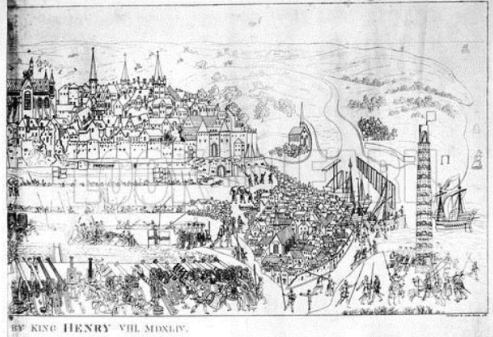
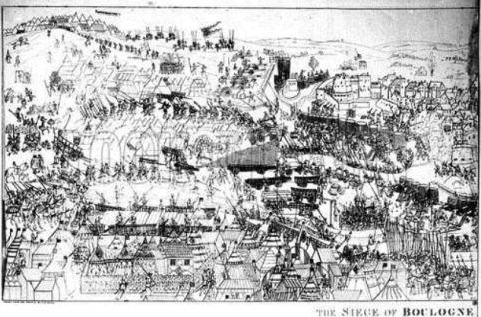

Henry VIII embarking in Dover.
Throughout this year, and the beginning of 1544, preparations were made for the great invasion of France under the combined leadership of Henry of England and Charles of Spain. The cost of the undertaking was so vast, however, that the general coinage of the realm was debased by introducing a larger amount of alloy into its gold and silver coins. By these means the king’s mint acquired large sums of money, since the face value of the currency was the same despite the smaller amount of precious metal. Prices naturally rose, at a rate of approximately 10 per cent each year, and the economy took twenty years to recover. These were the results of the king’s passion for war.
Other ways of making money were also found. It was decided to exact a ‘benevolence’ from the nation. Those who owned lands worth more than an…
View original post 1,382 more words
20 May 2020 Leave a comment
I never discuss my own research on this website – it’s more fun (for me at the very least!) to dive in to the great results the rest of the economics community produces. So I hope you’ll forgive me for breaking this rule today, as I want to show a few interesting, very time-sensitive results Jorge Lemus, Guillermo Marshall and I have developed about Covid-19 innovation.
Many of us in the innovation economics world have been asked by governments how they should handle R&D right now. The basic problem is clear. There is a pandemic. Stopping this has enormous economic benefits – a vaccine that arrived tomorrow would literally be among the most economically valuable inventions ever made. Treatments which allow normal economic activity are incredibly valuable as well. As always, governments have limited knowledge about who is able to invent what. There is tremendous uncertainty about how various…
View original post 1,317 more words
20 May 2020 Leave a comment
by Janette Rutterford and Dimitris P. Sotiropoulos (The Open University Business School)
The full article from this blog is forthcoming in the Economic History Review
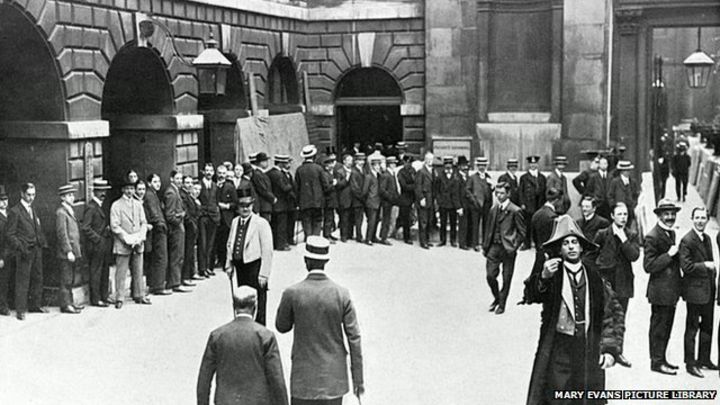 Mary Evans Picture Library
UK investment trusts (the British name for closed-end funds) were at the forefront of financial innovation in the global era before World War I. Soon after the increase in investment choice facilitated by Companies Acts in the 1850s and 1860s – which allowed investors limited liability – investment trusts emerged to invest in a diverse range of securities across the globe, thereby offering asset management services to individual investors. They rapidly became a low-cost financial vehicle for so-called “averaging” of risk across a portfolio of marketable securities without having to sacrifice return. UK investment trusts were the first genuine historical paradigm of a sophisticated asset management industry.
Formed as trusts from the the late 1860s, by the 1880s, the vast majority…
View original post 788 more words
20 May 2020 Leave a comment
This morning on BBC Radio 4, Jim Al-Khalili conducted a half-hour interview with Steve Pinker in “The Life Scientific” series. Although Steve is promoting his new book, The Better Angels of Our Nature, only about six minutes of the interview deals with it. The rest covers a number of topics, including controversies about his first book, The Language Instinct, and about the more recent The Blank Slate.
You can hear the program archived here, and it will be rebroadcast this evening at 9:30 p.m. London time.
As always, Steve is eloquent: he appears to speak in complete and perfect paragraphs; see if you can spot anything ungrammatical. Eloquence is one thing that unites the Five Horsemen (yes, there are five): Pinker, Dawkins, Dennett, Harris, and Hitchens; and I greatly envy that talent. I consider Hitch the most eloquent, but the rest are no slouches.
Highlights:
View original post 101 more words
20 May 2020 Leave a comment
After I wrote my critique of Subrena Smith’s anti-evolutionary-psychology paper this morning—hers titled “Is evolutionary psychology possible?”—I sent the link to Steve Pinker, who’s quarantining on Cape Cod. He wrote back with some nice words of approbation, but added a few points. I thought these points were good, relevant and, as the first two weren’t made by either me or critic Edward Hagen, I asked Steve if I could quote him. He said yes. So add these criticisms to those leveled this morning. (Steve’s words are indented.)
All your points are exactly right. The motive seems to be the slipshod politicizing I exposed 18 years ago in The Blank Slate: if we’re blank slates, there can’t be differences between races, which would make racism impossible; therefore to combat racism we must believe that humans are blank slates. It fails both in philosophical coherence (racism is not an empirical hypothesis…
View original post 664 more words
20 May 2020 Leave a comment
in discrimination, economic history, economics of education, gender, health economics, law and economics, liberalism, Marxist economics, politics - USA, poverty and inequality, Public Choice Tags: evolutionary psychology, gender wage gap, pessimism bias, political correctness, political psychology, regressive left, The fatal conceit
20 May 2020 Leave a comment

20 May 2020 Leave a comment
This Sunday the Observer ran a frontpage story headlined ‘rightwing thinktanks call time on austerity era’. I was quoted in the article, wearing my IEA hat, as were representatives of the Adam Smith Institute, Centre for Policy Studies and Policy Exchange. As it happens, I am happy with the specific comments attributed to me, which fairly reflected both my support for a temporary increase in government borrowing and my concerns about the duration of the lockdown. However, the inferences drawn, and indeed the whole narrative of the article, were badly misleading.
Let’s skip over the dubious assumption that a think-tank is ‘right-wing’ just because it favours free-market solutions to economic and social problems, or that any think-tank always speaks with a single voice. The bigger issue here is the claim that there had been a fundamental ‘shift in stance’ in favour of ‘sustained increases’ in public spending as a result…
View original post 618 more words
Celebrating humanity's flourishing through the spread of capitalism and the rule of law
Celebrating humanity's flourishing through the spread of capitalism and the rule of law
Celebrating humanity's flourishing through the spread of capitalism and the rule of law
Celebrating humanity's flourishing through the spread of capitalism and the rule of law
Celebrating humanity's flourishing through the spread of capitalism and the rule of law
Celebrating humanity's flourishing through the spread of capitalism and the rule of law
Celebrating humanity's flourishing through the spread of capitalism and the rule of law
Celebrating humanity's flourishing through the spread of capitalism and the rule of law
Celebrating humanity's flourishing through the spread of capitalism and the rule of law
A History of the Alt-Right
Econ Prof at George Mason University, Economic Historian, Québécois
Celebrating humanity's flourishing through the spread of capitalism and the rule of law
Scholarly commentary on law, economics, and more
Beatrice Cherrier's blog
Celebrating humanity's flourishing through the spread of capitalism and the rule of law
Celebrating humanity's flourishing through the spread of capitalism and the rule of law
Celebrating humanity's flourishing through the spread of capitalism and the rule of law
Why Evolution is True is a blog written by Jerry Coyne, centered on evolution and biology but also dealing with diverse topics like politics, culture, and cats.
Celebrating humanity's flourishing through the spread of capitalism and the rule of law
A rural perspective with a blue tint by Ele Ludemann
DPF's Kiwiblog - Fomenting Happy Mischief since 2003
Celebrating humanity's flourishing through the spread of capitalism and the rule of law
The world's most viewed site on global warming and climate change
Tim Harding's writings on rationality, informal logic and skepticism
A window into Doc Freiberger's library
Let's examine hard decisions!
Commentary on monetary policy in the spirit of R. G. Hawtrey
Thoughts on public policy and the media
Celebrating humanity's flourishing through the spread of capitalism and the rule of law
Politics and the economy
A blog (primarily) on Canadian and Commonwealth political history and institutions
Reading between the lines, and underneath the hype.
Economics, and such stuff as dreams are made on
"The British constitution has always been puzzling, and always will be." --Queen Elizabeth II
Celebrating humanity's flourishing through the spread of capitalism and the rule of law
Celebrating humanity's flourishing through the spread of capitalism and the rule of law
WORLD WAR II, MUSIC, HISTORY, HOLOCAUST
Undisciplined scholar, recovering academic
Celebrating humanity's flourishing through the spread of capitalism and the rule of law
Res ipsa loquitur - The thing itself speaks
In Hume’s spirit, I will attempt to serve as an ambassador from my world of economics, and help in “finding topics of conversation fit for the entertainment of rational creatures.”
Researching the House of Commons, 1832-1868
Reflections on books and art
Posts on the History of Law, Crime, and Justice
Celebrating humanity's flourishing through the spread of capitalism and the rule of law
Exploring the Monarchs of Europe


Recent Comments