
San Marino: The Oldest Republic in the World
27 Mar 2020 Leave a comment
in economic history Tags: maps
Crisis? What crisis?
26 Mar 2020 Leave a comment

On 11 January 1979, the front-page of the Sun covered a press conference given by the prime minister, James Callaghan. The headline – ‘Crisis? What crisis?’ – was one of the most memorable and enduring. On the fortieth anniversary, this is an extract from Alwyn Turner’s Crisis? What Crisis? Britain in the 1970s (Aurum, 2008)…
It was, to start with, bitterly cold, the coldest January since 1963. Weeks of frost, freezing fog, hailstorms, sleet and snow were followed in early February by a combination of a sudden thaw and heavy rain that produced widespread flooding. And then came yet more blizzards. In Scotland there were reports of beer freezing in pub cellars and of frozen waves in Oban harbour as the temperature plunged to –25º Celsius, while the whole country’s transport system struggled to cope.
Edward Heath had at least been lucky with the weather in 1973–74; in 1979, James…
View original post 883 more words
Cabinet must be adjudicating 24/7 on which businesses stay open #COVID19 #Hayekianknowledgeproblem
26 Mar 2020 Leave a comment
in Austrian economics, economics of bureaucracy, economics of information, health economics

Lee Ohanian on dynamic general equilibrium models to study the Great Depression
26 Mar 2020 Leave a comment
in business cycles, econometerics, economic growth, economic history, financial economics, great depression, history of economic thought, macroeconomics, monetary economics
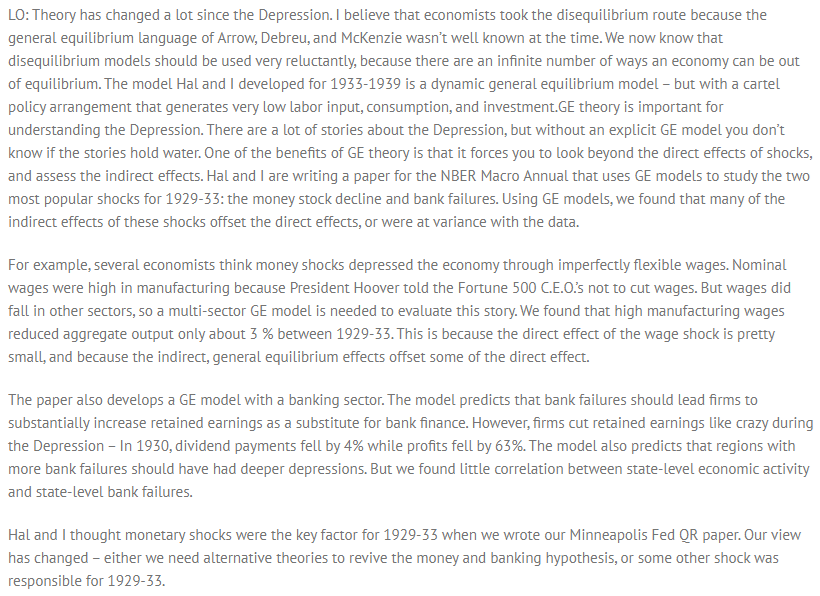
#Hayekianknowledgeproblem: 2006 pandemic law couldn’t even list all of NZ’s courts properly so emergency amendment passed yesterday
26 Mar 2020 Leave a comment
in Austrian economics, economics of information, F.A. Hayek, health economics

NZ Great Depression ended by 1935 because of fiscal austerity
26 Mar 2020 Leave a comment
in business cycles, economic history, fiscal policy, great depression, macroeconomics

#COVID19 #plasticbagfascism @NZGreens @mfe_news @EugenieSage
26 Mar 2020 Leave a comment
in economics of regulation, environmental economics, health economics, politics - New Zealand, politics - USA Tags: economics of pandemics, offsetting behaviour, recycling, The fatal conceit, unintended consequences

When is a fiscal stimulus a positive productivity shock?
26 Mar 2020 Leave a comment
in budget deficits, business cycles, fiscal policy, macroeconomics, public economics

Exiting the English Republic part 2: the end of the Long Parliament
26 Mar 2020 Leave a comment

In the second half of her series on exiting the English Republic (part one available here) Dr Vivienne Larminie, Assistant Editor of the Commons 1640-1660 project, explores the dissolution of the Long Parliament…
On 16 March 1660 the Parliament which had begun nearly twenty years earlier, on 3 November 1640, agreed to dissolve itself. After well over 3,000 days of sitting, several forcible interruptions and a lengthy gap from 1653 to 1659, a great volume of unprecedented legislation, countless hours of novel executive committee meetings, many heated debates and much praying and listening to sermons, the assembly which had stood up to Charles I and defeated his forces in battle voted for its own demise. It did so explicitly in anticipation of fresh elections and the calling of a new representative body, to convene at Westminster on 25 April.
View original post 922 more words
My #COVID19 lockdown reading
26 Mar 2020 Leave a comment
in administration, health economics Tags: economics of pandemics

March 25, 1306: Coronation of Robert the Bruce as King of Scots.
26 Mar 2020 Leave a comment

Robert I (July 11, 1274 – June 7, 1329), popularly known as Robert the was King of Scotland from 1306 until his death in 1329. Robert was one of the most famous warriors of his generation, and eventually led Scotland during the First War of Scottish Independence against England. He fought successfully during his reign to regain Scotland’s place as an independent country and is today revered in Scotland as a national hero.
Several members of the Bruce family were called Robert, the future king was one of ten children, and the eldest son, of Robert de Brus, 6th Lord of Annandale, and Marjorie, Countess of Carrick, and claimed the Scottish throne as a fourth great-grandson of David I of Scotland. His mother was by all accounts a formidable woman who, legend would have it, kept Robert Bruce’s father captive until he agreed to marry her. From his mother, he inherited…
View original post 660 more words


Recent Comments