The Real Reason Russia Sold Alaska To The United
26 Mar 2020 Leave a comment
in economic history, politics - USA

How The Ford Model T Took Over The World
26 Mar 2020 Leave a comment
in economic history, entrepreneurship, industrial organisation, managerial economics, organisational economics, personnel economics, survivor principle Tags: mass production

Hans Oster – A German Against Nazism – WW2 Biography Special
26 Mar 2020 Leave a comment
in defence economics, war and peace Tags: World War II
Why Murphy and Topel do not think much of efficiency wages theory
26 Mar 2020 Leave a comment
in applied price theory, economics of information, labour economics, personnel economics

#COVID19
26 Mar 2020 Leave a comment
in financial economics, health economics Tags: economics of pandemics

Never Competitive: Britain’s Wind Industry Begs For Even More Massive Subsidies
25 Mar 2020 Leave a comment
There should be no subsidies because the wind is supposed to be cheaper


The wind industry was founded on lies, built on myth and runs on subsidies. ‘Propaganda’ was conjured up by a Catholic Pope, employed with devastating effect by the Nazis and still maintains control over the masses in China. But it wasn’t until the wind industry switched into gear that propaganda really hit its straps. Being able to turn out lines such as “the wind is always blowing somewhere” and “the wind is free” was a mere doddle for the spin doctors and PR masters, who’ve worked overtime for nearly 20 years in an attempt to present wind power as part of an “inevitable transition” to an all wind and sun powered future.
As Dr John Constable details below, the wind industry has employed every euphemism, neutered every noun, assaulted every adjective and invalidated every verb in the English language. Or, as George Orwell put it, these propaganda masters have managed…
View original post 721 more words
Samsung and Hyundai are 35% of Korean exports; their sales are 22% of Korean GDP. Nokia represented 26% of Finnish GDP!
25 Mar 2020 Leave a comment
in business cycles, economic growth, industrial organisation, macroeconomics

How much of 20th century growth were one-off productivity gains?
25 Mar 2020 Leave a comment
in discrimination, economic growth, economic history, economics of education, gender, human capital, labour economics, labour supply, occupational choice, occupational regulation, politics - USA, poverty and inequality, Public Choice

What’s Love Got to Do with It? Marriage in Late Medieval England and the Low Countries
25 Mar 2020 Leave a comment

Guest post by Anna Boeles Rowland and Chanelle Delameillieure, 14 February 2020
“More things are necessary for a household than four naked thighs.”[1] In the middle ages the household was headed by a husband and his wife and was the centre of family life and economic productivity. So, in 1486 when John Wellis of London used the above retort upon hearing that his alleged betrothed Alice Billingham had publicly declared that they were married, he was chastising Alice for suggesting that they could legitimise their romantic relationship without the necessary social status and financial stability. Alice, however, had witnesses to the fact that John had asked her to be his wife on the feast of Saint Valentine that same year, asking for her hand so that she could be his “Valentyne for ever.”[2] Like today, the medieval feast day of the Roman martyr St Valentine was a celebration…
View original post 2,181 more words
March 24, 1953: Death of Queen Mary. Part I.
25 Mar 2020 Leave a comment

Mary of Teck (Victoria Mary Augusta Louise Olga Pauline Claudine Agnes; May 26, 1867 – March 24, 1953) was queen consort of the United Kingdom and the British Dominions and Empress consort of India as the wife of King George V.
Princess Victoria Mary (“May”) of Teck was born on May 26, 1867 at Kensington Palace, London, in the same room where Queen Victoria, her first cousin once removed, had been born 48 years earlier. Queen Victoria came to visit the baby, writing that she was “a very fine one, with pretty little features and a quantity of hair”. May would become the first British queen consort born in Britain since Catherine Parr.
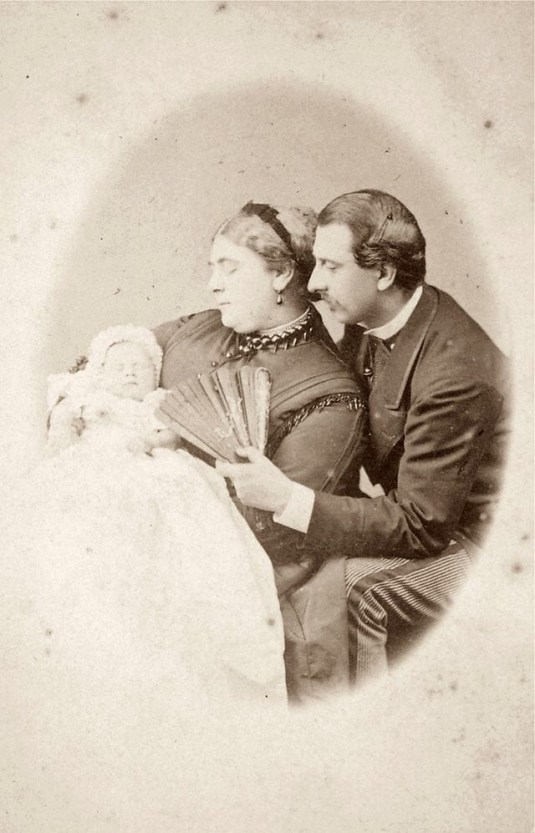
Duke and Duchess of Teck with Princess Victoria Mary
Her father was Prince Francis, Duke of Teck, the son of Duke Alexander of Württemberg by his morganatic wife, Countess Claudine Rhédey von Kis-Rhéde (created Countess von Hohenstein…
View original post 638 more words
Endangered species bear the costs of bad incentives
25 Mar 2020 Leave a comment

The Endangered Species Act imposes significant regulatory burdens on anyone who owns land where endangered and threatened species or their habitats are found. The predictable result of such burdens is to discouragelandowners from accommodating rare species or maintaining habitat. A recent study confirms this prediction, finding that species already threatened with habitat loss have lost an additional 8.1% of their private-land habitat over the last 30 years.

Previously, this effect had been shown for individual species. For instance, a 2003 study by Dean Lueck and Jeffery A. Michael found that landowners accelerated timber harvesting in areas occupied by the red-cockaded woodpecker. To protect individual birds and habitat, the federal government limits timber harvesting in areas occupied by the species. However, red-cockaded woodpeckers prefer old-growth pine forests. Landowners who harvest their trees early can avoid creating these conditions and, therefore, avoid the federal regulations that accompany the bird’s presence. The…
View original post 367 more words
Stephen Tierney and Jeff King: The Coronavirus Bill
25 Mar 2020 Leave a comment

 Today the House of Lords Constitution Committee reports to the House on the Coronavirus Bill. This is an emergency measure introduced in the Commons last Thursday. It passed through its Commons stages on Monday and came to the Lords today with a view to its enactment tomorrow.
The context of a global pandemic, now being felt in every household in the United Kingdom, creates a paradox for constitutionalists. On the one hand, the UK and devolved governments must be empowered quickly with the tools they need to protect public safety; on the other, hasty law-making can lead to confusing or ineffective law, and, more consequentially, the undermining of individual liberties. It is with this balance in mind that the Committee addresses the Bill.
The Bill is complex and lengthy, containing 87 clauses and 27 schedules. It has significant potential constitutional and civil liberties implications in relation to powers of…
View original post 1,581 more words


Recent Comments