
Gender Recognition Reform (Scotland) Bill Consultation – XX Submission
22 Mar 2020 Leave a comment
#femalerightsarenotupfordiscussion and any attempt to reduce women’s rights is always misogynist
A 500-year-old map used by Columbus reveals its secrets
21 Mar 2020 Leave a comment


THIS 1491 MAPis the best surviving map of the world as Christopher Columbus knew it as he made his first voyage across the Atlantic. In fact, Columbus likely used a copy of it in planning his journey.
The map, created by the German cartographer Henricus Martellus, was originally covered with dozens of legends and bits of descriptive text, all in Latin. Most of it has faded over the centuries.
But now researchers have used modern technology to uncover much of this previously illegible text. In the process, they’ve discovered new clues about the sources Martellus used to make his map and confirmed the huge influence it had on later…
View original post 1,092 more words

James Buchanan on economic advisors as establishment intellectuals
21 Mar 2020 Leave a comment
in applied welfare economics, constitutional political economy, economics of bureaucracy, economics of education, James Buchanan, Public Choice

From https://books.google.co.nz/books?id=92xzxQEACAAJ&pg=PA3&source=gbs_toc_r&cad=3#v=onepage&q&f=false
#COVID19
21 Mar 2020 Leave a comment
in entrepreneurship, health economics Tags: economics of pandemics

Outrageous: French Company Destroying Battlefield Graves With Giant Wind Turbines
21 Mar 2020 Leave a comment

 On the Western Front: a soldier’s trench, too often became his grave.
The efforts by wind power outfits to desecrate the battlefield graves of thousands who died in France are nothing short of outrageous.
Quite rightly, historians and the relatives and descendants of those who died fighting to protect French lives and liberty are furious as a French wind power outfit literally rips up a battlefield and the final resting place for thousands of men who made the supreme sacrifice. This latest outrage follows several other proposals to do precisely the same across the battlefields of northern France.
When the guns fell silent all across the Western Front on 11 November 1918, thoughts naturally turned to the 10 million combatants who had perished in what was meant to be the war to end all wars.
Of those who were killed in action, countless thousands remain buried where they fought and fell…
View original post 1,647 more words
King Henry IV of England. Part II.
21 Mar 2020 Leave a comment

Henry IV ‘s first major problem as monarch was what to do with the deposed Richard II. After an early assassination plot (the Epiphany Rising) was foiled in January 1400, Richard died in prison, probably of starvation. He was 33 years old. Though Henry is often suspected of having his predecessor murdered, there is no substantial evidence to prove that claim.
As king, Henry IV consulted with Parliament frequently, but was sometimes at odds with the members, especially over ecclesiastical matters. On Arundel’s advice, Henry IV obtained from Parliament the enactment of De heretico comburendo in 1401, which prescribed the burning of heretics, at the stake as an act done mainly to suppress the Lollard movement.
De heretico comburendo was one of the strictest religious censorship statutes ever enacted in England. In March 2, 1401 William Sawtrey became the first Lollard to be burned. This law stayed on the books…
View original post 498 more words
March 20, 1413: Death of King Henry IV of England. Part I.
21 Mar 2020 Leave a comment
From the Emperor’s Desk. This will be a four part series on the life of King Henry IV of England. Part I will look at his lineage and rise to the throne, Part II will examine his reign and Part III will examine his claim to the throne.
Henry IV (April 15, 1367 – March 20, 1413), also known as Henry Bolingbroke, was King of England and Lord of Ireland from 1399 to 1413. He reasserted the claim of his grandfather King Edward III, a maternal grandson of Philippe IV of France, to the Kingdom of France.
Henry was the son of John of Gaunt (the fourth son of Edward III) and Blanche of Lancaster. John enjoyed a position of considerable influence during much of the reign of his cousin King Richard II, whom Henry eventually deposed. Henry founded the Lancaster branch of the House of Anjou, also known as…
View original post 666 more words


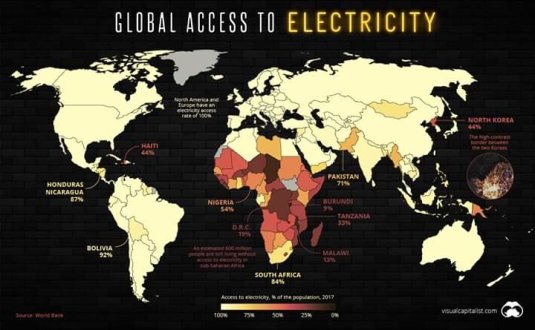
What is @Greenpeace @Oxfam doing to fix this?
21 Mar 2020 Leave a comment
in development economics, energy economics, growth disasters, growth miracles Tags: energy poverty, extreme poverty
No mucking about
21 Mar 2020 Leave a comment
in health economics, law and economics Tags: economics of pandemics, Singapore


Recent Comments