
Spot on @BillMaher
20 Feb 2020 Leave a comment
in economics of crime, economics of religion, law and economics, television Tags: free speech, Freedom of religion, political correctness, regressive left, war against terror
Nobel Prize Winner in Economist 1995 – Robert Emerson Lucas
20 Feb 2020 Leave a comment
in business cycles, history of economic thought, macroeconomics, monetary economics, Robert E. Lucas
Transaction costs in underground gun markets
20 Feb 2020 Leave a comment
in economics of crime, law and economics, politics - USA

Which Meal is Dinner?
20 Feb 2020 Leave a comment

18-year-old Helena Muffly wrote exactly 100 years ago today:
Sunday, April 13, 1913: Went to Sunday School this morning. Took dinner with Carrie.
 Source: Ladies Home Journal (July, 1911)
Her middle-aged granddaughter’s comments 100 years later:
Which meal did Grandma eat with her friend, Carrie Stout?
I’m almost sure that it was the noon meal—but today it seems like most people are refer to the evening meal as dinner.
When I was a child growing up we always called the mid-day meal dinner. But, I’m never sure if other people understand what I mean when I say dinner–so my family eats breakfast, lunch and supper.
What do you call the meals?
1913 Hair Styles
20 Feb 2020 Leave a comment
17-year-old Helena Muffly wrote exactly 100 years ago today:
Sunday, January 5, 1913: Went to Sunday School this morning. Would like to go every Sunday of this year. Was over to see Carrie this afternoon. Went along with her to church this evening.
Source; Ladies Home Journal (November, 1913)


Her middle-aged granddaughter’s comments 100 years later:
Carrie Stout was a friend of Grandma’s who lived on a nearby farm. What did the two teens talk about? . . . do?
When I was young my friends and I enjoyed fixing each other’s hair. Maybe Grandma and Carrie also enjoyed fixing each other’s hair.


There’s a fun YouTube video that shows how to do an early 1900s updo.
#climateemergency #globalwarming @GreenpeaceAP @Greenpeace @Greens @NZGreens
20 Feb 2020 Leave a comment

Jesus ‘n’ Mo ‘n’ the sexes
20 Feb 2020 Leave a comment

In the latest Jesus and Mo strip, called “lives,” the boys debate the timely question of who’s a man and who’s a woman. The author included this statement in the email:
A significant proportion of the political establishment seems to be losing its mind over this issue. To be clear: trans women are trans women and trans men are trans men. They deserve to be treated with the same kindness and respect as any other human being. But, as I am sure most regular readers of J&M know, you don’t have to believe in bullshit to be kind. Don’t trust anyone who tells you otherwise.
Curiously, Mo takes the woke position, but the barmaid asks a salient question—especially salient when it comes to sports participation.

James Carville on the 2020 Democratic candidates
20 Feb 2020 Leave a comment
Who doesn’t like James Carville? He’s smart, strongly liberal and pro-Democratic Party, and has an impish look but a potty mouth. His Louisiana accent is endearing. And he’s famous as a campaign strategist and for posting these three mantras on the wall of the Clinton election’s “campaign war room” in 1992:
- Change vs. more of the same.
- The economy, stupid.
- Don’t forget health care.
The man doesn’t mince words. Carville now teaches at Louisiana State University, and he’s still married to conservative Mary Matalin (I have no idea how that marriage works!).
So Carville has a recent interview in Vox with Sean Illig, and makes some strong pronouncements about how the Democratic Presidential race this year is going south, and what we need to do to fix it. Click on the screenshot to read it. I’ve given quotes below from only a part of the interview, which you…
View original post 1,209 more words
#endcoal #endoil #globalwarming #climateemergency @Greens @GreenpeaceAP
20 Feb 2020 Leave a comment
in energy economics, environmental economics, global warming Tags: air pollution

Champ and Freeman on financial intermediation
19 Feb 2020 Leave a comment
in applied price theory, economics of information, industrial organisation, macroeconomics, monetary economics Tags: adverse selection, asymmetric information, monetary policy, moral hazard, rational expectations

The history behind Nicola Sturgeon’s call for a Claim of Right for Scotland
19 Feb 2020 Leave a comment


Nicola Sturgeon has stated her intention to endorse a modern Claim of Right for Scotland, but there has been little discussion about the 1988 Claim that is the precedent for her new proposal. David Torrance describes the Claim’s history, and argues that it has meant different things at different times to various people.
Speaking in Edinburgh last week, First Minister Nicola Sturgeon said she intended to invite Scotland’s ‘elected representatives’ to ‘come together to endorse a modern Claim of Right for Scotland through a new Constitutional Convention’ to:
‘declare that it is for the Scottish Parliament to decide whether and when there should be an independence choice and build support for that principle amongst civic Scotland.’
The First Minister was referring to the 1988/89 Claim of Right, which argued for a Scottish Constitutional Convention. That Claim is much cited but little studied. This blog will look at three different uses…
View original post 2,244 more words
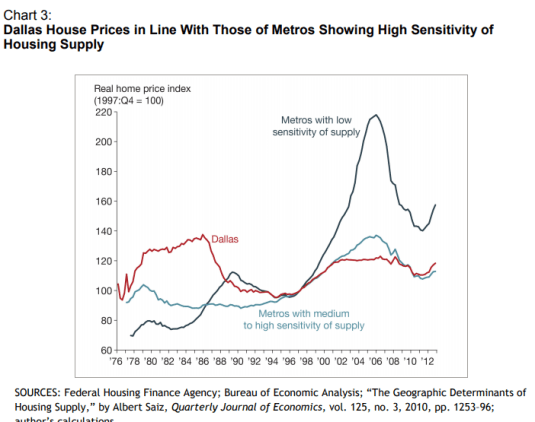
No housing bubbles if land supply is flexible
19 Feb 2020 Leave a comment
in applied price theory, business cycles, comparative institutional analysis, economics of regulation, global financial crisis (GFC), macroeconomics, politics - USA, Public Choice, rentseeking, urban economics
The key contributions of Fisher’s Appreciation and Interest (1896)
19 Feb 2020 Leave a comment
in business cycles, economics of information, history of economic thought, macroeconomics, monetary economics

What is the money illusion?
19 Feb 2020 Leave a comment
in business cycles, economics of information, history of economic thought, macroeconomics, monetary economics

Sir Robert Peel and the modern Conservative party
19 Feb 2020 Leave a comment

Today (5 Feb) marks the birthday of Sir Robert Peel (1788-1850), the 19th century prime minister traditionally credited with founding the modern Conservative party. Peel is also subject of a new BBC ‘Prime Properties’ episode – click here to view – and the latest video from the History of Parliament’s public engagement team.
 Perhaps more than any other Victorian leader, Peel’s career was dominated by themes and events that continue to have striking resonances today. These include implementing controversial constitutional reforms that divided his party, heading a short-lived minority Tory government and winning a landslide Conservative election victory using new electoral techniques. The extent of Peel’s role in rebuilding the Conservative party after its catastrophic election defeat in 1832, however, has always been a moot point. Peel was notoriously aloof and awkward as a leader. A new breed of party officials instead exerted considerable control behind the scenes during…
View original post 940 more words


Recent Comments