Finn Kydland on economic policy
22 Jan 2020 Leave a comment
in development economics, economic growth, economic history, economics of bureaucracy, Edward Prescott, entrepreneurship, Euro crisis, fiscal policy, global financial crisis (GFC), great recession, growth disasters, growth miracles, income redistribution, industrial organisation, inflation targeting, international economics, labour economics, law and economics, macroeconomics, monetary economics, property rights, Public Choice, public economics, rentseeking, Robert E. Lucas Tags: game theory, real business cycle theory
The True Nature of Crown Prerogative and Responsible Government
21 Jan 2020 Leave a comment

When PhDs Don’t Understand Westminster Parliamentarism
The debates in Westminster parliamentarism on the role of Crown-in-Parliament vs. the Crown-in-Council mostly result from legitimate differences of interpretation of Crown prerogative, such as between Dawson’s and Forsey’s respective schools of thought. Unfortunately, sometimes the debates result from factually incorrect assertions that even PhDs and tenured professors propagate, perhaps hoping that their credentials and their name will suffice in place of arguments or citations! Christian Nadeau, Professor of Philosophy at the University of Montreal, provides one such example.
Nadeau wrote “Constitutional Rule Bending: When Angry Citizens Push Back and Fight for Democracy” in the same issue of Canada Watch to which Peter Russell contributed the article featured in my previous blog entry. Essentially, Nadeau interprets the prorogations of 2008 and 2009 as evidence Harper’s desire to govern without the Crown-in-Parliament, and emblematic of a contempt for parliamentarism. Ironically, Nadeau shows contempt for Westminster…
View original post 1,859 more words
Neither the Queen Nor the Governor General Can Dissolve Parliament Unilaterally!
21 Jan 2020 Leave a comment
The Radicalism of the “Stop Harper” Lobby and of the High-Tory Monarchists
Last year, Bridget DePape abused her position as a Senate Page and mounted a silent protest with her “Stop Harper” sign in the Senate chamber while the Governor General read the Speech from the Throne that opened the 1st Session of the 41st Parliament. DePape has since inspired a new virulent “Stop Harper” Lobby, which has adopted histrionic extra-Parliamentary tactics and anti-constitutional viewpoints on the role of the Governor General of Canada and Queen of Canada in our system of Responsible Government.
Much to my surprise and chagrin, I have also recently learned of the existence of what I can only describe as a small fringe element of High Tories in Canada, who have expressed objection to this entry on some social media because they maintain that the Sovereign in the United Kingdom and Governors General…
View original post 2,987 more words
The Origins of Centralizing Executive Authority in the Prime Minister
21 Jan 2020 Leave a comment
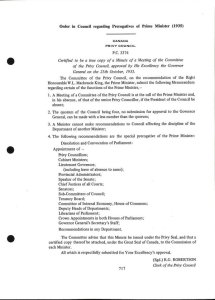
Introduction
The scholarly consensus on cabinet government in Canada argues that from Prime Minister Trudeau’s first government (1968 to 1979, the 20th Ministry) onward, the powers of the prime minister have become more centralized relative to both those of cabinet and parliament. Fed largely by Donald Savoie’s magnum opus Governing from the Centre: The Concentration of Power in Canadian Politics, the mythology of cabinet government in Canada also asserts that the Pearson government (the 19th Ministry, 1963 to 1968) was the last to practise the principle of cabinet government that the prime minister acted as primus inter pares (“first among equals”), and that from Prime Ministers Trudeau to Harper, cabinet government has suffered from an inexorable decline into irrelevancy. The scholarly consensus thus sanctifies Pearson as the last non-centralizing prime minister and friend of the classical model of cabinet government, and respectful of…
View original post 1,276 more words
Rejecting Constitutional Advice Equals Dismissal from Office: How Governor General Lord Aberdeen Forced Sir Charles Tupper’s Resignation in 1896
21 Jan 2020 Leave a comment
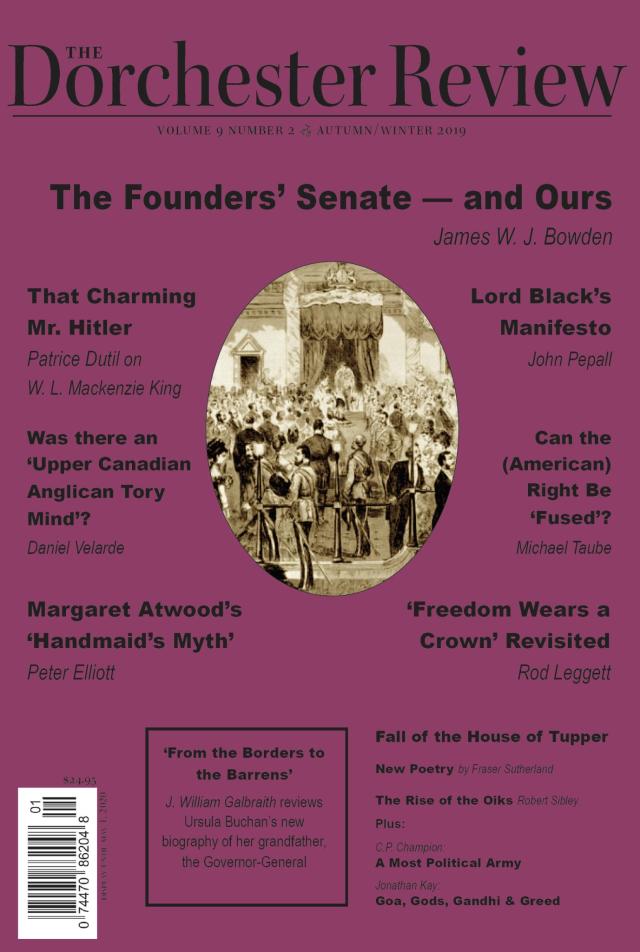
When I first embarked on this constitutional odyssey in 2011, I encountered scholars who propagated a novel constitutional interpretation with no basis in history, nor in the principles of Responsible Government itself, which I call “Reserve Powers Without Consequence”: the notion that the Governor General can reject a prime minister’s constitutional advice and that this extraordinary and rare vice-regal intervention, in turn, entails no consequences and allows the prime minister to carry on in office as if nothing happened until the House of Commons might say otherwise. This is false. And numerous historical precedents — along with the recent case from British Columbia in 2017 — demonstrate the falsity of this notion. I have written on one such case study in my latest piece in The Dorchester Review.
View original post 564 more words
Sunset Industry: US Taxpayers Liable As Giant Solar-Thermal Power Plant (Crescent Dunes) Goes Bankrupt
21 Jan 2020 Leave a comment

 Solar Thermal: Big, Shiny White Elephant.
US taxpayers are on the hook for hundreds of $millions following the spectacular financial collapse of the world’s biggest solar-thermal power plant, Crescent Dunes, situated in the Nevada desert, north-west of Las Vegas.
South Australians (victims of their government’s obsession with chaotically intermittent wind and solar) can count themselves lucky that they didn’t end up with a carbon copy of the Crescent Dunes debacle.
Back in August 2017, STT reported on efforts by the Weatherill Labor government to build a solar-thermal plant at Port Augusta with the ‘help’ of the characters behind Crescent Dunes. It was designed with a trivial 150 MW (notional) capacity, but came with an absolutely staggering $1.2bn pricetag: South Australia: Sublime One Day, Ridiculous the Next – Premier Set to Squander $1.2bn on Solar-Thermal Boondoggle
Fortunately for South Australians that big, shiny white elephant never get off the ground and Jay…
View original post 1,071 more words
What does the BBC tell audiences about Iraqi attacks on Israel in 1991?
21 Jan 2020 Leave a comment

Last weekend marked 29 years since the first Iraqi missile attack on Israel during the Gulf War of 1991.
A review of available BBC online content relating to those five and a half weeks of attacks shows that anyone searching today for information on those events will find only minimal references to the topic.
The timeline in the BBC’s profile of Israel reads:
“1991 January – Gulf War. Iraq fires 39 Scud missiles at Israel in failed attempt to regionalise conflict. Israel refrains from responding at US request.”
An entry for January 18th 1991 in the BBC’s ‘On This Day’ archive titled “Iraqi Scud missiles hit Israel” states:
“Iraq has attacked two Israeli cities with Scud missiles, prompting fears that Israel may be drawn into the Gulf War.
Israel’s largest city, Tel Aviv, and Haifa, its main seaport, were hit in the attacks, which began at…
View original post 381 more words
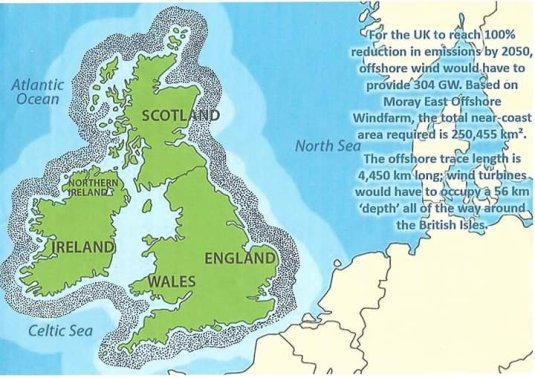
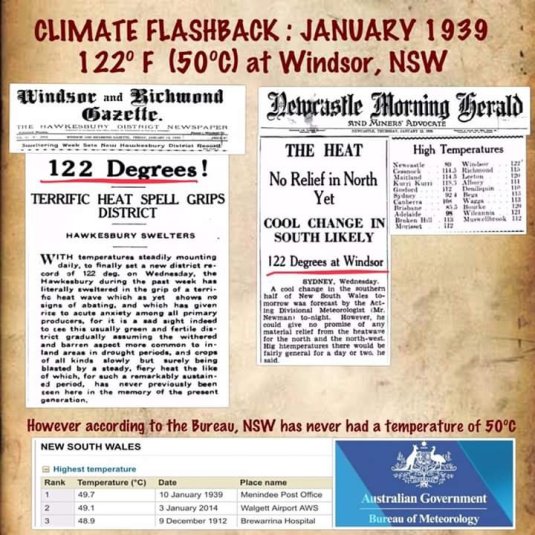
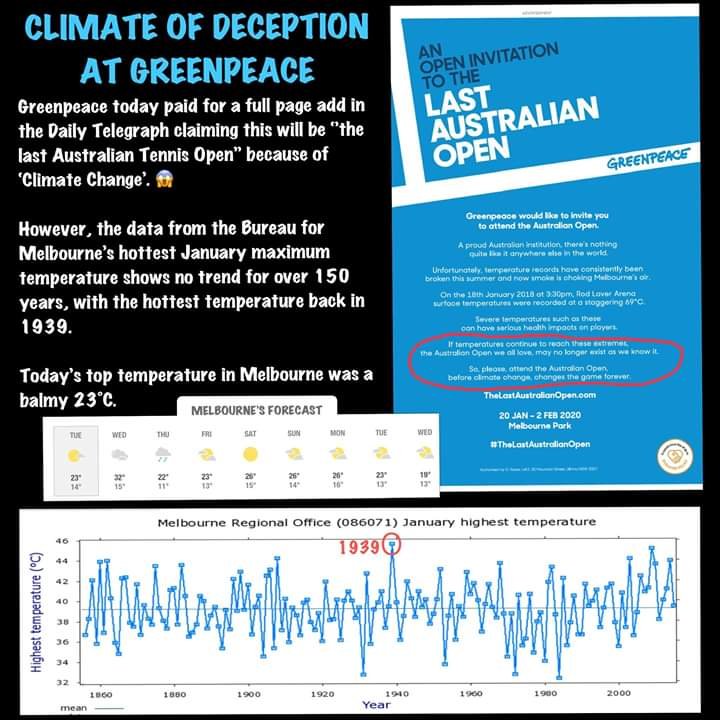
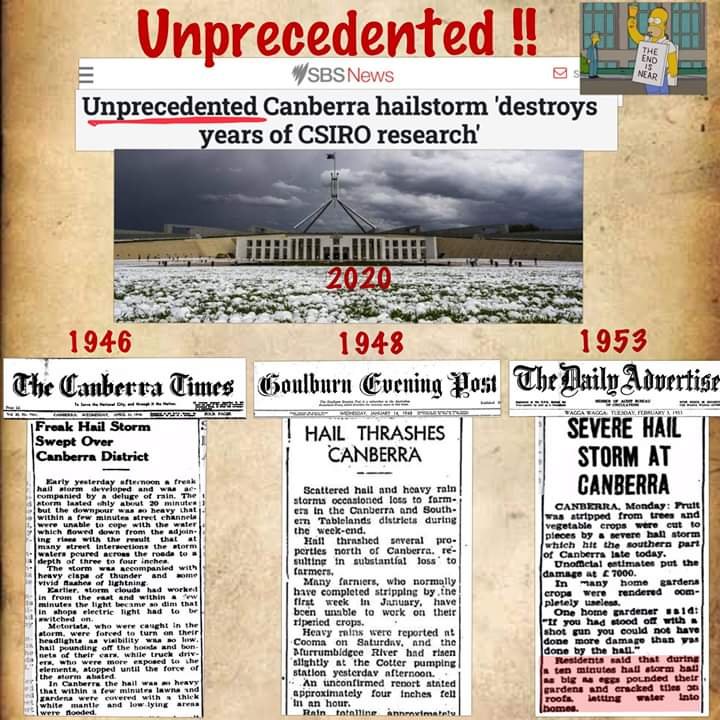
Did @GreenpeaceAP exaggerate the #globalwarming #climateemergency?
21 Jan 2020 Leave a comment
in economics of natural disasters, energy economics, environmental economics, global warming, politics - Australia Tags: climate alarmists
ENSO and IOD : Mother Nature’s Climate and Bushfire Drivers
21 Jan 2020 1 Comment

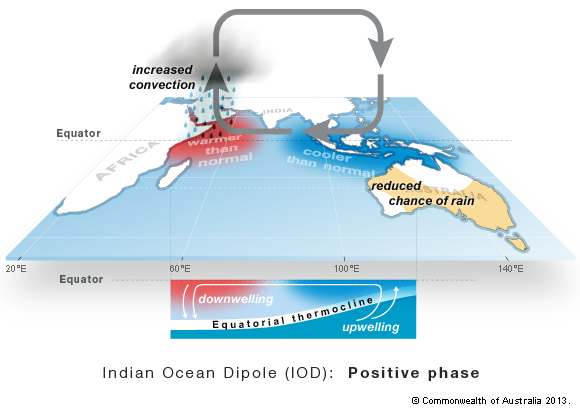 Indian Ocean Dipole (IOD) – Positive Phase | BOM
“People have been imagining that the climate is changing,
exaggerating every weather event, getting widespread press coverage,
and blaming it on man – for as long as there have been newspapers.”
–Tony Heller
Climate Change Insanity Never Changes
“It is fortunate for the community’s peace of mind
that the Commonwealth Meteorological Office exists as a
corrective to scare mongering and shameless prophecy.”
– Mr. E. Bromley : Commonwealth Meteorological Office (BoM) 1923
***
AUSTRALIA’s highly variable climate is influenced by the broad patterns in the oceans around it and the atmosphere above it. These patterns are considered the “dominant climate and weather drivers“ according to Australia’s Bureau of Meteorology.
ENSO (El Niño–Southern Oscillation) is one of Australia and the planet’s key climate drivers, influencing extremes including devastating bushfires, “droughts and flooding rains“.
ENSO swings…
View original post 2,698 more words


Recent Comments