There is media fuss today around the resistance of schools in terms of excluding students excluded from other schools. The NZ Herald highlights statistics that 100s of schools appear to be reluctant and three remain outright resistant. The article highlights the legal obligation for schools to accept students in their zone. This can be ordered […]
The Genuine Legal Conflict for School Boards
The Genuine Legal Conflict for School Boards
18 Jul 2024 Leave a comment
in economics of bureaucracy, economics of crime, economics of education, law and economics, politics - New Zealand, Public Choice Tags: crime and punishment, law and order
Universities and the Treaty
15 Jul 2024 Leave a comment
in economics of bureaucracy, economics of education, law and economics, liberalism, Marxist economics, politics - New Zealand, Public Choice Tags: Age of Enlightenment, conjecture and refutation, free speech, philosophy of science, political correctness, regressive left
Grant Duncan writes: University management should take note of that, as there have been unrealistic efforts to force poorly defined “Treaty obligations” into teaching and research. For example, one university is now telling its academic staff that all curricula should, as a high priority, be “designed, developed and delivered in authentic partnerships with Māori [and] […]
Universities and the Treaty
BBB in the NYT
15 Jul 2024 Leave a comment
in applied price theory, applied welfare economics, comparative institutional analysis, economic history, economics of bureaucracy, economics of regulation, income redistribution, law and economics, politics - USA, property rights, Public Choice, rentseeking, urban economics Tags: housing affordability, land supply, zoning
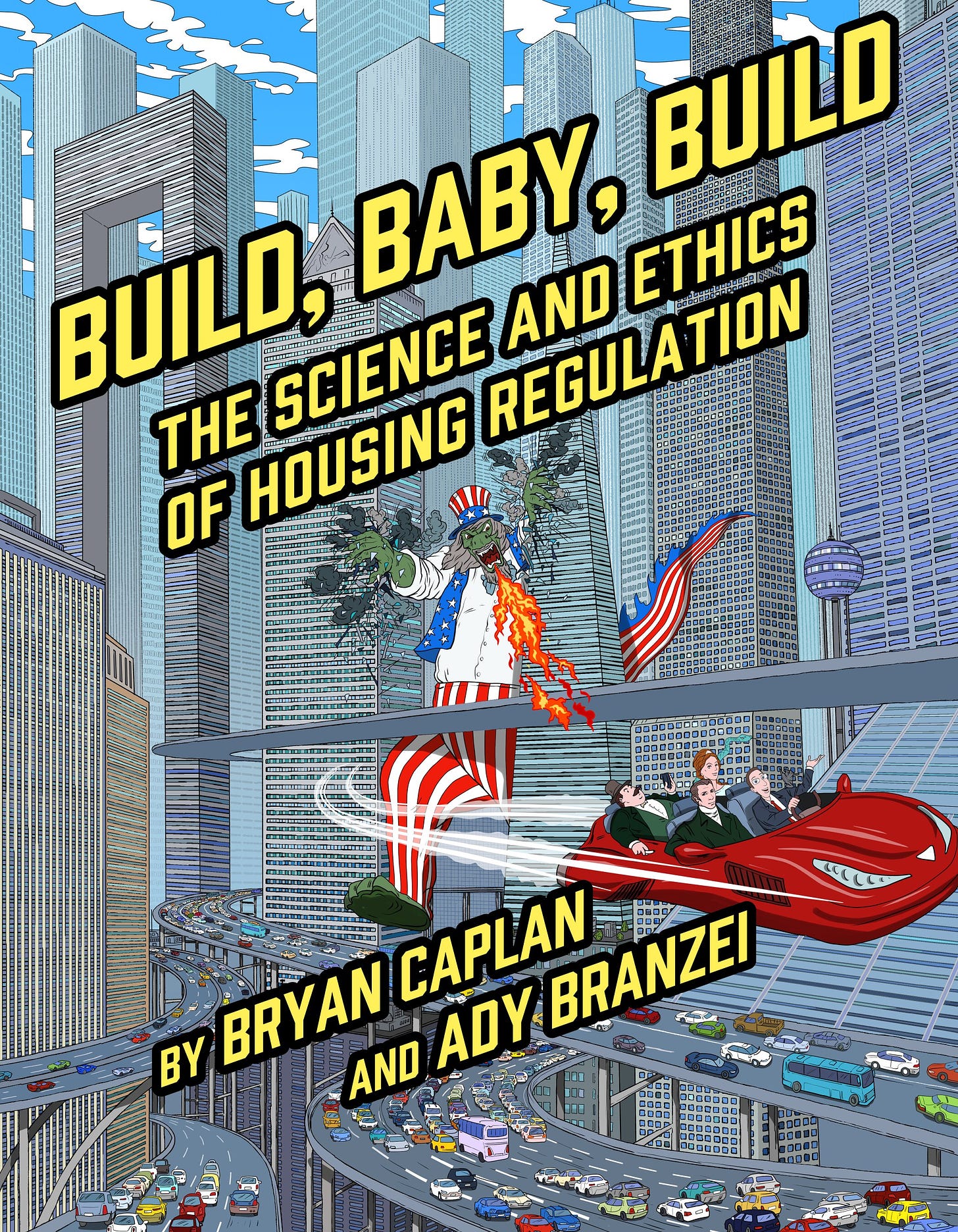
I pitch Build, Baby, Build in today’s New York Times. No illustrations, but a bunch of cool graphs cooked up by Sara Chodosh of the NYT data analytics team. The original title was “The Panacea Policy,” but now it’s “Yes in My Backyard: The Case For Housing Deregulation.” And for you, dear readers, it’s ungated!…
BBB in the NYT
Market Preserving Federalism in the USA
14 Jul 2024 Leave a comment
in applied price theory, comparative institutional analysis, economics of bureaucracy, income redistribution, Public Choice, rentseeking
One of my favorite economic journal articles is by Barry Weingast and has the short title “Market Preserving Federalism” (MPF). In this paper, Weingast lays out the conditions necessary for two tenuous equilibria: A) Federalism & B) Federalism that preserves a market economy. Given that we just celebrated Independence Day in the USA, it seems […]
Market Preserving Federalism in the USA
Finally a great housing package
05 Jul 2024 Leave a comment
in economics of bureaucracy, economics of regulation, law and economics, politics - New Zealand, property rights, Public Choice, rentseeking, transport economics, urban economics Tags: housing affordability, land supply, zoning
Chris Bishop has announced changes to housing laws which will make a huge difference to housing affordability. Almost every expert has said that to reduce pressure on house prices you need to both build up and build out. The NIMBYs oppose building up and the Greenies opposes building out. Phil Rayford in 2017 had some […]
Finally a great housing package
Hayley Hooper: Historical Origins of the ‘Principle of Legality’ in British Public Law
30 Jun 2024 Leave a comment
in economic history, economics of bureaucracy, law and economics, Public Choice, public economics Tags: British constitutional law
In 2021 the then Lord Chancellor Robert Buckland QC MP cited the principle of legality as an example of an aspect of public law that might ‘take on a life of [its] own, and lead to the courts overreaching.’ In the simplest terms, the principle of legality is a common law rule of statutory interpretation […]
Hayley Hooper: Historical Origins of the ‘Principle of Legality’ in British Public Law
Guest Post: Funding Infrastructure
24 Jun 2024 Leave a comment
in applied price theory, comparative institutional analysis, economics of bureaucracy, politics - New Zealand, Public Choice, transport economics, urban economics
A guest post by Gary Lindsay responding to the speech by Infrastructure Minister Chris Bishop: Chris Bishop’s speech regarding infrastructure has been a long time coming. It’s great that a government is finally serious about the massive infrastructure deficit that has been building since the major (necessary) cuts in 1984. Correcting a 40 year infrastructure […]
Guest Post: Funding Infrastructure
Murphy’s Law of Economic Policy
21 Jun 2024 Leave a comment
in applied price theory, applied welfare economics, comparative institutional analysis, economics of bureaucracy, economics of regulation, history of economic thought, Public Choice, public economics

Economists have the least influence on policy where they know the most and are most agreed; they have the most influence on policy where they know the least and disagree most vehemently.” I’d never heard of it before and it’s quoted in this review of a book called “Free Lunch Thinking – How Economics Ruins […]
Murphy’s Law of Economic Policy
Caught out! The NZ Initiative’s Article in the Herald Blaming the RBNZ for our Rip-Off Big Banks is Contradicted by its Own Expert Witness. (Willis Beware).
12 Jun 2024 Leave a comment
in applied price theory, applied welfare economics, business cycles, economic history, economics of bureaucracy, financial economics, macroeconomics, monetary economics, politics - New Zealand, Public Choice
When it comes to the question of how best to avoid a banking collapse and multi-billion dollar bailout that can drag a whole nation into depression, the best solution, according to Chicago-Stanford economist, John Cochrane, is to require banks to set aside a fraction of their own funds as reserves to cover losses they may…
Caught out! The NZ Initiative’s Article in the Herald Blaming the RBNZ for our Rip-Off Big Banks is Contradicted by its Own Expert Witness. (Willis Beware).
Where did the Government get the law right and wrong with the Covid-19 response?
10 Jun 2024 Leave a comment
in economics of bureaucracy, economics of natural disasters, economics of regulation, health economics, law and economics, politics - New Zealand, Public Choice Tags: economics of pandemics
For those who are interested in public law, a very interesting paper by Dean Knight summarising the various court cases over the Covid-19 response. It details in which areas the Government won judicial reviews, and in which areas they lost. The TLDR version is: Hopefully we will not go through another pandemic anytime soon.
Where did the Government get the law right and wrong with the Covid-19 response?
On electing gangsters
10 Jun 2024 Leave a comment
in comparative institutional analysis, development economics, economic history, economics of bureaucracy, economics of crime, growth disasters, growth miracles, income redistribution, law and economics, Public Choice, rentseeking Tags: economics of corruption, India
In India it’s common for politicians to have criminal cases against them. Why do voters vote for criminals? One compelling explanation provided by political scientist Milan Vaishnav is that voters often care less about their represntative’s ability to deliver broad-based development or draft good laws, and more about the effectiveness at helping them access limited […]
Haan, goonda hai, magar hamara goonda hai
Did the British Empire REALLY Drive the Industrial Revolution? IEA Debates
06 Jun 2024 Leave a comment
in applied price theory, comparative institutional analysis, constitutional political economy, economic history, economics of bureaucracy, growth disasters, growth miracles, income redistribution, Public Choice, rentseeking Tags: Age of Discovery, age of empires, economics of colonialism
The Huge Potential Benefits of Charter Schools
30 May 2024 Leave a comment
in economics of bureaucracy, economics of education, managerial economics, organisational economics, politics - New Zealand, Public Choice
Alwyn Poole writes – In New Zealand we have approximately 460 high schools. The gaps between the schools that produce the best results for students and those at the other end of the spectrum are enormous. In terms of the data for their leavers, the top 30 schools have an average of 87% of their […]
The Huge Potential Benefits of Charter Schools
Charter Schools are a worthwhile addition to our school system – but ACT is mis-selling why they are Good and Labour is mis-selling why they are Bad.
22 May 2024 Leave a comment
in economics of bureaucracy, economics of education, managerial economics, organisational economics, personnel economics, politics - New Zealand, Public Choice
We know the old saying, “Never trust a politician”, and the Charter School debate is a good example of it. Charter Schools receive public funding, yet “are exempt from most statutory requirements of traditional public schools, including mandates around .. human capital management .. curriculum & instructional practices, and governance & management structures”. That’s a…
Charter Schools are a worthwhile addition to our school system – but ACT is mis-selling why they are Good and Labour is mis-selling why they are Bad.
Is it time to take the Interislander away from Kiwirail?
17 May 2024 Leave a comment
in applied price theory, economics of bureaucracy, industrial organisation, law and economics, managerial economics, politics - New Zealand, privatisation, property rights, Public Choice, survivor principle, theory of the firm, transport economics
The Herald reports: KiwiRail’s seemingly endless requests for more money is damning. At one point, KiwiRail assured Robertson when he was the Finance Minister that the worst-case scenario would be an extra $300 million before requesting $1.2 billion a few months later. Not what most people regard as worst case. It’s no wonder Ministry of Transport officials […]
Is it time to take the Interislander away from Kiwirail?
 Utopia, you are standing in it!
Recent Comments