The Miami Herald reports: A stunning 10% of Cuba’s population — more than a million people — left the island between 2022 and 2023, the head of the country’s national statistics office said during a National Assembly session Friday, the largest migration wave in Cuban history. Isn’t it such a weird coincidence that the queue […]
Communism still doing well in Cuba
Communism still doing well in Cuba
05 Aug 2024 Leave a comment
in comparative institutional analysis, constitutional political economy, development economics, economic history, economics of bureaucracy, economics of crime, growth disasters, income redistribution, labour economics, labour supply, law and economics, Marxist economics, property rights, Public Choice, public economics Tags: Cuba
Talking BBB with Veronique de Rugy
03 Aug 2024 Leave a comment
in applied price theory, comparative institutional analysis, economic history, economics of bureaucracy, economics of regulation, income redistribution, law and economics, politics - USA, property rights, Public Choice, public economics, rentseeking, urban economics Tags: housing affordability, land supply
Here’s a lively AIER podcast on Build, Baby, Build with the one and only Veronique de Rugy. Best French libertarian since Bastiat? Décider vous-même!P.S. Capla-Con 2024 starts two weeks from tomorrow in Fairfax, Virginia. You’re all invited! Feel free to coordinate ride-sharing in the comments.
Talking BBB with Veronique de Rugy
Wellington rates skyrocket
31 Jul 2024 Leave a comment
in economics of bureaucracy, environmental economics, income redistribution, law and economics, politics - New Zealand, property rights, Public Choice, rentseeking, transport economics, urban economics
The Post reports: Many Wellington City home owners have received a nasty surprise after new rates costs came out with increases higher than the already-eye-watering planned increases. My rates have gone up over $900 a year, or just over 20%. This is not due to more investment in water infrastructure. This is due to the […]
Wellington rates skyrocket
Venezuela under “Brutal Capitalism”
31 Jul 2024 Leave a comment
in development economics, economic history, economics of bureaucracy, economics of crime, growth disasters, income redistribution, law and economics, liberalism, Marxist economics, property rights, Public Choice, rentseeking, resource economics Tags: Venezuela
Jeffrey Clemens points us to some bonkers editorializing in the NYTimes coverage of the likely stolen election in Venezuela. The piece starts out reasonably enough: Venezuela’s authoritarian leader, Nicolás Maduro, was declared the winner of the country’s tumultuous presidential election early Monday, despite enormous momentum from an opposition movement that had been convinced this was […]
Venezuela under “Brutal Capitalism”
Karen Chhour gives her response on the Royal Commission of Inquiry into …
29 Jul 2024 Leave a comment
in economic history, economics of bureaucracy, economics of crime, law and economics, politics - New Zealand, Public Choice
PETER WILLLIAMS: The costs of Te Mana o te Wai are worse than we thought
29 Jul 2024 Leave a comment
in economics of bureaucracy, economics of regulation, law and economics, politics - New Zealand, property rights, Public Choice, rentseeking, urban economics
Last month I wrote about the Government’s failure to repeal David Parker’s mad ‘te Mana o te Wai’ (literally meaning the mana of the water) requirements. A few days ago, the research team at the Taxpayers’ Union were sent the details on how the rules are playing it out in my local area: Otago. While…
PETER WILLLIAMS: The costs of Te Mana o te Wai are worse than we thought
Fast Takes on *Build, Baby, Build*: Ed Glaeser
27 Jul 2024 Leave a comment
in applied price theory, economics of bureaucracy, economics of regulation, income redistribution, politics - New Zealand, politics - USA, Public Choice, regulation, rentseeking, urban economics Tags: housing affordability, land supply

Ed Glaeser is the chairman of Harvard’s Department of Economics. He’s also widely credited with reviving the entire field of Urban Economics. His 2018 “The Economics of Housing Supply” (with Joe Gyourko) in the Journal of Economic Perspectives was a major inspiration for my Build, Baby, Build. So in the latest “Fast Takes” interview, I…
Fast Takes on *Build, Baby, Build*: Ed Glaeser
Cheatling Responsibility
26 Jul 2024 Leave a comment
in economics of bureaucracy, economics of crime, law and economics, politics - USA, Public Choice Tags: 2024 presidential election, crime and punishment, law and order

No sooner does this blog write about shitty government bureaucrats refusing to do the right thing, and even doubling down on the wrong things, than one of them does the right thing. Cheatle Resigns and for Good Cause. That’s Kimberly Cheatle, head of the United States Secret Service (USSS), finally taking responsibility for her outfit […]
Cheatling Responsibility
The Genuine Legal Conflict for School Boards
18 Jul 2024 Leave a comment
in economics of bureaucracy, economics of crime, economics of education, law and economics, politics - New Zealand, Public Choice Tags: crime and punishment, law and order
There is media fuss today around the resistance of schools in terms of excluding students excluded from other schools. The NZ Herald highlights statistics that 100s of schools appear to be reluctant and three remain outright resistant. The article highlights the legal obligation for schools to accept students in their zone. This can be ordered […]
The Genuine Legal Conflict for School Boards
Universities and the Treaty
15 Jul 2024 Leave a comment
in economics of bureaucracy, economics of education, law and economics, liberalism, Marxist economics, politics - New Zealand, Public Choice Tags: Age of Enlightenment, conjecture and refutation, free speech, philosophy of science, political correctness, regressive left
Grant Duncan writes: University management should take note of that, as there have been unrealistic efforts to force poorly defined “Treaty obligations” into teaching and research. For example, one university is now telling its academic staff that all curricula should, as a high priority, be “designed, developed and delivered in authentic partnerships with Māori [and] […]
Universities and the Treaty
BBB in the NYT
15 Jul 2024 Leave a comment
in applied price theory, applied welfare economics, comparative institutional analysis, economic history, economics of bureaucracy, economics of regulation, income redistribution, law and economics, politics - USA, property rights, Public Choice, rentseeking, urban economics Tags: housing affordability, land supply, zoning
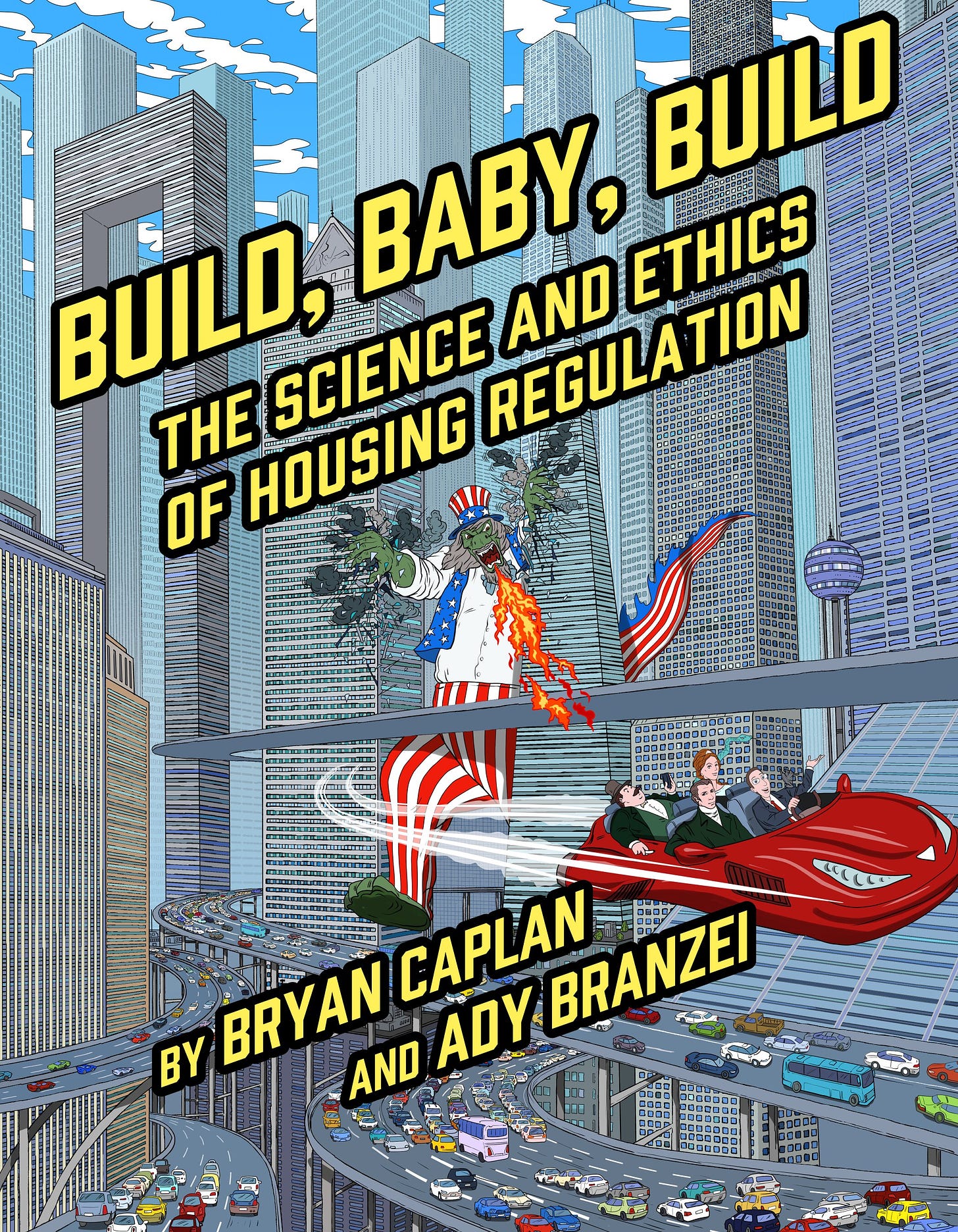
I pitch Build, Baby, Build in today’s New York Times. No illustrations, but a bunch of cool graphs cooked up by Sara Chodosh of the NYT data analytics team. The original title was “The Panacea Policy,” but now it’s “Yes in My Backyard: The Case For Housing Deregulation.” And for you, dear readers, it’s ungated!…
BBB in the NYT
Market Preserving Federalism in the USA
14 Jul 2024 Leave a comment
in applied price theory, comparative institutional analysis, economics of bureaucracy, income redistribution, Public Choice, rentseeking
One of my favorite economic journal articles is by Barry Weingast and has the short title “Market Preserving Federalism” (MPF). In this paper, Weingast lays out the conditions necessary for two tenuous equilibria: A) Federalism & B) Federalism that preserves a market economy. Given that we just celebrated Independence Day in the USA, it seems […]
Market Preserving Federalism in the USA
Finally a great housing package
05 Jul 2024 Leave a comment
in economics of bureaucracy, economics of regulation, law and economics, politics - New Zealand, property rights, Public Choice, rentseeking, transport economics, urban economics Tags: housing affordability, land supply, zoning
Chris Bishop has announced changes to housing laws which will make a huge difference to housing affordability. Almost every expert has said that to reduce pressure on house prices you need to both build up and build out. The NIMBYs oppose building up and the Greenies opposes building out. Phil Rayford in 2017 had some […]
Finally a great housing package
Hayley Hooper: Historical Origins of the ‘Principle of Legality’ in British Public Law
30 Jun 2024 Leave a comment
in economic history, economics of bureaucracy, law and economics, Public Choice, public economics Tags: British constitutional law
In 2021 the then Lord Chancellor Robert Buckland QC MP cited the principle of legality as an example of an aspect of public law that might ‘take on a life of [its] own, and lead to the courts overreaching.’ In the simplest terms, the principle of legality is a common law rule of statutory interpretation […]
Hayley Hooper: Historical Origins of the ‘Principle of Legality’ in British Public Law


Recent Comments