Shane Jones deserves full support for his round-arm swing at the Waitangi Tribunal which is now fiddling about with a constitutional inquiry and deciding who can take part in it. A clause in New Zealand First’s coalition agreement with the National Party commits the government to amending the Waitangi Tribunal’s legislation so that the body…
MICHAEL BASSETT: SHANE JONES DESERVES SUPPORT ABOUT THE WAITANGI TRIBUNAL
MICHAEL BASSETT: SHANE JONES DESERVES SUPPORT ABOUT THE WAITANGI TRIBUNAL
31 Jan 2024 Leave a comment
in economics of bureaucracy, income redistribution, law and economics, liberalism, politics - New Zealand, property rights, Public Choice, public economics, rentseeking Tags: constitutional law
Water metering – a small piece of silver buckshot
25 Jan 2024 Leave a comment
in economics of bureaucracy, environmental economics, industrial organisation, law and economics, politics - New Zealand, property rights, Public Choice, survivor principle Tags: economics of networks, privatization
Chris Parker at Treasury sometimes quips that there are no silver bullets for solving housing in NZ, only pieces of silver buckshot. Basically you’ve got to do a lot of things to solve the problem; any one of them on their own won’t do it. I was on RNZ’s The Panel yesterday afternoon (here, from around…
Water metering – a small piece of silver buckshot
Will Milei succeed in Argentina?
22 Jan 2024 Leave a comment
in applied price theory, budget deficits, comparative institutional analysis, development economics, economic growth, economic history, economics of bureaucracy, economics of regulation, fiscal policy, growth disasters, income redistribution, labour economics, liberalism, libertarianism, macroeconomics, Marxist economics, monetary economics, Public Choice, public economics, rentseeking Tags: Argentina
I give him a 30-40% chance, which is perhaps generous because I am rooting for him. Bryan Caplan, who is more optimistic, offers some analysis and estimates that Milei needs to close a fiscal gap of about five percent of gdp. I have two major worries. First, if Milei approaches fiscal success, the opposing parties […]
Will Milei succeed in Argentina?
Avoiding scrutiny
19 Jan 2024 Leave a comment
in business cycles, economics of bureaucracy, macroeconomics, monetary economics, politics - New Zealand, Public Choice Tags: monetary policy

Regular readers will recall that I have, intermittently, been on the trail of the approach taken to the selection (and rejection) of external MPC members when the current crop were first appointed in 2019. I have been pursuing the matter since a highly credible person who was interested in being considered for appointment told me that […]
Avoiding scrutiny
JOHN RAINE: Ministerial Spring Cleaning and the Parable of the Rowing Eight
05 Jan 2024 Leave a comment
in applied price theory, economics of bureaucracy, politics - New Zealand, Public Choice, public economics
Matthew Hooton’s recommendation that Nicola Willis cut the cost of the Public Service by 25% (NZ Herald 22nd December) reminded me of a story. Years ago, the engineering community was getting fired up about new Japanese business and manufacturing efficiency methods, and “kaizen” (continuous improvement) and “just in time” were being bandied about. At the…
JOHN RAINE: Ministerial Spring Cleaning and the Parable of the Rowing Eight
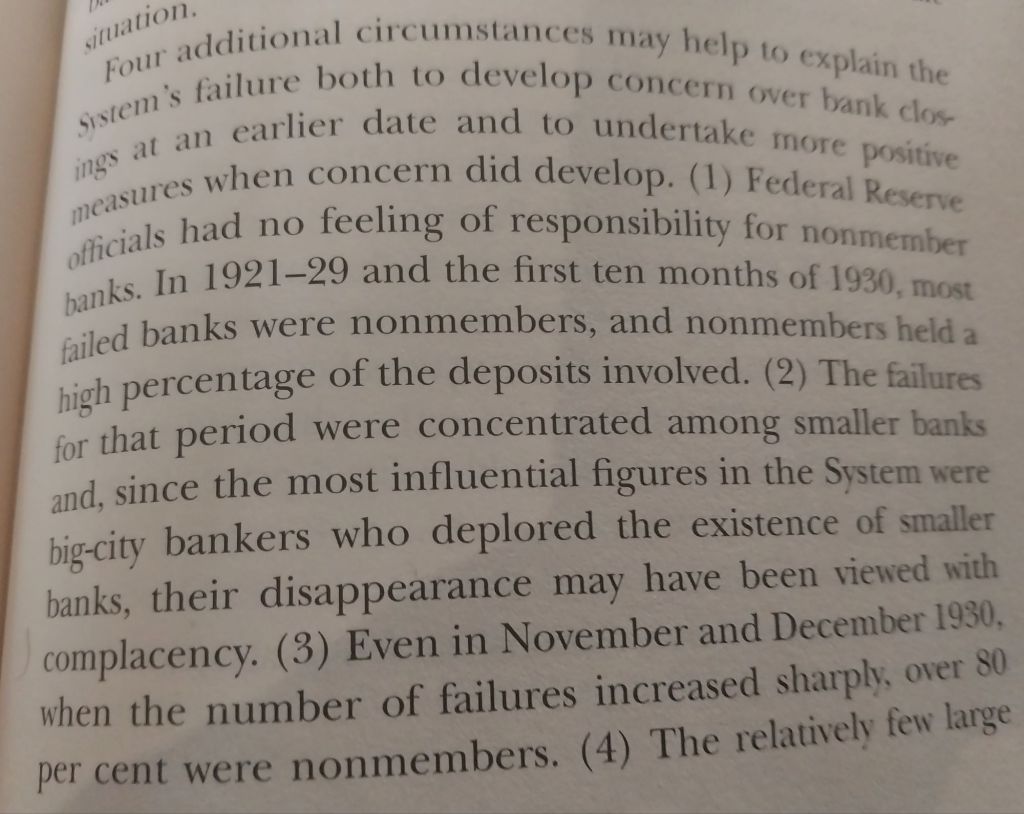
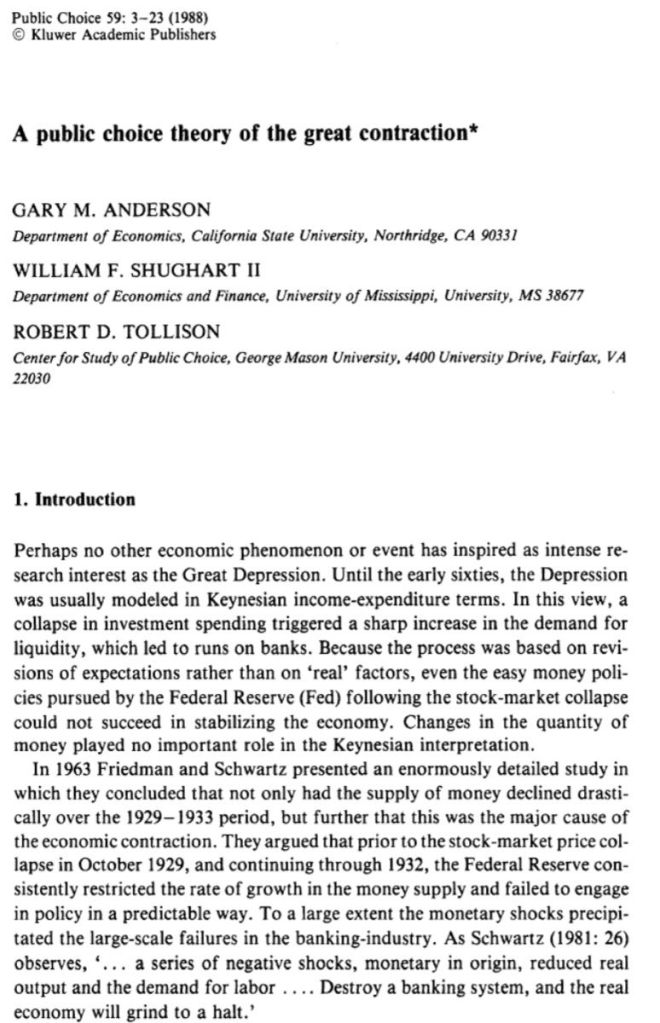
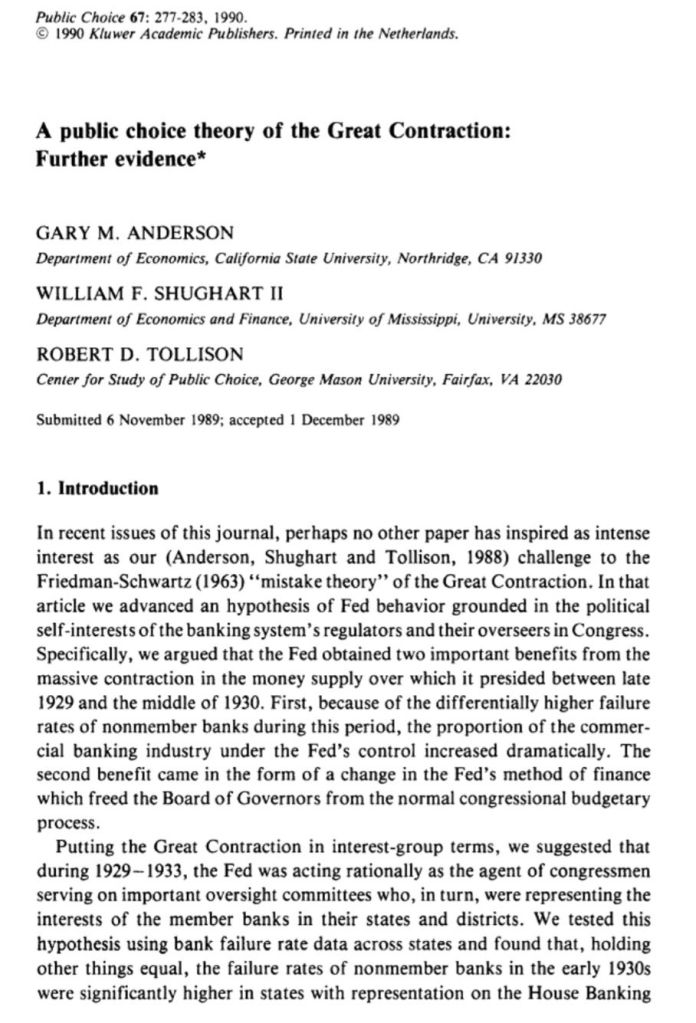
Friedman and Schwartz agreed with Anderson, Tollison and Shughart on the public choice origins of the Great Contraction!
28 Dec 2023 Leave a comment
in applied price theory, business cycles, economic history, economics of bureaucracy, great depression, history of economic thought, macroeconomics, Milton Friedman, monetarism, monetary economics, Public Choice, rentseeking Tags: monetary policy
Argentina Milei reform impressions
23 Dec 2023 Leave a comment
in applied price theory, budget deficits, business cycles, comparative institutional analysis, constitutional political economy, development economics, economic growth, economics of bureaucracy, economics of regulation, fiscal policy, growth disasters, history of economic thought, income redistribution, international economics, labour economics, law and economics, liberalism, libertarianism, macroeconomics, Marxist economics, monetary economics, property rights, Public Choice, public economics, rentseeking, unemployment Tags: Argentina
I didn’t have much time in Argentina, but I can pass along a few impressions about how Milei is doing, noting I hold these with “weak belief”: 1. He is pretty popular with the general population. He is also popular in B.A. in particular. People are fed up with what they have been experiencing. It […]
Argentina Milei reform impressions
FMI Public Speaker Series – Finn Kydland
23 Dec 2023 Leave a comment
in applied price theory, budget deficits, business cycles, comparative institutional analysis, development economics, economic growth, economic history, economics of bureaucracy, fiscal policy, global financial crisis (GFC), great depression, great recession, growth disasters, growth miracles, history of economic thought, human capital, income redistribution, labour economics, labour supply, macroeconomics, Public Choice, public economics, rentseeking
Monetary policy turning points
18 Dec 2023 Leave a comment
in business cycles, economic growth, economic history, economics of bureaucracy, global financial crisis (GFC), great recession, history of economic thought, inflation targeting, macroeconomics, monetary economics, politics - New Zealand, Public Choice Tags: monetary policy

When the Reserve Bank MPC came out late last month with its last words on monetary policy before its extended summer break, my post then was headed “Really?“. It was a commentary on the disjunction between the Reserve Bank’s inflation forecasts on the one hand, that showed quarterly inflation collapsing (not really too strong a word […]
Monetary policy turning points
An Upside-Down Economic History of Argentina
13 Dec 2023 Leave a comment
in budget deficits, business cycles, development economics, economic growth, economic history, economics of bureaucracy, fiscal policy, growth disasters, growth miracles, history of economic thought, income redistribution, labour economics, macroeconomics, Public Choice, public economics, rentseeking, Ronald Coase Tags: Argentina
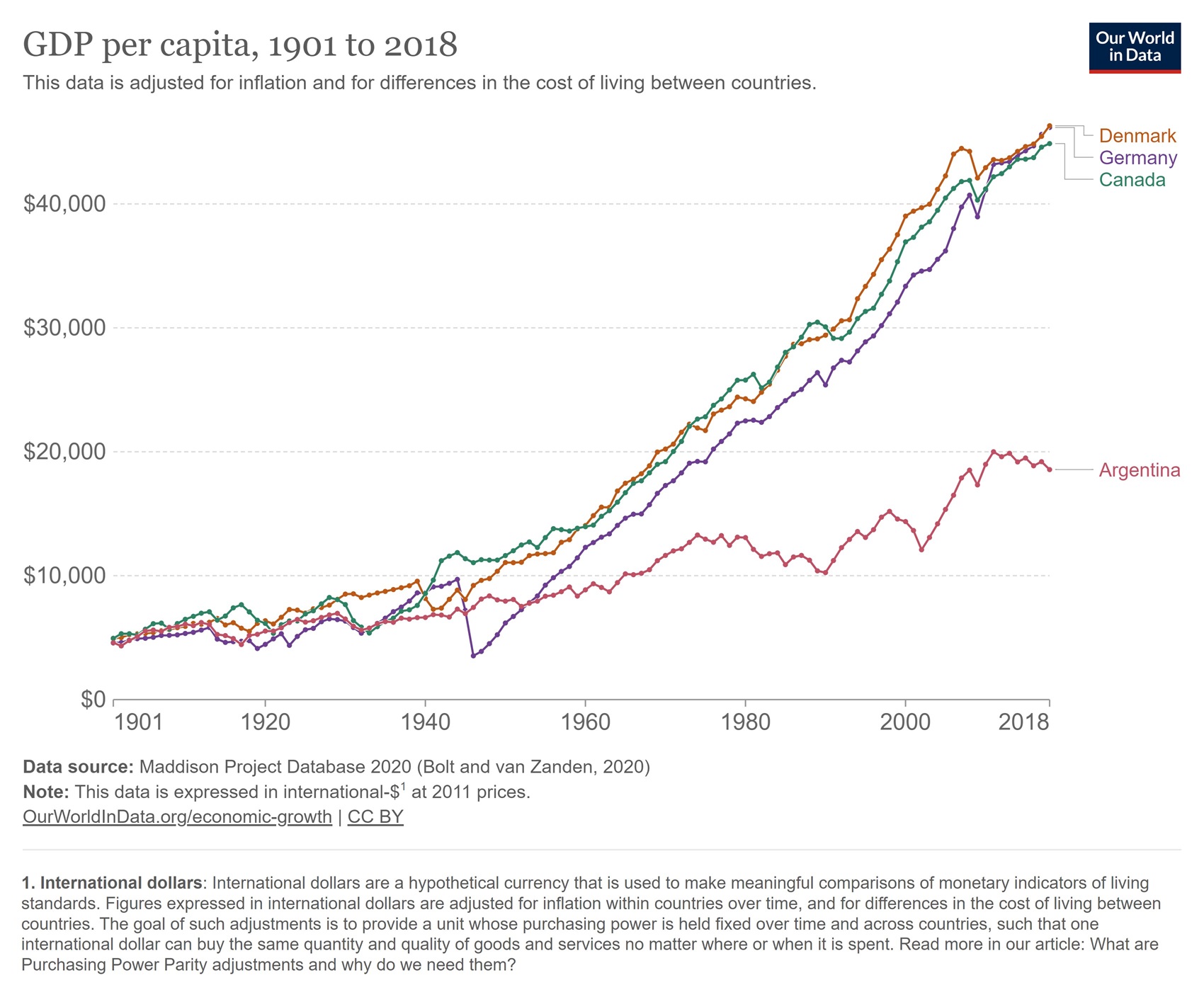
Argentina has a very interesting, but also rather tragic, economic history. During first half of the 20th century, it was one of the world’s richest nations. But thanks to dirigiste economic policies (known locally as Peronism) starting after World War II, Argentina has suffered a dramatic decline in relative living standards. However, something shocking has […]
An Upside-Down Economic History of Argentina
Shameless central bankers
15 Nov 2023 Leave a comment
in business cycles, economics of bureaucracy, financial economics, fiscal policy, inflation targeting, macroeconomics, monetary economics, Public Choice Tags: monetary policy

It was in mid-August that this particular bit of shameless Reserve Bank spin got going. From a post in late August It proved to be nonsense of course. Once we had access to the short little IMF piece, published at the back of the Fund’s Article IV review, it was clear that it all amounted […]
Shameless central bankers
Reflections on the TCU Capitalism versus Socialism Debate
08 Nov 2023 Leave a comment
in applied price theory, applied welfare economics, comparative institutional analysis, constitutional political economy, development economics, economic growth, economic history, economics of bureaucracy, growth disasters, growth miracles, income redistribution, industrial organisation, labour economics, law and economics, liberalism, libertarianism, Marxist economics, poverty and inequality, privatisation, property rights, Public Choice, public economics Tags: economics of socialism, Sweden

Two days ago at Texas Christian University, I debated Scott Sehon, chair of Bowdoin College’s Philosophy Department, on Capitalism versus Socialism. (Video forthcoming eventually). My opening statement was a slight variation on the one I wrote for an earlier debate on the same topic with Elizabeth Bruenig. Sehon’s opening statement was adapted from his Socialism:…
Reflections on the TCU Capitalism versus Socialism Debate
Still under-policed and over-imprisoned
07 Nov 2023 Leave a comment
in applied price theory, economics of bureaucracy, economics of crime, Gary Becker, labour economics, law and economics, occupational choice, Public Choice Tags: crime and punishment, criminal deterrence, law and order
A new paper, The Injustice of Under-Policing, makes a point that I have been emphasizing for many years, namely, relative to other developed countries the United States is under-policed and over-imprisoned. …the American criminal legal system is characterized by an exceptional kind of under-policing, and a heavy reliance on long prison sentences, compared to other […]
Still under-policed and over-imprisoned
Liberal Hypocrisy is Fueling American Inequality. Here’s How. | NYT Opinion well worth watching
04 Nov 2023 Leave a comment
in applied price theory, applied welfare economics, comparative institutional analysis, economics of bureaucracy, economics of education, economics of regulation, income redistribution, labour economics, labour supply, law and economics, liberalism, Marxist economics, politics - USA, property rights, Public Choice, public economics, rentseeking, urban economics Tags: housing affordability, top 1%, zoning


Recent Comments