The Productivity Commission will cease operations tomorrow, to make way for the new Ministry for Regulation. On the same day, the Waitangi Tribunal will begin an urgent inquiry into the government’s proposal to disestablish the Māori Health Authority. But legislation passed under urgency by Parliament will result in the authority being shut down by the end […]
Productivity Commission gone tomorrow, Māori Health Authority gone in June – so what should we do with the Waitangi Tribunal?
Productivity Commission gone tomorrow, Māori Health Authority gone in June – so what should we do with the Waitangi Tribunal?
28 Feb 2024 Leave a comment
in economics of bureaucracy, health economics, law and economics, politics - New Zealand, property rights, Public Choice, rentseeking
Goodbye to the Productivity Commission
27 Feb 2024 Leave a comment
in economics of bureaucracy, politics - New Zealand, Public Choice
The Productivity Commission closes its doors on Thursday and goes out of existence. There have been a couple of recent articles on the demise of the Productivity Commission, and the chair (Ganesh Nana) has even put out his own statement (not exactly compelling) on productivity, and policy options for improving New Zealand’s dismal performance. There […]
Goodbye to the Productivity Commission
On price control
25 Feb 2024 Leave a comment
in applied price theory, comparative institutional analysis, economic history, economics of bureaucracy, energy economics, environmental economics, global warming, income redistribution, industrial organisation, Public Choice, rentseeking Tags: price controls, The fatal conceit, unintended consequences, utility regulation

Texas professor fired, then reinstated after a lawsuit, for teaching that chromosomes determine human sex
23 Feb 2024 Leave a comment
in discrimination, economics of bureaucracy, economics of education, gender, health economics, labour economics, law and economics, politics - USA, Public Choice Tags: Age of Enlightenment, employment law, free speech, political correctness, regressive left, sex discrimination

In general, one can’t say that chromosomes “determine sex” in animals, as there are other genetic or environmental features that determine what sex an individual becomes. As Coyne and Maroja (2023) note: Different sexes can determined during development bybe based on different chromosomes and their genes (e.g., XX vs. XY in humans, ZW vs. ZZ in birds, […]
Texas professor fired, then reinstated after a lawsuit, for teaching that chromosomes determine human sex
ROB MacCULLOCH: Grant Robertson’s new job sends an awful message to students about meritocracy in NZ
22 Feb 2024 Leave a comment
in economics of bureaucracy, economics of education, politics - New Zealand, Public Choice
The appointment of Grant Robertson as Vice-Chancellor of Otago University has raised hackles – and questions – among academics. Robertson’s credentials for the job is one issue. The appointment process is another. University of Auckland economics professor Rob MacCulloch has posted these three articles in the past few days on Down To Earth Kiwi… […]
ROB MacCULLOCH: Grant Robertson’s new job sends an awful message to students about meritocracy in NZ
Constitution 101: How Powerful Is The Queen?
17 Feb 2024 Leave a comment
in constitutional political economy, economics of bureaucracy, Public Choice Tags: British constitutional law
[This is the first in a series of posts that will look at the key institutions of the British constitution. A version of this particular post first appeared on my personal blog.] Americans don’t really understand the British Monarchy. Our pundits often portray the Queen as a powerless figurehead who does little more than cut ribbons and unveil plaques. […]
Constitution 101: How Powerful Is The Queen?
Supreme Court Unanimously Throws Out Bridgegate Convictions — And Rejects Prior Legal Arguments Against Trump
17 Feb 2024 Leave a comment
in economics of bureaucracy, economics of crime, law and economics, politics - USA, property rights, Public Choice

The Supreme Court today unanimously threw out the convictions of Bridget Kelly, a former aide to Christie, and Bill Baroni, a former Port Authority official, for their role in “Bridgegate.” The dispute involved the controversial closing of lanes on the George Washington Bridge to create traffic problems for the mayor of Fort Lee, N.J., who […]
Supreme Court Unanimously Throws Out Bridgegate Convictions — And Rejects Prior Legal Arguments Against Trump
Congress and Courts enable Energy and Climate Fantasy and Tyranny
15 Feb 2024 Leave a comment
in comparative institutional analysis, economics of bureaucracy, economics of climate change, economics of regulation, energy economics, environmental economics, environmentalism, global warming, law and economics, politics - USA, property rights, Public Choice Tags: constitutional law
Supreme Court should end “Chevron deference” to restore checks, balances and reality
Congress and Courts enable Energy and Climate Fantasy and Tyranny
BRIAN EASTON: Te Tiriti as a social contract
12 Feb 2024 Leave a comment
in comparative institutional analysis, constitutional political economy, economics of bureaucracy, income redistribution, law and economics, liberalism, Marxist economics, politics - New Zealand, property rights, Public Choice, rentseeking Tags: Age of Enlightenment, constitutional law, regressive left
Interpreting the agreement made at Waitangi as a social contract is a way to move forward on treaty issues (This column follows ‘Our Understandings Of Te Tiriti Has Evolved Organically’.) Brian Easton writes – Te Tiriti is in the form of a social contract of the sort that political theorists have discussed since the seventeenth […]
BRIAN EASTON: Te Tiriti as a social contract
Pinker on “What’s wrong with our universities”
11 Feb 2024 Leave a comment
in economics of bureaucracy, economics of education, law and economics, liberalism, Marxist economics, politics - USA, property rights, Public Choice Tags: Age of Enlightenment, free speech, political correctness, regressive left
Here’s a new one-hour interview of Steve Pinker by John Tomasi, inaugural president of the Heterodox Academy. Here are the YouTube notes: Are our higher education institutions still nurturing true intellectual diversity? Our guest today is Steven Pinker, a cognitive scientist at Harvard, and today, we’ll be exploring the growing concerns within higher ed that […]
Pinker on “What’s wrong with our universities”
Charles Moore: The political class is only just realising that voters prefer prosperity over climate jingoism
11 Feb 2024 Leave a comment
in economic growth, economics of bureaucracy, economics of climate change, energy economics, environmental economics, environmentalism, global warming, income redistribution, liberalism, macroeconomics, Marxist economics, Public Choice, rentseeking, technological progress Tags: British politics, climate alarmism, wind power
By Paul Homewood From The Telegraph: Labour’s green U-turn reflects the shifting sands of climate policy If you want to see how the politics of climate change are shifting, compare today with late 2009. In both cases, a general election was approaching. In October 2009, with the Copenhagen climate summit […]
Charles Moore: The political class is only just realising that voters prefer prosperity over climate jingoism
PETER WILLIAMS: Supreme Court decision astounding
09 Feb 2024 Leave a comment
in economics of bureaucracy, energy economics, environmental economics, global warming, law and economics, liberalism, Marxist economics, politics - New Zealand, property rights, Public Choice, rentseeking Tags: climate activists
Three years ago a friend of mine who’s a District Court Judge asked me if I would be guest speaker at the annual DCJ shindig, scheduled that year for the Hilton in Taupo. Despite a feeling of significant intellectual inferiority, I accepted on the condition that all I would talk about were personal experiences from…
PETER WILLIAMS: Supreme Court decision astounding
The Conway speech
08 Feb 2024 Leave a comment
in budget deficits, business cycles, econometerics, economic growth, economic history, economics of bureaucracy, fiscal policy, inflation targeting, labour economics, macroeconomics, monetary economics, politics - New Zealand, Public Choice, unemployment Tags: monetary policy
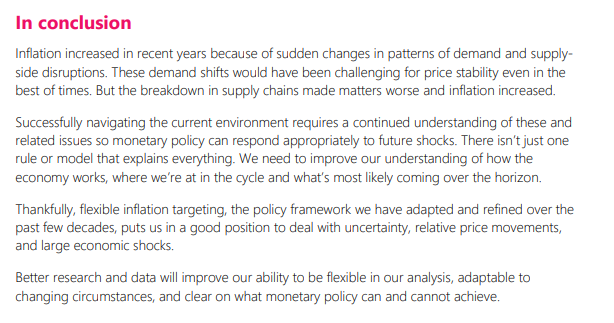
I’ve been rather tied up with other stuff for the last few weeks (including here) which is why I’ve not previously gotten round to writing about the first piece of monetary policy communications from our Reserve Bank this year. That was the “speech” by the Bank’s chief economist (and MPC) member Paul Conway given to […]
The Conway speech
BRIAN EASTON: Our understanding of Te Tiriti has evolved organically.
06 Feb 2024 Leave a comment
in comparative institutional analysis, constitutional political economy, economic history, economics of bureaucracy, law and economics, politics - New Zealand, property rights, Public Choice, rentseeking Tags: Age of Enlightenment, constitutional law, Internet, political correctness, racial discrimination, regressive left
Why try to stop that evolution? Brian Easton writes – In 1956, historian Ruth Ross presented her investigations of the treaty signed at Waitangi on 6 February 1840 to a seminar concluding, ‘The [Māori and Pakeha] signatories of 1840 were uncertain and divided in their understanding of [Te Tiriti’s] meaning; who can say now what […]
BRIAN EASTON: Our understanding of Te Tiriti has evolved organically.
The Euro at 25
03 Feb 2024 Leave a comment
in budget deficits, currency unions, economic history, economics of bureaucracy, Euro crisis, fiscal policy, global financial crisis (GFC), great recession, inflation targeting, macroeconomics, monetary economics, Public Choice Tags: Euro

The euro technically started in 1999, when the 11 founding European members of the currency agreed to keep their exchange rates fixed and to hand over monetary policy to the European Central Bank. The euro then became the actual currency that people and firms used in 2002. I confess that, back in the early 1990s,…
The Euro at 25


Recent Comments