Advice to the new government from Sir Humphrey
23 Nov 2017 Leave a comment
in economics of bureaucracy, politics - New Zealand, Public Choice Tags: Yes Prime Minister
Best sitcom – Yes minister 3
05 Nov 2017 Leave a comment
in economics of bureaucracy, Public Choice, television Tags: Yes Minister, Yes Prime Minister
Best sitcom – Yes minister 2
04 Nov 2017 Leave a comment
in economics of bureaucracy, Public Choice, televison Tags: Yes Minister, Yes Prime Minister
Best sitcom – Yes minister 1
03 Nov 2017 1 Comment
in economics of bureaucracy, Public Choice, television Tags: Yes Minister, Yes Prime Minister
Bureaucrats address problems, entrepreneurs seize untapped profit opportunities
26 Oct 2017 Leave a comment
in economics of bureaucracy, entrepreneurship, managerial economics
This distinction between the perspective of an entrepreneur and bureaucracy is essential to problem solving. Bureaucracies look for problems to solve through policy interventions. Alert entrepreneurs grasp for untapped opportunities for profit before others jump ahead of them to seize the day.
Luke Froeb discovered this crisp difference in organisational perspective between entrepreneurs and bureaucrats when his MBA students kept falling asleep when he lectured on market failures and the standard public policy responses. His teaching evaluations were so bad that the Dean of his Business School threatened to fire him if his student evaluations did not improve. This focused his mind.
Froeb repackaged market failures as a business opportunity. His students sat up and paid close attention. Froeb saved his job and later wrote an excellent MBA textbook (Froeb and McCann 2008).
Froeb and McCann (2008) started the problem diagnosing with market failure is an untapped wealth-creating opportunity. Froeb told his students that the first to fill these gaps in the market or be the market maker for the missing market stands to profit. Alert entrepreneurs make money by identifying unconsummated wealth-creating transactions and devise ways to profitably consummate them.
The art of public policy is looking beyond the immediate effect of a policy to trace its consequences not merely for one group but for all. Looking past what is under your nose is not good business. Much of entrepreneurial alertness is seeing what others do not see under their very noses (Kirzner 1997).
The art of business is identifying assets in low-valued uses and devising ways to profitably move them into higher values uses (Froeb and McCann 2008). Wealth is created when entrepreneurs move assets to higher-valued uses. Cost control such as in a mega-project is a standard entrepreneurial challenge.
Froeb and McCann (2008) argued that mistakes – opportunities are missed – for one of two reasons:
- A lack of information; or
- Bad incentives.
Rational, self-interested actors err because either they do not have enough information to make better decisions, or they lack incentives to make the best use of information they already have.
Froeb and McCann (2008) argued that three questions arise about all business problems:
- Who is making the bad decision?
- Does the decision maker have enough information to make a good decision?
- Does the decision maker have the incentives to make a good decision?
For Froeb and McCann (2008), the answers to these questions immediately suggest ways to fix them:
- Let someone else make the decision;
- Give more information to the decision maker; or
- Change the decision makers’ incentives.
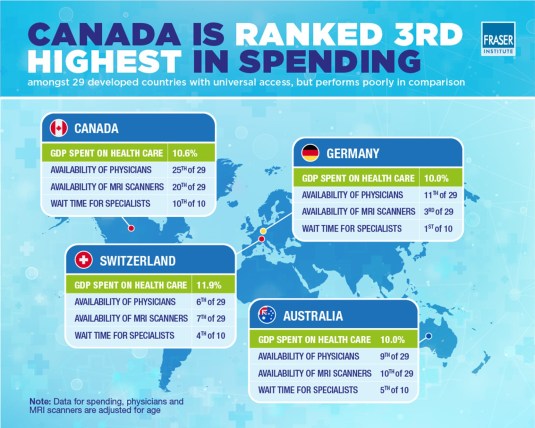
Why does @SenSanders lie about waiting lists in Canadian healthcare?
06 Oct 2017 Leave a comment
in economics of bureaucracy, health economics, politics - USA

Yes Prime Minister. Tobacco.
05 Oct 2017 Leave a comment
in economics of bureaucracy, health economics, Public Choice, television Tags: economics of smoking, Yes Prime Minister
Yes Minister. A full independent enquiry.
30 Sep 2017 1 Comment
in economics of bureaucracy, Public Choice, television
Inside The Lives Of The RICH KIDS OF NORTH KOREA
24 Sep 2017 Leave a comment
in economics of bureaucracy, income redistribution, Public Choice, rentseeking Tags: North Korea
How to Discredit a Report, Minister
11 Sep 2017 Leave a comment
in economics of bureaucracy, Public Choice, television Tags: Yes Minister
Stalin’s buzzer to stop clapping; no one wanted to be first in case they ended up shot
10 Sep 2017 Leave a comment
in economics of bureaucracy, Public Choice Tags: Stalin
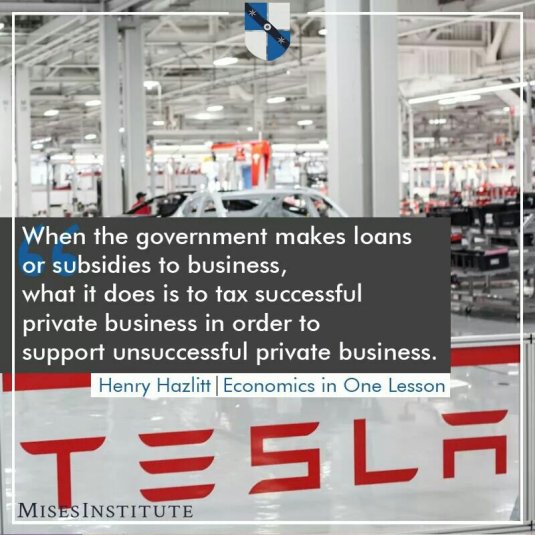
Corporate welfare explained
21 Aug 2017 Leave a comment
in applied price theory, economics of bureaucracy, entrepreneurship, Public Choice, rentseeking Tags: industry policy, picking winners
Banned from r/ProtectAndServe
18 Jul 2017 Leave a comment
in discrimination, economics of bureaucracy, economics of crime, politics - USA
The American police subreddit did not want to know that there were a few bad apples in their rank ranks despite the overall good news about the use of lethal force.

Blacks are not shot dead out of proportion but there are more incidents of excessive force which is nonlethal. Racists are cowards. There is excessive force under the colour of authority but they chicken out when there are real consequences and serious investigations.
Climate economics (UG): International environmental agreements in practice
14 Jul 2017 Leave a comment
in applied price theory, comparative institutional analysis, constitutional political economy, development economics, economic history, economics of bureaucracy, energy economics, environmental economics, global warming, international economics, International law, Public Choice, rentseeking Tags: international public goods


Recent Comments