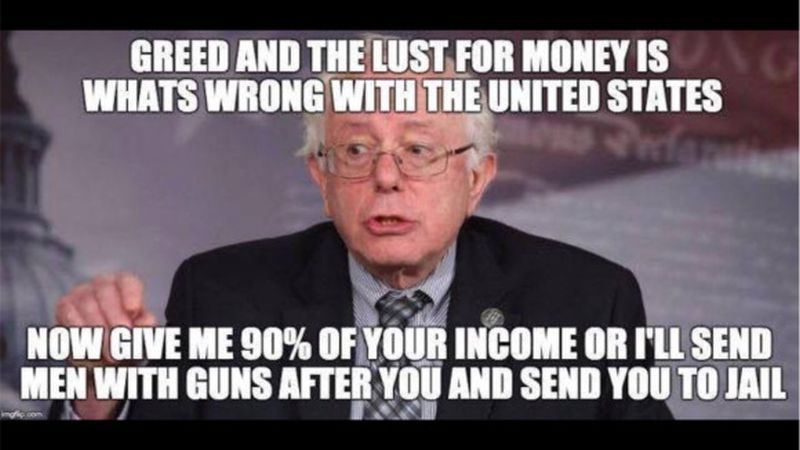
Some folks on the left have a deep-seated resentment of successful investors, entrepreneurs, business owners, and other high-income people. They want to hit them with confiscatory tax rates, even if the tax is so punitive that the government doesn’t wind up with more revenue. Heck, some of them are so consumed by hate and envy […]
Anyone watching and trying to understand last Sunday’s Q&A where Jack Tame interviewed Debbie Ngarewa-Packer will realise that she seems to be beyond reason. Tame tried to examine bits of her blather and her obvious misuse of words, but she immediately slithered like an eel under a rock and made louder assertions about how Maori “korero”…
There are many lessons for New Zealand in last week’s British election result, which saw the 14-year reign of the Conservative Party ending in a crushing defeat. While the number of seats won by Labour appeared to indicate a huge swing to the left in support of Sir Keir Starmer’s Party, that isn’t the case […]
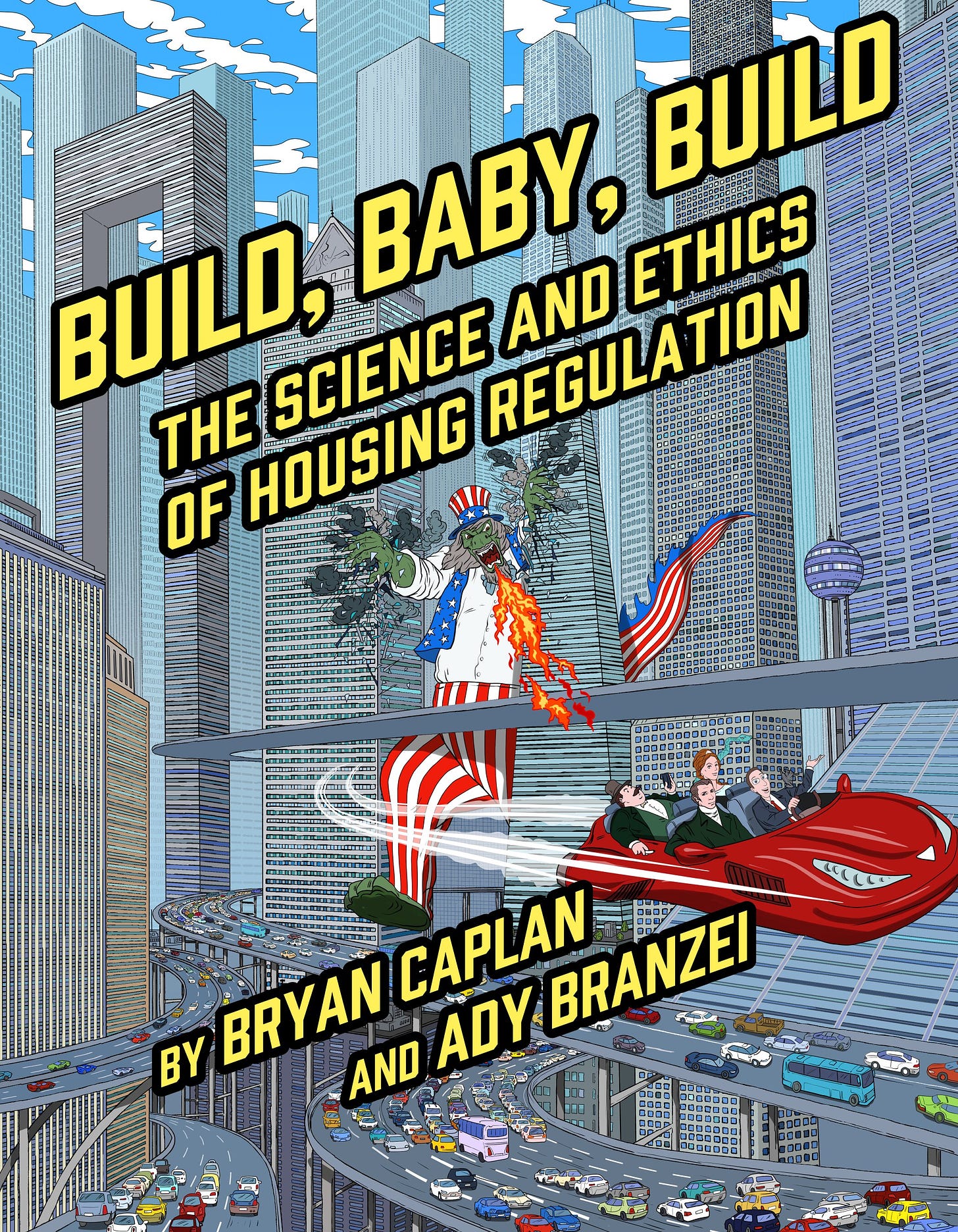
I pitch Build, Baby, Build in today’s New York Times. No illustrations, but a bunch of cool graphs cooked up by Sara Chodosh of the NYT data analytics team. The original title was “The Panacea Policy,” but now it’s “Yes in My Backyard: The Case For Housing Deregulation.” And for you, dear readers, it’s ungated!…
I’m not a political pundit, but I’m guessing that yesterday’s despicable assassination attempt on Donald Trump increases the likelihood that he reclaims the White House. That’s probably not good news for trade policy (though Biden has been just as bad), but it will be very good news for housing policy. Not because of what Trump […]
One of my favorite economic journal articles is by Barry Weingast and has the short title “Market Preserving Federalism” (MPF). In this paper, Weingast lays out the conditions necessary for two tenuous equilibria: A) Federalism & B) Federalism that preserves a market economy. Given that we just celebrated Independence Day in the USA, it seems […]
Four months ago, I described a speech by Chris Bishop in his capacity as Minister of Housing as perhaps the most important speech given by any Government minister since the election last year. He’s just given another, arguably even more important, laying out in words of one syllable what the Government plans to do…
Here is one excerpt: What few appreciate is that the overregulation of housing has blocked a classic American path: moving to a higher-wage part of the country to secure a better life. A paper by the economists Peter Ganong and Daniel Shoag shows that housing costs now routinely outweigh wage gains: While janitors and waiters do indeed […]
From a new working paper “The Price of Housing in the United States, 1890-2006” by Ronan C. Lyons, Allison Shertzer, Rowena Gray & David N. Agorastos (emphasis added): “Zoning was adopted by almost every city in our sample during the 1920s. We see a slightly steeper gradient over the next two periods (coefficients of .48 […]
The RN intends to move ahead with a proposed law that states as its aim “to combat Islamist ideologies”. It includes measures to make it easier to close mosques and deport imams deemed to be radicalised, and a ban on clothing that “constitute in themselves an unequivocal and ostentatious affirmation” of Islamist ideology. Bardella said […]
That phrasing comes from Arnold Kling, right? It is also the topic of my latest Bloomberg column. Here is one bit: Unfortunately, the US already was setting a bad example for the British. Recent plans from the Biden administration called for a broadly similar approach to housing policy, namely subsidizing demand. Earlier this year, Biden called for […]
In India it’s common for politicians to have criminal cases against them. Why do voters vote for criminals? One compelling explanation provided by political scientist Milan Vaishnav is that voters often care less about their represntative’s ability to deliver broad-based development or draft good laws, and more about the effectiveness at helping them access limited […]
“Democracy is on the ballot.” That mantra of President Joe Biden and other democrats has suggested that “this may be our last election” if the Republicans win in 2024. A few of us have noted that the Democrats seem more keen on claiming the mantle of the defenders of democracy than actually practicing. Democrats have […]
Article is by Chris Lynch and I have pinched this one from The BFD Blog. `ĀCT MP Karen Chhour has responded to the Maori Party’s “divisive outbursts.” Co-leader Rawiri Waititi said yesterday, ‘It’s now time for us to step comfortably into our rangatiratanga and to not give too much to this Pakeha Government with their […]
Why Evolution is True is a blog written by Jerry Coyne, centered on evolution and biology but also dealing with diverse topics like politics, culture, and cats.
“We do not believe any group of men adequate enough or wise enough to operate without scrutiny or without criticism. We know that the only way to avoid error is to detect it, that the only way to detect it is to be free to inquire. We know that in secrecy error undetected will flourish and subvert”. - J Robert Oppenheimer.


 Utopia, you are standing in it!
Recent Comments