Trump studies!
18 Oct 2017 Leave a comment
in politics - USA, Public Choice Tags: political correctness
Room for honest disagreement on tax policy?
16 Oct 2017 6 Comments
in applied price theory, Public Choice, public economics
Too much of tax policy is debated with pistols drawn at ten paces. Each side accusing the other of ignorance or being steeped in moral turpitude, and preferably often both.
Far too much time is spent feuding over the incentive effects of taxes. If you inspect closely the history of the warring sides, they all agree that incentives matter. If you tax something, you see less of it; if you cut taxes, you will see more of it. The difficulty is the advocates for various causes are disappointingly selective about when they admit this is so.
Incentives do matter
Thomas Piketty could not be more honest about the impact of a higher top tax rate. Piketty welcomes the strong incentive effects of high marginal tax rates!
Why? Piketty wants to use high taxes to put an end to top incomes. He wants few to earn a large income and if they do, they should face ruinously high 70-80% marginal tax rates.
This honesty of Piketty is the basis of a ceasefire. Let us all admit that taxes have incentive effects and argue whether that is good or bad or that other considerations are more important than efficiency. Too often in debates over income tax cuts, the opponents will not give an inch on the labour supply and investment effects of lower taxes.
Incentives count, especially when they bolster your case
But when the same groups argue about poverty traps when welfare benefits are wound back or when tax rates and Working for Families abatement rates interact, they admit that work must pay. Ordinary families will work less and second earners may stop working.
Those deeply troubled about poverty traps from high effective marginal tax rates deny point blank that putting the top tax rate back up to 39% or more will harm labour supply, investment, entrepreneurship and the incentive to go on to higher education.
On taxes on sugar and tobacco, consumers are said to be fairly responsive to higher taxes. Unkind words are said about the motives of those that disagree with these taxes.
The opposition is about how taxes on sugary drinks is a waste of time unless they are prohibitively high because there is plenty of substitute sources of sugar and fattening foods.
A higher tobacco tax is much more likely to cut smoking because there is no reasonable substitute. If the Government really wanted people to quit smoking, rather than raise more revenue, they would legalise the sale of the safer alternative — e-cigarettes containing nicotine.
Opponents of company tax cuts are unwilling to admit that in highly integrated global capital markets that a lower company tax wins more investment. They say that more tax is paid in the home country of the foreign investor if we cut our company tax.
In the next breath, they will rage against Facebook and Google for avoiding New Zealand company taxes. This is despite their previous argument implying this tax avoidance must be futile because Facebook and Google will pay more taxes off-shore if they pay less company tax in New Zealand.
European Union politicians will say in domestic elections that company taxes do not deter investment but still relentlessly bully the Irish for its 12.5% company tax rate because it was winning more investment at their expense. What is the point of the EU and G20 push for tax harmonisation unless it is to stop competition for investment through lower company taxes?
Clashing value judgements
It is perfectly reasonable to agree on the effect of a particular tax policy but have an honest disagreement about its desirability. A higher top tax rate will not raise as much revenue as some hope but that may not matter if you want less income inequality. Sugar taxes may not reduce obesity by much, but it could be a useful first signal about healthy eating.
Others disagree because sugar taxes are ineffective and because people should be able to live their lives for better or for worse by their own lights as long as they do not harm others. People meddling in the lives of others because they know better has always ended in tears.
At least we should keep the conversation civil. Incentives matter. Taxes bite. The disagreement is over who you want the taxes to bite. By how much usually depends on by how you value the competing goals of efficiency, equality and liberty.
Peaceful protesters should always plead guilty
12 Oct 2017 Leave a comment
in constitutional political economy, economics of crime, politics - New Zealand, Public Choice
By pleading not guilty to maritime safety charges from his offshore drilling protest, does Russel Norman think that his vote counts for more than mine on environmental policy? He is mounting a greater good defence. Does his views count for more than mine on what is the greater good?
We resolve our differences about what is the greater good on offshore drilling, on environmental policy, on any policy by normal democratic means. That is, by trying to persuade each other and elections. We just had an election which gave us a rich taste of the political views of New Zealanders.
By openly breaking the law non-violently, accepting arrest and pleading guilty, that act of peaceful defiance implores the majority to reconsider their position. Through their passion, their sacrifice, their willingness to risk a conviction on their record, protestors are pleading from the bottom of their heart with the majority to think again and contemplate the possibility that they may be wrong.
Central to political protests is the notion is by making a lot of noise and showing your passionate disagreement, your fellow voters will respect that passion and hear you out. Instead, Greenpeace is trying to impose its conception of the greater good by harassment and court room manoeuvring rather than by their side of the argument winning at the ballot box or on the floor of Parliament.
Greenpeace deserves the respect of taking them at their word; that they want to stop offshore drilling by their protesting alone making it too difficult to continue. They are not saying we are staging a publicity stunt that respects maritime safety laws to implore voters to think again.
Protests should not be attempts to impose views on others. Civil disobedience contributes to the democratic exchange of ideas by forcing the dominant opinion to defend their views. A willingness to accept a conviction is proof that the protest is a passionate, selfless attempt to persuade voters to join their side.
Protests should never be a means of coercing or frightening others in a democracy into conforming to your wishes. Greenpeace expects others to obey the laws for which it successfully lobbied. Why does Greenpeace think they can break laws that others secured through normal democratic means?
Some find democracy frustrating because they cannot win at the ballot box even under proportional representation. Environmentalists such as Greenpeace must be the last to complain so. Greenpeace activists and environmentally conscious voters were spoiled for choice at the most recent election.
Two parties were competing principally for their vote. The older of the two spent the last four weeks of the campaign desperately rebranding itself as principally an environmental party. The new party was an environmental party that was also at peace with the market economy. The two major parties were also campaigning strongly on many policies that might win over environment minded voters.
The great virtue of a democracy is it readily enables the people, over time, to be persuaded that what they took for granted is not so and change the law accordingly. Noisy protesters from across the political spectrum stage publicity stunts to catch the public’s eye in the hope of doing this.
What is holding up legislating in many areas is not that minorities are powerless and individuals are voiceless. It is exactly the opposite. By banding together, passionate minorities can resist the tyranny of the majority. They can trade off their support in other areas in return for policy concessions most dear to them. A small group of concerned and thoughtful citizens can band together and change things by mounting single issue campaigns that influence who wins. An MMP democracy is about building winning coalitions made up of a great many different policy agendas and several parties.
If you want to reform the world, Greenpeace should do what we ordinary folk must do: change our vote, write to an MP, protest, donate to or join a political party, or run for parliament. Sometimes you win, sometimes you lose, but you had your chance at the ballot box every 3 years so you must live with the peace of a fair defeat. By pleading guilty, protesters show that they are trying to win the majority over with their deep-felt passion for which they will willingly pay the price for in court.
Is Growth of Government Inevitable? | Sam Peltzman
12 Oct 2017 Leave a comment
in applied price theory, economic history, fiscal policy, macroeconomics, Public Choice, public economics, Sam Peltzman Tags: Director's Law, growth of government
Spain Is Not A Federation: Autonomous Communities of Spain Explained
09 Oct 2017 Leave a comment
in constitutional political economy, Public Choice Tags: Spain
.@uklabour is losing the working class
06 Oct 2017 Leave a comment
in Public Choice Tags: British politics
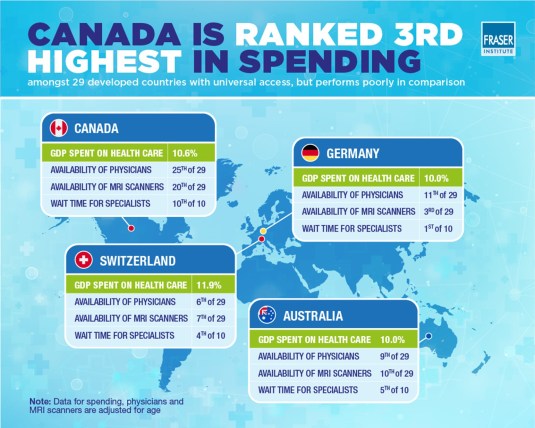
Why does @SenSanders lie about waiting lists in Canadian healthcare?
06 Oct 2017 Leave a comment
in economics of bureaucracy, health economics, politics - USA

Yes Prime Minister. Tobacco.
05 Oct 2017 Leave a comment
in economics of bureaucracy, health economics, Public Choice, television Tags: economics of smoking, Yes Prime Minister
Yes Minister. A full independent enquiry.
30 Sep 2017 1 Comment
in economics of bureaucracy, Public Choice, television

#Morganfoundation @top_nz do not understand the transitional gains trap
25 Sep 2017 Leave a comment
in applied price theory, economics of regulation, politics - New Zealand, rentseeking, urban economics
It is unfortunate that the Morgan foundation economists and purported economists do not understand the concept of rent capitalisation when discussing tax concessions for housing in New Zealand.
The classic example is how restrictions on supply result in the capital value of taxi licenses going up, and now through Uber, collapsing.

The same goes with a tax concession for any particular asset. The value of the tax concession will immediately capitalise through a spike in prices.
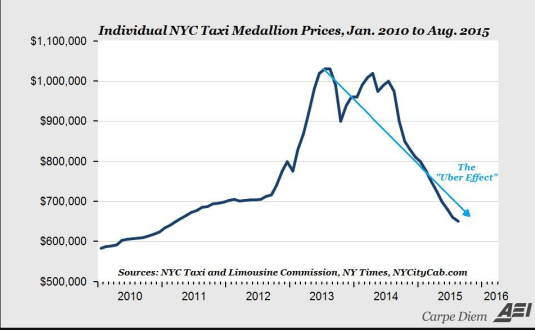
After that, the underlying trend price growth will continue. For housing prices to continually rise, there must be a restriction on the supply of land. Tax treatment changes will only result in transitory price spikes.
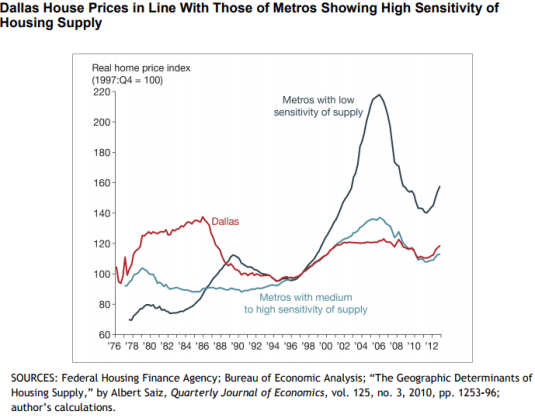
There is nothing special about private homes have been an exemption from capital gains tax in New Zealand. What matters is the restriction on land supply.
Inside The Lives Of The RICH KIDS OF NORTH KOREA
24 Sep 2017 Leave a comment
in economics of bureaucracy, income redistribution, Public Choice, rentseeking Tags: North Korea
Angela Merkel’s rise to power, in five steps | The Economist
24 Sep 2017 Leave a comment
in Public Choice Tags: Germany
How to Discredit a Report, Minister
11 Sep 2017 Leave a comment
in economics of bureaucracy, Public Choice, television Tags: Yes Minister


Recent Comments