.
Celebrating humanity's flourishing through the spread of capitalism and the rule of law
18 Jun 2016 Leave a comment
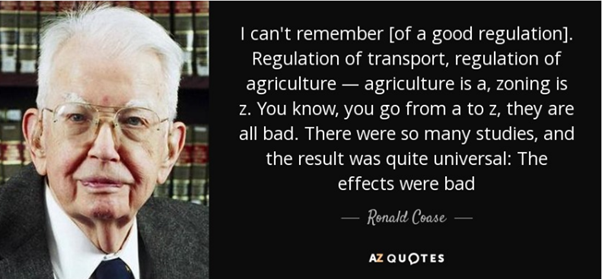
in applied price theory, comparative institutional analysis, economics of regulation, Public Choice, rentseeking, Ronald Coase
.
18 Jun 2016 Leave a comment
in applied welfare economics, comparative institutional analysis, constitutional political economy, economic history, Public Choice

Source: Quotation of the Day… – Cafe Hayek.
12 Jun 2016 Leave a comment
in economics of media and culture, politics - USA, Public Choice Tags: 2016 presidential elections
11 Jun 2016 Leave a comment
in Marxist economics, politics - USA, Public Choice Tags: Berlin, collapse of communism, fall of berlin wall
11 Jun 2016 Leave a comment
in applied price theory, applied welfare economics, comparative institutional analysis, constitutional political economy, economics, economics of information, income redistribution, Public Choice, public economics, rentseeking Tags: rational ignorance, rational irrationality, voter demographics
11 Jun 2016 Leave a comment
in applied price theory, applied welfare economics, economics of bureaucracy, environmental economics, politics - New Zealand, Public Choice, transport economics, urban economics Tags: cost benefit analysis, KiwiRail, New Zealand Green Party, road pricing
I just wrote an op-ed for National Business Review online (pay-walled) agreeing with an op-ed last week by Green MP Julie Anne Genter on transport investment. My op-ed started
The Taxpayers’ Union welcomes the commitment of the Green Party yesterday to evaluating transport investments without any bias or favouritism to one transport mode over another.
The Taxpayers’ Union could not agree more with Julie Anne Genter when she said that the question ministers should always ask is “what is the best investment we can make?”
This op-ed was my rejoinder to her reply to my op-ed criticising a recent Green Party on national freight policy. That policy called for 25% of all freight by kilometres travelled to each go by rail and road. That would near double their freight market share from 30% currently to 50% when measured by kilometre.
For my troubles I got nothing but criticism and accusations in the comments section in National Business Review Online. A tweet by Genter was far more gracious.
There was no praise in the comment section at the National Business Review online for agreeing with the Green policy. In the first comment I was told I did not understand economics and that
When the policy default is “cut taxes and spending and let me selfishly keep my money” they miss out on the much larger benefit to everyone, including themselves, by nudging or economy to spend more on intrinsically more efficient transport – like rail – and less on alternatives.
No thanks at all for agreeing that transport investments should be the best we can make. After saying that in their recent freight policy, the Greens set targets were specific transport technologies they favour, which are rail and sea freight.

You cannot argue that transport investments should be the best we can make then declare a preference for a particular technology or mode of transport. But let us not quibble over that glaring contradiction.

The broader principle was agreed which is transport investments should be driven by cost benefit analysis and value for money. It should be technology neutral and transport mode neutral. That, of course, means the Greens cannot declare targets for the market shares of particular modes of freight shipment if they want to follow their own policy about value for money.
10 Jun 2016 Leave a comment
in development economics, entrepreneurship, industrial organisation, Joseph Schumpeter, survivor principle Tags: creative destruction
09 Jun 2016 Leave a comment
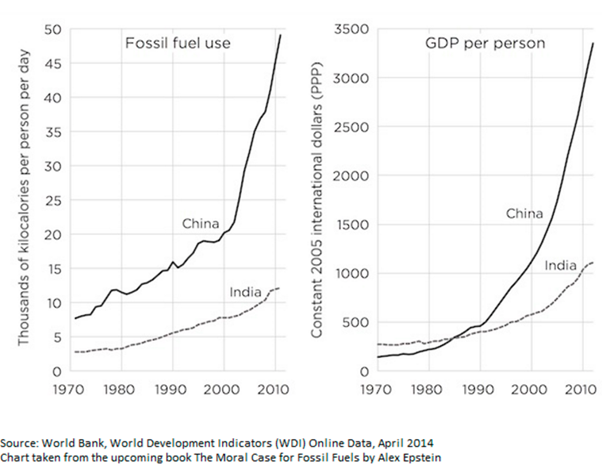
in applied welfare economics, development economics, economic history, energy economics, environmental economics, global warming, growth miracles, Public Choice, rentseeking Tags: China, energy poverty, extreme poverty, India, The Great Enrichment, The Great Escape
09 Jun 2016 Leave a comment
in applied price theory, applied welfare economics, comparative institutional analysis, economic history, economics of education, economics of regulation, health economics, income redistribution, industrial organisation, international economics, politics - USA, Public Choice, public economics, rentseeking Tags: 2016 presidential election, antimarket bias, crony capitalism, living wage, pessimism bias, top 1%
07 Jun 2016 Leave a comment
in applied price theory, comparative institutional analysis, labour economics, minimum wage, politics - USA, Public Choice Tags: antimarket bias, expressive voting, living wage, rational rationality
Any decent political movement makes an ambit claim in expectation of being beaten back to its real position. That is basic negotiation tactics in politics.
Such is the volatility of expressive politics that the fight for 15 campaign has taken on a life of its own and is actually delivering on a $15 living wage as the minimum wage in the USA in a growing number of states and cities as well is in Democratic party presidential campaign pledges.
If there is any degree of economic sanity and practicality among living wage advocates, they know that such a high living wage increase will cost jobs.
After all, if a large wage increase for low-paid workers cost no jobs, why not increase everyone’s wage by a similar percentage, which is about 100% in the USA?
06 Jun 2016 Leave a comment
in economic history, economics of bureaucracy, Marxist economics, Public Choice Tags: autocracy, Russia, Stalin, USSR
06 Jun 2016 Leave a comment
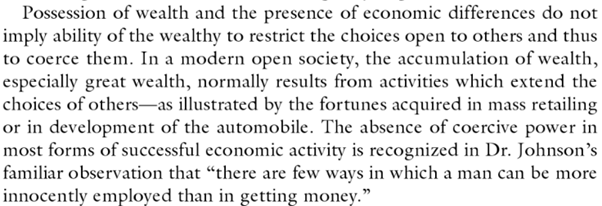
in comparative institutional analysis, constitutional political economy, development economics, labour economics, liberalism, P.T. Bauer, poverty and inequality, Public Choice Tags: wealth and power
05 Jun 2016 Leave a comment
in development economics, economic history, economics of bureaucracy, poverty and inequality

The World Bank should enquire more as to why particular Latin countries succeeded while others did not and the economic systems employed in each.
05 Jun 2016 Leave a comment
in applied price theory, applied welfare economics, comparative institutional analysis, constitutional political economy, development economics, economic history, economics, economics of regulation, entrepreneurship, growth disasters, growth miracles, income redistribution, industrial organisation, labour economics, macroeconomics, Milton Friedman, minimum wage, occupational choice, politics - USA, Public Choice, public economics Tags: 2016 presidential election, Leftover Left
05 Jun 2016 Leave a comment
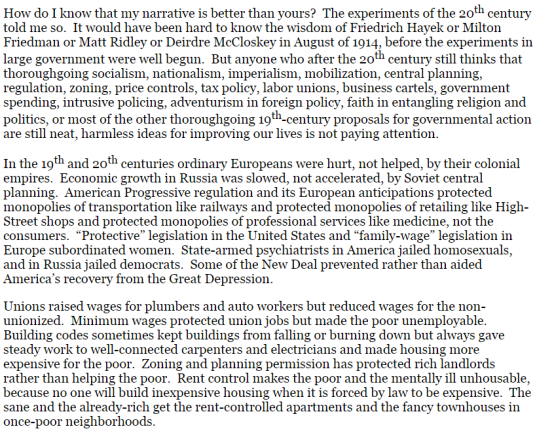
in applied price theory, applied welfare economics, development economics, economic history, economics of regulation, income redistribution, liberalism, Marxist economics
Celebrating humanity's flourishing through the spread of capitalism and the rule of law
Celebrating humanity's flourishing through the spread of capitalism and the rule of law
Celebrating humanity's flourishing through the spread of capitalism and the rule of law
Celebrating humanity's flourishing through the spread of capitalism and the rule of law
Celebrating humanity's flourishing through the spread of capitalism and the rule of law
Celebrating humanity's flourishing through the spread of capitalism and the rule of law
Celebrating humanity's flourishing through the spread of capitalism and the rule of law
Celebrating humanity's flourishing through the spread of capitalism and the rule of law
A History of the Alt-Right
Econ Prof at George Mason University, Economic Historian, Québécois
Celebrating humanity's flourishing through the spread of capitalism and the rule of law
Scholarly commentary on law, economics, and more
Beatrice Cherrier's blog
Celebrating humanity's flourishing through the spread of capitalism and the rule of law
Celebrating humanity's flourishing through the spread of capitalism and the rule of law
Celebrating humanity's flourishing through the spread of capitalism and the rule of law
Why Evolution is True is a blog written by Jerry Coyne, centered on evolution and biology but also dealing with diverse topics like politics, culture, and cats.
Celebrating humanity's flourishing through the spread of capitalism and the rule of law
A rural perspective with a blue tint by Ele Ludemann
DPF's Kiwiblog - Fomenting Happy Mischief since 2003
Celebrating humanity's flourishing through the spread of capitalism and the rule of law
The world's most viewed site on global warming and climate change
Tim Harding's writings on rationality, informal logic and skepticism
A window into Doc Freiberger's library
Let's examine hard decisions!
Commentary on monetary policy in the spirit of R. G. Hawtrey
Thoughts on public policy and the media
Celebrating humanity's flourishing through the spread of capitalism and the rule of law
Politics and the economy
A blog (primarily) on Canadian and Commonwealth political history and institutions
Reading between the lines, and underneath the hype.
Economics, and such stuff as dreams are made on
"The British constitution has always been puzzling, and always will be." --Queen Elizabeth II
Celebrating humanity's flourishing through the spread of capitalism and the rule of law
Celebrating humanity's flourishing through the spread of capitalism and the rule of law
WORLD WAR II, MUSIC, HISTORY, HOLOCAUST
Undisciplined scholar, recovering academic
Celebrating humanity's flourishing through the spread of capitalism and the rule of law
Res ipsa loquitur - The thing itself speaks
In Hume’s spirit, I will attempt to serve as an ambassador from my world of economics, and help in “finding topics of conversation fit for the entertainment of rational creatures.”
Researching the House of Commons, 1832-1868
Articles and research from the History of Parliament Trust
Reflections on books and art
Posts on the History of Law, Crime, and Justice
Celebrating humanity's flourishing through the spread of capitalism and the rule of law
Exploring the Monarchs of Europe


Recent Comments