The explosion of lead in the saddlebags of trade agreements @KennedyGraham @DavidShearerMP #TPPANoWay

image

Source: CONVERSABLE ECONOMIST: A Fundamental Shift in the Nature of Trade Agreements

Rothbard on Conspiracy Theory

@toddmcclaymp #MFAT hasn’t heard of trade diversion? @DavidShearerMP #TPPANoWay @KennedyGraham

Trade diversion occurs when preferential trading agreements cause imports to shift from low cost countries to higher cost countries. Rather than gaining tariff revenue from inexpensive imports from world markets, a country may import expensive products from member countries but not gain any tariff revenue. An example of trade diversion is when Britain closed its doors to New Zealand agricultural exports after joining the common market.

Preferential trading agreements are trade agreements between countries in which they lower tariffs for each other but not for the rest of the world. The mass media mislabel them free trade agreements.

Under trade diversion, the partner country benefits from this change as an exporter, but the importing country loses due to this higher cost, as does the third country whose exports fall.

The loss to the importing country is not visible to consumers, who find the higher-cost product cheaper due to the absence of tariff. The country as a whole loses, with that loss being lost tariff revenue – lost to cover the cost of the higher cost imports from a member of the new preferential trading agreement.

Source: Key Graph 10 Trade Diversion versus Trade Creation in Joining a Trade Bloc: US Market for Imported Compact Cars.

It does not take much trade diversion to make a preferential trading agreement welfare reducing because of this switch to high cost producers.

image

The New Zealand Minister of Trade and the Ministry of Foreign Affairs and Trade did not discuss this major risk even from the simplest preferential trading agreement in recent policy analysis of the TPPA as my Official Information Act request has revealed. The term trade version does not appear in any of their analysis.

Adherents of the natural trading partner hypothesis argue that preferential trade agreements are more likely to improve welfare if participating countries already trade disproportionately with each other. Opponents of the hypothesis claim that the opposite is true: welfare gains are likely to be greater if participating countries trade less with each other. The powerful critique by Bhagwati and Panagariya (1996) is now widely accepted and one hears little justification of on preferential trading agreements on the grounds of the natural trading partners hypothesis

Dodging the #Trump Bullet: @zingales (2011) on @realdonaldtrump’s previous run for president

Read what Zingales wrote five years ago on City Journal that was part of what was cut out of his book “A Capitalism for the People” because Donald Trump running seriously for president was never supposed to happen.

Source: Dodging the Trump Bullet | City Journal.

Zingales is no kinder in his recent op-ed recalling the lost book chapter, which is paywalled.

Campaign Financing Capture Index

Image

Hilarious story of Oberlin cry-baby students fleeing to safe rooms

An Economic Approach to School Integration: Public Choice with Tie-ins

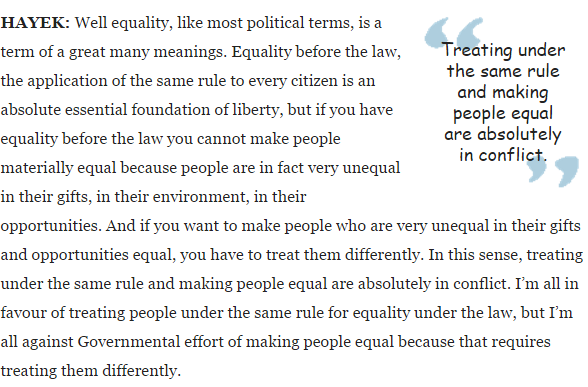
Thomas Borcherding “An Economic Approach to School Integration: Public Choice with Tie-ins.” Public Choice, 1977, argues that a reason for racial or ethnic discrimination in the public sector is politics encourages the coercive transfer of income from the racial, religious or ethnic group to those with more political influence.

Race can be used as a means of organizing coalitions to lobby for fiscal and economic discrimination in favour of even a previously unprejudiced group.

Preferences of each group to locate in a common geography and the severe control over entry or exit from the group that such things as skin colour, language, caste, and religious dogma impose make the organization of racial or ethnic coalitions by political entrepreneurs fairly cheap and minimises free riding and defection.

Prejudice may reinforce the solidarity of each group and help to monitor via custom, mores, and folkways the behavior of those that would attempt to bring persons of other groups into the former coalition. Further, prejudice may also serve as a device to rationalize exploitation of another group by fiscal or other means.

Borcherding argues that integration, racial balancing, quotas, and busing of school children take on a new logic when income transfers can be tied to fairly immutable characteristics such as race.

Mixing of children by race reduces the ability of a white dominated school board to differentially favour its own partisans’ children and to discriminate against those of blacks.

This paper anticipated Becker’s point that the competition among pressure groups for political influence for looks for lower cost ways of redistributing wealth so as to as much as possible limits the largess as much as possible to the pressure groups that lobby for it and their allies.

@UKIP supporters are slightly to the left of @LibDems supporters

Data generated by 17,281 England-only users of the WhoGetsMyVoteUK  application. Before to the 2015 general election, users expressed their opinions on thirty policy statements including taxation, welfare, the EU and immigration. Their answers were matched with the party or parties that best corresponded with those views.

Source: Politics is too complex to be understood in terms of Left and Right | British Politics and Policy at LSE.

Where UKIP supporters distinguish themselves from other parties is on the cultural dimension. They are, to use David Goodhart’s phrase, far more “communitarian” (i.e. anti-immigration, anti-EU, localist, anti gay marriage and English nationalist) than “cosmopolitan” Green, Labour and Liberal Democrat supporters, while Conservative supporters occupy a “middle-of-the-road” position on the cultural scale.

This conforms well to Ford and Goodwin’s characterisation of UKIP as older blue-collar workers who feel threatened by social change and cling to past certainties. In this respect, UKIP is similar to other right-wing populist parties in Europe that draw their support from globalisation’s “losers”…

Solution aversion and the anti-science Left

image

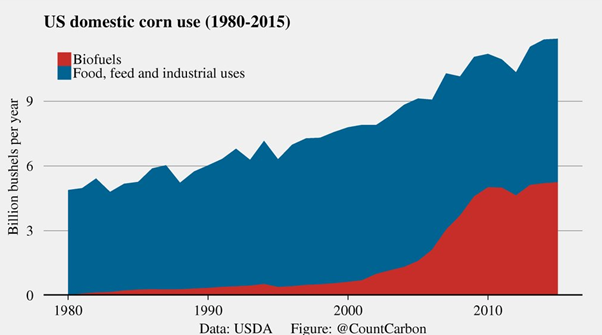
Climate science is the latest manifestation of solution aversion: denying a problem because it has a costly solution. The Right does this on climate science, the Left does it on gun control, GMOs, and plenty more. Cass Sunstein explains:

It is often said that people who don’t want to solve the problem of climate change reject the underlying science, and hence don’t think there’s any problem to solve.

But consider a different possibility: Because they reject the proposed solution, they dismiss the science. If this is right, our whole picture of the politics of climate change is off.

Some psychologists wasted grant money on lab experiments to show that people that think the solution to a problem is costly tend to rubbish every aspect of the argument. Any politician will tell you you do not concede anything. Sunstein again:

Campbell and Kay asked the participants whether they agreed with the IPCC. And in both, about 80 percent of Democrats did agree; the policy solutions made no difference.

Republicans, in contrast, were far more likely to agree with the IPCC when the proposed solution didn’t involve regulatory restrictions…

Here, then, is powerful evidence that many people (of course not all) who purport to be skeptical about climate science are motivated by their hostility to costly regulation.

The Left is equally prone to motivated readings. For example, it was found that those on the left are much more concerned about home invasions when gun control can reduce them rather than increase them.

image

The Left picks and chooses which scientific consensus as it accepts. The overwhelming consensus among researchers is biotech crops are safe for humans and the environment. This is a conclusion that is rejected by the very environmentalist organisations that loudly insist on the policy relevance of the scientific consensus on global warming.

Previously the precautionary principle was used to introduce doubt when there was no doubt. But when climate science turned in their favour, environmentalists wanted public policy to be based on the latest science.

The Right is welcoming of the science of nuclear energy or geo-engineering. The Left rejects it point-blank. Their refusal to consider nuclear energy as a solution to global warming is a classic example of solution aversion. Let he who is without sin cast the first stone.

The changing nature of political activism

Image

@BernieSanders and @realdonaldtrump trade in fear and blame

This @amprog conservative antipoverty dictionary does not add up

The only alternative offered by the Centre for American Progress is send them on a course. This response, which is the standard policy response to any labour market crisis, will not solve poverty, mush less inequality.

Directors’ Law vindicated again – the American middle class think there are undervalued

image

Image

Why did communism fall in the USSR?

I find many explanations of the fall of the USSR disappointing because many want to believe in people power and popular rebellions.

The rise and fall of mercantilism view of the USSR put forward by Pete Boettke will be the foundation of better explanations. By analysing communism as a rent-seeking society, the process of social and political evolution can be embedded into the history of the rise and fall of mercantilism.

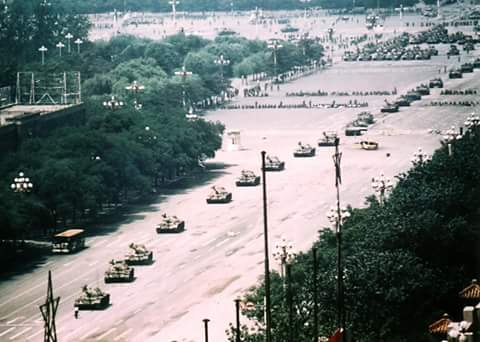
More freedom in Russia and China came as an unintended by-product of a constitutional struggle over who would control the rules under which the economy prospered (or failed to prosper) and the sharing within the elite.

After the death of Stalin, the Soviet Nomenklatura used both co-option and political repression to encourage loyalty to the communist regime. As Grossman noted:

Under Stalin’s leadership the nomenklatura, after initially emphasizing a strategy of co-option, then experimented with political repression as a substitute for co-option, and finally, in response to the threats posed by German militarism and the onset of the Cold War, employed a combination of intense political repression and co-option. As a result, membership in the CPSU increased rapidly, then decreased sharply, before increasing rapidly again. After Stalin was gone the nomenklatura, having learned the cost of Stalin’s repressive excesses, adopted a policy that combined more co-option with less intense political repression. As a result, membership in the CPSU increased steadily, then levelled off, until the rapprochement between the United States and China, the emergence of Islamic fundamentalism, and the escalation of the cold war arms race resulted in yet more co-option and in the final episode of growth in party membership.

More and more of the general public in Russia and China were co-opted into the winning circle through peacefully adaptations when threats of revolution were minimal.

The cost of co-opting people into the Communist Party was a decrease in the standard of living of members of the Nomenklatura, whereas the cost of political repression was the danger that members of the Nomenklatura would themselves be victimized.

These successive minor reforms were mutual beneficial constitutional exchanges as suggested by Roger Congleton’s brilliant recent book on his king-and-council template and in Herschel Grossman’s earlier paper on co-option in the communist party from 1953 to 1989.

The USSR broke apart as the result of an internal power struggle within a new generation of leaders who grew up in a climate of corruption and high living.

Perestroika and glasnost should be viewed as nothing much more than the usual system reforms and rotations of patronage that were launched after the appointment of all previous Soviet leaders. As Anderson and Boettke explain

…upon closer examination, the succession of Gorbachev in general and the perestroika/glasnost “reform” program in particular bear a close resemblance to other, earlier Soviet government policy adjustments which followed shifts in the top leadership. Gorbachev’s behaviour as a “reformer” over the period 1985 to 1989 can be explained by reference to the incentives facing the dictator of a socialist state based on the distribution of economic privilege and political patronage… Gorbachev’s period of “reform” was not an extraordinary example of the role of ideology or vision in human affairs, but a more routine episode of rent-seeking in action.

Political and economic power was devolved to the 15 republics in the old USSR because this is the only way to operate a mercantilist state.

These local leaders formed their own alliances and declared succession from the USSR when the centre was too weak to fight. Local military units defected with them to a new rent-seeking coalition.

The fall of soviet communism led to a drawn out struggle for access to patronage and state monopolies and a new and better paid manifestation of the old mercantilism but ex-KGB owned and run under Putin.

How the Curly effect explains @realdonaldtrump @berniesanders

Previous Older Entries Next Newer Entries

Bassett, Brash & Hide

Celebrating humanity's flourishing through the spread of capitalism and the rule of law

Truth on the Market

Scholarly commentary on law, economics, and more

The Undercover Historian

Beatrice Cherrier's blog

Matua Kahurangi

Celebrating humanity's flourishing through the spread of capitalism and the rule of law

Temple of Sociology

Celebrating humanity's flourishing through the spread of capitalism and the rule of law

Velvet Glove, Iron Fist

Celebrating humanity's flourishing through the spread of capitalism and the rule of law

Why Evolution Is True

Why Evolution is True is a blog written by Jerry Coyne, centered on evolution and biology but also dealing with diverse topics like politics, culture, and cats.

Down to Earth Kiwi

Celebrating humanity's flourishing through the spread of capitalism and the rule of law

NoTricksZone

Celebrating humanity's flourishing through the spread of capitalism and the rule of law

Homepaddock

A rural perspective with a blue tint by Ele Ludemann

Kiwiblog

DPF's Kiwiblog - Fomenting Happy Mischief since 2003

The Dangerous Economist

Celebrating humanity's flourishing through the spread of capitalism and the rule of law

Watts Up With That?

The world's most viewed site on global warming and climate change

The Logical Place

Tim Harding's writings on rationality, informal logic and skepticism

Doc's Books

A window into Doc Freiberger's library

The Risk-Monger

Let's examine hard decisions!

Uneasy Money

Commentary on monetary policy in the spirit of R. G. Hawtrey

Barrie Saunders

Thoughts on public policy and the media

Liberty Scott

Celebrating humanity's flourishing through the spread of capitalism and the rule of law

Point of Order

Politics and the economy

James Bowden's Blog

A blog (primarily) on Canadian and Commonwealth political history and institutions

Science Matters

Reading between the lines, and underneath the hype.

Peter Winsley

Economics, and such stuff as dreams are made on

A Venerable Puzzle

"The British constitution has always been puzzling, and always will be." --Queen Elizabeth II

The Antiplanner

Celebrating humanity's flourishing through the spread of capitalism and the rule of law

Bet On It

Celebrating humanity's flourishing through the spread of capitalism and the rule of law

History of Sorts

WORLD WAR II, MUSIC, HISTORY, HOLOCAUST

Roger Pielke Jr.

Undisciplined scholar, recovering academic

Offsetting Behaviour

Celebrating humanity's flourishing through the spread of capitalism and the rule of law

JONATHAN TURLEY

Res ipsa loquitur - The thing itself speaks

Conversable Economist

In Hume’s spirit, I will attempt to serve as an ambassador from my world of economics, and help in “finding topics of conversation fit for the entertainment of rational creatures.”

The Victorian Commons

Researching the House of Commons, 1832-1868

The History of Parliament

Articles and research from the History of Parliament Trust

Books & Boots

Reflections on books and art

Legal History Miscellany

Posts on the History of Law, Crime, and Justice

Sex, Drugs and Economics

Celebrating humanity's flourishing through the spread of capitalism and the rule of law

European Royal History

Exploring the Monarchs of Europe

Tallbloke's Talkshop

Cutting edge science you can dice with

Marginal REVOLUTION

Small Steps Toward A Much Better World

NOT A LOT OF PEOPLE KNOW THAT

“We do not believe any group of men adequate enough or wise enough to operate without scrutiny or without criticism. We know that the only way to avoid error is to detect it, that the only way to detect it is to be free to inquire. We know that in secrecy error undetected will flourish and subvert”. - J Robert Oppenheimer.

STOP THESE THINGS

The truth about the great wind power fraud - we're not here to debate the wind industry, we're here to destroy it.

Lindsay Mitchell

Celebrating humanity's flourishing through the spread of capitalism and the rule of law

Alt-M

Celebrating humanity's flourishing through the spread of capitalism and the rule of law

croaking cassandra

Economics, public policy, monetary policy, financial regulation, with a New Zealand perspective

The Grumpy Economist

Celebrating humanity's flourishing through the spread of capitalism and the rule of law

International Liberty

Restraining Government in America and Around the World