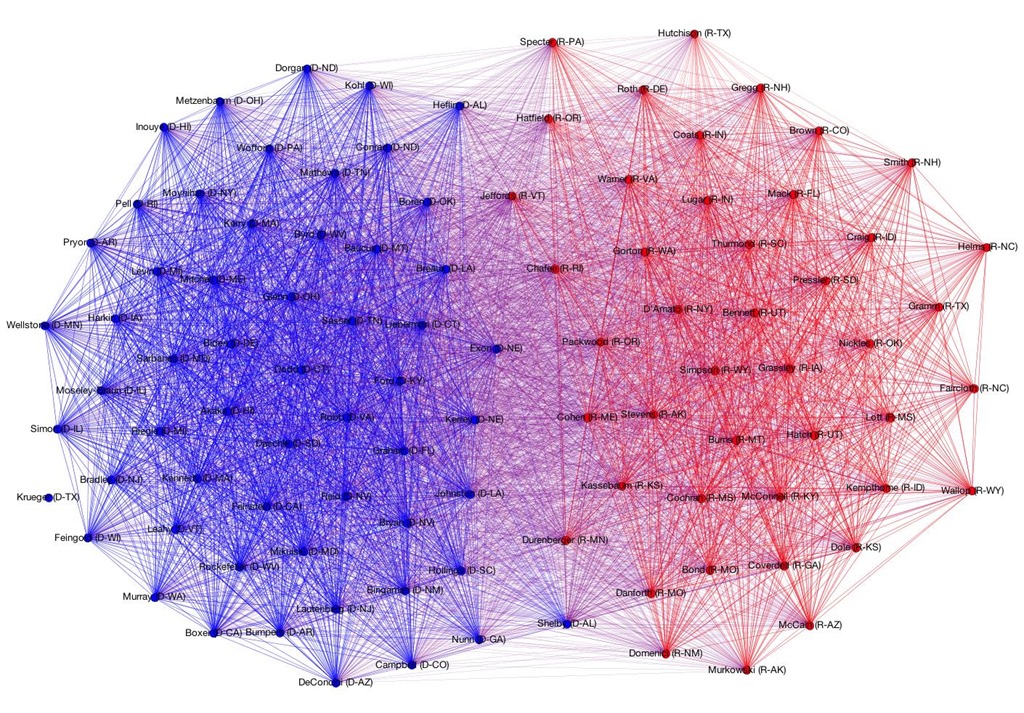
1993
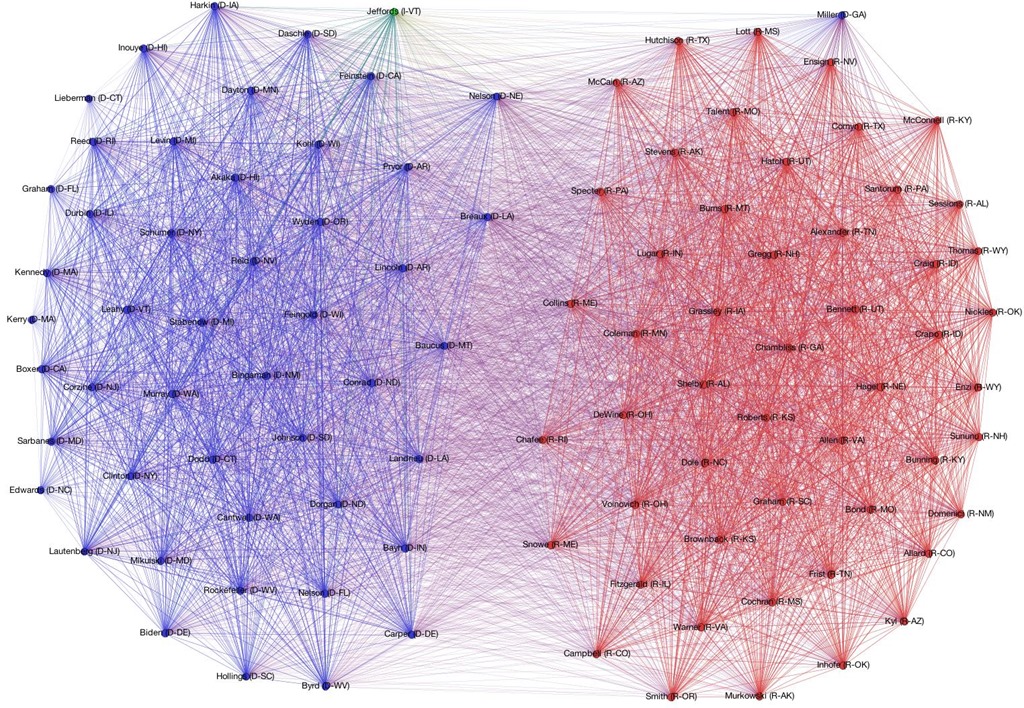
2003
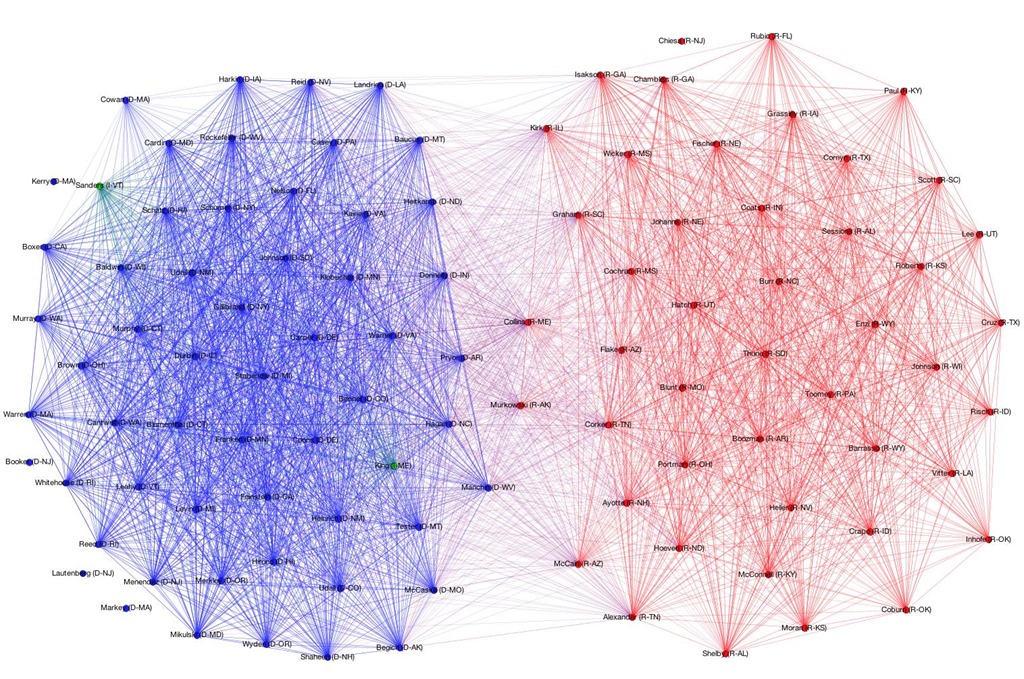
2013
Celebrating humanity's flourishing through the spread of capitalism and the rule of law
02 Jul 2015 Leave a comment
in economic history, politics - USA, Public Choice Tags: political polarisation, U.S. Senate
01 Jul 2015 Leave a comment
in constitutional political economy, economics of bureaucracy, politics - USA, Public Choice, rentseeking Tags: campaign finance reform, campaign finance regulation, political lobbyists, pressure groups, voter demographics
Several major industries have shifted their political donations to Republicans from Democrats: nytimes.com/interactive/20… http://t.co/qYgOdbeZAp—
NYT Graphics (@nytgraphics) June 29, 2015
29 Jun 2015 Leave a comment
in economic history, entrepreneurship, income redistribution, politics - USA, Public Choice, public economics, rentseeking Tags: Eurosclerosis, taxation and entrepreneurship, taxation and investment, taxation and the labour supply, top 1%
Piketty presents the changes in the top marginal income tax rate throughout the 20th century… #GCLIS http://t.co/sFpV0ypC5C—
LIS (@lisdata) April 16, 2014
29 Jun 2015 Leave a comment
in economics of bureaucracy, economics of crime, economics of regulation, industrial organisation, labour economics, law and economics, property rights, Public Choice, rentseeking Tags: cost of doing business, Euroland, Greece, Russia, sovereign defaults, transitional economies, World Bank
Figure 1: Greek and Russian Doing Business sub-rankings, 2015
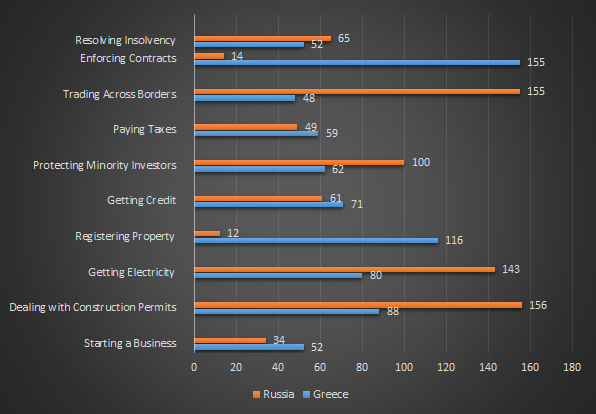
Source: World Bank Doing Business 2015.
As long as you’re not in a construction or export business, and don’t mind waiting for your electricity, it’s better to do business in Russia than in Greece! The main difference between Russia and Greece is its membership of the European Union makes it easy to export?
In Russia, it’s easier to start a business, register property and enforce contracts than it is in Greece!
28 Jun 2015 Leave a comment
in comparative institutional analysis, constitutional political economy, economics of bureaucracy, economics of regulation, industrial organisation, Public Choice, rentseeking, survivor principle Tags: cost of doing business, endogenous growth theory, Eurosclerosis, Spain
28 Jun 2015 Leave a comment
in comparative institutional analysis, constitutional political economy, politics - Australia, politics - New Zealand, politics - USA, Public Choice Tags: antiforeign bias, antimarket bias, economics of personality traits, expressive voting, Leftover Left, makework bias, political psychology, rational ignorance, rational irrationality
27 Jun 2015 Leave a comment
in economics of crime, law and economics, occupational choice, politics - USA, Public Choice Tags: official corruption, political corruption
27 Jun 2015 Leave a comment
in international economic law, international economics, politics - USA, Public Choice, rentseeking Tags: 2016 presidential election, antiforeign bias, antimarket bias, crony capitalism, Donald Trump, expressive voting, left-wing populists, populists, right-wing populists
26 Jun 2015 Leave a comment
in applied price theory, applied welfare economics, comparative institutional analysis, constitutional political economy, economics of crime, economics of media and culture, economics of regulation, law and economics, liberalism, politics - New Zealand, Public Choice Tags: chilling effect, disorderly conduct, free speech, infotopia, Internet trolls, meddlesome preferences, nanny state, offsetting behaviour, The fatal conceit, The pretence to knowledge, unintended consequences
25 Jun 2015 Leave a comment
in applied price theory, applied welfare economics, entrepreneurship, financial economics, industrial organisation, Marxist economics, politics - New Zealand, politics - USA, rentseeking, sports economics, survivor principle Tags: CEO pay, Leftover Left, obama, superstar wages, superstars, top 1%
Defenders have also pointed to the pay of pro ballplayers or Hollywood stars, but they do not determine their own pay (as CEOs do) and are paid based on performance. Once they begin to fail, they are dumped. By contrast, CEO pay isn’t tied to performance in any meaningful way.
It’s a big concession to say that athletes and celebrities earn their pay but top CEOs don’t. Most of all, that concession changes the case against the top 1% from inequality to just desert – a big shift in theories of distributive justice. It’s also a big risk to base the argument for greater equality and a 80% top tax rate not only on the excesses of CEOs but on the very specific and testable hypothesis that these CEOs determine their own pay.
if we are to look at CEOs, top athletes and Hollywood celebrities, it is the athletes and celebrities who benefited the most from the windfall of been able to service huge markets through the global media market.
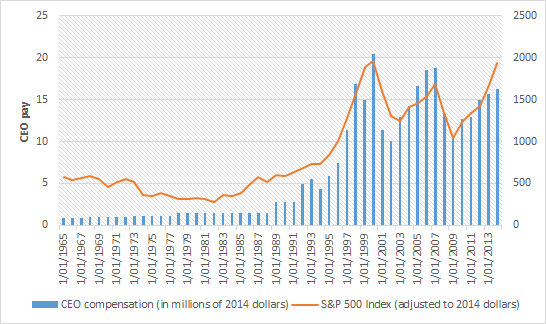
Figure 1: CEO pay and share market performance
Source: Economic Policy Institute.
CEOs actually have to run large complex companies to earn their pay, which is why their compensation tracks the share market relatively closely. Athletes and celebrities don’t do that what they do any better than in the past. They simply do it in front of a global media market. Since the late 1970s, the ratio of average pay of CEOs of large public companies to the average market value of those companies has stayed relatively constant: CEO pay grew hand in hand with corporations.
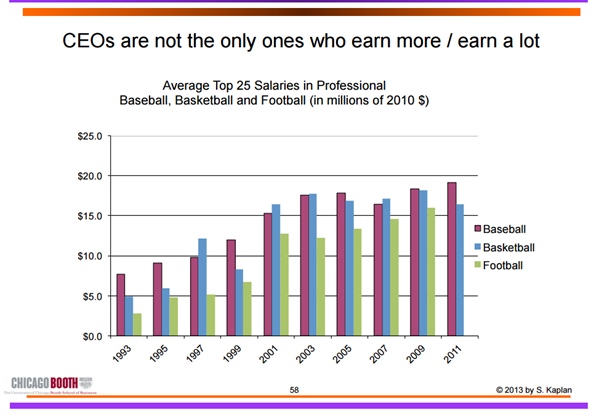
Steven Kaplan and Joshua Rauh make a number of basic points backed up by detailed evidence about CEO pay:
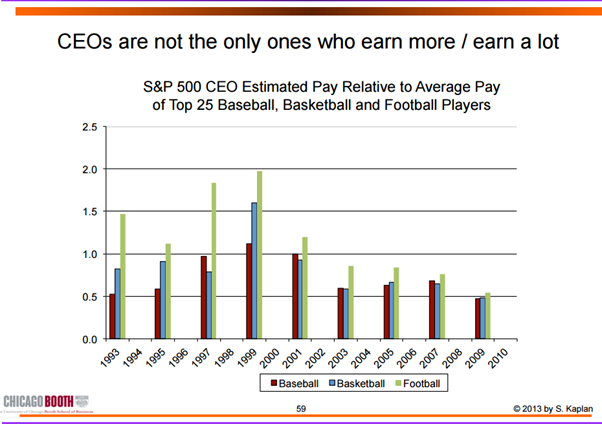
To put it simply:
If the reason for growth of incomes at the very top is, say, managerial power in publicly owned companies, then one would expect the increases in income at the top levels to be much larger for that group.
But the breadth of the occupations that have seen a rise in top income levels is much more consistent with the argument that the increase in “superstar” pay (or pay at the top) has been driven by the growth of information and communications technology, and the ways this technology allows individuals with particular skills that are in high demand to expand the scale of their performance.
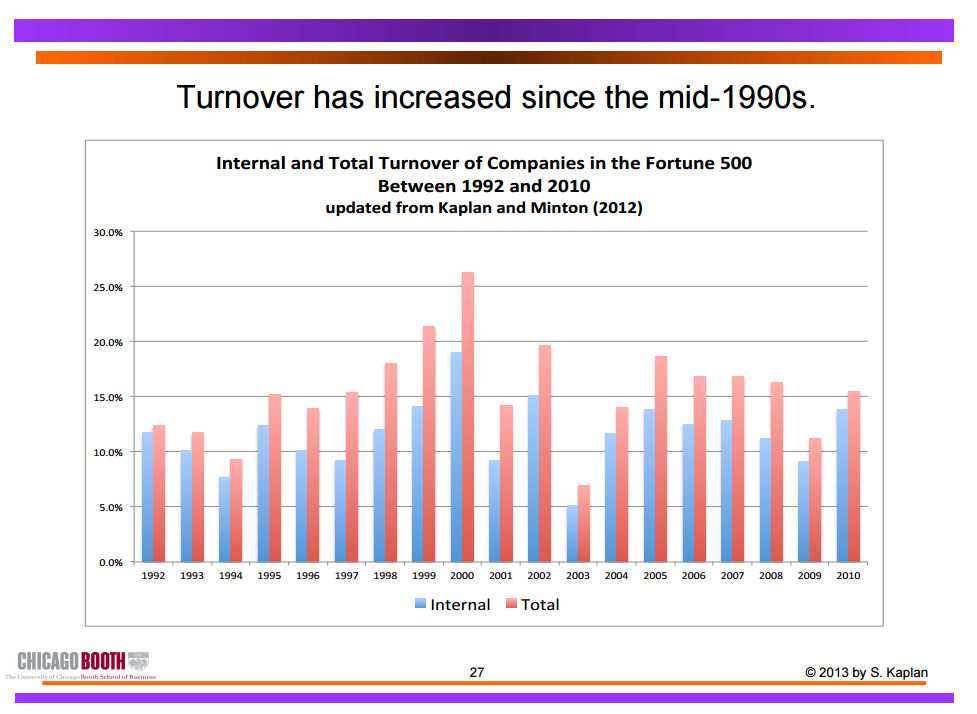
As for the turnover argument, that underperforming athletes and celebrities are dropped, prior to the GFC, CEO turnover was already on the rise:
Turnover is 14.9% from 1992 to 2005, implying an average tenure as CEO of less than seven years. In the more recent period since 1998, total CEO turnover increases to 16.5%, implying an average tenure of just over six years.
Internal turnover is significantly related to three components of firm performance – performance relative to industry, industry performance relative to the overall market, and the performance of the overall stock market.
Only 21.3% of CEOs in 1992 remained in that role in 1999; only 16.35% of CEOS on the job in 2000 were there in 2007. In any given year, one out of six Fortune 500 CEOs loses their jobs, compared to one out of 10 in the 1970s.
Dirk Jenter and Fadi Kanaan in a study of of 3,365 CEO turnovers from 1993 to 2009 found that:
CEOs are significantly more likely to be dismissed from their jobs after bad industry and, to a lesser extent, after bad market performance. A decline in industry performance from the 90th to the 10thpercentile doubles the probability of a forced CEO turnover.
In another study, Kaplan found that average CEO pay increased substantially during the 1990s, but declined by more than 30% from peak levels reached around 2000.
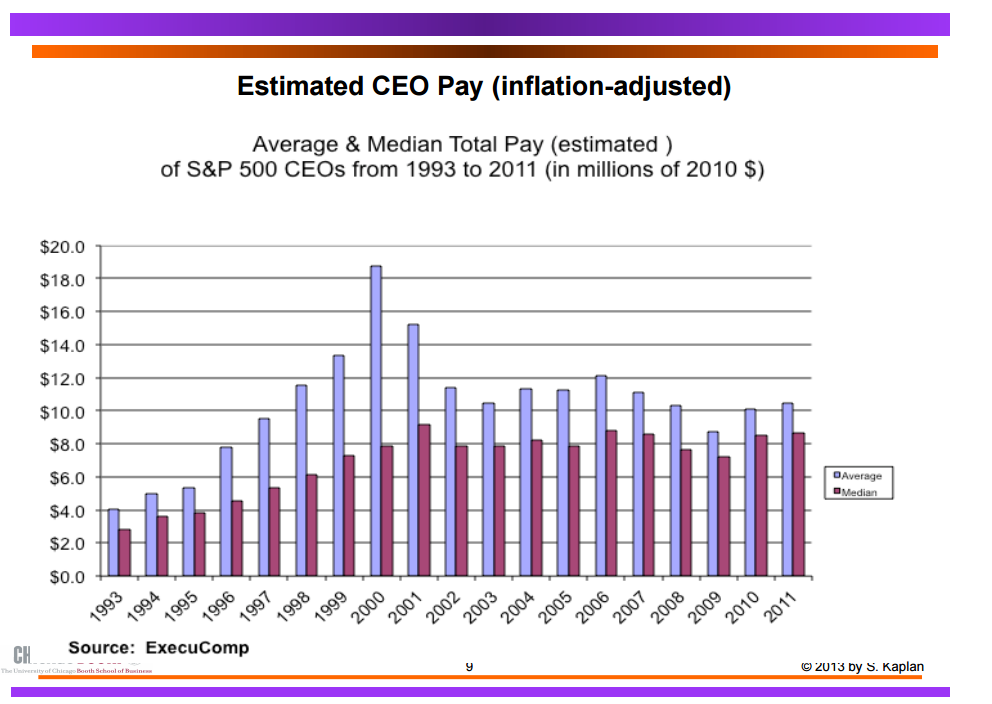
In addition, private company executives have seen their pay increase by at least as much as public companies. Private company executives with fewer agency problems have increased by more than public company executives. To close with another quote from Kaplan:
The point of these comparisons is to confirm that while public company CEOs earn a great deal, they are not unique. Other groups with similar backgrounds–private company executives, corporate lawyers, hedge fund investors, private equity investors and others—have seen significant pay increases where there is a competitive market for talent and managerial power problems are absent.
Again, if one uses evidence of higher CEO pay as evidence of managerial power or capture, one must also explain why these professional groups have had a similar or even higher growth in pay. It seems more likely that a meaningful portion of the increase in CEO pay has been driven by market forces as well.
24 Jun 2015 Leave a comment
in comparative institutional analysis, financial economics, income redistribution, politics - New Zealand, Public Choice, public economics Tags: ageing society, demographic crisis, New Zealand superannuation fund, old age pensions, social insurance, sovereign wealth funds, welfare state

The $30 billion New Zealand Superannuation Fund is the best performing sovereign wealth fund over the past five years, generating returns of more than 17 per cent a year.
Those returns easily beat all other sovereign wealth funds that publish their figures, according to a global study by JP Morgan. In the last three years alone, the fund returned an average of 21 per cent a year.
Good thing to do considering that the default deadweight cost of taxation is put by that Treasury to be 20%:
As a general rule, deadweight losses should be included if they are of sufficient size relative to the overall costs and benefits of the proposal that they are capable of altering the decision as to whether or not to proceed with the proposal.
Having said this, deadweight losses are notoriously difficult to quantify. Estimates vary from 14% up to 50% of the revenue collected.
Treasury suggests a rate of 20% as a default deadweight loss value in the absence of an alternative evidence based value. Thus public expenditures should be multiplied by a factor of 1.2 prior to discounting to incorporate the effects of deadweight loss.
This deadweight cost of taxation includes funds contributed to New Zealand government owned investment funds. In a speech last week, the Super Fund chairman Gavin Walker warned that the recent high returns were unlikely to continue in the long-term:
The last few years are likely to have been among the best years the fund will experience for some time,” he said. “On average and over the long-term we expect to earn the rather less exciting figure of 8 per cent [per annum] – but which will still provide a handsome return to New Zealander stakeholders.
The New Zealand Superannuation Fund must beat the market every single year to make up for the deadweight cost of its funding, the usual interest rate on borrowed funds, a premium for the investment risk added to the Crown’s portfolio and the cost to New Zealand’s growth rate of higher than otherwise taxes on income, entrepreneurship and investment.
Most mutual funds still can't beat their benchmark read.bi/1GkTig1 http://t.co/r7ezoDGJbV—
BI Chart of the Day (@chartoftheday) June 03, 2015
24 Jun 2015 Leave a comment
in comparative institutional analysis, constitutional political economy, development economics, growth disasters, growth miracles, international economic law, international economics, law and economics, property rights, Public Choice, rentseeking, Richard Posner Tags: European Court of Justice, free trade agreements, International Court of Justice, international law, investor state dispute settlement, ODA, overseas development assistance, preferential trade agreements, regional trade agreements, WTO
Would objections to the Investor State Dispute Settlement provisions in the proposed Trans-Pacific Partnership wilt away if the adjudicating body was the International Court of Justice? The left-wing opponents of investor state dispute settlement genuflect at the very mention of the International Court of Justice and international law generally (unless it is international economic law).

Disputes over the provisions of European union treaties are adjudicated by the European Court of Justice. The judgements of that court brought by individuals against member states so annoy the British that it is a leading reason for many British wanting to leave the European Union and replace the Human Rights Act 1998 with a British Bill Of Rights policed by British courts rather than by the European Court of Justice and European human rights law.
It is routine for any treaty to have some provision for arbitration of disputes. This includes trade and investment treaties.
The World Trade Organisation treaty includes a dispute settlement provision with arbitrators based in Geneva. Some of the more than 400 cases heard have been motivated by discrimination against imports on the basis of a breached environmental protection policies of the importing country.

A number of countries want to ban imports that are produced in ways that upset them. Others want to include labour and environmental standards in trade agreements to impose developed country standards on developing countries in what is a new form of colonialism.
I have previously said that investor State Dispute Settlement provisions have no place in trade and investment treaties between democracies. I must now admit there are good reasons to have arbitration clauses in treaties between democracies.
The puzzle is why refer these trade and investment disputes to a little-known arbitration body adjunct to the World Bank rather than the far more prestigious International Court of Justice.
Perhaps the reason is both sides want an arbitrator who is not too strong and not too credible. It would look very bad if the International Court of Justice was to rule against you.
William Landes and Richard Posner contended that judicial independence maximises the value of legislative deals with interest groups by enhancing the durability of those deals.
Why no International Court of Commercial Law? When deciding what type in judiciary to enforce international trade bargains, the signatories may prefer a less credible adjudication and enforcement mechanism in case they want to opt out of it or chip around the decision.
The jurisdiction of the International Court of Justice is to settle, in accordance with international law, legal disputes submitted to it by special agreement and matters specifically provided for in treaties and conventions in force.
UN member states are the parties to any litigation but that doesn’t stop them raising cases on behalf of individuals. That said, organizations, private enterprises, and individuals cannot have their cases taken to the International Court, such as to appeal a national supreme court’s ruling. Only the states can bring the cases and become the defendants of the cases.
The International Court of Justice is different from the European Court of Justice because individuals cannot easily bring complaints before it. One of the causes of action before the European Court of Adjusters is under European competition law over member states providing financial aid to industries.
Democratic countries with high levels of economic and social integration, such as the European union, do find it in advantage to set up a European wide Court to adjudicate disputes over rights under European law.
Why then would a democracy sign up to an investment protection treaty with a developing country? One reason is overseas development assistance.
Developing countries with corrupt and incompetent courts, politicians and bureaucracies sign international treaties as a way of assuring foreign investors and trading partners of some degree of security of their property rights and their ability to enforce contracts with suppliers and buyers.
By folding these assurances into trade treaties, the developing country has a stronger incentive to honour its promises. There will be domestic constituencies wanting to retain reciprocal export market access who will lobby for the honouring of the promises of legal protection to investors and businesses in their home country.
New Zealand signing up to the Trans-Pacific Partnership is an example of this form of overseas development assistance. Exporters and investors from the developing country who export and invest in New Zealand have another reason to support more secure property rights and better enforcement of contracts in their home country as a way of securing their treaty rights to export and invest in New Zealand.
The Left of the political spectrum should be keen on this form of overseas development considering their general belief in greatly increasing the amount spent on overseas development assistance. Rather than pay cash to the development country, the payment is in kind as reciprocal legal promises.
Trade treaties that include investor state dispute settlement are forms of governance assistance to developing countries. The reciprocal exchange of promises about investor protection and the enforcement of contracts and property rights improves the quality of governance in the developing country.
The countries most likely to be subject to investor state dispute settlement are those with weaker governance. Even in the European Union, the member states most likely to be sued are former communist countries. The most common course of action was the cancellation of a licence or permit.

Investor state dispute settlement clauses are no different from any other international treaty include environmental and human rights treaties. All these treaties require countries to give up part of their sovereignty.

Democracies give up their sovereignty in investor state dispute settlement in the hope that developing country partners to the treaty will improve the development potential of their country through better governance and more secure property rights.
That is an overseas development aid objective the Left of the political spectrum should support, but it does not. The Left of the political spectrum is happy to use trade agreements to impose developed country labour and environmental standards on poor countries desperate for access to rich country markets, but is not willing to give up anything in return.
22 Jun 2015 Leave a comment
in applied price theory, applied welfare economics, development economics, environmental economics, global warming, health economics, Public Choice, rentseeking Tags: climate alarmism, evidence-based policy, global warming, green rent seeking
Celebrating humanity's flourishing through the spread of capitalism and the rule of law
Celebrating humanity's flourishing through the spread of capitalism and the rule of law
Celebrating humanity's flourishing through the spread of capitalism and the rule of law
Celebrating humanity's flourishing through the spread of capitalism and the rule of law
Celebrating humanity's flourishing through the spread of capitalism and the rule of law
Celebrating humanity's flourishing through the spread of capitalism and the rule of law
Celebrating humanity's flourishing through the spread of capitalism and the rule of law
Celebrating humanity's flourishing through the spread of capitalism and the rule of law
A History of the Alt-Right
Econ Prof at George Mason University, Economic Historian, Québécois
Celebrating humanity's flourishing through the spread of capitalism and the rule of law
Scholarly commentary on law, economics, and more
Beatrice Cherrier's blog
Celebrating humanity's flourishing through the spread of capitalism and the rule of law
Celebrating humanity's flourishing through the spread of capitalism and the rule of law
Celebrating humanity's flourishing through the spread of capitalism and the rule of law
Why Evolution is True is a blog written by Jerry Coyne, centered on evolution and biology but also dealing with diverse topics like politics, culture, and cats.
Celebrating humanity's flourishing through the spread of capitalism and the rule of law
A rural perspective with a blue tint by Ele Ludemann
DPF's Kiwiblog - Fomenting Happy Mischief since 2003
Celebrating humanity's flourishing through the spread of capitalism and the rule of law
The world's most viewed site on global warming and climate change
Tim Harding's writings on rationality, informal logic and skepticism
A window into Doc Freiberger's library
Let's examine hard decisions!
Commentary on monetary policy in the spirit of R. G. Hawtrey
Thoughts on public policy and the media
Celebrating humanity's flourishing through the spread of capitalism and the rule of law
Politics and the economy
A blog (primarily) on Canadian and Commonwealth political history and institutions
Reading between the lines, and underneath the hype.
Economics, and such stuff as dreams are made on
"The British constitution has always been puzzling, and always will be." --Queen Elizabeth II
Celebrating humanity's flourishing through the spread of capitalism and the rule of law
Celebrating humanity's flourishing through the spread of capitalism and the rule of law
WORLD WAR II, MUSIC, HISTORY, HOLOCAUST
Undisciplined scholar, recovering academic
Celebrating humanity's flourishing through the spread of capitalism and the rule of law
Res ipsa loquitur - The thing itself speaks
In Hume’s spirit, I will attempt to serve as an ambassador from my world of economics, and help in “finding topics of conversation fit for the entertainment of rational creatures.”
Researching the House of Commons, 1832-1868
Articles and research from the History of Parliament Trust
Reflections on books and art
Posts on the History of Law, Crime, and Justice
Celebrating humanity's flourishing through the spread of capitalism and the rule of law
Exploring the Monarchs of Europe


Recent Comments