My earlier column this month, New Zealand’s highest court could be facing a turning point, prompted a flood of feedback from business readers and lawyers alike. A common query was what Parliament can do to restrain an overreaching judiciary. This week I discuss two steps Parliament should not hesitate to take. But first a quick recap. The…
ROGER PARTRIDGE: HOW TO REIN IN AN ACTIVIST SUPREME COURT
ROGER PARTRIDGE: HOW TO REIN IN AN ACTIVIST SUPREME COURT
22 Mar 2024 Leave a comment
in comparative institutional analysis, constitutional political economy, economic history, economics of bureaucracy, law and economics, liberalism, Marxist economics, politics - New Zealand, property rights, Public Choice Tags: constitutional law, rule of law
Do Me a Personal Favor: Please Pre-Order *Build, Baby, Build* Now
22 Mar 2024 Leave a comment
in applied price theory, applied welfare economics, comparative institutional analysis, constitutional political economy, economics of bureaucracy, economics of regulation, income redistribution, law and economics, liberalism, Marxist economics, politics - USA, property rights, Public Choice, public economics, rentseeking Tags: land supply, zoning

I started writing Build, Baby, Build: The Science and Ethics of Housing Regulation, in the early weeks of Covid. Now, with the kind cooperation of the Cato Institute, my second non-fiction graphic novel releases on May 1, 2024. That’s less than six weeks away.The official coverPlease forgive my laughable arrogance, but I assure you that…
Do Me a Personal Favor: Please Pre-Order *Build, Baby, Build* Now
Europe’s Wind Industry Collapse Leaves Wind Power Cult Searching For New False Idols
21 Mar 2024 Leave a comment
in energy economics, environmental economics, global warming, Public Choice, rentseeking Tags: European Union, solar power, wind power

Wind power acolytes exhibit all the hallmarks of a cult. 20 years on, and anyone with critical faculties can explain in a sentence why wind power will never amount to meaningful power generation source. But the cultist still believes – running on a mix of blind faith, ignorance and blissful stupidity. Cults are never big […]
Europe’s Wind Industry Collapse Leaves Wind Power Cult Searching For New False Idols
Nikole Hannah-Jones on reparations for descendants of slaves
21 Mar 2024 Leave a comment
in discrimination, economics of crime, economics of education, human capital, income redistribution, labour economics, labour supply, law and economics, liberalism, Marxist economics, occupational choice, politics - USA, poverty and inequality, property rights, Public Choice, rentseeking Tags: affirmative action, free speech, political correctness, racial discrimination, regressive left

As you know, I go back and forth on the question of affirmative action for college and professional-school admissions, and even after I thought I’d settled on a view (i.e., give some preference to minorities among those equally qualified for admission), it still keeps changing. After I read the long New York Times piece below […]
Nikole Hannah-Jones on reparations for descendants of slaves
Aussie Security Committee Madness: Spy Agency Chiefs Kicked Out, Replaced by Climate Head
20 Mar 2024 Leave a comment
in economics of bureaucracy, energy economics, environmental economics, global warming, politics - Australia, Public Choice Tags: climate alarmism

Imagine if the CIA and FBI were disinvited from the US National Security Council, and replaced by the head of the EPA. Because this is the grotesque level of government incompetence Aussies are enduring.
Aussie Security Committee Madness: Spy Agency Chiefs Kicked Out, Replaced by Climate Head
100 Years of Rent Control in Sweden
17 Mar 2024 Leave a comment
in applied price theory, economic history, economics of bureaucracy, economics of regulation, history of economic thought, income redistribution, law and economics, property rights, Public Choice, public economics, rentseeking, urban economics Tags: rent control, Sweden
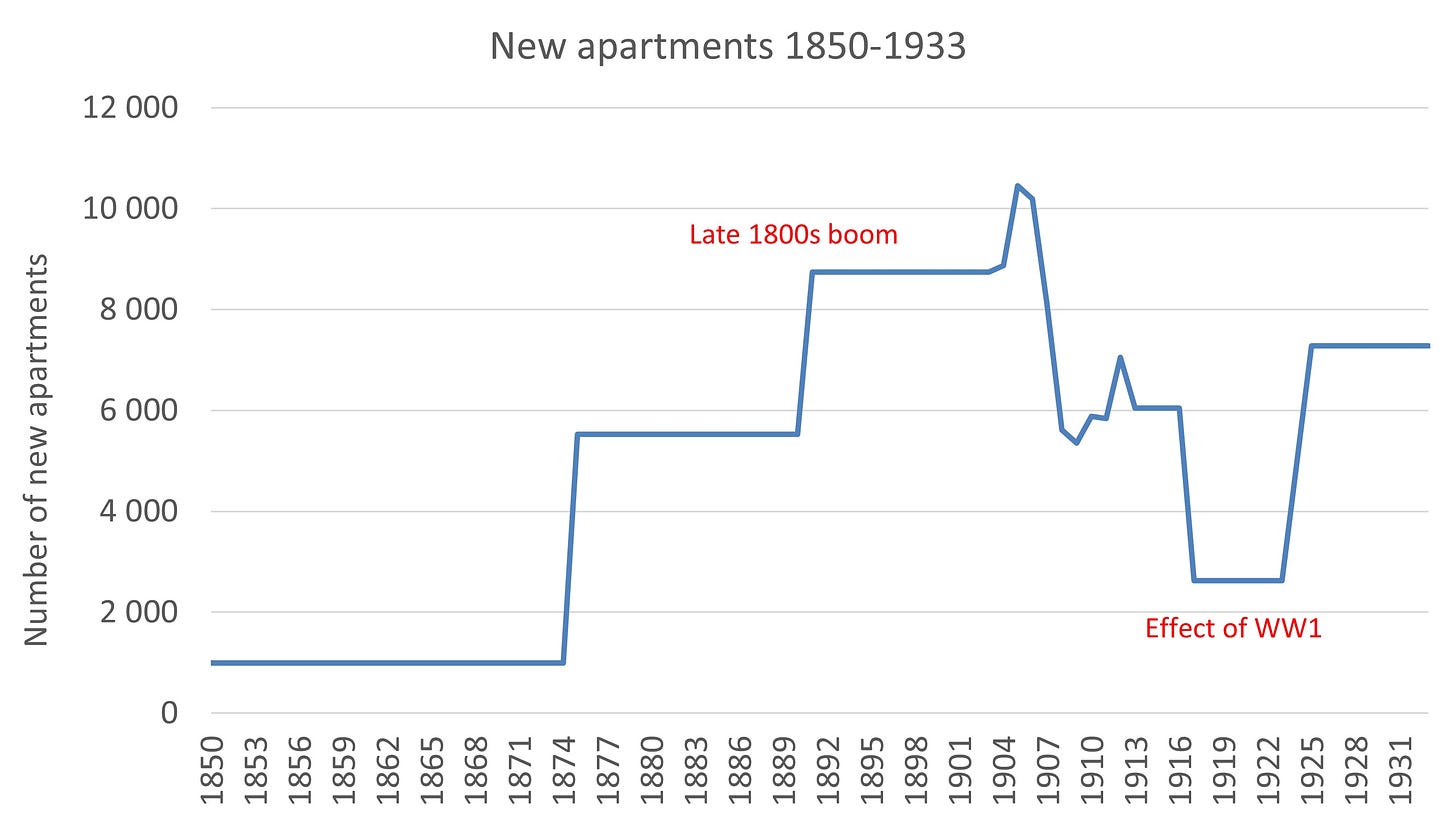
Bet On It reader Vanja Månborg knows a lot about rent control in Sweden. If you think Sweden is a country of thoughtful technocrats where government intervention works well, reading his guest post may make you think again. Here’s Vanja:Sweden has had rent control regulations since 1917 with less than two decades of pause between…
100 Years of Rent Control in Sweden
The Tsar Abdicates – Baghdad Falls I THE GREAT WAR Week 138
16 Mar 2024 Leave a comment
in defence economics, economic history, economics of bureaucracy, income redistribution, law and economics, liberalism, Marxist economics, Public Choice, public economics, rentseeking, war and peace Tags: Russian revolution, World War I
An Open Letter to Nobel-laureate Economist Angus Deaton
13 Mar 2024 Leave a comment
in applied price theory, applied welfare economics, Austrian economics, comparative institutional analysis, economic history, entrepreneurship, history of economic thought, income redistribution, international economics, labour economics, labour supply, poverty and inequality, Public Choice, rentseeking, survivor principle, unemployment Tags: creative destruction, free trade, tariffs
TweetProf. Angus Deaton Princeton University Prof. Deaton: Over the years I’ve learned much from your writings, and I regard your 2013 The Great Escape as one of the most important books published in the past 15 years. So I was quite surprised and disappointed to read that you, as you say, are now “much more…
An Open Letter to Nobel-laureate Economist Angus Deaton
The RCT Agenda
12 Mar 2024 Leave a comment
in applied price theory, applied welfare economics, comparative institutional analysis, development economics, econometerics, economic history, economics of bureaucracy, economics of education, economics of information, economics of regulation, experimental economics, growth disasters, growth miracles, history of economic thought, human capital, labour economics, labour supply, law and economics, managerial economics, market efficiency, Marxist economics, occupational choice, organisational economics, property rights, Public Choice, public economics Tags: The fatal conceit

Randomized Controlled Trials: Could you be any more scientific? The book I’m now writing, Unbeatable: The Brutally Honest Case for Free Markets, insists that the randomistas of the economics profession actually have a thinly-veiled political agenda. Namely: To get economists to humbly serve the demagogues that rule the world instead of bluntly challenging their unabated…
The RCT Agenda
Reading deal – rare media bouquet
11 Mar 2024 1 Comment
in applied price theory, economic history, economics of bureaucracy, economics of media and culture, income redistribution, industrial organisation, law and economics, market efficiency, movies, politics - New Zealand, property rights, Public Choice, public economics, rentseeking, survivor principle, theory of the firm, urban economics Tags: Wellington
Both Matt Nippert of the NZ Herald and Tom Hunt of The Post deserve a bouquet for their analyses of the truly remarkable deal between the Wellington City Council (WCC) and the troubled American Cinema company Reading. For this who don’t know, Reading owns a large (more than 14, 000 square metres or 1.4 hectares) […]
Reading deal – rare media bouquet
“Banning Books is Never the Answer”: RuPaul’s “No Censorship” Bookstore Lasted Just Three Days
10 Mar 2024 Leave a comment
in economics of crime, law and economics, liberalism, Marxist economics, politics - USA, property rights, Public Choice Tags: Age of Enlightenment, free speech, political correctness, regressive left

It took just three days. After drag performer RuPaul announced the creation of a “no censorship” Allstora bookstore, censorship was back with a vengeance after many on the left learned that free speech meant that opposing views might be sold at the site. While the sentiment was appealing, it became intolerable when activists noted that […]
“Banning Books is Never the Answer”: RuPaul’s “No Censorship” Bookstore Lasted Just Three Days
Not Bridgeable
10 Mar 2024 Leave a comment
in comparative institutional analysis, discrimination, economic history, economics of crime, economics of education, economics of love and marriage, gender, income redistribution, labour economics, law and economics, liberalism, Marxist economics, politics - USA, Public Choice Tags: 2024 presidential election, free speech, political correctness, regressive left

In the last few years, especially after I started writing for this blog, I got more than a few comments about the need for bi-partisanship, not hating out ideological, let alone political opponents. What was notable about this was that they all came from the Right of the political spectrum. The Left seem quite happy […]
Not Bridgeable
TV layoffs not a threat to democracy
10 Mar 2024 Leave a comment
in applied price theory, economic history, economics of bureaucracy, economics of information, economics of media and culture, economics of regulation, entrepreneurship, income redistribution, industrial organisation, managerial economics, market efficiency, organisational economics, personnel economics, politics - New Zealand, Public Choice, public economics, rentseeking, survivor principle, theory of the firm Tags: media bias
A few weeks ago I joined some contemporaries by abandoning the near sixty year habit of watching nightly TV news. I dropped it because I felt it did not give me real information that I had not acquired from other media sources, including some I pay for – The Economist, the NZ Herald, The Atlantic […]
TV layoffs not a threat to democracy


Recent Comments