Using #FiftyShadesofRed we'll be charting the most embarrassing call outs & giving safety tips http://t.co/r4Mu5pxAun pic.twitter.com/zhRvDlBpeC
— London Fire Brigade (@LondonFire) February 12, 2015
An important notice from the London Fire Brigade about 50 Shades of Grey
12 Feb 2015 Leave a comment
Vangelis – Memories of Green
03 Feb 2015 Leave a comment
in movies, Music Tags: Blade Runner, Vangelis
35 years ago today, 6 Americans escaped from Iran, as dramatized in Argo
31 Jan 2015 Leave a comment
Blade Runner – Final scene, "Tears in Rain" Soliloquy
31 Jan 2015 1 Comment
in movies, Music Tags: Blade Runner, Vangelis
The Bechdel Test: whether women are in a movie as fully human characters, or as plot devices for the male characters
27 Jan 2015 Leave a comment
in discrimination, economics of media and culture, gender, industrial organisation, movies, occupational choice, survivor principle Tags: co-worker discrimination, consumer sovereignty, customer discrimination, employer discrimination, Hollywood economics, sex discrimination, The meaning of competition
/cdn0.vox-cdn.com/uploads/chorus_asset/file/3332436/hickey-bechdel-11.0.png)
Hollywood is a slave to the box office on the most cutthroat industry there is. Film producers and screenwriters will portray men and women in whatever roles and whatever extent sells tickets.
How women are represented in the movies is determined solely by the preferences of the audiences willing to buy tickets. It’s a buyers market out there. Film producers would do whatever it takes to finance films that sell tickets, as even Five Thirty-Eight realised:
“Movies that are female-driven do not travel,” said Krista Smith, West Coast editor of Vanity Fair, describing the broader sentiment in Hollywood. There are almost no women who have sales value in multiple international territories, maybe with the exception of Sandra Bullock, she said.
Times change, and film producers change with the times. Consumers are both sovereign and change their minds, and in the case of movie audiences, constantly demand novelty and surprises, as even Five Thirty-Eight picked up on:
Hollywood is the business of making money. Since our data demonstrates that films containing meaningful interactions between women do better at the box office than movies that don’t, it may be only a matter of time before the data of dollars and cents overcomes the rumours and prejudices defining the budgeting process of films for, by and about women.
This moral panic over gender wage gaps between millionaire actresses and actresses dare not say that for want of offending the audience that is actually the main driver of any gender gap in movies.

Hollywood activists complaining about the gender wage are to business minded to dare insult the audiences that pay their wages.
Movie 3-D technology review: Peter Jackson’s Battle of the Five Armies versus the rest
22 Jan 2015 Leave a comment
in economics of media and culture, entrepreneurship, industrial organisation, movies, politics - New Zealand, technological progress Tags: 3-D movies, creative destruction, innovation
We saw Peter Jackson’s latest Hobbit movie the other day. The other films previewed before the Battle of the Five Armies were also 3-D films.

The first of these was a cartoon where the 3-D technology seemed to be based on using crayons to try and trick you as to what was going on.
The next trailer was the next Star Wars movie in 3-D. Again, it was vastly inferior to the 3-D technology of Sir Peter Jackson and his team.
I noticed the same with all the 3-D films of Sir Peter Jackson: they are much better than the competition.
More than a few times in the 3-D films of his competition, you doubt as to whether the film is in 3-D or not and can’t really tell the difference sometimes as to the 3-D effect over normal films in terms of cinematic experience. Example of this was the last Star Trek movie we saw. The 3-D effect failed in a number of occasions.
Clearly there are trade secrets in 3-D films. The 3-D effect works pretty well in Peter Jackson’s films, except for the occasional close-up transition, and sometimes is quite dazzling.
The response of biologists to creation theory as compared to climate alarmism
20 Jan 2015 Leave a comment
in economics of education, environmental economics, global warming, movies Tags: climate alarmism, conjecture and refutation, Inherit the Wind, JS Mill, persuasion, Socratic questions
Biologists spent great effort over many decades to rebut creation science is a cold methodical manner designed to change minds through facts and reasoned arguments. Insults and conceit give peoples excuses to not listen.
Labels like denier and alarmist are not conducive for scientists to change their minds or decide they were right in the first place, and that such unpleasantness encourages many to choose other careers or fields of study.
It is better to ask your interlocutor to think more deeply about this or that point that is in debate. Look for common ground that already exists and for a growing number of important anomalies and puzzles their current way of thinking cannot explain. Knowledge grows through critical discussion, not by consensus and agreement.
J.S. Mill pointed out that critics who are totally wrong still add value because they keep you on your toes and sharpened both your argument and the communication of your message.
If the righteous majority silences or ignores its opponents, it will never have to defend its belief and over time will forget the arguments for it.
As well as losing its grasp of the arguments for its belief, J.S. Mill adds that the majority will in due course even lose a sense of the real meaning and substance of its belief.
What earlier may have been a vital belief will be reduced in time to a series of phrases retained by rote. The belief will be held as a dead dogma rather than as a living truth.
Beliefs held like this are extremely vulnerable to serious opposition when it is eventually encountered. They are more likely to collapse because their supporters do not know how to defend them or even what they really mean.
J.S. Mill’s scenarios involves both parties of opinion, majority and minority, having a portion of the truth but not the whole of it. He regards this as the most common of the three scenarios, and his argument here is very simple.
To enlarge its grasp of the truth the majority must encourage the minority to express its partially truthful view.
Three scenarios – the majority is wrong, partly wrong, or totally right – exhaust for Mill the possible permutations on the distribution of truth, and he holds that in each case the search for truth is best served by allowing free discussion.
Mill thinks history repeatedly demonstrates this process at work and offered Christianity as an illustrative example. By suppressing opposition to it over the centuries Christians ironically weakened rather than strengthened Christian belief, and Mill thinks this explains the decline of Christianity in the modern world. They forgot why they were Christians.
Going on about how climate science is settled and the debate is over is bad tactics for the climate alarmists.
Attempts to close the debate this way provokes suspicion among those who expect some attempt to persuade them rather than to instruct them from on high.
Presumptuousness is never a good influencing strategy nor is dismissiveness. Listen here you stupid dupe of corrupt corporate lackeys converts few.
Most know that the defining feature of the growth of knowledge is knowledge grows and that is often by displacing the received wisdom. These instincts come well before any knowledge is required by the philosophy and sociology of science.

Darrow’s polite and careful cross-examination of Bryan in that great movie Inherit the Wind persuaded many to reject religious-based opposition to the theory of evolution. He asked questions and was very polite. The movie was Spencer Tracy at his finest and in black and white.
Four Legends by Martin Schoeller
20 Jan 2015 Leave a comment
in economic history, economics of media and culture, movies Tags: movies

Don Corleone with and without make-up
18 Jan 2015 Leave a comment
in movies Tags: Marlon Brando, The Godfather
Cause Célèbre – Gender Split behind Celebrity Charity Work | Information Is Beautiful
18 Jan 2015 Leave a comment
in economics of media and culture, election campaigns, movies, Music, politics - USA, Public Choice, sports economics, televison, TV shows Tags: activists, Celebrities

HT: http://www.informationisbeautiful.net/2014/cause-celebre-gender-split-behind-celebrity-charity-work/
Is Hollywood On A Dystopian Movie Binge? | FiveThirtyEight
17 Jan 2015 Leave a comment
in liberalism, movies Tags: disutopia
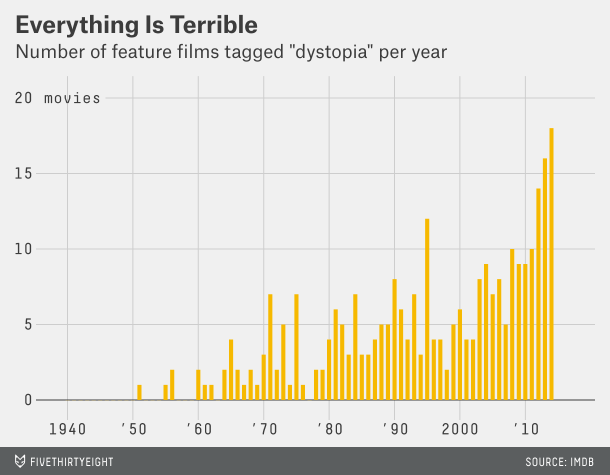
It is also cheaper to make disutopian films.
Via http://fivethirtyeight.com/datalab/is-hollywood-on-a-dystopian-movie-binge/
And the Oscar for “Best Tax Break” Goes to…
17 Jan 2015 Leave a comment
in economics of media and culture, movies, politics - New Zealand, politics - USA, Public Choice, rentseeking Tags: corporate welfare, film subsidies

HT: http://economics21.org/commentary/oscars-tax-break-american-sniper-2015-01-16 and http://www.washingtonexaminer.com/how-this-years-oscar-nominees-got-government-handouts/article/2558717


Recent Comments