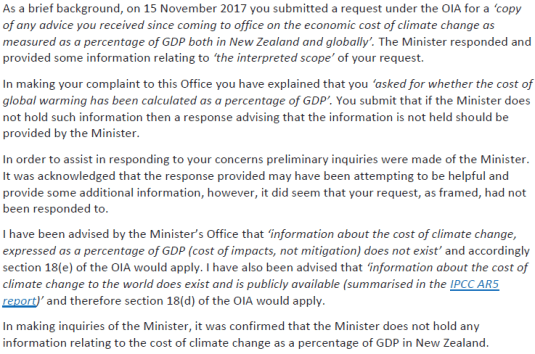
Slippery @jamespeshaw admits he does not know the cost of #globalwarming. Had to go to ombudsman to get him to admit that. Maybe he should ask for those projections and considered ministerial advice on the same
25 Jan 2018 Leave a comment
in applied welfare economics, global warming, politics - New Zealand, Public Choice
Did banning alcohol in 1837 fit in with deliberate genocide?
25 Jan 2018 Leave a comment
in discrimination, health economics, politics - Australia, Public Choice
Laws banning the sale of alcohol to aboriginals were first passed in 1837. Later that century the ban was extended to opium. In time, all states and territories banned the sale of alcohol to aboriginals.
Australia figures prominently in the Journal of Genocide Research. The black armband theory of Australian history alleges genocidal intent towards Australian aboriginals by the state and territory protectors of aboriginals and their accomplices. Then why the ban on alcohol and the opium?
There were strong temperance movements in Australia in the first half of the 20th century. They achieved considerable political success. Their intention was to save their fellow Australians from the demon drink.

Why then was a policy of alcohol prohibition extended to aboriginals when the state protectors aboriginals were apparently according to the black armband theory of history practising genocide?
A credible theory must make risky predictions and strictly forbid certain things if its fundamental thesis is valid. Temperance movements were well-intentioned attempts to save their fellow man and, in particular, husbands and sons. The pubs closed at 6 for white Australians and were not open at all for aboriginals.
Why was this well-intentioned policy to save people from the demon drink extended to aboriginals in an era of genocide against aboriginals? Certainly, genocidal governments of that time would have known that binge drinking would have helped kill off the aboriginal people. Did they just miss a step? Keep missing that step from 1837 until 1972?
Something does not add up here? Drinking was seen as a serious social evil. The supposedly otherwise genocidal state and territory protectors of aboriginals sought to protect aboriginals from this serious social evil.
Genocidal state and territory protectors of aboriginals, if it is true they were intent on a genocide, must be expected to do little or nothing to promote aboriginal welfare. Yet they sought bans on alcohol and opium.
The Post was a lot better than I anticipated
20 Jan 2018 Leave a comment
in defence economics, economic history, movies, politics - USA, war and peace Tags: Vietnam war, World War II
Second movie this week on it is heroic (Darkest Hour), treasonous (The Post) to fight on in a war you can’t win against murderously evil monsters in the hope something might turn up.
George Orwell on why the Australian @Greens want to change Australia Day
20 Jan 2018 1 Comment
in politics - Australia, Public Choice

Illegal Immigration: What Liberals Used to Say
18 Jan 2018 Leave a comment
in international economics, labour economics, labour supply, politics - USA Tags: economics of immigration
The Greatest Speech Ever – Robert F Kennedy Announcing The Death Of Martin Luther King
18 Jan 2018 Leave a comment
in economic history, politics - USA
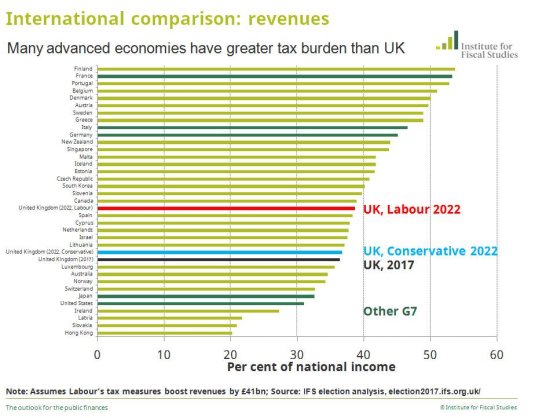
Political evolution of USA senate 1789 – 2018
16 Jan 2018 2 Comments
in economic history, politics - USA, Public Choice
The middle class is just withering away
16 Jan 2018 Leave a comment
in economic history, labour economics, politics - USA, poverty and inequality Tags: top 1%
Ok for @amnestyOz to imply #Manusisland is a S***hole?
15 Jan 2018 Leave a comment
in development economics, Economics of international refugee law, politics - Australia, politics - USA
You cannot criticise Trump and the Pacific solution to boat people coming to Australia at the same time? Both Trump and Amnesty International agree that certain developing countries are not very nice places to go to and the people there are rather rough and intolerant of outsiders.
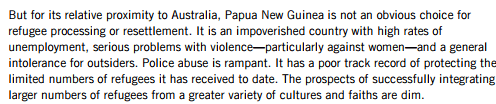
Source: THIS IS BREAKING PEOPLE HUMAN RIGHTS VIOLATIONS AT AUSTRALIA’S ASYLUM SEEKER PROCESSING CENTRE ON MANUS ISLAND, PAPUA NEW GUINEA by Amnesty International Australia at https://www.amnesty.org.au/wp-content/uploads/2016/09/Amnesty_International_Manus_Island_report-1.pdf
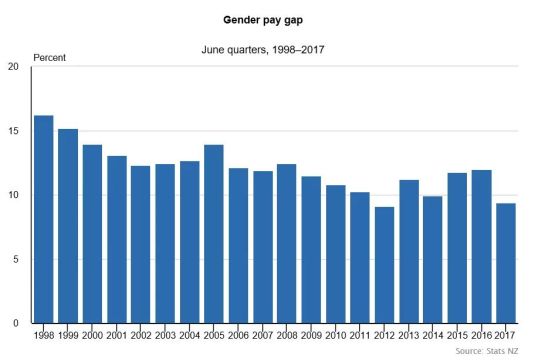
.@jamespeshaw has asked Stats NZ to collect gender pay gap data
14 Jan 2018 Leave a comment
in discrimination, economics, gender, labour economics, politics - New Zealand Tags: gender wage gap
The Sunday Star Times reported today that
The Government has ordered Statistics NZ to begin measuring the country’s gender pay gap… new Statistics Minister James Shaw believed there was an onus on his department to gather the data, so the Government could fix it.
It was too early to know exactly how it was going to be measured, Shaw said in a written statement.
Not sure to what to make of this because extensive data is already collected.
Accurate start of 2017 prediction
14 Jan 2018 Leave a comment
in politics - USA Tags: 2016 presidential election
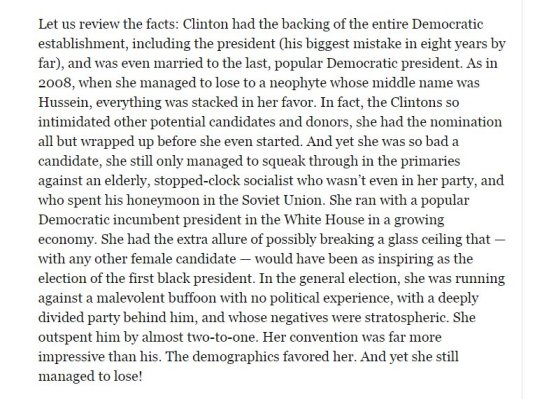
Can’t remember who said this of crooked Hillary
13 Jan 2018 2 Comments
in politics - USA Tags: 2016 presidential election
US-Mexico border wall faces tough Texas terrain
13 Jan 2018 Leave a comment
in politics - USA, population economics, Public Choice Tags: economics of borders, economics of immigration, illegal immigration
How much do US state legislature members get paid?
10 Jan 2018 Leave a comment
in constitutional political economy, politics - USA, Public Choice

Source: Ballotpedia at https://ballotpedia.org/Comparison_of_state_legislative_salaries
Note: the amounts below $1000 are expenses for daily attendance. Lower house pay is used.


Recent Comments