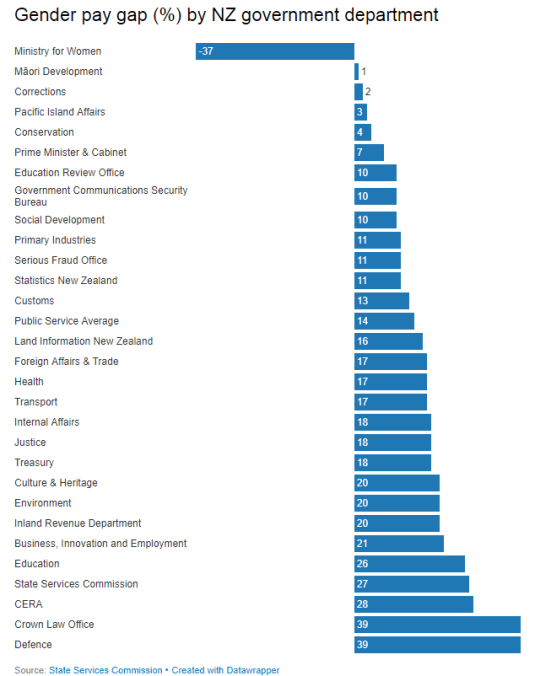
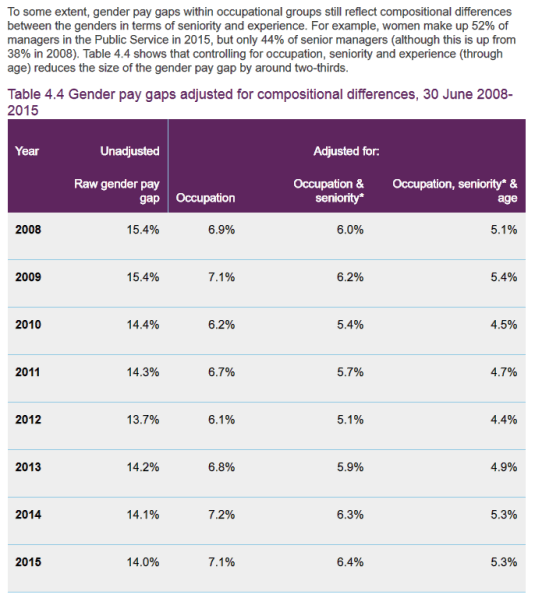
Please no excuses like the recruitment pool is made up of too much of one gender and not enough of the other. The occupational choices and labour supply decisions of workers is never accepted as an excuse at the other end of this chart as valid reasons for departmental gender pay gaps.
Aus closing Manus prison for refugees, victims of persecution & war, as cruelly as it was run. In our backyard. We have to do something https://t.co/gzxgDwZlzi
Renouncing your citizenship could include a trip back to the old country of your parents or grandparents that you have never ever visited. Have do you decide if it is too dangerous? DFAT travel warnings, individual threats of harm or just the level of bribes you have to pay to get anything done.
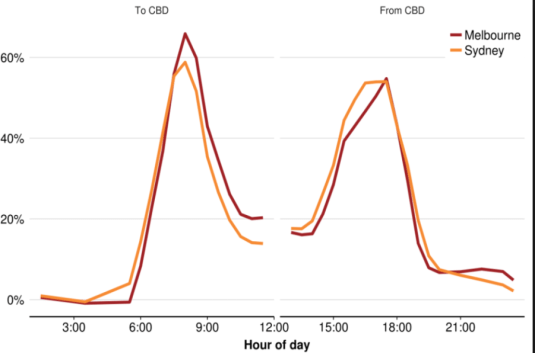
In 1962, Anthony Downs put forward the fundamental law of peak hour congestion on urban commuter expressways: peak-hour traffic congestion rises to meet maximum capacity. Larger bus and train networks and more cycle-ways are never the solution. Just as more highways leads to more congestion because more people drive to work, with fewer people driving to work if they fit enough to ride on the new cycle-ways, other people will start driving to work, instead of taking public transport (Downs 2005).
Downs’ law of peak hour congestion or “triple convergence” means that road will be as congested as before after any new investment in capacity because fewer people are taking public transport or postponing their trips to outside the peak hour times. More commercial driving in peak hours by trucks and delivery vans is an obvious response to more road capacity (Downs 2004). Increases in road capacity do not reduce congestion because of a triple convergence of new users from buses, trains and off-peak.
If an expressway’s capacity were doubled overnight, the next day’s traffic would flow rapidly because the same number of drivers would have twice the road space. Word will soon spread that this highway is less congested. Drivers who used that road before and after the peak hour to avoid congestion will shift into the peak hours. Other drivers using alternative routes will shift to this more convenient expressway. Bus and train passengers will start driving on the upgraded road in the peak periods. In a short time, this triple convergence of bus, train and car users onto the improved or new road in the peak hours will make that road as congested as it was before its expansion. Duranton and Turner (2011) found that vehicle kilometers travelled increases proportionately to increase road space for interstate highways and slightly less rapidly for other roads. The increased vehicle miles travelled is a mix of more driving by current residents, more commercial traffic and some migration from other types of roads.
Increases in bus or train capacity had the same triple convergence effect at peak times as new roads. Duranton and Turner (2011) found that increased provision of public transport does not relieve road congestion. The road space freed up by the motorists who switched to the additional buses or trains is filled by other motorists and commercial transport who previously planned to travel outside of the peak hours. Downs considers that peak-hour congestion is inherent to how modern societies operate:
…congestion exists because societies organize economies so most people will work during the same hours each day. This makes interaction among firms and agencies possible, thereby increasing society’s productivity, and raising overall efficiency. But it also requires most workers and students to travel to and from their places of activity at the same times. This overloads ground transportation systems during the morning and evening peaks, and often longer.
No large metropolitan areas have enough infrastructure to transport everyone who wants to move during peak hours simultaneously; nor do they have enough resources to build it. Hence some travelers must wait until others have moved. That waiting constitutes traffic congestion. (Downs 2006).
Road capacity expansions and extensions to bus and train networks do not reduce congestion. The added space means the extra traffic can be handled with still tolerable congestion. Judiciously selected road investments are still value for money because the additional road space allows more commuters to travel by the fastest, most convenient, most flexible method of urban travel, which is in a car.
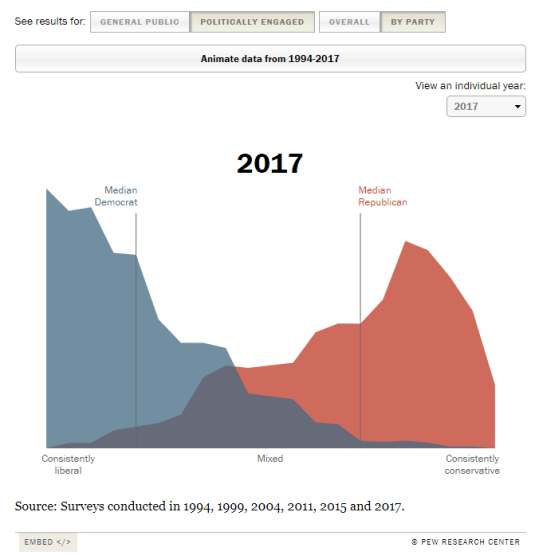
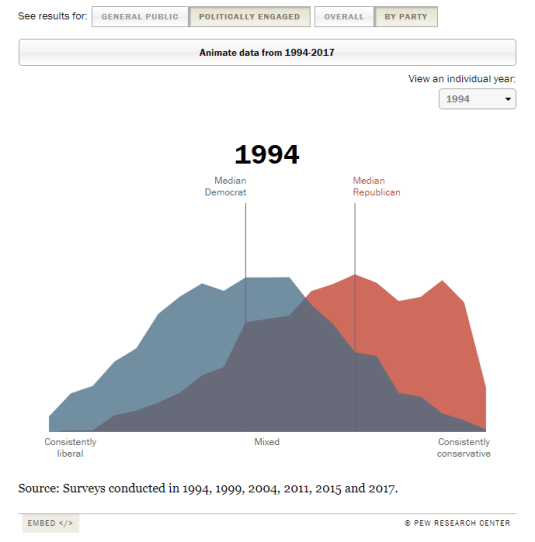
Political activists in any political party have such different opinions to the average supporter for that party is it is often advised that they not go door-knocking. The chart above for 2017 and below for 1994 compares the politically engaged with the views of the median Democrat and Republican.
Political activists who go doorknocking are more likely to put a voter off because of their interest in issues that simply do not interest the average voter for their party, much less the swinging voter.
This gap between the average party activist and average supporter of that party at the ballot box also explains why too many political activists explain political defeat in terms of the voters being wrong.
Demands for massive pay rises for the low-paid are not just confined to New Zealand. The US debate is worth reviewing because their living wage advocates are so upfront about the job losses.
US living wage activists such as Fight for $15 want to double their federal minimum wage from $7.25 per hour to $15 per hour. California, New York, San Francisco and Seattle are among the states and cities increasing their local minimum wages, currently of up to $12, to $15 by 2021 or 2022.
Some such as Arindrajit Dube say that these very large wage increases by cities and states in their federal system are experiments “worth running and monitoring” (Lane 2016). As Dube said recently:
“… 30 to 40 percent of the California workforce will get a raise … This will be a big experiment. It’s far outside of our evidence base…
If you’re risk-averse, this would not be the scale at which to try things. On the other hand, if you think that wages are really low and they’ve been low for a really long time and we can afford to take some risks, doing things at this scale will get us more evidence” (Lee 2016).
Noah Smith (2016) concluded that the empirical literature on minimum wages suggests that a 10% minimum wage increase would reduce employment by about 2% so doubling the federal minimum wage would see the employment of young people go down by one-fifth. Smith (2016) said this is a “small but real effect — a $15 federal minimum wage might throw a million kids out of work”.
Should activists use minimum wage breadwinners for policy experiments? Noah Smith (2016) considers balancing the one million unemployed teenagers against the wage gains for adults as “necessary for a decision”.
Smith suggests that the large minimum wage increases in some US states and cities will tell us how big this welfare trade-off between jobs and wage rises is:
We don’t really know what happens when you raise the minimum wage to $15 — but soon, we will know. We will be able to see whether employment rates fall in L.A., Seattle, and San Francisco. We will be able to see whether people who can’t get work migrate from these cities to cities with lower minimum wages.
We will be able to see if employment growth suddenly slows after the enactment of the policy. In other words, federalism will do its job, by allowing cities to act as policy laboratories for the rest of the country (Smith 2015).
I want to understand the connection between in the money supply and economic depressions. One way to demonstrate that I understand this connection–I think the only really convincing way–would be for me to engineer a depression in the United States by manipulating the U.S. money supply.
I think I know how to do this, though I’m not absolutely sure, but a real virtue of the democratic system is that we do not look kindly on people who want to use our lives as a laboratory. So I will try to make my depression somewhere else (Lucas 1988).
Leading reasons for economic theory, empirical research and the study of economic history are to warn the present against repeating past errors and not try experiments that are folly (Rosen 1993). There is too much group think and not enough courage of your vocation (see Dylan Matthew’s tweet below).
Australian-born economist Justin Wolfers is frank about the wishful thinking in the US debate:
But if you are interested in what level to set the minimum wage, the existing literature is nearly hopeless. Plausible reforms lie far outside the bounds of historical experience.
We don’t have useful estimates of the extent to which employment effects vary with the minimum wage. Since policymakers tend to implement short-run fixes, we know a lot about the effects of temporary reforms, but very little about the consequences of lasting reform (Wolfers 2016).
Most of the empirical studies are of the jobs lost over the next few years. When estimates have a 10 to 15-year horizon with time enough for entry, exit and technological adaptation and automation, a “long-run disemployment effect that is five times larger than the short-run effect” is in evidence (Aaronson, French, Sorkin 2016; Aaronson, French, Sorkin and To forthcoming; Sorkin 2015).
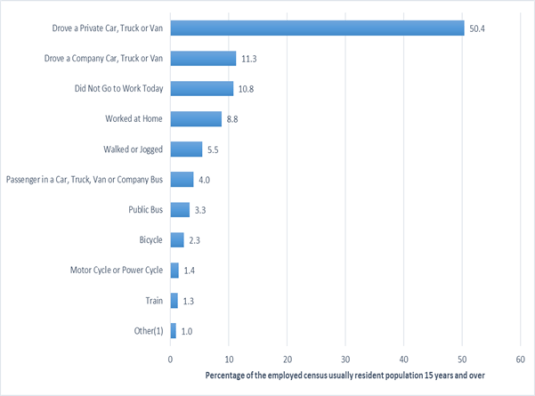
Better value for money for the taxpayer from road investments is vital because few New Zealanders (barely 4.5%) commute to work via public transport – see figure 1. Public transport simply does not make the grade for the great majority of New Zealanders as a way of carrying out their daily lives. The policy question therefore is providing the necessary roads in a more cost-effective manner than now.
Figure 1: Modes of travel to work, New Zealand, 2013 Census
Source: Statistics New Zealand, 2013 Census.
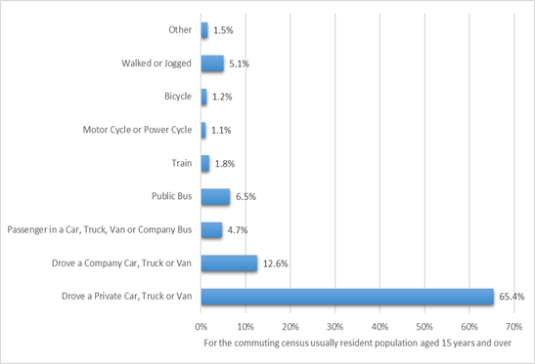
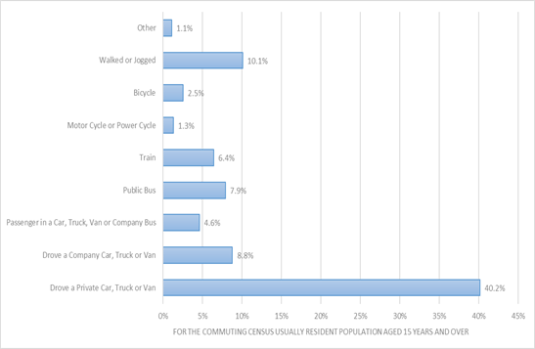
A small minority of New Zealand adults commute by bus or train even in the big cities. Figure 2 shows that even in Auckland, for those that left home for work, only 8.3% commute via public transport. In Wellington, 14.1% commute to work from home via public transport – see figure 3.
Figure 2: Modes of travel to work, Auckland, 2013 Census
Source: Statistics New Zealand, 2013 Census
Figure 3: Modes of travel to work, Wellington, 2013 Census
Why Evolution is True is a blog written by Jerry Coyne, centered on evolution and biology but also dealing with diverse topics like politics, culture, and cats.
In Hume’s spirit, I will attempt to serve as an ambassador from my world of economics, and help in “finding topics of conversation fit for the entertainment of rational creatures.”



Recent Comments