.@PhilTwyford @JulieAnneGenter finest hour on housing affordability
10 Sep 2017 Leave a comment
in economics of regulation, politics - New Zealand, urban economics Tags: housing affordability, land use planning, zoning
Will @jacindaardern @nzlabour never lie about poverty and inequality trends?
06 Sep 2017 Leave a comment
in discrimination, economic history, gender, labour economics, politics - New Zealand
Labour cannot claim that incomes are falling if since the end of the recession in the early 1990s, there has been rapid income growth including for Maori and Pacifika, at least 50%.
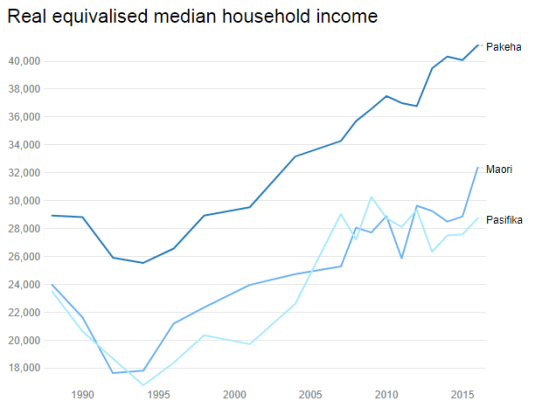
Source: Bryan Perry, Household incomes in New Zealand: Trends in indicators of inequality and hardship 1982 to 2016. Ministry of Social Development (2017).
Income equality has been stable for several decades and consumption inequality is declining. Another area where Labour is unable to lie from now on.
Child poverty has been fairly stable for 20 years so to say it is getting worse and worse is a lie.
Real wages started growing again after the passage of the Employment Contract Act in 1993 as documented by impeccable left sources. Another area where Labour must not lie.
Our take on the latest Household Incomes in NZ report closertogether.org.nz/no-quick-escap… @MaxRashbrooke #inequality #poverty http://t.co/c1L9QHs3fi—
Closer Together (@CloserTogether) July 09, 2014
Of course, the increase in real wages and real household incomes is larger than in the measured statistics because of their well-known bias measuring new goods and better quality goods.
Goes about saying that the OECD estimates New Zealand to have the smallest gender wage gap of any of its members.
There is a hole in @NZLabour’s fiscal plan
06 Sep 2017 Leave a comment
in fiscal policy, politics - New Zealand Tags: 2017 New Zealand election
Why fact-checking can’t stop Trump’s lies
31 Aug 2017 3 Comments
in politics - USA Tags: political psychology
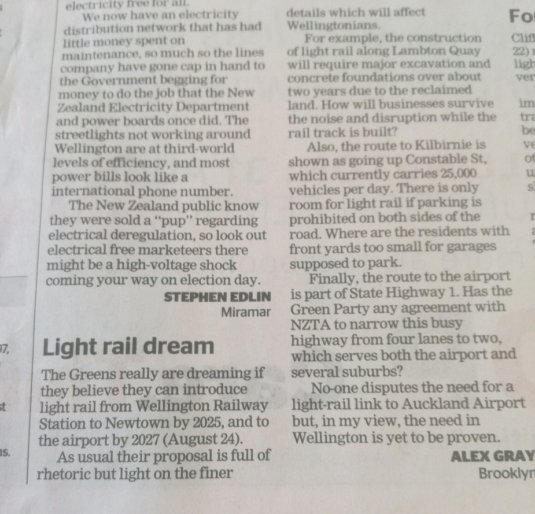
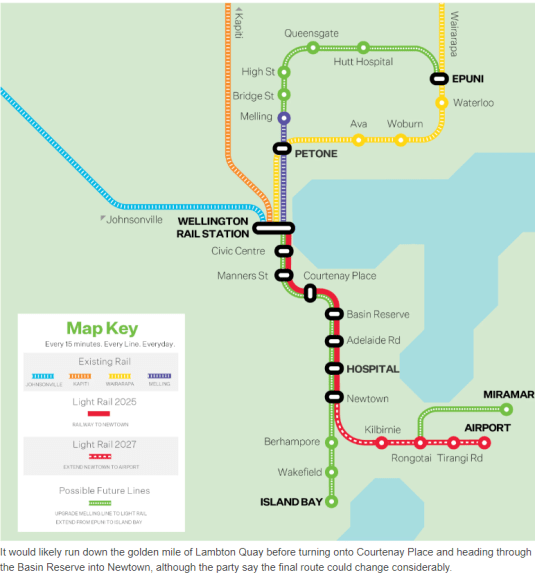
I don’t think the @NZGreens have thought light rail through
28 Aug 2017 Leave a comment
in applied price theory, politics - New Zealand, transport economics Tags: 2017 New Zealand election, expressive voting, light rail
So @top_nz says “no evidence” incarceration reduces crime?
26 Aug 2017 Leave a comment
in applied price theory, economics of crime, labour economics, labour supply, law and economics, occupational choice, politics - New Zealand Tags: 2017 New Zealand election, crime and punishment


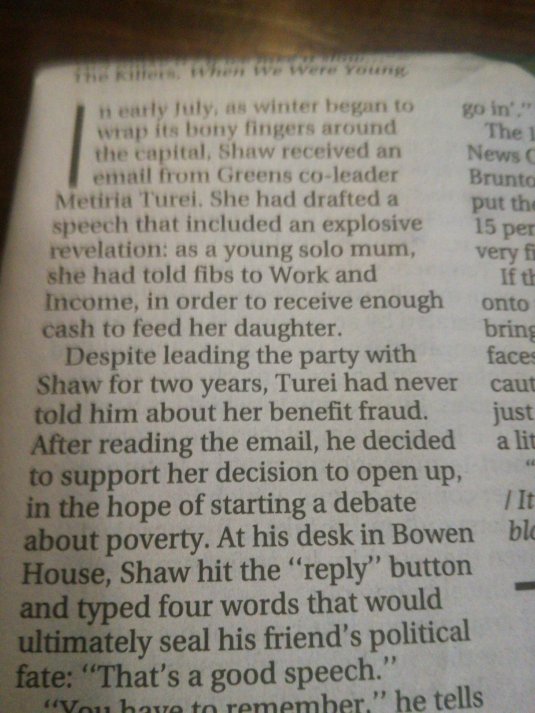
Consensus decision making in @nzgreens, no opposition research, no media plan
20 Aug 2017 Leave a comment
in politics - New Zealand Tags: 2017 New Zealand election
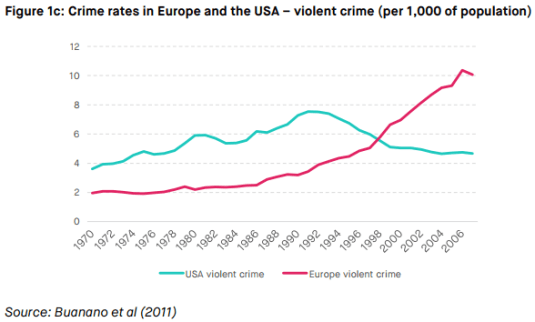
So @top_nz wants the European approach to crime and punishment! Fewer prisoners, more violent crime
18 Aug 2017 Leave a comment
in economics of crime, politics - New Zealand
Is ethical investing a dud? @NZSuperFund @JordNZ @EricCrampton @GreenpeaceNZ
17 Aug 2017 1 Comment
in defence economics, environmental economics, financial economics, health economics, politics - New Zealand
Imagine how much more would be available for funding old age pensioners, schools, hospitals and kidney machines if you have a passively invested portfolio rather than an ethically invested portfolio. Virtue signalling is not free. Ethical investing significantly underperforms the market even if done by the best of the passive investing funds such as Vanguard.

The pay equity settlement is unfair to fair employers
17 Aug 2017 Leave a comment
in discrimination, gender, labour economics, politics - New Zealand
My objection to the $2 billion pay equity settlement is an employer can live a morally upright life, hiring on merit, paying the most he can while still staying in business, and still be successfully sued. Their good names are blackened forever.
The court case and the pay equity bill before Parliament are not about anything the retirement home employers did wrong. They paid the going rate. The case was about what was paid in other industries based on the contentious concept of comparable worth.
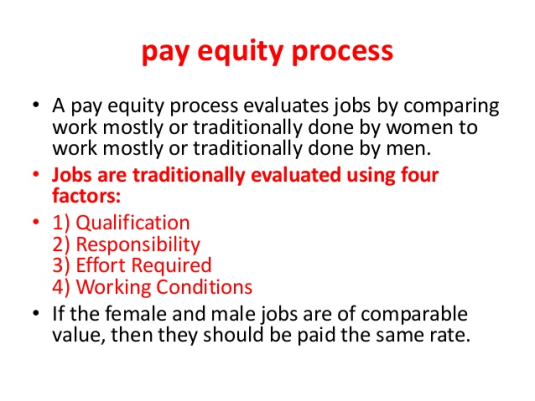
The notion that the same job should not pay different rates because of sex is a question on which all agree. Comparing pay in a job to jobs in other industries because more men work in them requires many leaps in reasoning that is less to do with justice and is more about ideology and economics.
The most obvious of which is the extent to which you accept the market setting wages. That is a different dispute to someone being paid a different pay in the same job because of their sex.
Employers hiring on merit is a basic practice of any business who wants to survive in competition. Not hiring the best regardless of sex and race sacrifices profit for bigotry.
Venn Diagram: Why the #EqualPayDay
Nonsense About the Gender Pay Gap
Doesn't Even Pass the Smell Test @Chsommers https://t.co/q14EiGp9mf—
Mark J. Perry (@Mark_J_Perry) April 05, 2017
Anyone suggesting that the immorality of the market is open and shut was watching the other channel when the Berlin Wall fell and extreme poverty dropped by two thirds in China, India and elsewhere since 1990. The market has at least an arguable case as an acceptable way to set wages.
Many tweet their moral contempt for the market on a smart phone that would have cost many millions of dollars to make when the Berlin Wall fell, and they would not give up the Internet for life in return for $1 million. Are we all millionaires just because of the digital economy?
Adam Smith wrote that matters of distributive justice can only be resolved if people distance themselves from the grubby particulars of their own positions in particular disputes. This evolved into John Rawls arguing that the justice of social institutions should be tested from behind a veil of ignorance where people don’t know their particular place in society or their individual talents.
Rawls argued that a society is fair if you would not mind turning up anywhere in it at random. Inequality is OK if the poor are looked after better than in a more equal society. It is better to be poor in a rich society than poor in a poor society. Rich societies can afford generous welfare states.
Behind Rawls’s veil of ignorance, most would easily agree on equal liberty, equal opportunity and all jobs to be filled on merit. Would agreement on having a market economy be just as quick?
Strong competitive markets do not favour one individual over another. They harness self-interest to generate massive wealth, widely distributed. The income of the poorest, along with the whole of society, benefit from competition in a market economy. Behind the veil of ignorance, not knowing where we will turn up at random in a society, rational people would support competitive markets.
The market delivered the Industrial Revolution. Yesterday, today and every day, 200,000 plus people escape extreme poverty in developing countries because of the spread of capitalism. Yes, this involved inequality and markets determining wages but living standards increased 30-fold since the dawn of the Industrial Revolution; life expectancy doubled since 1900.
OK, you do not have the luxurious life of billionaires, seven of the top eight were self-made I might add. Oddly enough, you probably enjoy a better life than John D. Rockefeller did 100 years ago. Rockefeller lived in a big draughty house with lots of servants. Cars were primitive as was medicine. No refrigerators, washing machines or other domestic appliances we take for granted. Running water, much less safe tap water were brand new inventions at best.
The living wage in New Zealand is set high enough to afford mobile phones, the Internet, overseas holidays and Sky TV too. All beyond the reach of Rockefeller despite his billions.
Would you step into a time machine to go back to the good old days of the 1970s before Rogernomics? You must leave everything from your iPhone to cheap international travel at the door, knock a few years off your life expectancy, and watch two TV channels with no VCR. How many remember what a VCR is? I would pack a few recently invented medicines to ever contemplate stepping back in time to the good old days before neoliberalism no matter how much money was waiting for me at the other end.
Even the biggest critics of neoliberal New Zealand only go so far as to claim that the good old days of the 1970s was an egalitarian paradise except if you were female, Maori or gay. That is two-thirds of the population! The good old days were a very boy’s own good old days.
‘Equal Pay Day’ is April 4 — the next ‘Equal Occupational Fatality Day’ will be on January 21, 2029… twitter.com/i/web/status/8…—
(@AEI) April 04, 2017
The road to a more just society is still full of trade-offs. We should have a hard head as well as a soft heart. The case for the pay equity settlement and against the market setting wages is not open and shut.
If I was to spend $2 billion more in the health sector, distributive justice would mind me to spend it on Pharmac and hospital waiting lists. Mental health workers want a flow on of the pay equity settlement. I would spend that money on hiring more mental health workers, not paying the existing ones more.
Trump supporters: Who are they?
15 Aug 2017 Leave a comment
in politics - USA Tags: 2016 presidential election


Recent Comments