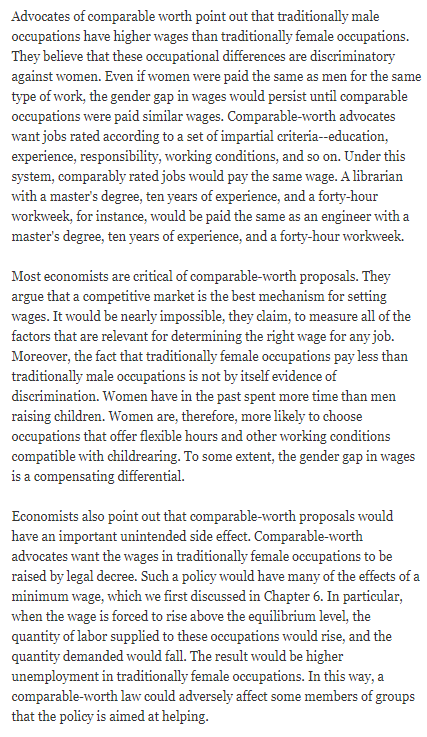
Source: Greg Mankiw’s Blog: A Comeback for Comparable Worth.
Celebrating humanity's flourishing through the spread of capitalism and the rule of law
12 Aug 2017 Leave a comment
in applied price theory, labour economics, politics - New Zealand
08 Aug 2017 Leave a comment
in economics, politics - New Zealand Tags: 2017 New Zealand election
08 Aug 2017 Leave a comment
in politics - New Zealand Tags: 2017 New Zealand election

02 Aug 2017 Leave a comment
01 Aug 2017 Leave a comment
in politics - USA Tags: Charles Murray
31 Jul 2017 Leave a comment
in environmental economics, environmentalism, law and economics, politics - USA

Source: ExxonSecrets Factsheet.
27 Jul 2017 Leave a comment
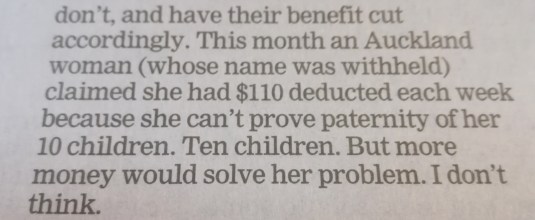
in labour economics, occupational choice, politics - New Zealand, population economics, poverty and inequality Tags: deadbeat dads, expressive voting, New Zealand Greens, single mothers
dav
25 Jul 2017 Leave a comment
in applied welfare economics, politics - New Zealand, poverty and inequality
What a poor effort! The US top 1% is going from strength to strength by whatever explanation or conspiracy theory is your poison. The NZ top 1% is failing completely on its job as the ruling class extracting the labour surplus without mercy or pity to immiserise the proletariat just because it thinks that is a viable long-term strategy for its class.

Source: The material wellbeing of NZ households: Overview and Key Findings from the 2017 Household Incomes Report and the companion report using non-income measures (the 2017 NIMs Report) prepared by Bryan Perry, Ministry of Social Development, Wellington, July 2017.
The income share of the New Zealand top 1% has been falling and falling for a long time now. The class struggle has been cancelled in New Zealand. What is a point of the class war if the ruling class is losing and the proletariat winning. Marxists have nothing to whine about.
21 Jul 2017 Leave a comment
in politics - New Zealand, population economics, poverty and inequality Tags: homelessness
https://twitter.com/MPD_NZ/status/887960123259277312

Source: OECD Affordable Housing Database – http://oe.cd/ahd OECD – Social Policy Division – Directorate of Employment, Labour and Social Affairs Last updated on 21/02/2017 HC3.1 HOMELESS POPULATION via http://www.oecd.org/social/affordable-housing-database.htm
21 Jul 2017 Leave a comment
in energy economics, environmental economics, industrial organisation, politics - USA, survivor principle Tags: Big Solar, solar power
20 Jul 2017 Leave a comment
in budget deficits, politics - New Zealand, public economics
The case for a tax cut is a distinct issue from repaying the recent large budget deficits and balancing the budget over the business cycle.
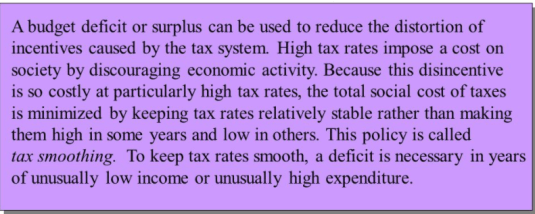
Ministers of Finance should pay more attention to the concept of tax smoothing. Unless something special is happening, income tax rates should be similar from one year to another. We should keep tax rates fairly smooth by borrowing during recessions and emergencies.
Instead, the Government not indexing the income tax thresholds for inflation collected $2.1 billion in extra revenue since 2008 according to Parliamentary Library calculations. Raising the income tax rate thresholds is becoming more pressing. Income growth is starting to push many ordinary taxpayers uncomfortably close to the next threshold and a much higher marginal tax rate. For example, 30% rather than the 17.5% income tax rate many taxpayers face.
New Zealand is already left behind on company tax rates; ours is currently 28%. The Australian company tax rate may drop to 25%; the British company tax rate is going down to 17% by 2020.
Prudent public debt management dictates that governments run temporary budget deficits in recessions and other emergencies such as the Canterbury earthquake and repay that debt as better times return. Recessions and natural disasters are infrequent so this extra debt should be paid down at a measured speed, not a frantic pace at the expense of other tax policy goals.
An increase in the budget deficit smooths over these bad times and avoids taxes going up and down like a Jack-in-the-Box over the business cycle. Who raises taxes in a recession?
After the start of the recession in 2009, foul weather fiscal conservatives wanted to do just that. The same usual suspects who always advocate bigger government argued for higher taxes rather than running a larger budget deficit, which New Zealand did. Imagine the massive income tax rises required every recession and in the last recession in particular if the large budget deficits were not run?
The large public debt from the temporary budget deficits that smoothed over the last recession is no special or additional reason to postpone income tax cuts. A sound long-term fiscal strategy has tax rates at levels that make up on the deficits in bad times with surpluses in the good times. Slowly repaying debts accumulated in a recession is a routine part of prudent public debt management.
Every budget allocates about $1.5 billion for new policy proposals that can be adopted without the Treasury thinking that they might harm long-term fiscal stability.
New Zealand budget allows for up to $1.5 billion on new policies every year. If this new spending was justified despite the large public debt from the recent recession, some tax cuts are too. They could start with raising the income tax rate thresholds to make up for past inflation.
18 Jul 2017 Leave a comment
in applied price theory, politics - New Zealand, public economics
Cannot comment on Gareth Morgan’s Facebook page anymore. Can’t handle the truth. I wrote an extensive critique of his universal basic income but he does not want to discuss the evidence or the logical flaws of his policy proposal. The only people who lose out from his universal basic income are those for whom the modern welfare state was founded to protect.

What set Gareth Morgan off on his Facebook page was when I commented pointing out that the optimal rate of tax on income from capital to zero. All I said was “optimal tax theory including that pioneered by Stiglitz and Merrlees, economists of impeccable left-wing credentials, show that taxes on the income from capital should be low because the deadweight social costs of taxes on capital are very high”. His response was anti-intellectualism.
18 Jul 2017 Leave a comment
in discrimination, economics of bureaucracy, economics of crime, politics - USA
The American police subreddit did not want to know that there were a few bad apples in their rank ranks despite the overall good news about the use of lethal force.

Blacks are not shot dead out of proportion but there are more incidents of excessive force which is nonlethal. Racists are cowards. There is excessive force under the colour of authority but they chicken out when there are real consequences and serious investigations.
Celebrating humanity's flourishing through the spread of capitalism and the rule of law
Celebrating humanity's flourishing through the spread of capitalism and the rule of law
Celebrating humanity's flourishing through the spread of capitalism and the rule of law
Celebrating humanity's flourishing through the spread of capitalism and the rule of law
Celebrating humanity's flourishing through the spread of capitalism and the rule of law
Celebrating humanity's flourishing through the spread of capitalism and the rule of law
Celebrating humanity's flourishing through the spread of capitalism and the rule of law
Celebrating humanity's flourishing through the spread of capitalism and the rule of law
Celebrating humanity's flourishing through the spread of capitalism and the rule of law
Celebrating humanity's flourishing through the spread of capitalism and the rule of law
Celebrating humanity's flourishing through the spread of capitalism and the rule of law
Celebrating humanity's flourishing through the spread of capitalism and the rule of law
A History of the Alt-Right
Econ Prof at George Mason University, Economic Historian, Québécois
Celebrating humanity's flourishing through the spread of capitalism and the rule of law
Scholarly commentary on law, economics, and more
Beatrice Cherrier's blog
Celebrating humanity's flourishing through the spread of capitalism and the rule of law
Celebrating humanity's flourishing through the spread of capitalism and the rule of law
Celebrating humanity's flourishing through the spread of capitalism and the rule of law
Why Evolution is True is a blog written by Jerry Coyne, centered on evolution and biology but also dealing with diverse topics like politics, culture, and cats.
Celebrating humanity's flourishing through the spread of capitalism and the rule of law
A rural perspective with a blue tint by Ele Ludemann
DPF's Kiwiblog - Fomenting Happy Mischief since 2003
Celebrating humanity's flourishing through the spread of capitalism and the rule of law
The world's most viewed site on global warming and climate change
Tim Harding's writings on rationality, informal logic and skepticism
A window into Doc Freiberger's library
Let's examine hard decisions!
Commentary on monetary policy in the spirit of R. G. Hawtrey
Thoughts on public policy and the media
Celebrating humanity's flourishing through the spread of capitalism and the rule of law
Politics and the economy
A blog (primarily) on Canadian and Commonwealth political history and institutions
Reading between the lines, and underneath the hype.
Economics, and such stuff as dreams are made on
"The British constitution has always been puzzling, and always will be." --Queen Elizabeth II
Celebrating humanity's flourishing through the spread of capitalism and the rule of law
Celebrating humanity's flourishing through the spread of capitalism and the rule of law
WORLD WAR II, MUSIC, HISTORY, HOLOCAUST
Undisciplined scholar, recovering academic
Celebrating humanity's flourishing through the spread of capitalism and the rule of law
Res ipsa loquitur - The thing itself speaks
In Hume’s spirit, I will attempt to serve as an ambassador from my world of economics, and help in “finding topics of conversation fit for the entertainment of rational creatures.”
Researching the House of Commons, 1832-1868
Reflections on books and art



Recent Comments