Core Crown net debt in New Zealand
June years, 1997–2015, % of GDPhttps://t.co/zPcIEt2NZ6 pic.twitter.com/SqJn9VjHCc— Figure.NZ (@FigureNZ) December 13, 2015
Core Crown net debt in New Zealand June years, 1997–2015, % of GDP
01 Apr 2016 Leave a comment
in fiscal policy, macroeconomics, politics - New Zealand Tags: budget deficits, government debt
@garethmorgannz the @TaxpayersUnion #UBI report isn’t bonkers @JordNZ
31 Mar 2016 Leave a comment
in labour economics, politics - New Zealand, poverty and inequality, welfare reform Tags: child support, deadbeat dads, do gooders, expressive voting, New Zealand Labour Party, New Zealand superannuation, old-age pension, rational irrationality, single mothers, social insurance, universal basic income, welfare state
A clever man can climb out of the hole a wise man would not have fallen into. In responding to my Taxpayers’ Union paper on a Universal Basic Income, Gareth Morgan just kept digging.

His first response was to say a Universal Basic Income would not be implemented immediately. This avoids retirees taking home $50 per week less than currently under NZ Superannuation.
Gareth Morgan’s solution is to say that only those currently under 50 will have to rely on a Universal Basic Income.
Only people who are today under the age of 50 could be expected to retire under the UBI policy, the policy would not apply to existing superannuitants.
Generation Rent have to pay higher taxes to keep current retirees in the superannuation style they have become accustomed. Those aged over 50 are also grandfathered in to the existing level of income support from New Zealand Superannuation.
Home ownership rates among Millenials are on average 16 percentage points lower than those recorded by Generation X https://t.co/QNcCXvFbif—
ResolutionFoundation (@resfoundation) February 13, 2016
Generation Rent will have to save their Universal Basic Income so they do not live in poverty when they retire in as little as 15 years from the date of introduction. As Gareth Morgan explains when referring to 40-year-olds:
For the 25 years prior to retirement they will receive the UBI on top of their wages. If they save a good portion of it they will have nest egg at retirement which they can use in retirement to supplement the UBI (which is more modest than today’s NZ Super).
At least the Labour Party admitted that a Universal Basic Income of $11,000 per adult was inadequate and will have to be supplemented so that no one is left worse off:
After all, $11,000 is a lower income than what is currently paid out as part of New Zealand Super. If the figure is too low, then the benefits of security and freedom promised by a UBI may not be realised.
On the other hand, if the figure is pushed higher, taxes will have to rise, possibly to an unrealistically high figure. (Morgan’s $11,000 UBI is funded through a flat tax of 30%.) There is, therefore, a real feasibility-sufficiency trade-off.
It may be that a UBI has to be supplemented by other transfers to ensure that the most vulnerable groups have enough income.
As for single parents relying on a welfare benefit, they are $150 a week short under a Universal Basic Income. Where is Sue Bradford when you need her to go on about beneficiary bashing.
Gareth Morgan’s proposed solution to this $150 per week cut in the incomes of the needy is to suggest that the non-custodial parent of the child should give up part or all of their Universal Basic Income to support their child:
Each child has two parents, the UBI is paid to both whether they live together or not.
It is totally feasible that the UBI of both parents could be required to be directed to support the children in the event of separation. In the Kahuna the amount paid per family would be $22,000 after tax – more than is paid to a sole parent family now.
This hard line on child support will make being a non-custodial parent of a child a rather risky venture under a Universal Basic Income. A Universal Basic Income is supposed to make you feel very secure against misfortune as Gareth Morgan explained back in 2011:
…let’s agree on what is a minimum income every adult should have in order to live a dignified life and then see what flows from that. We begin by specifying the income level below which we are not prepared to see anyone having to live.
If you are the non-custodial parent and down on your luck – unemployed, sick or an invalid – you cannot rely on your Universal Basic Income as a backstop because part or all of that is already transferred to support your child.
Paternity suits will take on a new meaning because you can lose your Universal Basic Income. The Universal Basic Income with Gareth Morgan’s ad hoc amendments this week has strings attached on whether you or someone else receives your Universal Basic Income. That make or break decision will be up to the Family Court and the Child Support Agency at IRD.
I am not sure how a Universal Basic Income deals with deadbeat dads at home and living abroad. Central to its funding is abolition of the welfare state bureaucracy to save $2 billion.
Those down on their luck will not have a welfare state bureaucracy to turn to if their child support does not come through or have nothing to live on after their child support is paid.
Now let Gareth Morgan explain why he wanted to get rid of that welfare state bureaucracy and replace it with a Universal Basic Income:
We must finally admit that with all the paternalistic will in the world there is no chance that public servants can adequately identify and monitor eligibility for a needs-based benefit regime.
We should save ourselves the torture of continuously getting it wrong and designing an endless stream of discriminatory “fixes” to cover our mistakes in finding targeted perfection.
The reality is that people’s circumstances are dynamic and that they will change their behaviour to suit the design of the benefit regime making the chicken and egg nature of determining “needs” an exercise in futility.
The important thing is to be fair and to have a consensus on the level of income that we all have an unconditional entitlement to in order to live a dignified life.
Gareth Morgan seems to throw Generation Rent and non-custodial parents under the bus to deliver on his dream. They both have to give up much of their Universal Basic Income either to their children or their KiwiSaver to fill the growing number of gaps in his Big Kahuna. Their unconditional entitlement to be able to live a dignified life through a Universal Basic Income of $11,000 per adult has a lot of strings attached to it and cracks to fall through with no safety net.
Wear a condom, do not divorce and do not be under 50 are the secrets to enjoying a Universal Basic Income. If not, you are on your own. Your Universal Basic income is already spoken for.
Political bias, free trade and @berniesanders @realdonaldtrump
31 Mar 2016 Leave a comment
in applied price theory, applied welfare economics, economics of media and culture, industrial organisation, international economics, politics - USA, Public Choice, public economics, rentseeking Tags: 2016 presidential election, antiforeign bias, antimarket bias, makework bias, pessimism bias, rational irrationality
Questions for @grantrobertson1 on the #UBI @JordNZ
30 Mar 2016 1 Comment
in labour economics, labour supply, politics - New Zealand, poverty and inequality, welfare reform Tags: flat rate tax, New Zealand Labour Party, top tax rate, universal basic income
Labor Party finance spokesman Grant Robertson yesterday ruled out an income rate tax of 50% to fund a Universal Basic Income. Labour is considering a Universal Basic Income. It released a background paper for that purpose as part of its Future of Work Commission.

Source: Taxpayers’ Union rubbishes Universal Basic Income idea | Stuff.co.nz.
Questions arise as to how the Labour Party will fund its Universal Basic Income after ruling out a tax rate of 50%. As Brain Easton said:
Many advocates put the UMI forward without doing the sums. Those who do find that the required tax rates are horrendous or the minimum income is so low that it is not a viable means of eliminating poverty. Among the latter are New Zealanders Douglas, Gareth Morgan and Keith Rankin.
The Labour Party’s background paper already has said that the Universal Basic Income proposed by the Morgan Foundation is insufficient because many beneficiaries and all retirees will be much worse off. They receive much more in income support under the existing welfare state and they would under a Universal Basic Income of $11,000 per adult as proposed by the Morgan Foundation.
The solution proposed by the Labour Party is a supplemental income transfers to ensure no one is worse under a Universal Basic Income. This will greatly increase the cost of a Universal Basic income in comparison to the Morgan Foundation proposals.
https://twitter.com/grantrobertson1/status/711758860659240960
A series of questions come to mind that the Labour Party and its finance spokesman Grant Robinson must answer if they are to go anywhere with a Universal Basic Income;
- Is not the point of a Universal Basic Income to replace the welfare state, not supplement it?
- How will the Labour Party fund its Universal Basic Income plus the supplemental income transfers without introducing a $8 billion tax on capital income (including the family home) as in the Morgan Foundation’s proposals?
- The Universal Basic Income proposed by the Morgan Foundation requires $13 billion in extra taxes ($8 billion from taxing capital and $5 billion from a 30% flat-rate income tax) so how much more to that will Labour need for a Universal Basic Income plus supplemental income transfers?
- What is the maximum top marginal income tax rate that Labour will consider to fund a Universal Basic Income?
- Will the Labour Party’s Universal Basic Income be funded by a flat rate income tax or a progressive income tax system?

Source: How we pay for a universal basic income – Whiteboard Wednesday.It would have been my first point
@garethmorgannz’s #UBI finishes the job on #GenerationRent @JordNZ
29 Mar 2016 Leave a comment
in fiscal policy, labour economics, labour supply, macroeconomics, politics - New Zealand, population economics, poverty and inequality Tags: Edward Prescott, New Zealand superannuation, old age pensions, social insurance, timing inconsistency, universal basic income, welfare state
Gareth Morgan revealed today a hitherto unnoticed design feature in his Universal Basic Income of $11,000 per annum. It will be phased in over a long time. That will mean that Generation Rent will continue to pay taxes to fund a universal old age pension for their parents and grandparents, but will not be fortunate enough to receive that themselves.
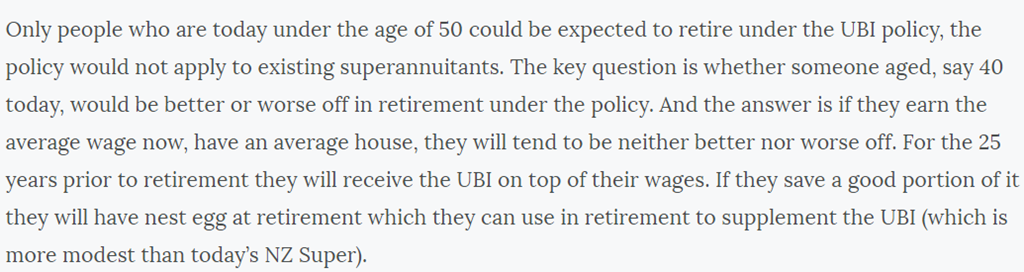
Source: Morgan Foundation (2016) Taxpayers Union Critique of the UBI just bonkers – again
They are not left of their own devices. Generation Rent is expected to save the Universal Basic Income they receive over their working lives to avoid living in poverty in their retirement. Does not strike me as a political winner.
The Morgan Foundation does not understand the implications of time inconsistency for retirement savings policy:
- Which is better? Save for your retirement through the share market or save to own your own home and then present yourself at the local social security office to collect your taxpayer funded old-age pension?
- Under this fine game of bluff, you bleed the taxpayer in your old age and pass on your debt-free home to your children.
This strategy of not saving much for retirement is rational for the less well-paid. The family home is exempt from income and asset testing for social security. If you lose you bet, sell your house and live off the capital. For ordinary workers, this is a good bet. The middle class might prefer to live in a more luxurious retirement.
For ordinary workers, whose wages are not a lot more than their old age pension from the government, a government funded pension is a good political gamble. The old-age pension for a couple in New Zealand is set at no less that 60% of average earnings.
Edward Prescott argues for compulsory retirement savings account albeit with important twists because it is otherwise irrational for many to save for their retirement against the background of a welfare state:
The reason we need to have mandatory retirement accounts is not because people are irrational, but precisely because they are perfectly rational — they know exactly what they are doing.
If, for example, somebody knows that they will be cared for in old age — even if they don’t save a nickel — then what is their incentive to save that nickel? Wouldn’t it be rational to spend that nickel instead?
…Without mandatory savings accounts we will not solve the time-inconsistency problem of people under-saving and becoming a welfare burden on their families and on the taxpayers. That’s exactly where we are now.
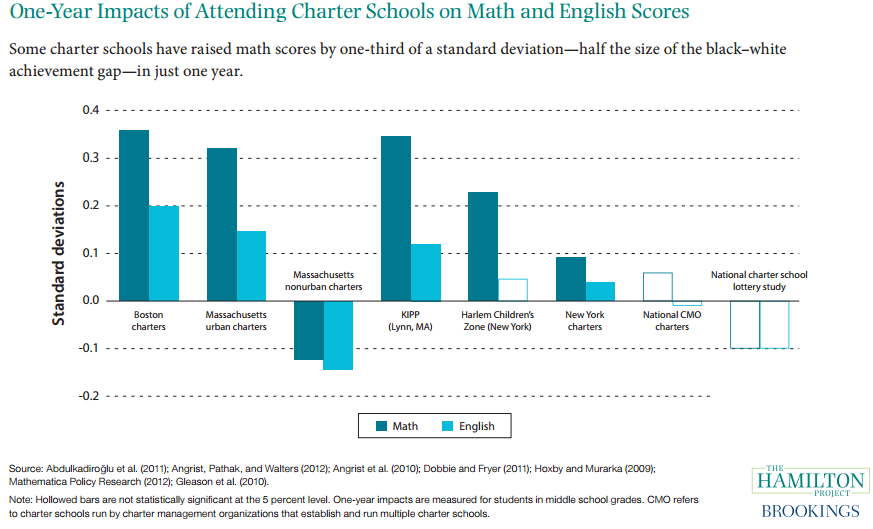
1-Year Impacts of Charter Schools on Math & English Scores @GreenCatherine @DBSeymour
29 Mar 2016 Leave a comment
in economics of education, politics - New Zealand, politics - USA Tags: charter schools, School choice, school vouchers
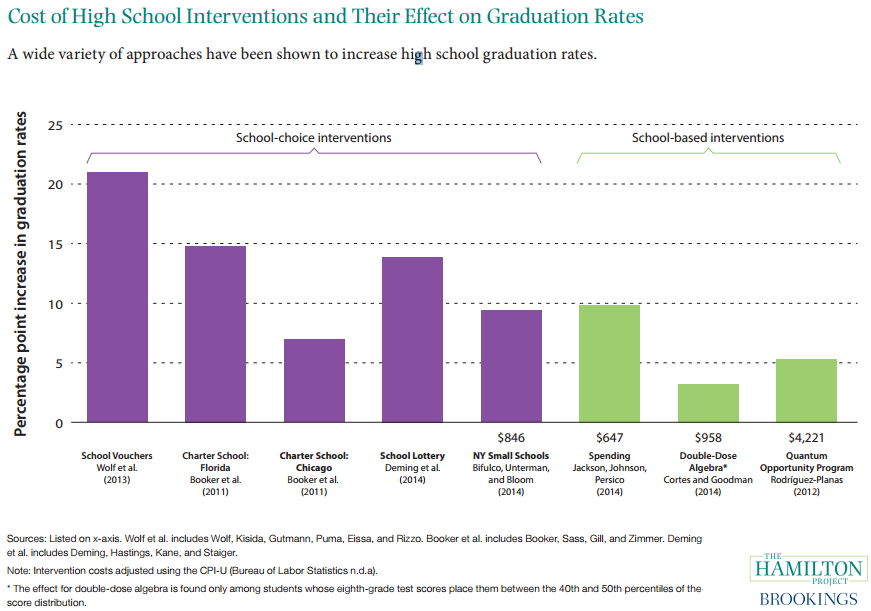
Cost of High School Interventions and Effects on Graduation @ChrisHipkins @DBSeymour
29 Mar 2016 Leave a comment
in economics of education, politics - New Zealand, politics - USA Tags: charter schools, School choice, school vouchers
How would you feel if @realdonaldtrump were elected President? #NeverTrump
27 Mar 2016 Leave a comment
in politics - USA Tags: 2016 presidential election
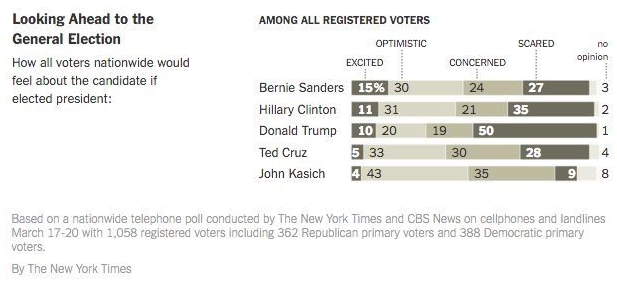
HT: Justin Wolfers.
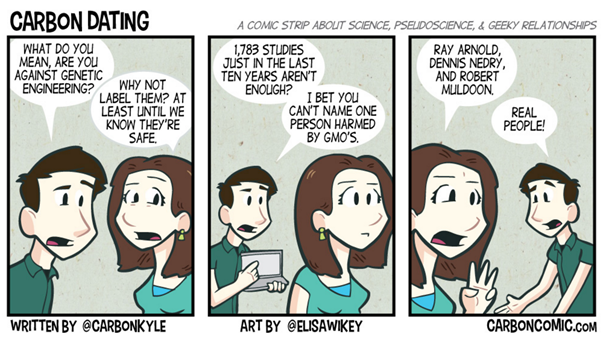
Robert Muldoon explained
27 Mar 2016 Leave a comment
in economics of media and culture, health economics, politics - New Zealand Tags: cranks, GMOs

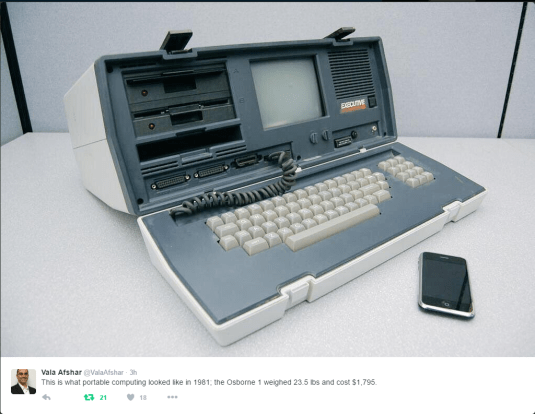
All part of @BernieSanders’ good old days before the top 1% looted everything
26 Mar 2016 Leave a comment
in applied welfare economics, economic history, economics of media and culture, politics - USA, poverty and inequality, technological progress
@suemoroney the Maori economy is not $39 billion, it is much more @Maori_Party
26 Mar 2016 Leave a comment
in economic history, economics of education, human capital, labour economics, politics - New Zealand Tags: Maori economic development
Much of the non-European human capital in New Zealand is Maori and it far exceeded $39 billion 20 years ago or more. Attempts to quantify the Maori economy by counting up the value of Maori institutions and businesses distracts from the main priority for Maori economic development which is education, education, education.

Source: Lˆe Thi. Vˆan Tr`ınh, Estimating the monetary value of the stock of human capital for New Zealand, University of Canterbury PhD thesis (September 2006), Table 4.6: Aggregate human capital stock by ethnicity.


Recent Comments