@Economicpolicy shows that top CEO pay has been a miserable rollercoaster for 15 years
25 Apr 2016 Leave a comment
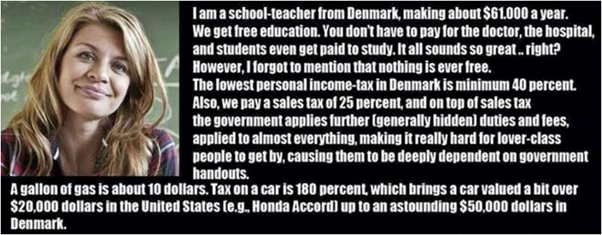
@BernieSanders nothing is free in Denmark
24 Apr 2016 Leave a comment
in applied welfare economics, fiscal policy, politics - USA, public economics Tags: 2016 presidential election, Denmark, growth of government, size of government, social insurance, taxation and labour supply, welfare state
And the beat goes on – housing prices since 1975 @PeterDunneMP @PhilTwyford
24 Apr 2016 Leave a comment
in applied welfare economics, politics - New Zealand, Public Choice, rentseeking, urban economics Tags: Auckland, housing affordability, land supply, land use planning, NIMBYs, Resource Management Act, urban limits, zoning
New Zealand housing prices were pretty flat up for the two decades until the passage of the Resource Management Act (RMA) in 1993. They then soared well before any foreign buyers such as from China entered the market.
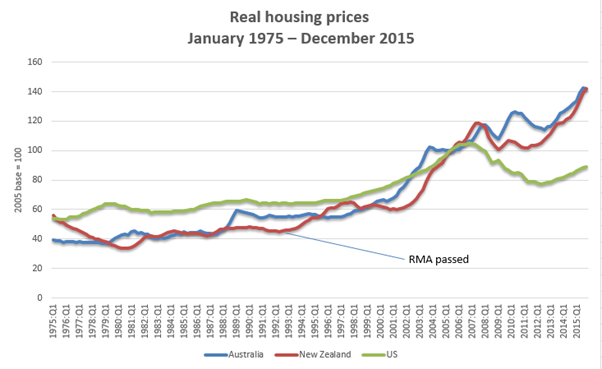
Source: International House Price Database – Dallas Fed December 2015; nominal housing prices for each country is deflated by the personal consumption deflator for that country.
Most of the housing price rises were under the watch of a Labour Government – a party which is supposed to look out for working families.
The failure of the Labour Party to nip the problem in the bud when they had a working majority in Parliament means future solutions run into the political problem that any significant increase in supply of land may push many with recent mortgages such as in Auckland into negative equity.
Since they left office in 2008, leaving land supply regulation in a mess, the approach of Labour has been political opportunism rather than supporting RMA reform.
Labour recently admitted the need to increase the supply of land, but have not put forward practical ideas to increase the supply of land.
The National Party is not much better in terms of real solutions to regulatory constraints on the supply of land.
Why Do Black Markets for Marijuana Still Exist in Colorado? @PeterDunneMP
24 Apr 2016 Leave a comment
in applied price theory, economics of regulation, health economics, politics - USA Tags: black markets, economics of prohibition, marijuana decriminalisation, tax evasion
#MorganFoundation errors about @nzinitiative’s Health of the State – part 2
23 Apr 2016 Leave a comment
in economics of media and culture, economics of regulation, health economics, politics - New Zealand Tags: anti-market bias, do gooders, meddlesome preferences, Morgan Foundation, nanny state, political psychology, rational rationality
#MorganFoundation errors about @nzinitiative’s Health of the State – part 1
22 Apr 2016 3 Comments
in economics of information, economics of regulation, health economics, law and economics, politics - New Zealand Tags: Aaron Director, alcohol regulation, economics of obesity, economics of prohibition, economics of smoking, meddlesome preferences, Morgan Foundation, nanny state
The Greens have joined that Morgan Foundation in playing the man rather than the ball on the recently published report of the New Zealand Initiative on sin taxes. Green Party health spokesperson Kevin Hague said:
The New Zealand Initiative cares more about junk-food barons’ bottom lines than it cares about Kiwis who are getting sick and dying because of obesity-related illnesses
The Morgan Foundation was just as keen to argue that their opponents on sin taxes are both ignorant and steeped in moral turpitude as a way of avoiding substantive argument:
The New Zealand Initiative are not interested in reducing obesity, or preventing the looming diabetes crisis where 1 in 3 Kiwis will have the disease. They make no attempt to understand the causes, and don’t propose any way to deal with these issues…
Is there no room for honest disagreement and different views on the ability of further government intervention to be a net benefit? As Aaron Director said:
Laissez-faire is no more than a slogan in defence of the proposition that every extension of state activity should be examined under the presumption of error.
One of the specific claims by the Morgan Foundation that seems to be in error is:
In fact, the report seems devoid of any research outside a narrow economic focus. The food industry has funded an enormous amount of psychological research on how to influence people to eat more junk food through packaging, advertising, product placement etc, much of which is publicly available, but which the New Zealand Institute has roundly ignored. Ironic, given that they funded by the same organisations that funded this psychological research.
The Food industry’s own research shows our choices are hugely influenced by the environment that surrounds us, but the New Zealand Institute conveniently prefers to cling to the oversimplification that we are all rational economic units – known as homo economicus.
The report of the New Zealand Initiative has a nice discussion of the limitations of rationality which did not weigh as heavily as it should in the critique by the Morgan Foundation part of which is in the snapshot below:

Source: Jenesa Jeram, The Health of the State, The New Zealand Initiative ( April 2016, p.10).
But who would be elected president of New Zealand? @PeterDunneMP
22 Apr 2016 2 Comments
in comparative institutional analysis, constitutional political economy, politics - New Zealand, Public Choice Tags: head of state, New Zealand republic
The principal argument against the republic is it results in a president as the head of state.
In the last Republican debate in Australia in 1999, the Republican movement split between those who wanted an appointed president and an elected president.
An elected president would quickly get ideas above his station because of their popular mandate.
Imagine Gareth Morgan as president. He is a great New Zealander, but heads of state are supposed to be seen and not heard.

It would be a good pub quiz game to list the people would be wholly unsuited as president but would be likely to be elected. Boring people such as those who currently occupy the position such as judges and retired military would not have much of a chance of being elected. A vote for president would be the ultimate protest vote.
The Irish president, for example, is elected but is completely circumscribed in powers. The only power they have to exercise independently is whether to dissolve parliament after a motion of no confidence.
A president elected by the New Zealand House of Representatives would still have some sort of independent mandate and sooner or later would get ideas above their station, which is to be seen but not heard.
Why environmentalists are adverse to real solutions #earthday
22 Apr 2016 Leave a comment
in applied price theory, applied welfare economics, comparative institutional analysis, constitutional political economy, economics of media and culture, economics of regulation, energy economics, entrepreneurship, environmental economics, environmentalism, global warming, politics - USA Tags: anti-market bias, Earth Day, expressive voting, rational ignorance, rational rationality

Source: Quotation of the day for Earth Day on the ‘science of economics versus the religion of environmentalism’ … – AEI | Carpe Diem Blog » AEIdeas from Steven E. Landsburg’s book “The Armchair Economist: Economics and Everyday Life,” in his chapter titled “Why I Am Not an Environmentalist: The Science of Economics versus the Religion of Ecology“.
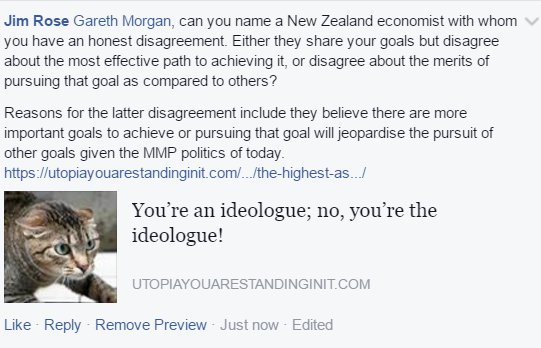
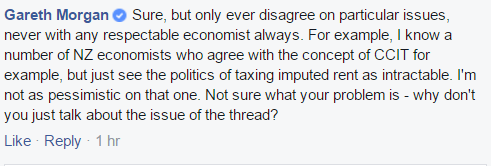
A challenge for @GarethMorgannz on disagreement in public policy making
21 Apr 2016 Leave a comment
in applied price theory, comparative institutional analysis, constitutional political economy, politics - New Zealand, Public Choice, rentseeking Tags: action bias, conjecture refutation, motivated reasoning, The fatal conceit, The pretense to knowledge
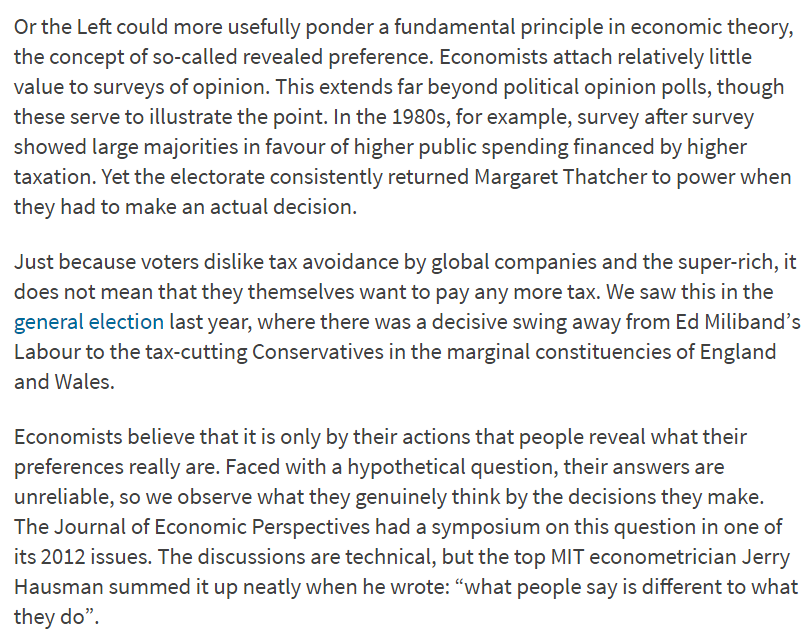
Forget avoidance outrage: public’s real attitude to tax is revealed by their actions @JordNZ
21 Apr 2016 Leave a comment
in applied price theory, constitutional political economy, economic history, economics of media and culture, politics - Australia, politics - New Zealand, politics - USA, Public Choice, public economics Tags: British economy, British politics, expressive voting, growth of government, rational irrationality, revealed preference, size of government, voter demographics
George Plunkitt of Tammany Hall on the difference between honest and dishonest political graft
21 Apr 2016 Leave a comment
in economic history, economics of bureaucracy, economics of crime, economics of media and culture, law and economics, politics - USA, Public Choice, rentseeking Tags: bribery and corruption

In the book Plunkitt of Tammany Hall William Riordan published many of George Washington Plunkitt’s thoughts about government and about big city machines. In the link below, you can find the passage that explains the difference between honest and dishonest graft.
Honest graft is using your connections and knowledge as a government official to enrich yourself. It is essentially what we would now call “insider trading.”
Honest graft is when a goverment official goes out (for example) and buys up land because he knows a city project will need that land and he will be able to make a lot of money by buying the land now while no one else knows that it is about to be bought by the city. He can buy it cheap and then sell it at a higher price to the city.
Dishonest graft consists of doing things like blackmailing people who are doing illegal or semi-illegal things. It can also consist of actually taking money directly from the city treasury.
It is more of what you would expect mobsters to do–things like forcing prostitutes to pay money to police in order to be allowed to work in a given area rather than being arrested.
Source: How does George Plunkitt define “honest/dishonest graft”? | eNotes.

Wanted poster for Lincoln’s assassins, this day 1865
20 Apr 2016 Leave a comment
in politics - USA Tags: American Civil War, Lincoln, political assassinations
Wanted poster for murderer of President Lincoln, still at large, 150 years ago this month: #LOC http://t.co/IRCjup0RU0—
Michael Beschloss (@BeschlossDC) April 15, 2015
P.T. Bauer on @BernieSanders extending #fightfor15 to entire Third World!
19 Apr 2016 Leave a comment
in applied welfare economics, behavioural economics, constitutional political economy, development economics, economic history, growth disasters, growth miracles, P.T. Bauer, politics - USA, Public Choice Tags: 2016 presidential election, antiforeign buyers, George Orwell, living wage, rational irrationality, The fatal conceit, The pretense to knowledge
India tried that in the 1950s as part of its five-year plans. It did not work that well. Bauer said that in development economics there is a “need to restate the obvious.”
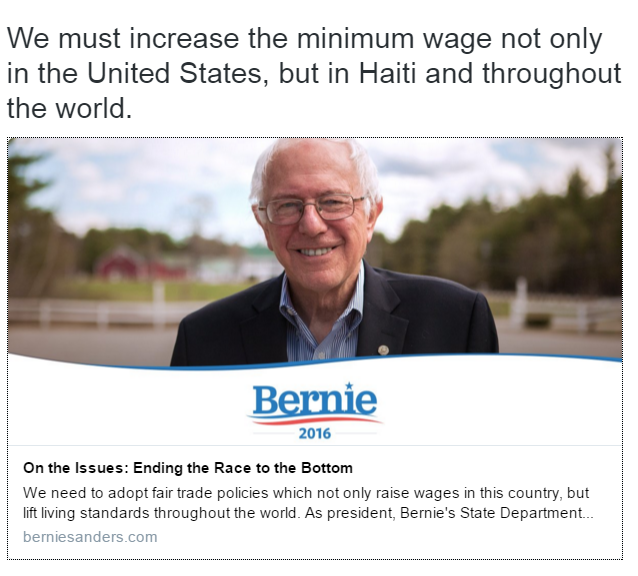
Source: Ending the Race to the Bottom – Bernie Sanders.
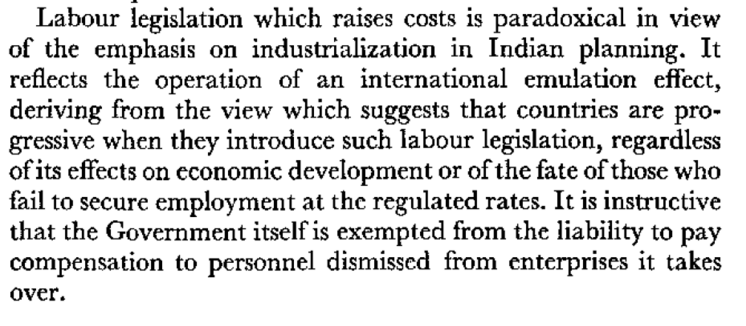
Source: Indian Economic Policy and Development – P. T. Bauer (1959) – Google Books
<p><img src="http://quotes.lifehack.org/media/quotes/quote-George-Orwell-we-have-now-sunk-to-a-depth-39424.png" /></p> <p>
McDonald’s Workers Just Lovin’ Their #ZeroHoursContracts @suemoroney @IainLG @FairnessNZ
19 Apr 2016 Leave a comment
in labour economics, labour supply, managerial economics, market efficiency, organisational economics, personnel economics, politics - New Zealand Tags: British economy, British politics, employment law, employment regulation, fixed costs of working, part-time work, The fatal conceit, The pretense to knowledge, zero hours contracts
Revealed preference rules. Not only do about half of unemployed turned down offers of zero hour contract jobs, those that switch from a zero hours contract to minimum hours are not much different from the number of people in these type of jobs who would be quitting to another job anyway.
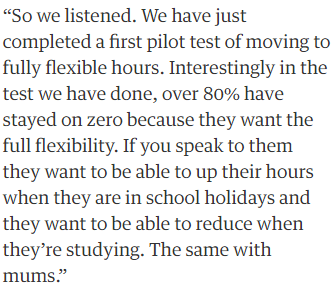
Source: McDonald’s Workers Are Just Lovin’ Their Zero Hours Contracts – Forbes and McDonald’s offer staff the chance to get off zero-hours contracts | UK news | The Guardian.
#Morganfoundation discovers that #Ukraine is a dodgy place to buy credence goods
19 Apr 2016 Leave a comment
in economics of climate change, economics of crime, economics of information, environmental economics, global warming, industrial organisation, international economic law, international economics, International law, law and economics, politics - New Zealand, survivor principle Tags: adverse selection, asymmetric information, carbon trading, climate alarmism, climate alarmists, credence goods, experience goods, inspection goods
Morgan Foundation yesterday put out a report pointing out that many of the carbon credits purchased from the Ukraine under the carbon trading scheme are fraudulent.
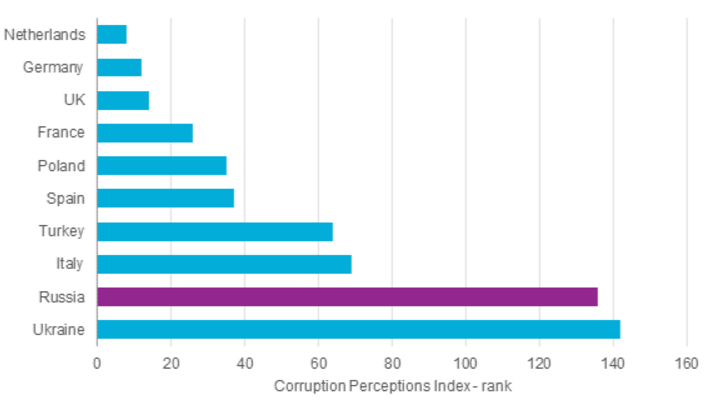
That comes with no surprise to anyone vaguely familiar with business conditions and the level of official corruption in the former Soviet Union. Russia is a more honest place to do business.
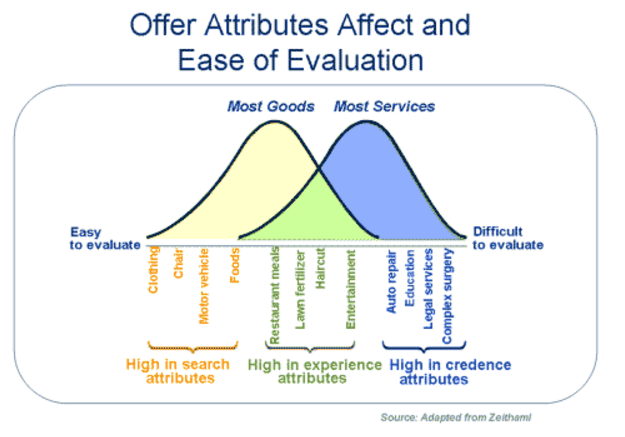
Carbon traders who buy from the Ukraine are not buying an inspection good. An inspection good is a good whose quality you can ascertain before purchase.

They are not buying an experience good. An experience good is a good whose quality is ascertained after purchase in the course of consumption.

Source: Russia, Ukraine dodgy carbon offsets cost the climate – study | Climate Home – climate change news.
What these carbon traders in New Zealand are doing is buying credence goods from the Ukraine. The credence goods are the carbon credits, which the Morgan Foundation and others have found often to be fraudulent.
A credence good is a good whose value is difficult or impossible for the consumer to ascertain. A classic example of a credence good is motor vehicle repairs.
You must trust the seller and their advice as to how much you need to buy of a credence good. Many forms of medical treatment also require you to trust the seller as to how much you need.
Carbon credits are such a credence good. You know there is corruption in the Ukraine and many other countries that supply them. You may never know at any reasonable cost whether the specific carbon credits you buy were legitimate.
The reason why carbon credits are purchased from such an unreliable source is expressive voting. As is common with expressive politics, what matters is whether the voters cheer or boo the policy. The fact whether it works or not does not matter too much.
The Greens are upset about this corruption in carbon trading. They did not mention the corruption in international carbon trading and climate aid when they welcomed the recent Paris treaty on global warming but that is for another day.
https://twitter.com/kadhimshubber/status/721831502372302849
Co-ordinated international action on global warming is rather pointless if some of the key countries with carbon emission caps are corrupt, which they are.
As Geoff Brennan has argued, CO2 reduction actions will be limited to modest unilateral reductions of a largely token character. There are many expressive voting concerns that politicians must balance to stay in office and the environment is but one of these.

Once climate change policies start to actually become costly to swinging voters, expressive voting support for these policies will fall away, and it has.
Networked Carbon Markets

Source: World Bank Networked Carbon Markets.
One way to stem that fading support is to buy carbon credits on the cheap and there is plenty of disreputable suppliers of cheap carbon credits. Buying dodgy carbon credits as a way of doing something on global warming without it costing more than expressive voters will pay.
One of the predictions of the adverse selection literature is that if consumers cannot differentiate good and bad goods from each other, such as with used cars, the market will contract sharply or even collapse because buyers cannot trust what is on offer. This risk of adverse selection undermining a market applies with clarity to carbon trading.

Source: How Can Your Vote Shape a Low Carbon Future? It Starts with Carbon Pricing.


Recent Comments